House Passes Landmark Housing Bill, Sending Bipartisan Package Back to Senate
May 22, 2026
The House passed the amended 21st Century ROAD to Housing Act on Wednesday by a vote of 396-13, sending the bipartisan housing package back to the Senate for final consideration. The legislation includes major reforms to expand housing supply, modernize federal housing programs, reduce regulatory barriers, and removes the Senate bill’s unconstitutional forced-sale mandate targeting build-to-rent (BTR) housing. (Politico | The Hill, May 20)
State of Play
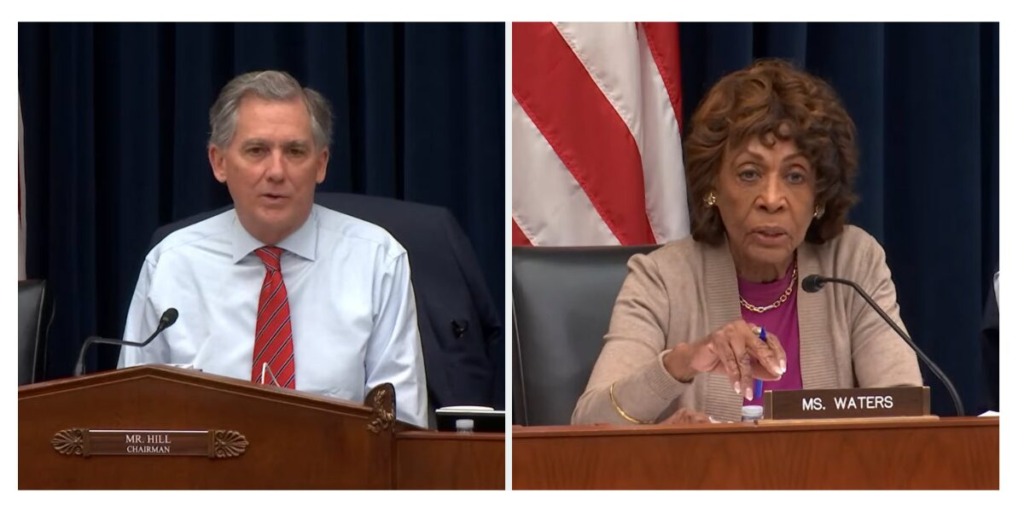
House Financial Services Committee Chairman French Hill (R-AR) and Ranking Member Maxine Waters (D-CA) led months of bipartisan negotiations over the landmark housing package, navigating extensive back-and-forth among the White House, House leadership, and the Senate. (View Bill Text | One-Pager | Section-by-Section )
The White House indicated it will back the House version of the bill, as the legislation moves to the Senate for final approval. (White House SAP, May 20 | CNBC)
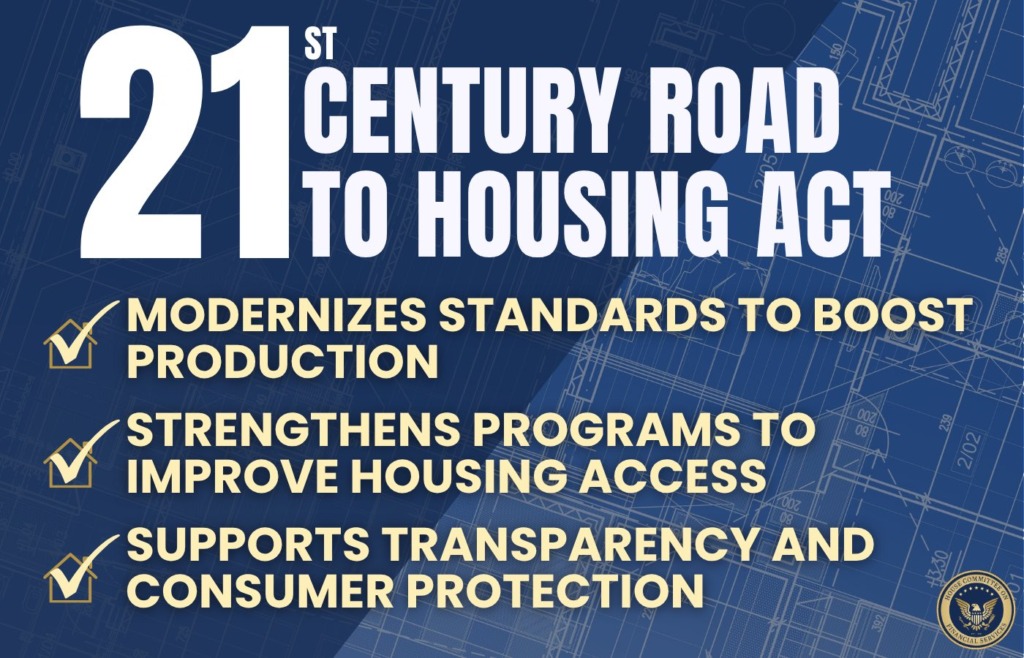
The House-passed version amends the Senate-approved legislation, addressing concerns raised by House members and industry stakeholders, while preserving core reforms to streamline housing development, improve affordability, encourage new construction, update outdated HUD programs, restore critical community banking provisions, and eliminate burdensome regulatory barriers. (House Financial Services Committee Press Release, May 20)
Chairman Hill said, “Today, we proved Washington still works. After months of bipartisan, bicameral negotiations—and with the partnership of the Trump Administration—the House delivered to make housing more accessible and affordable for American families.”(House Financial Services Committee Press Release, May 20)
Ranking Member Waters added, “I am beyond proud of this legislation and the benefits it will bring to all of our cities, counties and states. The Senate must meet this moment with the same urgency and determination and quickly pass this bill.” (Rep. Waters Press Release, May 21)
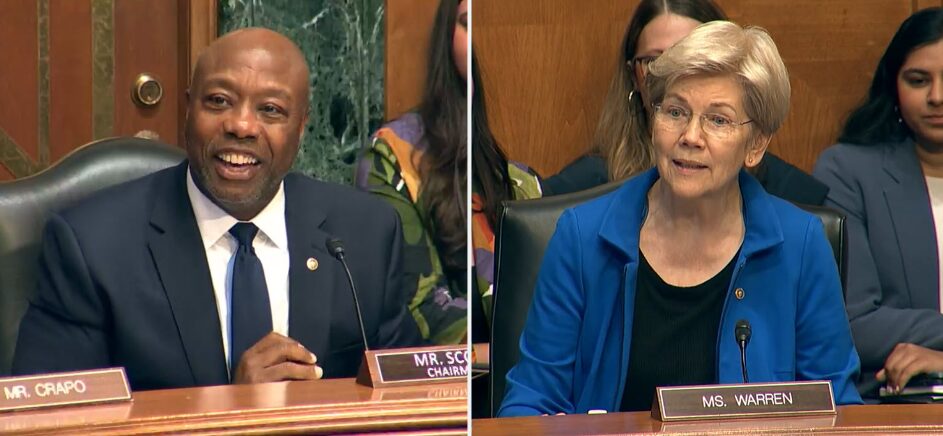
In a joint statement before the House vote, Senate Banking Committee Chairman Tim Scott (R-SC) and Sen. Elizabeth Warren (D-MA) said there is “still work to be done” on a final bill. (Senate Banking Committee Press Release, May 20)
Chairman Hill urged Senate negotiators to support the amended House bill, calling it “the best landing spot for the two chambers” and saying it reflects both chambers’ priorities and their shared commitment to a “bicameral bipartisan housing bill.” (Watch–Fox News | Roll Call, May 21)
What’s In the Bill
The House-passed bill preserves the core housing supply and affordability provisions in the Senate package, including reforms to streamline environmental reviews, reduce barriers to new construction, modernize HUD programs, support manufactured housing, and encourage local zoning and land-use reforms. (Bipartisan Policy Center, May 20)
The most significant change is the removal of the Senate’s unconstitutional seven-year forced-sale mandate for BTR housing, which would have required certain owners to sell newly built single-family rental homes after seven years. (Axios, May 21)
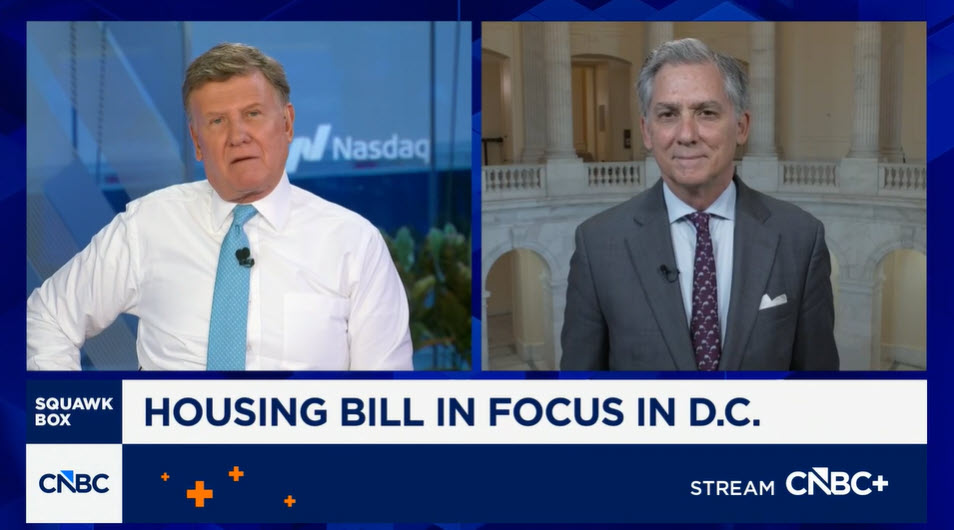
Both Chairman Hill and Ranking Member Waters raised concerns about the provision's constitutionality this week during their floor statements and an appearance on CNBC’s Squawkbox. (SquawkBox, May 19 | Roll Call, May 21 | Rep. Waters Floor Statement, May 19)
The bill still limits large institutional investors—defined as entities controlling at least 350 single-family homes—from buying additional single-family homes. However, it includes exceptions for BTR homes, newly constructed or renovated homes, rental conversions, and homes sold by another large institutional investor that already owned the property or acquired it in compliance with the bill. (Bisnow, May 20)
The bill also restores critical community banking provisions and includes measures to expand community lending, support transit-oriented development, improve federal tools for renters and homeowners, and convert abandoned buildings into housing.
Key provisions include:
Manufactured housing reforms to eliminate the outdated 1974 “permanent chassis” requirement for manufactured homes, which supporters estimate could reduce production costs by thousands of dollars per unit.
Zoning incentives to provide grants to local governments that adopt “pattern books” of pre-approved housing designs to speed up construction.
Permitting and development reforms to reduce delays, streamline environmental reviews, and lower barriers to new housing production.
Community lending and housing finance tools to support local development capacity, expand access to housing, and strengthen federal housing programs.
Roundtable Advocacy
The Real Estate Roundtable (RER) strongly endorsed the House amendment, which advances several housing supply and affordability reforms RER has long championed. (RER Statement | May 20)
“The latest amendment is focused where it should be — on increasing housing supply,” said RER President and CEO Jeffrey D. DeBoer. “Its sections to boost manufactured housing; help support renters interested in home ownership; build more homes in Opportunity Zones; streamline excessive environmental reviews that delay residential construction; encourage transit-oriented development; and promote much-needed land-use and zoning reforms, among other provisions, all add up to a comprehensive and robust package of smart housing policy.” (RER Statement | May 20)
Over the last several months, RER has led efforts to raise constitutional concerns about the Senate’s forced-sale mandate, including through a white paper by former U.S. Solicitor General Paul Clement, which characterized the provision as an unprecedented federal market intervention and outlined a “triple threat” to the U.S. Constitution. (RER’s One Pager, May 18 | RER Letter, May 12 | Roundtable Weekly, April 17)
More than 125 housing advocacy and industry groups supported the House amendment, urging lawmakers to advance legislation that would modernize outdated housing programs, reduce barriers to development, and increase flexibility for local communities. (Coalition Letter, May 18)
Following House passage, RER joined 10 other national housing organizations in commending House leadership for their work, while urging the Senate to swiftly pass the revised Act, calling it one of the most significant housing proposals in a generation. (Statement May 20)
What’s Next
The legislation now returns to the Senate, where lawmakers will determine whether to accept the House-passed package or pursue additional changes. With Congress out next week for recess, the earliest the Senate could take up the bill is June.
Sens. Scott and Warren have indicated they are not ready to accept the House-passed bill as-is and continue to push for the Senate-approved text. (Politico, May 21)
Neither Senate Majority Leader John Thune (R-SD) nor Senate Minority Leader Chuck Schumer (D-NY) has publicly indicated whether they will support the House-amended package. (Politico, May 21)
RER and its coalition partners will continue working with lawmakers as the housing bill moves back to the Senate to ensure the final package remains focused on increasing housing supply, improving affordability, protecting private property rights, and supporting the capital needed to build more homes nationwide


 Menu
Close
Menu
Close
 About Us