Roundtable Urges IRS to Issue Transition Guidance for Opportunity Zones
December 19, 2025
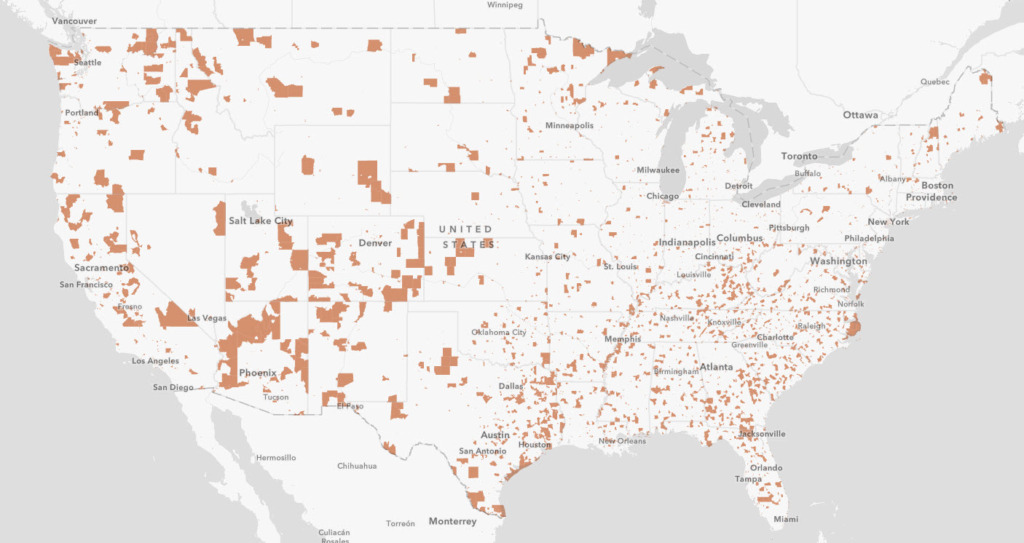
The Real Estate Roundtable (RER) submitted a comment letter this week, urging the Treasury Department and IRS to issue expedited guidance to ensure Opportunity Zone (OZ) investment continues uninterrupted in 2026 as the program transitions from Opportunity Zones 1.0 to the permanent Opportunity Zones 2.0 framework enacted in the One Big Beautiful Bill (OB3) Act. (Letter, Dec. 19)
Roundtable Advocacy
In a letter to IRS Chief Counsel (Acting) Kenneth Kies, RER called on the agency to issue a Revenue Procedure confirming that investments in existing Tax Cuts and Jobs Act (TCJA) qualified opportunity funds (“QOFs”) and qualified opportunity zone businesses (“QOZBs”) will continue to qualify for OZ benefits after zone designations lapse, provided the investments are consistent with the QOZB’s working capital plan.
RER warned that, absent clear transition rules, investors in 2026 will face uncertainty over whether to proceed with TCJA OZ projects or wait for new zone designations expected to take effect in 2027—risking a slowdown in capital deployment to distressed communities.
The OB3 Act made OZs permanent and expanded key incentives, but also raised questions about compliance testing, QOF asset requirements, and treatment of projects that span the transition period between expiring and newly designated zones.
Why It Matters
RER emphasized that OZs have mobilized more than $120 billion in private capital nationwide, supporting affordable and workforce housing, retail, mixed-use developments, and small-business growth in low-income communities.
Without timely IRS action, uncertainty could delay projects already underway, disrupt financing, and undermine the long-term policy goals Congress reinforced by making the program permanent.
RER urged the IRS to adopt a clear “safe harbor” allowing certain TCJA OZ projects to be treated as “grandfathered” for compliance purposes if their working capital plans contemplated development before zone designations expired and investments remain consistent with those plans.
The letter includes a detailed statutory and regulatory analysis prepared by RER’s Opportunity Zone Working Group and Tax Policy Advisory Committee (TPAC), along with a proposed framework for administrable transition relief. The initial draft was developed by KPMG’s Orla O’Connor and Michael McMahon, with critical edits and input from working group members Gary Hecimovich (Deloitte), Sandy Presant (Greenberg Traurig), Andrea Whiteway (EY), and Steve Schneider (Hogan Lovells). (Analysis of Opportunity Zones Transition Challenges and Request for Expedited IRS Guidance)
Prompt administrative guidance is essential to prevent a policy gap in 2026 and keep capital, jobs, and housing investment flowing to the communities OZs were designed to serve. OZs will be discussed at the next in-person TPAC meeting at RER’s State of the Industry Meeting scheduled for Jan. 21-22, 2026.


 Menu
Close
Menu
Close
 About Us