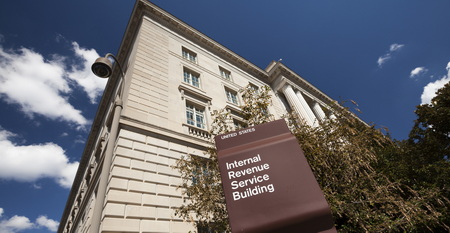
IRS Relief Expands Real Estate’s Access to Bonus Depreciation Tax Benefit
March 20, 2026
The IRS and Treasury Department this week issued new guidance allowing real estate companies to withdraw prior elections that had prevented many from fully benefiting from the One Big Beautiful Bill Act’s (OB3 Act) restored 100% bonus depreciation provision. Revenue Procedure 2026-17 outlines how taxpayers may revoke those elections under Section 163(j), clearing the way for broader use of immediate expensing across commercial real estate. (Bloomberg, March 18)
Why It Matters
The Real Estate Roundtable (RER) has urged Treasury to allow real estate owners who previously elected out of strict limitations on the deductibility of business interest to withdraw or amend those elections. This would enable them to fully benefit from the OB3 Act’s restored bonus depreciation benefit. (Roundtable Weekly, Feb. 6)
Under the Tax Cuts and Jobs Act of 2017 (TCJA), an electing real property trade or business (RPTOB) is exempt from the Section 163(j) limit on business interest deductibility, but must use the alternative depreciation system to recover the cost of its investment. As a result, electing RPTOBs are ineligible for bonus depreciation on leasehold and nonresidential interior property improvements.
Beginning in 2022, the Section 163(j) business interest limitation tightened, and starting in 2023, bonus depreciation began to phase out. Those two changes led many real estate owners to make the RPTOB election.
The OB3 Act reversed both provisions by restoring the original TCJA parameters for Section 163(j) and permanently extending 100% bonus depreciation. While that was a major positive development for new real estate investment, it left existing property owners locked into irrevocable RPTOB elections made under prior law.
Revenue Procedure 2026-17addresses that problem by allowing taxpayers to retroactively withdraw an RPTOB election for taxable years 2022, 2023, or 2024. If a real estate owner withdraws the election under the revenue procedure, the owner is treated as if the election had never been made.
This change makes 100% bonus depreciationavailable to a much larger share of U.S. commercial real estate, ensures that property owners are not penalized for elections made under a tax regime that no longer applies, and should support additional capital formation.
The revenue procedure also provides guidance on the administrative steps for withdrawing an election, partnership filing requirements, and procedures for amending returns for intervening years.
RER Advocacy
In an Oct. 17, 2025, letter, RER wrote to Treasury urging guidance allowing real estate businesses to amend or revoke prior RPTOB elections to ensure the OB3 Act’s restored 100 percent bonus depreciation provision supports real estate investment, job creation, and economic growth. (Roundtable Weekly, Feb. 6)
The letter emphasized that clear implementing rules will help bonus depreciation “facilitate the modernization and repurposing of real estate assets,” including underutilized offices, shopping centers, hotels, and mixed-use properties. (Roundtable Weekly, Oct. 17)
Treasury’s action addresses a key transition issue created by the new law. It helps ensure that restored bonus depreciation can work as intended across a broader share of commercial real estate investment.


 Menu
Close
Menu
Close
 About Us