Affordability, Ratepayer Protections Drive Data Center Policies on Capitol Hill
July 24, 2026
Congress and federal regulators focused this week on how to meet rapidly growing electricity demand from data centers and AI while protecting consumers, strengthening grid reliability, and accelerating new energy infrastructure.
State of Play
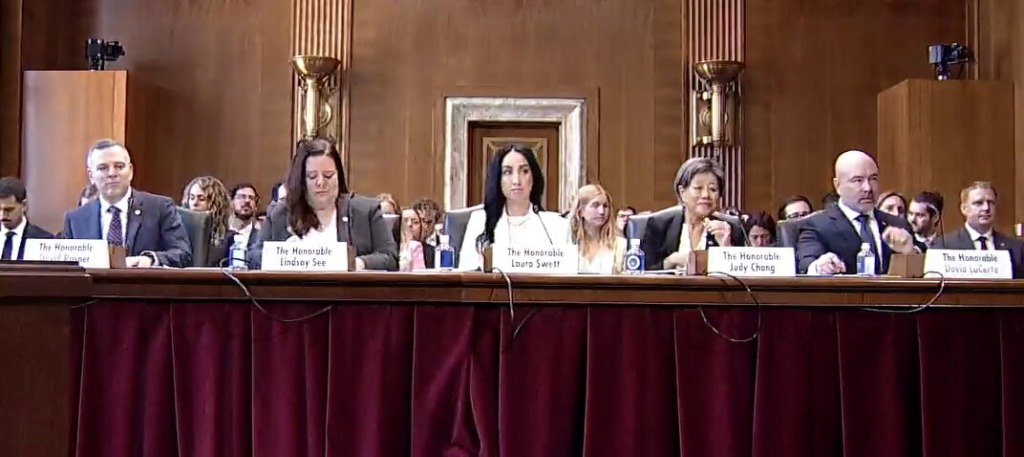
All five Federal Energy Regulatory Commission (FERC) commissioners testified Wednesday before the Senate Energy and Natural Resources Committee, where lawmakers from both parties focused heavily on ensuring that the costs of serving new data centers and other large loads are not shifted to existing ratepayers. (E&E News, July 23 | Bloomberg Government, July 22)
“FERC now sits at the center of some of the most important questions facing our country: reliable electricity, affordable energy, data centers, manufacturing, national security,” said committee chair Sen. Mike Lee (R-UT). "Every one of these issues, in its own way, now runs directly through FERC." (PoliticoPro, July 22)
Commissioners and senators discussed broader strategies to expand grid capacity, including grid-enhancing technologies that can increase the capacity of existing transmission infrastructure, and permitting reform. (Daily Energy Insider, July 22 | New York Times, July 23)
FERC is also moving to address the reliability risks associated with large computational loads, directing the North American Electric Reliability Corp. (NERC) to finalize new reliability standards and registration requirements for certain computational loads by the end of 2026. (Roundtable Weekly, July 17)
Data Center Legislation
On Tuesday, the House Energy and Commerce Committee unanimously approved the bipartisan Ratepayer Protection Act (H.R. 9340) by a 52-0 vote. The bill would require state utility regulators to consider standards to ensure data centers cover the incremental costs of the energy infrastructure needed to serve them, rather than shifting those costs to other customers. (Energy& Commerce Committee Press Release, July 21)
The framework includes the Data Center Tax Accountability and Disclosure Act, which would require large AI data centers to disclose information about energy and water use, emissions, backup generation, and other operational impacts, while conditioning federal bonus depreciation on meeting “LEED Gold” rating standards. (Sen. Warner Press Release, July 21)
State policymakers are also reassessing data center development and tax incentives. New York Gov. Kathy Hochul recently imposed a one-year moratorium on new large-scale data centers and said she will pursue legislation to eliminate certain tax incentives for the facilities. (Fortune, July 14 | PoliticoPro, July 20)
Arizona has paused new data center sales tax incentives for three years, while leaders in other states are also examining changes to incentive structures. (Fortune, July 14 | PoliticoPro, July 20)
The IRS is considering whether AI could help analyze comments while still meeting Administrative Procedure Act requirements, though GAO found the agency does not currently have such tools. (Politico, July 24)
For The Real Estate Roundtable (RER), which regularly submits substantive comments to Treasury, the IRS, and other agencies, the potential use of AI in regulatory review could significantly change how stakeholder input is processed and underscores the importance of ensuring meaningful consideration of technical advocacy.
Permitting Push
As Senate negotiators work toward a broader permitting reform deal, House Energy and Commerce Committee Chairman Brett Guthrie (R-KY) moved to stake out House priorities by releasing a discussion draft of the Permitting Our Way to an Energy Resurgence (POWER) Act, a 19-bill package aimed at accelerating pipelines, power generation, transmission, and industrial projects. (E&E News | E&C Press Release | Bill Text, July 22)
With energy demand surging, real estate is an important partner in supporting energy investment, increasing efficiency, and delivering energy savings across the economy. The Real Estate Roundtable (RER) and its Sustainability Policy Advisory Committee (SPAC) continue to monitor federal and state actions affecting grid capacity, energy costs, infrastructure permitting, and data center development.


 Menu
Close
Menu
Close
 About Us