The coalition letter emphasized that acting in 2026 would provide long-term certainty and help avoid disruptions if reauthorization were to slip into the program’s final year.
The legislation would also shorten the Treasury Department’s certification window for determining an act of terrorism from 90 days to 30 days, enabling claims to move sooner, along with other technical updates.
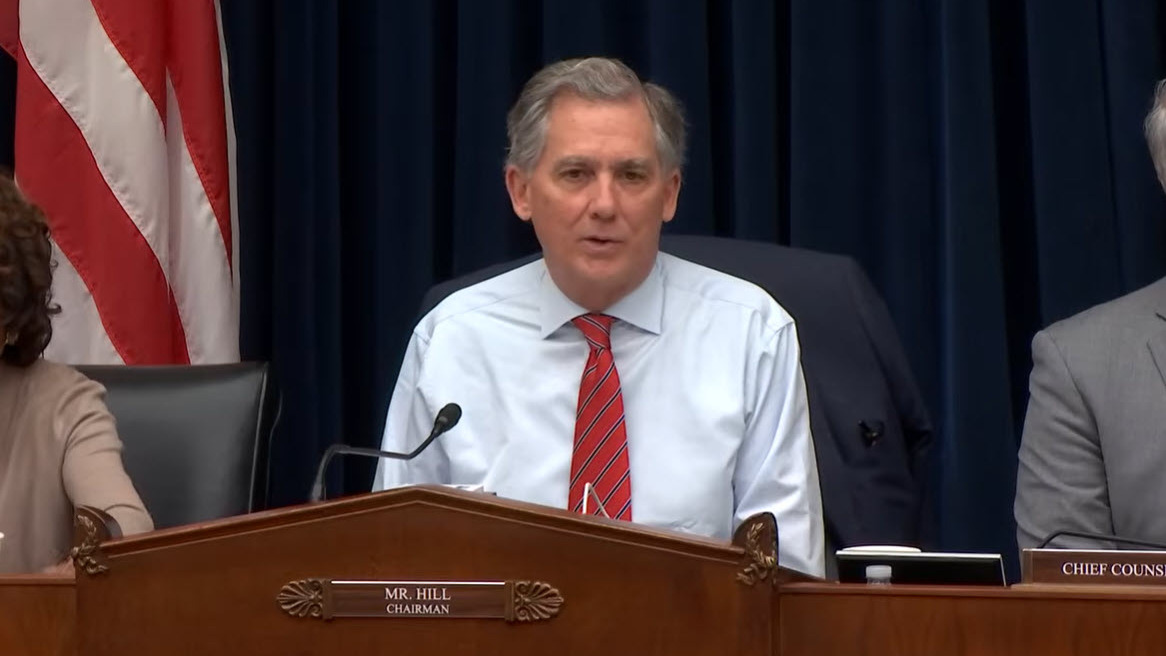
House Financial Services Committee Chairman French Hill (R-AR) said in his opening statement, “Extending TRIA not only safeguards American businesses but ensures that our economy remains resilient against potential threats.” (Press Release, Jan. 22)
Why It Matters
TRIA was originally enacted in 2002, following the 9/11 attacks. The program has been reauthorized four times—in 2005, 2007, 2015, and 2019—and is currently set to expire on Dec. 31, 2027.
While TRIA has never been triggered, it has provided a crucial backstop against losses from terrorist attacks for nearly two decades.
At almost no cost to the taxpayer, the TRIA Program has been the key factor in ensuring that the private insurance market has remained intact and continues to meet the needs of commercial policyholders during the on-going threat of a future terrorist attack—all while minimizing federal taxpayer exposure.
Roundtable Advocacy
Rep. Mike Flood (R-NE), lead sponsor of the bill at RER'S SOI RECPAC meeting
Since 9/11, RER has been at the forefront of efforts to enact a federal program to enable American businesses to secure the terrorism risk insurance coverage they need.
RER helped establish CIAT, a broad coalition of commercial insurance consumers formed immediately after 9/11 to ensure that businesses could obtain comprehensive and affordable terrorism insurance. (CIAT Talking Points on TRIA Reauthorization)
In September 2025, the House Housing and Insurance Subcommittee held a hearing on TRIA reauthorization, where members and witnesses from both parties voiced strong support for renewing the program ahead of its expiration. CIAT also sent a letter before that hearing, warning that a lapse would trigger “a period of profound economic slowdown, posing a very real threat to our economic and homeland security.” (Roundtable Weekly, Sept. 19)
The bill (H.R. 7128) now advances to the full House for consideration. RER and its CIAT coalition will continue working with policymakers to secure a long-term TRIA reauthorization ahead of 2027


 Menu
Close
Menu
Close
 About Us