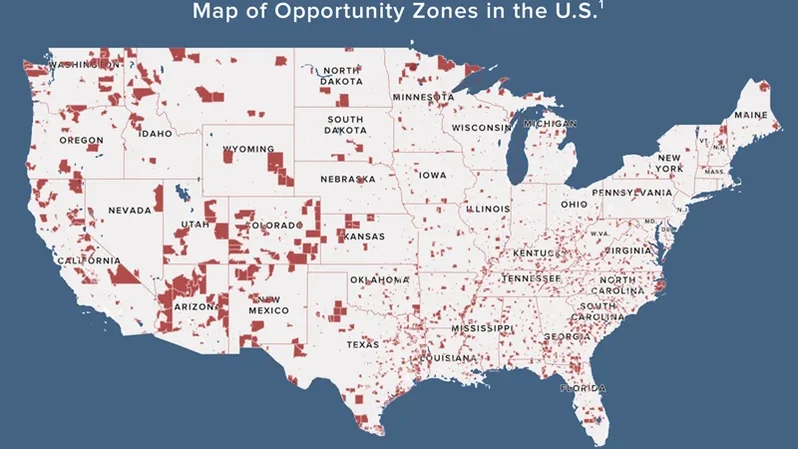
IRS and Treasury Issue Guidance on Opportunity Zone Nominations
The IRS and Treasury Department released new guidance Monday outlining the process for states to nominate census tracts for designation as Qualified Opportunity Zones (QOZs) under the expanded, permanent program enacted in the One Big Beautiful Bill (OB3) Act. (Treasury News Release, April 8)
Proposed Guidance
Treasury and IRS issued new guidance establishing the process for chief executive officers of any state, the District of Columbia, and U.S. territories to nominate eligible low-income census tracts for QOZ designation. (Politico Pro, April 6)
The guidance is a step toward implementing the Opportunity Zone (OZ) changes enacted in the OB3 Act, which made the incentive permanent and expanded it to provide enhanced tax benefits for investments in rural OZs. Rural OZs have lower investment requirements than urban tracts. (IRS News Release, April 6 | Politico Pro, April 6)
Under the statute, states generally may designate no more than 25 percent of their eligible low-income communities as QOZs, subject to special rules for states with fewer qualifying tracts. (IRS News Release, April 6)
The new designations will take effect on Jan. 1, 2027, and future designation rounds will occur every 10 years, replacing the original one-time map established under the 2017 Tax Cuts and Jobs Act (TCJA). (IRS News Release, April 6)
Treasury is developing an online nomination tool to streamline the designation process. (Bloomberg, April 6)
Roundtable Advocacy
Following the passage of the OB3 Act, RER actively engaged Treasury and IRS to support a smooth transition from OZs 1.0 to 2.0, including submitting a detailed comment letter and providing draft guidance for consideration. (Letter, Dec. 19)
RER’s December 2025 comment letter requested urgent tax guidance to ensure investment and capital continue to flow to low-income communities during the transition from the TCJA OZ regime to the new OB3 Act rules. (Letter, Dec. 19)
RER urged policymakers to confirm that contributions to existing TCJA qualified opportunity funds and businesses would continue to qualify for OZ benefits after current zone designations lapse, provided certain conditions are met. (Letter, Dec. 19)
Without clear transition rules, investors could delay or redirect capital, creating unnecessary uncertainty and slowing affordable housing development and economic activity in distressed communities. (Letter, Dec. 19)
OZ incentives have already mobilized more than $120 billion in capital to support housing, retail, and mixed-use development in underserved areas. (Letter, Dec. 19)
What's Next
The QOZs nomination window opens on July 1, 2026 and runs for 90 days, subject to a single 30-day extension. (IRS News Release, April 6)
Treasury and IRS expect to issue additional guidance identifying designated QOZs before the Jan. 1, 2027 effective date. (IRS News Release, April 6)
New OZ designations will run through Dec. 31, 2036, with new nomination rounds occurring every 10 years thereafter. (IRS News Release, April 6)
RER will continue to engage with policymakers to support clear, workable implementation of the new OZ framework, ensure continuity for existing projects, and encourage tax policies that incentivize long-term investment in underserved communities.


 Menu
Close
Menu
Close
 About Us