Roundtable Urges Congress to Pass Bipartisan SPEED Act to Advance Energy Permitting Reform and Support Grid Demand
The Roundtable’s Jeffrey DeBoer Recognized as One of DC’s “Top Lobbyists” for 2025
House Introduces Bipartisan Housing Package
Fed Cuts Rates Again Amid Split Outlook; Hearing Targets Capital Rules
Roundtable Weekly
December 12, 2025
Roundtable Urges Congress to Pass Bipartisan SPEED Act to Advance Energy Permitting Reform and Support Grid Demand

The Real Estate Roundtable (RER) wrote to congressional leadership this week, urging passage of the bipartisan SPEED Act (H.R.4776), calling the bill essential to strengthening grid reliability, lowering energy costs, and keeping pace with surging electricity demand. (Letter, Dec. 8)

Roundtable Advocacy

  • The House is expected to vote next week on the SPEED Act, the centerpiece of a broader GOP push to overhaul NEPA reviews and ease longstanding permitting bottlenecks.  (Letter, Dec. 8)
  • In the letter, RER emphasized that the bill is critical to improving energy affordability, meeting surging electricity demand, and ensuring the grid can support U.S. families, job creators, and long-term economic competitiveness. The current patchwork of federal reviews delays the delivery of affordable, reliable power to homes and commercial buildings.
  • RER noted the U.S. needs “as much electricity as possible, from as many sources as possible, delivered as quickly and cheaply as possible” to lead in artificial intelligence, re-shore manufacturing, and maintain global competitiveness.
  • Duane Desiderio, RER Senior Vice President & Counsel, stated, “Reliable, affordable power is essential to the buildings that support our communities and economy. Modernizing permitting is critical to improving energy affordability, strengthening the grid, and reducing costly project delays. RER supports policies like the SPEED Act to build the infrastructure our country needs for long-term economic growth.”
  • Excessive and redundant reviews under NEPA delay energy and housing projects, drive up costs, and stall critical grid upgrades. The bill would reduce duplicative reviews and frivolous lawsuits, harmonize categorical exclusions, and provide certainty for approved projects.
  • Edison Electric Institute (EEI) and a coalition of energy and utility groups also urged Congress to advance the comprehensive permitting reform bill to accelerate infrastructure deployment and strengthen U.S. energy dominance. (Roundtable Weekly, Dec. 5)

State of Play

  • House and Senate leaders were active this week, advancing and negotiating several permitting reform measures as momentum builds around the SPEED Act. (Axios, Dec. 11)
  • This week, Majority Whip Tom Emmer (R-MN) convened industry leaders to discuss how streamlined permitting can support affordability, data center buildout, and rising power demand, as House leaders move a series of related bills forward.
  • On Thursday, the House passed three GOP-led permitting bills to bolster grid reliability and accelerate energy project reviews, underscoring bipartisan interest in reducing regulatory delays amid rising power demand and affordability pressures. (PoliticoPro, Dec. 11)
  • Natural Resources Chair Bruce Westerman (R-AR) is aiming for a strong bipartisan vote to build momentum for Senate action. (UtilityDive, Dec. 10)
  • Senators Mike Lee (R-UT) and Martin Heinrich (D-NM) expressed optimism about ongoing bipartisan Senate negotiations with Environment and Public Works Chair Shelley Moore Capito (R-WV) and Ranking Member Sheldon Whitehouse (D-RI), noting that any deal should make it easier to permit transmission and other major energy infrastructure. (PoliticoPro. Dec. 10)
  • The Trump administration has expressed support for congressional action on permitting reform, but has not taken a position on the SPEED ACT. (PoliticoPro, Dec. 8)

Permitting reform will be a featured topic at RER's next all-member State of the Industry Meeting on Jan. 21–22, 2026, in Washington, D.C., as policymakers consider strategies to bolster energy infrastructure and support long-term economic growth.
The Roundtable’s Jeffrey DeBoer Recognized as One of DC’s “Top Lobbyists” for 2025

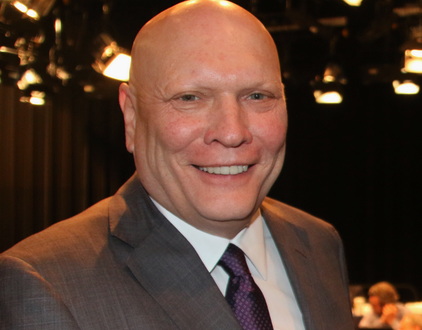
The Real Estate Roundtable (RER) President & CEO Jeffrey DeBoer was  recognized this week as one of the "Top Lobbyists" in Washington, D.C. for 2025, according to the prominent policy news publication, The Hill. This marks the eighth consecutive year that DeBoer has received this honor. (The Hill, Dec. 11)

  • The publication noted their annual list highlights the “industry’s savviest, most influential and well-connected advocates” who have made a meaningful impact on the course of policy and politics over the past year.
  • DeBoer stated, “I am honored to receive this recognition. And I share it with The Roundtable’s exceptional advocacy team and our deeply engaged membership. Together, we navigated the unprecedented pace and complexity of national policy debates this past year. From safeguarding long-standing tax rules in the historic One Big Beautiful Bill Act and preserving the ENERGY STAR program to pushing back on proposals that would have undermined real estate credit or discouraged investment, we ensured that the industry’s priorities were reflected in legislation that strengthens local budgets, economic growth, and job creation.”
  • DeBoer added, “We will continue working with policymakers to advance practical, pro-growth solutions that strengthen local economies, modernize energy and permitting systems, expand housing opportunities, and enhance long-term competitiveness.”

Roundtable on the Road

  • This week, Roundtable on the Road held a member gathering in Dallas hosted by RER Board members Ross Perot, Jr. (Chairman, Hillwood; Chairman, The Perot Group) and Kenneth Valach (CEO, Crow Holdings Development), along with RER member Michael Levy (CEO, Crow Holdings). The event brought together local real estate leaders for a candid discussion about federal policy developments in Washington and market conditions across the Southwest.
  • RER Chair Kathleen McCarthy (Global Co-Head, Blackstone Real Estate) and President & CEO Jeffrey DeBoer outlined the organization’s 2026 priorities and heard directly from members about challenges and opportunities facing regional markets.
  • RER SVP & Counsel Ryan McCormick spoke at the AICPA conference in Las Vegas this week, outlining the major tax issues shaping real estate investment, including the implications of the One Big Beautiful Bill Act, partnership tax developments, and the political outlook for additional tax changes in 2026. He emphasized that even modest adjustments to long-standing tax rules can significantly affect capital formation, investment decisions, and the economics of real estate ownership. (AICPA Conference - Watch Session)

All RER policy advisory committees will meet in person at the State of the Industry Meeting scheduled for Jan. 21-22, 2026.

House Introduces Bipartisan Housing Package

The House Financial Services Committee introduced a bipartisan housing package, the Housing for the 21st Century Act on Thursday, aimed to streamline housing development and improve affordability by updating outdated programs, removing unnecessary federal requirements, and increasing local flexibility. (One-pager; Text of the bill; Section-by-Section)

Housing for the 21st Century Act

  • House Financial Services Chairman French Hill (R-AR), Ranking Member Maxine Waters (D-CA), Subcommittee on Housing and Insurance Chair Mike Flood (R-NE) (who will be speaking at the joint RECPAC/Research Committee meeting on Jan. 21), and Subcommittee on Housing and Insurance Ranking Member Emanuel Cleaver (D-MO) unveiled the bipartisan legislation Thursday, proposing targeted updates to HUD programs, expand manufactured and affordable housing, and modernize local and rural development tools.
  • Chairman Hill said, “Our goal is to chart a path forward toward greater development capacity and a simplified regulatory framework. We look forward to moving this bill through regular order and working with our Senate counterparts in the new year to get a bill signed into law that reflects ideas from both chambers and delivers real results for American families.” (Press Release, Dec. 11)
  • Subcommittee Chair Flood added, “As housing gets more expensive, the American Dream of homeownership is slipping away for working families. This package is the product of bipartisan work in the Financial Services Committee to address some of the core issues driving up the cost of housing.”
  • The committee plans to integrate aspects of the Senate’s Renewing Opportunity in the American Dream (ROAD) to Housing Act of 2025 (S. 2651) with additional measures from the House Financial Services Committee.
  • One major distinction in the House bill is a provision to overhaul the HOME Investment Partnerships Program. (WashingtonExaminer, Dec. 11)

Senate – ROAD to Housing Act

  • The ROAD to Housing Act was ultimately excluded from the final text of the 2026 National Defense Authorization Act. (HousingWire, Dec. 8)
  • The bill incentivizes states and cities to boost housing supply by cutting red tape, streamlining federal inspections, and eliminating duplicative regulations. (Roundtable Weekly, Oct. 17, Aug. 1 )
  • The Senate’s bipartisan package advanced earlier this year with unanimous committee support in July and received full Senate approval in October, but House Republicans signaled they wanted more flexibility to advance their own housing legislation. (Multifamily Dive, Dec. 10)
  • Ranking Member Waters stated, “While I was disappointed ROAD was not included in the NDAA, there is clearly broad bipartisan support in both Chambers to advance housing legislation.”

The House Financial Services Committee intends to mark up its housing package next week, along with 20 other bills on the National Flood Insurance Program and community banking, among others. (PoliticoPro, Dec. 11)

Fed Cuts Rates Again Amid Split Outlook; Hearing Targets Capital Rules

The Federal Reserve on Wednesday cut its benchmark interest rate by 25 basis points for the third straight meeting, lowering the federal funds target range to 3.50-3.75 percent. Fed Chair Jerome Powell emphasized that while policy is easing, the bar for additional reductions in early 2026 remains high.

Fed's Decision

  • The Federal Open Market Committee (FOMC) vote was 9-3, with two policymakers preferring to hold rates steady and one seeking a deeper cut. (CNBC, Dec. 10)
  • Chair Powell said policy is "well positioned," but stressed decisions are not on a preset path, citing mixed inflation signals and slowing but still resilient labor conditions. (Watch Press Conference)
  • The Chair noted that the latest projections show only one rate cut expected in 2026, signaling a potential pause in additional easing absent clearer labor and inflation trends.
  • Officials highlighted labor market softening as a key factor, with Chair Powell acknowledging it's a "labor market that seems to have significant downside risks," even as inflation remains elevated.
  • He also expressed some optimism about growth, with the FOMC raising its outlook for 2026 GDP by half a percentage point, to 2.3 percent. (CNBC, Dec. 10)

Housing and CRE Outlook

  • Rate cuts alone won't materially reprice CRE, as valuations and returns depend on multiple factors beyond monetary policy, and CRE has historically performed well even in higher-rate environments, industry analysts noted. (Connect CRE, Dec. 10)

  • Multifamily and industrial have already benefitted from the current rate environment, with multifamily development borrowing costs falling from 7.5-9 percent to ~6-7.25 percent and industrial cap rates expected to compress modestly. (Connect CRE, Dec. 10)

  • Commercial Mortgage-Backed Securities refinancing challenges remain acute, as lenders are unwilling to extend maturities without new borrower equity or substantive restructuring proposals. (Commercial Observer, Dec. 10)

Congressional Oversight & Capital Framework

  • At a House Financial Services Subcommittee hearing Thursday, witnesses largely urged regulators to calibrate the emerging Basel III Endgame proposal to support competitiveness, credit availability, and economic growth. (Watch Hearing)
  • Andrew Olmem (Partner, Mayer Brown) emphasized that capital decisions are policy choices: "Improperly calibrated requirements can reduce credit, raise borrowing costs, and slow wealth creation."
  • GOP leaders on the subcommittee stressed the need for a tailored, data-driven framework that avoids the "gold-plated" standards identified by the Basel Committee.
  • Subcommittee Chair Andy Barr (R-KY) stated that the initial Basel III Endgame proposal was "deeply flawed" and pointed out that it has received bipartisan criticism. (Rep. Barr Press Release, Dec. 11)  

RER Advocacy

  • Thursday's hearing was the latest in a series of recent steps policymakers have taken toward re-evaluating bank capital requirements.
  • Last week, RER and a coalition of leading business trade organizations encouraged prudential regulators to adopt requirements for large banks that support consumers, businesses, and the broader economy. (Roundtable Weekly, Dec. 5)

RER will continue to advocate policies that protect the safety and soundness of our financial system without harming credit flows and capital formation vital for CRE.