FSOC Hearing Highlights Nonbank Oversight as CRE Reacts to Fed Chair Nomination
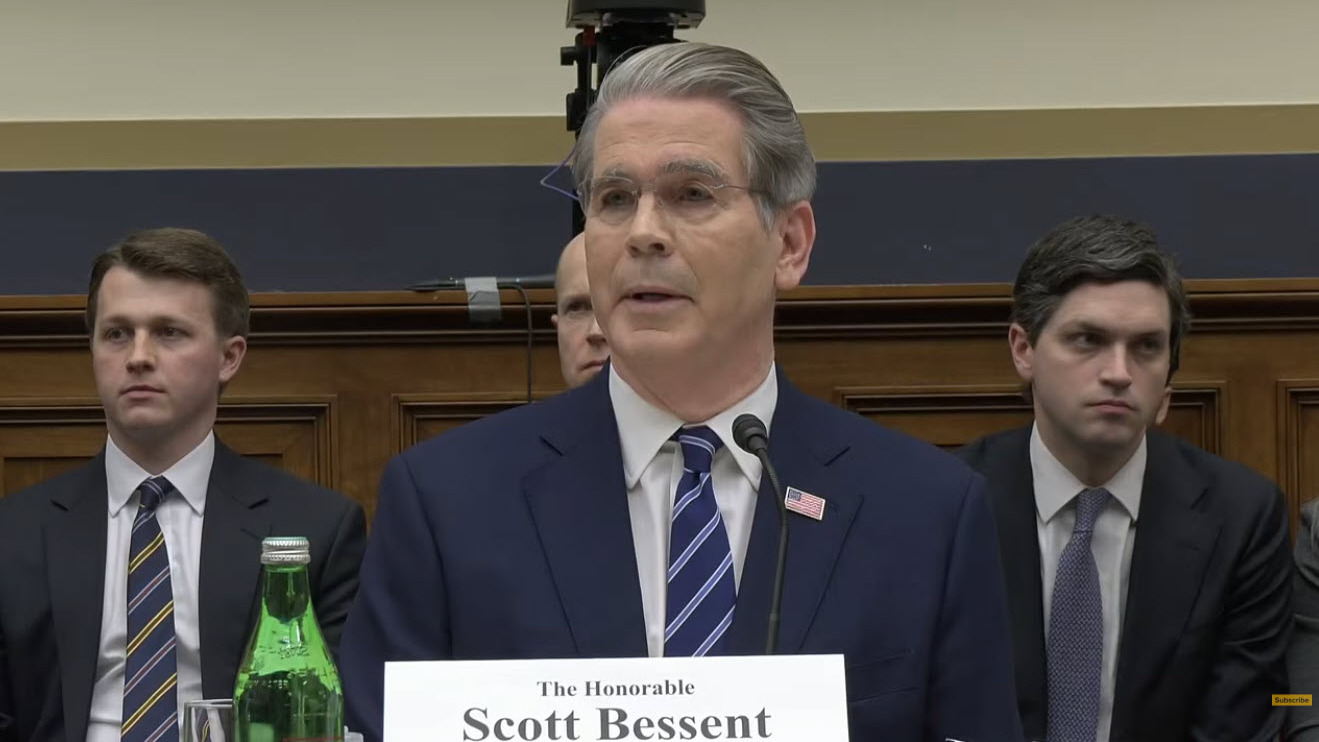
This week, the House Financial Services Committee (HFSC) and Senate Banking, Housing and Urban Affairs Committee held hearings with Treasury Secretary Scott Bessent to review the Financial Stability Oversight Council’s (FSOC) 2025 Annual Report. Lawmakers used the session to raise broader concerns about financial regulation, capital formation, and credit availability, including attention on FSOC’s role in banking regulation.
FSOC and Regulatory Direction
In his testimony, Sec. Bessent described a recalibrated approach at FSOC that focuses on identifying specific risky activities, rather than broadly regulating entire firms or sectors. He criticized prior “regulation by reflex” and stated that FSOC should avoid labeling wide swaths of the financial system as vulnerable, absent clear, material risk. (Watch Hearing)
“FSOC should… work with its members to support efforts to avoid or pare back existing regulation that stifles pro-growth lending, capital formation, and innovation. And the best way to achieve these goals is by centering economic growth and economic security at the heart of FSOC’s agenda,” Sec. Bessent said. (Politico Pro, Feb. 4)
Several exchanges focused on FSOC’s authority to designate nonbank financial companies as Systemically Important Financial Institutions (SIFIs). Sec. Bessent confirmed a preference for an activities-based framework, signaling openness to clearer standards and restraint in the use of entity-based designations. (Watch Hearing)
Sec. Bessent added that he would propose new nonbank guidance later this year, and that he supports higher deposit insurance to protect small banks’ competitiveness against larger institutions. (Politico Pro, Feb. 4)
He also supported HFSC Chairman French Hill’s (R-AR) community banking legislative package. He emphasized that small and community banks need tailored capital and risk standards to succeed. (American Banker, Feb. 4)
Democratic lawmakers warned that easing regulatory scrutiny could increase systemic risk and repeat conditions that preceded the 2008 financial crisis, with HFSC Ranking Member Maxine Waters (D-CA) arguing that FSOC should play a stronger role in identifying risks across the financial system, including among nonbank entities. (Watch Hearing)
Affordability and Tariffs
During the HFSC hearing, Ranking Member Waters pressed Sec. Bessent on whether the administration’s tariffs have contributed to persistent inflation. Sec. Bessent rejected that characterization and disputed claims that he had previously warned investors tariffs were inflationary. (American Banker, Feb. 4)
Ranking Member Waters also linked tariffs directly to worsening housing affordability, pointing to duties on key construction inputs such as lumber, steel, and appliances. (American Banker, Feb. 4)
While Democrats argued that tariffs and high prices continue to burden consumers, Sec. Bessent cited a Wharton study that points to immigration-driven demand as a contributing factor to higher housing costs. (CNBC, Feb. 4)
Roundtable Advocacy
The Real Estate Roundtable (RER) and coalition partners have supported the Financial Stability Oversight Council Improvement Act (H.R.3682), which would require FSOC to consult with a company and its primary regulator before designating a nonbank as a SIFI. (Letter, Oct. 28)
The bill is intended to strengthen due-process protections, improve interagency coordination, and ensure designations are based on rigorous analysis.
RER has consistently urged regulators to focus on activities that pose genuine systemic risk, rather than imposing broad designations that can create regulatory overreach and unintended consequences for credit markets. (Roundtable Weekly, Oct. 31)
CRE’s Reaction to Fed Chair Nomination
Last week, President Donald Trump announced his nomination of Kevin Warsh, a former Federal Reserve Governor, to succeed Fed Chair Jerome Powell. (Axios, Jan. 30)
As industry media outlets have reported, commercial real estate and finance leaders have broadly welcomed the nomination, citing Warsh’s experience from the financial crisis and his capital markets expertise. (Bisnow, Jan. 30)
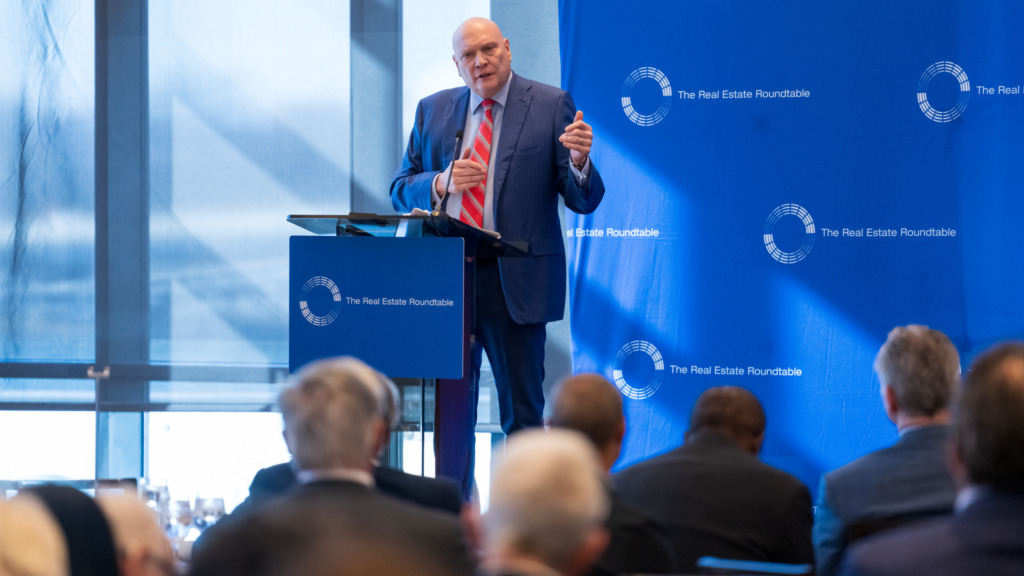
“Kevin Warsh is a smart, thoughtful, and experienced nominee. His deep understanding of monetary policy and financial markets would help maintain and strengthen market confidence at a time when economic certainty matters most,” Jeffrey D. DeBoer, RER President and CEO, said.
Bob Broeksmit, President and CEO of the Mortgage Bankers Association, said in a statement that Warsh’s prior service on the Fed board gave him a reputation as “a prudent, thoughtful voice on monetary policy.”(ConnectCRE, Jan. 30)
CRE finance experts noted that while Warsh’s nomination could raise expectations for near-term rate cuts, uncertainty surrounding the confirmation process and Fed independence may keep long-term Treasury yields, as well as permanent financing costs, elevated. (ConnectCRE, Jan. 30)
RER remains committed to engaging policymakers on FSOC reform and related financial regulations to ensure oversight frameworks support capital formation, liquidity, and economic growth.
Tax Policy
Treasury Considering Extension of Bonus Depreciation to Certain Existing Real Estate Investments
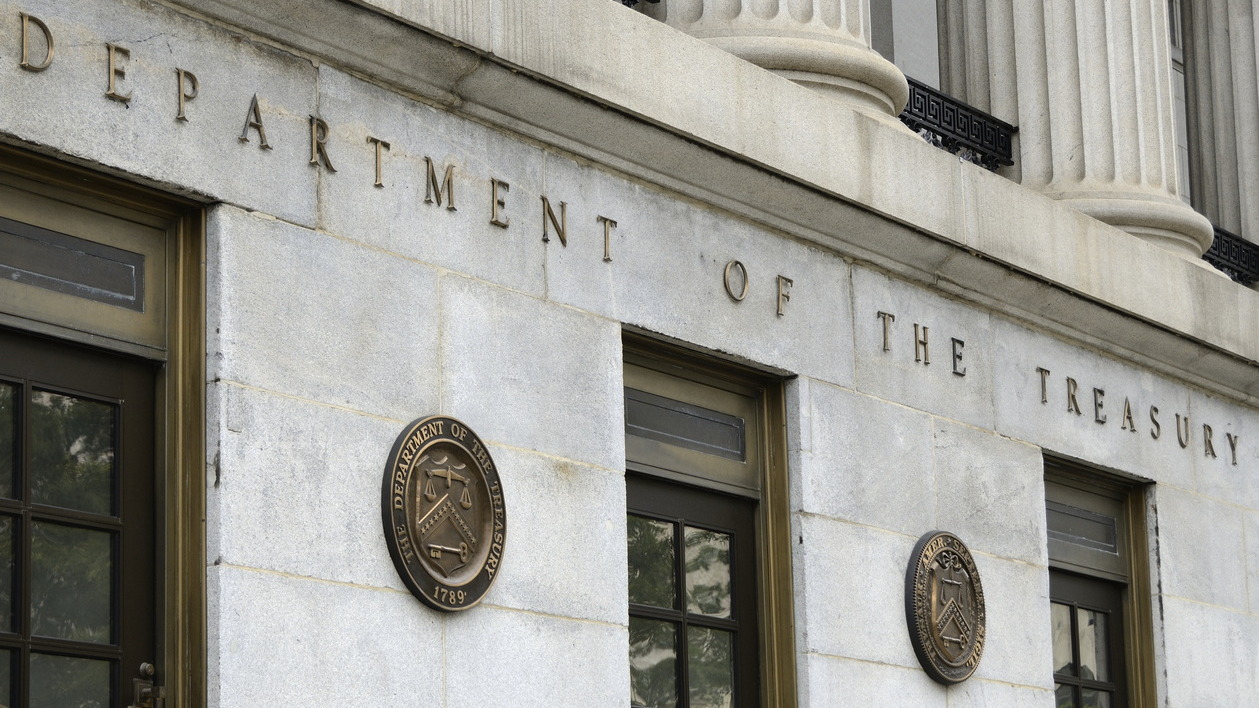
The U.S. Treasury Department is reviewing real estate industry concerns that many firms may be locked out of the One Big Beautiful Bill (OB3) Act’s restored 100 percent bonus depreciation because of prior elections made to opt out of the Section 163(j) business interest limitation. (Bloomberg, Feb. 3)
State of Play
The restoration of 100 percent expensing for capital expenditures, including tenant and nonresidential property improvements, is among the most significant provisions in the OB3 Act.
Treasury tax policy advisor Dan Penrith acknowledged the concern at the American Bar Association Tax Section’s midyear meeting in San Diego. Penrith stated that the issue is “on our radar, it’s something that we’re thinking about,” signaling potential openness to targeted administrative relief. (Bloomberg, Feb. 3)
The Real Estate Roundtable (RER) has urged Treasury guidance to allow “real property trades or businesses (RPTOBs)” that previously elected out of Section 163(j) to withdraw or amend that election—so they can fully benefit from the OB3 Act’s restored bonus depreciation for eligible property improvements. (Roundtable Weekly, Oct. 17)
Why It Matters
The RPTOB election historically enabled full interest deductibility, but required the alternative depreciation system, making taxpayers ineligible for bonus depreciation.
Without additional guidance, many taxpayers may not qualify for bonus depreciation on property improvements, despite Congress’s intent to spur investment through 100 percent expensing.
There is precedent for allowing flexibility. During the pandemic, IRSRevenue Procedure 2020-22 provided an opportunity for certain taxpayers to withdraw a prior Section 163(j)(7)(B) election in response to CARES Act changes. (Revenue Procedure 2020-22)
As RER’s SVP & Counsel Ryan McCormick told Bloomberg Tax: “We’re seeking similar flexibility,” adding that it’s “really important for the future.” (Bloomberg, Feb. 3)
Roundtable Advocacy
In an Oct. 17, 2025, letter, RER wrote to Treasury urging guidance to ensure the OB3 Act’s restored 100 percent bonus depreciation provision supports real estate investment, job creation, and economic growth.
The letter emphasized that clear implementing rules will help bonus depreciation “facilitate the modernization and repurposing of real estate assets,” including underutilized offices, shopping centers, hotels, and mixed-use properties. (Roundtable Weekly, Oct. 17)
RER will continue engaging Treasury as it considers next steps to ensure the OB3 Act’s bonus depreciation provisions deliver on their intended investment and growth impact.


 Menu
Close
Menu
Close
 About Us