Washington Ramps Up Housing Agenda as Real Estate Coalition Presses for Solutions that Expand Supply
President Trump and lawmakers ramped up efforts to address housing affordability this week—floating executive actions, new financing tools, and legislative proposals aimed at lowering costs for homebuyers and renters. The Real Estate Roundtable (RER) and a broad real estate coalition are urging policymakers to stay focused on the underlying challenge: the nation’s chronic housing supply shortage.
State of Play
Speaking at the Detroit Economic Club, President Trump previewed additional affordability proposals, saying, “In the coming weeks, I will be laying out even more plans to help bring back affordability.” (PoliticoPro, Jan. 14)
Last week, Trump said he would move to ban “large institutional investors” from purchasing single-family homes—without providing details on what legal steps the administration could take or how “large” would be defined. (Bloomberg, Jan. 8 | WSJ, Jan. 7)
Administration officials have indicated to Axios that more details on the administration’s housing policies will come from Trump's speech at Davos this month. (Axios, Jan. 12)
Trump also instructed Fannie Mae and Freddie Mac to purchase $200 billion in mortgage-backed securities, an effort the administration says is intended to help reduce mortgage rates and monthly payments. (Politico | Bloomberg, Jan. 9)
The administration has floated the idea of "portable mortgages," which would allow mortgage holders to sell their house and bring their low mortgage-rate along to their new home. (Axios, Jan. 14)
On Tuesday, the Republican Study Committee (RSC) unveiled a new “Making the American Dream Affordable Again” policy framework for a second reconciliation package, including housing-related concepts such as a proposed down payment assistance program and ideas tied to easing mortgage “lock-in.” (The Hill, Jan. 13)
Roundtable & Real Estate Coalition View
Large-scale SFR investments have helped revitalize distressed properties and communities, contributing to economic growth and stability.
RER has consistently emphasized that restricting investment is not a substitute for increasing supply—and that institutional capital can be part of the solution when it supports new housing development and expanded rental options.
In a Jan. 13 coalition statement, real estate organizations urged policymakers to prioritize supply-forward policies that expand construction and keep capital flowing to housing: “The only way to lower the cost of mortgages and rent is by encouraging, not hindering, investment… by building the housing our nation needs.” (Coalition Statement, Jan. 13)
RER has also highlighted research showing affordability pressures are driven primarily by supply shortages, construction costs, and mortgage rates—not institutional ownership levels. (Roundtable Weekly, Jan. 9)
Sen. Gallego’s Housing Affordability Plan
Sen. Ruben Gallego (D-AZ) released a housing affordability plan on Wednesday centered on boosting supply, reforming zoning and permitting, lowering costs, and strengthening resilience to extreme weather. (Politico| HousingWire, Jan. 14)
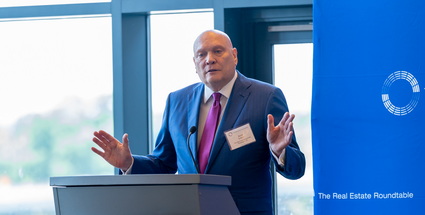
RER President and CEO Jeffrey D. DeBoer welcomed elements of Gallego’s plan focused on increasing supply—such as ideas to expand the Low-Income Housing Tax Credit, encourage conversions of obsolete buildings into housing, and reward jurisdictions that streamline land use and zoning rules. (Press Release, Jan. 14)
DeBoer said RER looks forward to working with Sen. Gallego “to advance these important proposals in the most impactful way possible.”
Bipartisan Bill Incentivizes Transit-Oriented Housing
A bipartisan, bicameral group introduced the Build Housing, Unlock Benefits and Services (HUBS) Act to cut red tape and expand federal infrastructure loan tools to support transit-oriented development and boost housing supply. (One Pager; Full Text)
Sens. Lisa Blunt Rochester (D-DE) and John Curtis (R-UT) are leading the bill in the Senate, alongside Reps. Laura Friedman (D-CA) and Mike Lawler (R-NY) in the House.
DeBoer said, “The Build HUBS Act is an important step to address the nation’s housing crisis. By expanding the Department of Transportation’s low-interest TIFIA/RRIF loan programs to finance housing in transit-oriented development projects, this bill will increase the supply of housing in America and bring more affordable housing options to communities across the country. We look forward to working with Congress to enact this legislation,” he added. (Press Release, Jan. 15)
Rep. Lawler will be a featured speaker at RER’s State of the Industry Meeting next week.
RER will continue working with policymakers and the administration to advance practical solutions that increase construction, support investment, and address the root causes driving today’s housing costs.
Capital & Credit
RER Backs Community Banking Reform to Expand Credit and Local Investment
The Real Estate Roundtable (RER) submitted a letter of support this week for the Main Street Capital Access Act (H.R. 6955). RER praised the bill as a long-overdue step toward “common sense tailoring” of bank regulation in comments sent to House Financial Services Chairman French Hill (R-AR) and Financial Institutions Subcommittee Chairman Andy Barr (R-KY). (Letter, Jan. 8)
Background
Introduced on Jan. 7, the Main Street Capital Access Act looks to ease regulations on small and mid-size banks and increase their access to capital.
The measure bundles 29 bills that advanced through the full House Financial Services Committee last year, several of which received overwhelming bipartisan support.
Chairman Hill said, “Over the past year, the Subcommittee on Financial Institutions under Chair Barr’s leadership has worked tirelessly to examine outdated regulations, listen directly to small businesses, and confront barriers to access capital for small and mid-sized banks. I am proud to introduce the Main Street Capital Access Act with Chair Barr to reinvigorate our community banks and return commonsense back to Main Street.”
Chair Barr will be a featured speaker at RER’s State of the Industry Meeting next week.
The package includes legislation that promotes new bank formation, expands local community access, tailors bank regulation, fosters fair and transparent bank supervision, and supports competition, innovation, and responsible bank partnerships.
Roundtable Advocacy
RER’s letter emphasizes that community and regional banks are vital to the financing ecosystem for commercial and residential real estate, and therefore play a key role in addressing the nation’s housing shortage.
“The Main Street Capital Access Act will help revitalize communities across the nation by encouraging local bank formation and enhancing credit capacity,” wrote RER President and CEO Jeffrey DeBoer. “By easing outdated regulatory burdens for community banks, it will help unlock more capital for housing and small businesses and permit Main Street community lenders to focus on serving families and local economies, making life more affordable for Americans.”
DeBoer also underscored the impact of the decline in new bank formation in recent years. “This lack of ‘de novo’ or ‘new’ bank activity, coupled with ‘banking deserts’ that are common in rural areas, has led to higher costs for households and less access to capital and investment for small and medium-sized businesses,” DeBoer added.
Why It Matters
Community banks serve as a primary capital source for local housing and commercial real estate projects, particularly in underserved markets where larger institutions may have little presence.
RER has consistentlyadvocated for right-sized financial regulation that promotes liquidity in the CRE market while maintaining safety and soundness in the banking system. The Main Street Capital Access Act aligns with this principle by streamlining oversight and promoting innovation in the small-bank sector.
Next Steps
RER will continue to work with Congress and the administration to advance policy measures that encourage capital formation, enhance credit capacity, support housing production, and foster economic development in communities around the country.


 Menu
Close
Menu
Close
 About Us