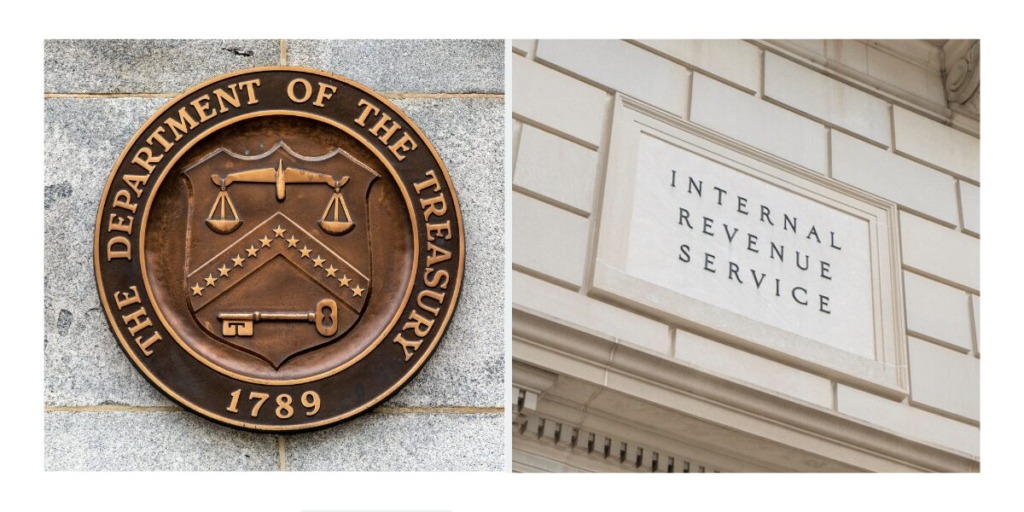
Treasury Extends Tax Relief to Foreign Governmental Investors in U.S. Real Estate
The U.S. Department of the Treasury and Internal Revenue Service (IRS) took a positive step last Friday in response to The Real Estate Roundtable (RER) and other stakeholder concerns, partially withdrawing and modifying proposed regulations on the taxation of sovereign wealth funds and other foreign governmental investors. (Treasury Press Release, May 29)
Why It Matters
Foreign investment, including investment by sovereign wealth funds, foreign pension funds, and other government entities, is a critical source of financing for capital-intensive U.S. real estate projects.
Section 892 of the tax code generally exempts from U.S. tax certain dividends, interest, and gains earned by foreign governments, unless the income is treated as commercial activity income or income from a controlled commercial entity. Foreign investors rely heavily on Section 892 when planning and structuring U.S. real estate investments.
In December, Treasury issued proposed regulations addressing two key questions under Section 892: (1) when a foreign government has effective control of an entity engaged in commercial activities, and (2) when an acquisition of debt is considered commercial activity. (Tax Notes, June 1)
The new regulations published on June 1 would ensure that existing foreign government investments, as well as investments acquired during a transition period, are not subject to the more stringent standards in the 2025 proposed rules. (Skadden, May 29)
As Treasury and the IRS continue to evaluate the underlying substantive issues, this most recent action ensures that the new rules will not retroactively increase the tax burden on existing real estate investments or have a chilling effect on foreign real estate investments currently under consideration.
RER Advocacy
In February, RER submitted comments urgingTreasury to avoid imposing a retroactive new tax on existing investments and recommended clear grandfathering and transition rules as part of any final Section 892 regulations. The new Treasury proposal is a positive step that directly addresses those concerns. (Letter | Roundtable Weekly, Feb. 13| Feb. 27)
RER also provided detailed comments on the underlying section 892 issues, urging Treasury to clarify that customary minority investor protections do not create effective control, confirming withholding agents may rely on foreign government self-certifications, and establishing safe harbors for certain debt-related situations. (Roundtable Weekly, Feb. 27)
In March, TPAC Chair Joshua Parker (Founder, Chairman and CEO, Ancora) reinforced RER’s concerns in a BloombergTax op-ed urging Treasury to modernize Section 892 rules without discouraging sovereign investment in U.S. real estate and other long-term assets. (Roundtable Weekly, March 13)
What’s Next
Treasury Secretary Scott Bessent said the new guidance provides certainty for current investments and transition relief for sovereign investors, while Treasury continues to evaluate feedback to “uphold established market practices” and maintain a stable environment for sovereign wealth fund investment. (Treasury Press Release, May 29)
Treasury has not yet modified the substantive provisions related to effective control, commercial activity, and acquisitions of debt.
RER will continue working with Treasury and IRS to ensure final Section 892 rules preserve foreign government capital flows into U.S. real estate while maintaining the statute’s distinction between tax-exempt investment activity and taxable commercial activity.
Section 892 regulations and other foreign investment tax policy issues will be discussed next week during RER’s Tax Policy Advisory Committee meeting on June 10.
Capital & Credit
Roundtable Backs DOL Proposal to Expand 401(k) Access to Alternative Assets
The Real Estate Roundtable (RER) submitted comments this week supporting the Department of Labor’s (DOL) proposed rule to clarify fiduciary standards for including alternative assets, such as real estate, in 401(k) retirement plans. In the letter, RER affirmed that the proposal would expand investment choice, improve diversification, and provide retirement savers with access to asset classes that have long been available to institutional investors. (Letter, June 1)
Why It Matters
RER’s comments respond to the DOL's proposed rule implementing the August 2025 Executive Order, "Democratizing Access to Alternative Assets for 401(k) Investors," which seeks to clarify fiduciary obligations when plan sponsors offer investment options that include alternative assets such as private equity, real estate, private credit, and infrastructure investments. (Letter, June 1)
The DOL proposal would also establish a process-based safe harbor under the Employee Retirement Income Security Act (ERISA), helping reduce regulatory uncertainty and litigation risk that have discouraged many employers from offering alternative investment options in defined-contribution retirement plans. (DOL Press Release, March 30)
More than 90 million Americans participate in 401(k)-style retirement plans but generally lack access to the same alternative investment opportunities available to defined-benefit plan portfolios, such as pensions and other institutional investors. (Letter, June 1)
RER Advocacy
RER’s letter argues that the DOL’s rule appropriately clarifies that ERISA gives fiduciaries discretion and flexibility to determine when alternative investments are suitable for plan participants. (Letter, June 1)
RER also emphasized that defined-benefit pension plans that maintain allocations to private equity and other alternative assets have historically outperformed many defined-contribution plans, giving institutional investors access to diversification and return opportunities generally unavailable to retail retirement savers. (Letter, June 1)
The proposal would help level the playing field between 401(k) investors and defined-benefit plans by allowing fiduciaries to consider a broader range of investment options when they determine such investments are appropriate for plan participants. (Letter, June 1)
“RER believes that this rulemaking represents an important step toward restoring the principle that retirement savers, not regulators, determine how they invest,” the letter stated.
State of Play
The proposal has drawn mixed reactions on Capitol Hill.
Senior congressional Democrats, including House Education and Workforce Committee Ranking Member Bobby Scott (D-VA), Senate HELP Committee Ranking Member Bernie Sanders (I-VT), and Senate Banking Committee Ranking Member Elizabeth Warren (D-MA), urged DOL this week to withdraw the proposal. (Letter, June 1)
The Democratic lawmakers argued that expanding access to private equity, cryptocurrency, and other alternative investments could expose retirement savers to “risky, complex, and expensive” investments and weaken fiduciary protections for retired savers. (Letter, June 1)
Meanwhile, a group of 21 Senate Republicans, including Senate Banking Chair Tim Scott (R-SC) and HELP Chair Bill Cassidy (R-LA), submitted a letter backing the proposal, arguing that it “has the potential to materially improve long-term retirement outcomes for American workers.” (PoliticoPRO, June 2)
A separate group of 25 House Republicans, including House Budget Chair Jodey Arrington (R-TX) and House Financial Services Subcommittee on Financial Institutions and Monetary Policy Chair Andy Barr (R-KY), also submitted a letter advocating for the policy. (PoliticoPRO, June 2)
In a March press release, then-U.S. Secretary of Labor Lori Chavez-DeRemer explained, “This proposed rule will show how plans can consider products that better reflect the investment landscape as it exists today. This greater diversity will drive innovation and result in a major win for American workers, retirees, and their families.” (DOL Press Release, March 30)
SEC Chairman Paul S. Atkins echoed former Secretary Chavez-DeRemer’s remarks, saying, “Americans’ ability to participate more fully in innovation and economic growth through well-diversified long-term investments is a vitally important priority for effective retirement planning.” (DOL Press Release, March 30)
What's Next
The public comment period closed on June 1, and DOL is reviewing stakeholder feedback before deciding whether to finalize the rule later this year.
RER will continue to engage with policymakers on retirement investment policy and support reforms that expand capital formation, balance investment flexibility with appropriate oversight, and provide American workers with broader opportunities to build long-term wealth.


 Menu
Close
Menu
Close
 About Us