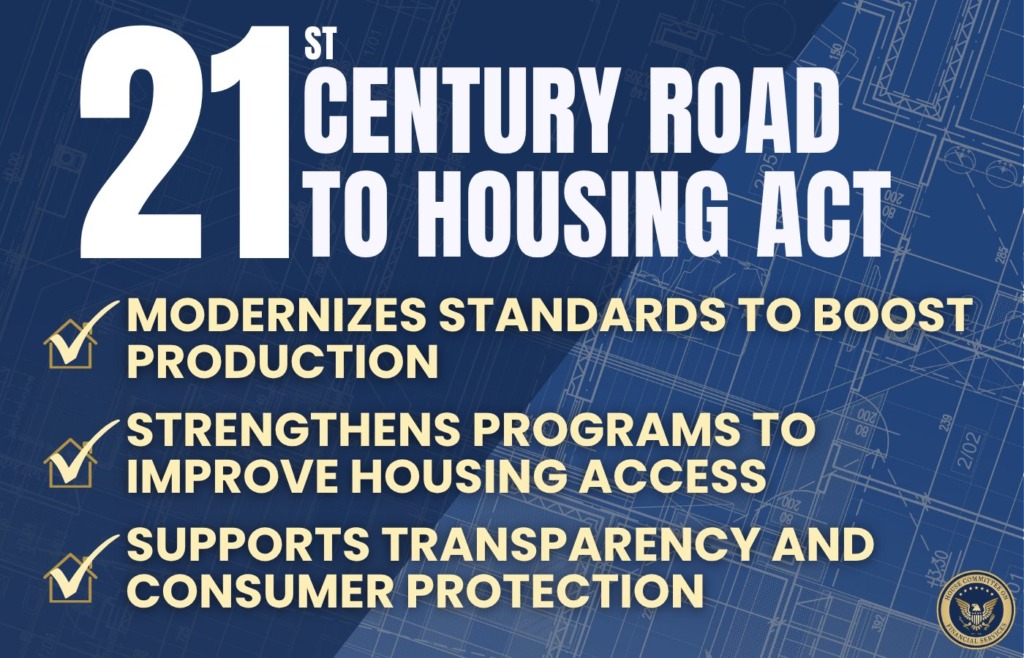
President Donald Trump signed an executive order on Thursday, aimed at reducing mortgage costs and supporting manufactured housing development. Separately, Treasury proposed rules implementing restrictions on institutional purchases of single-family homes, while HUD expanded financing eligibility for build-to-rent communities. (The Hill | White House, Oct. 22)
Executive Order
The Oct. 22 executive order directs the Federal Housing Finance Agency (FHFA) to establish a mortgage insurance cancellation pilot through Fannie Mae and Freddie Mac, subject to safety and soundness and other requirements. The pilot would proactively identify eligible borrowers and apply to mortgages originated after the program begins. (White House EO | Politico, Oct. 22)
To reduce refinancing costs, the order directs FHFA to expand alternatives to lender’s title insurance for eligible refinances, with savings passed through to borrowers.
The order alsoestablishes a federal task force on manufactured housing to recommend ways to streamline approvals, reduce duplicative requirements and expand manufactured and factory-built housing production. Recommendations are due within 180 days. (Reuters, Oct. 22)
Beginning Jan. 7, 2027, large institutional investors generally may not purchase—or enter into contracts to purchase—single-family homes unless the transactions qualify for a statutory exception. The law’s definition includes entities engaged in the single-family housing business with direct or indirect investment control over at least 350 homes. (Treasury Press Release, Oct. 22)
The proposal outlines how exceptions would apply to build-to-rent, renovate-to-rent and homeownership programs, including standards for substantial rehabilitation, and financial assistance to help renters purchase homes. (PoliticoPro, Oct. 22)
Treasury also proposes clarifications addressing passive investment, ownership and property-control arrangements, certain debt-related transactions, and transfers between large institutional investors.
Treasury said its approach seeks to accommodate different investment, construction and property-management structures while avoiding unnecessary disruption to housing supply, homebuilding, rehabilitation and capital formation.
Rep. Maxine Waters (D-CA), Ranking Member on the House Financial Services Committee, welcomed Treasury’s proposal but urged the department to ensure the rules protect homeownership opportunities for families and prevent investors from circumventing the restrictions. (Rep. Waters Press Release, Oct. 22)
The Real Estate Roundtable (RER) welcomes member input as it prepares comments on Treasury’s proposed investor rules and their implications for housing supply and private investment. Comments are due 30 days after publication in the Federal Register.
Build-to-Rent Financing
HUD announced Oct. 14 that build-to-rent communities—including single-family homes, duplexes and triplexes—are now eligible for FHA-insured financing under the same general terms as traditional multifamily rental developments.
Effective immediately, the policy expands financing options for new construction and the acquisition or refinancing of recently developed rental communities. (HUDPress Release, Oct. 14)
Government Sponsored Enterprises (GSEs)
Treasury Secretary Scott Bessent said Tuesday that the administration expects to pursue an overhaul of Fannie Mae and Freddie Mac over the next two years, setting a new timeline for addressing their government conservatorship, which began during the 2008 financial crisis. (Politico Pro, Oct. 20)
Sec. Bessent said the administration’s priority is ensuring that any changes do not increase mortgage rates relative to Treasury bonds. (Politico Pro, Oct. 20)
Energy
Energy Policy Update: Permitting Reform, Data Center Growth and Tax Proposals
A bipartisan group of former senior administration officials is urging Congress to advance permitting reform legislation, citing growing energy demand, infrastructure delays, and threats to U.S. economic competitiveness. The push comes as new research highlights the economic impact of data center development and Senate Democrats introduce proposals to reshape federal energy and data center tax incentives. (The Hill | Axios, Oct. 21)
Permitting Reform
Nineteen former economic and national security officials from five presidential administrations urged congressional leaders to pass bipartisan permitting reform legislation, warning that lengthy approval processes are hindering infrastructure development, economic growth, and national security. (The Hill, Oct. 21)
Signatories included former Treasury Secretaries Janet Yellen, Steven Mnuchin, Timothy Geithner, Henry Paulson Jr. and Robert Rubin, along with former Secretary of State Mike Pompeo and seven former chairs of the Council of Economic Advisers.
The officials endorsed the bipartisan American Affordability and Jobs Act, introduced Sept. 30 by Sens. Shelley Moore Capito (R-WV), Mike Lee (R-UT), Martin Heinrich (D-NM) and Sheldon Whitehouse (D-RI), which would reform federal environmental review and permitting processes. (Roundtable Weekly, Oct. 2)
The officials warned that permitting delays are particularly concerning as artificial intelligence and data center development drive electricity demand. Faster infrastructure approvals could expand electricity supply, reduce reliance on costly on-site generation and help lower consumer energy costs.
RER Advocacy
The Real Estate Roundtable(RER) has consistently supported bipartisan permitting reform to strengthen grid reliability, lower energy costs, and accelerate infrastructure investment.
In a December 2025 letter to congressional leadership, RER urged passage of the bipartisan SPEED Act (H.R. 4776), emphasizing that duplicative federal reviews delay the delivery of affordable, reliable electricity to homes and commercial buildings. (RER Letter, Dec. 8 | Roundtable Weekly, Dec. 12)
Data Center Economic Impact
A new U.S. Chamber of Commerce study found that data centers generate substantial economic activity, employment, and local tax revenue, underscoring their role in supporting communities and infrastructure investment. (U.S. Chamber of Commerce, Oct. 15)
By the Numbers: According to the Chamber's analysis, economic impacts generated by a typical 50-megawatt data center include:
5,200 jobs annually supported statewide during a two-year construction phase, generating approximately $680 million in economic activity.
$114 million in local tax revenue projected over five years in Prince William County, Virginia, with similar benefits estimated for communities in Texas, Georgia, and Ohio.
The findings come as lawmakers debate how to accommodate growing data center electricity demand while protecting consumers from higher infrastructure costs.
RER has also urged the North American Electric Reliability Corporation (NERC) to develop clear, workable grid reliability standards that reflect the distinct responsibilities of data center owners, operators, and tenants. (Roundtable Weekly, Sept. 18)
Meanwhile, congressional Democrats plan to ramp up oversight of the Trump Administration’s efforts to avoid federal environmental standards for data centers if they take control of the House and/or Senate after the midterms. (PoliticoPro, Oct. 22)
Data Center Tax Proposals
Senate Finance Committee Ranking Member Ron Wyden (D-OR) released draft legislation Friday that would impose an excise tax on data center operators and eliminate several federal tax incentives for data center investment, including bonus depreciation, Opportunity Zone benefits and research and development tax credits. (Press Release | Senate Finance Committee Summary | Draft Legislation, Oct. 23)
The proposal builds on Wyden's August white paper, which also called for restrictions on certain data center investments through real estate investment trusts (REITs). (Roundtable Weekly, Aug. 7)
The proposed changes would create tax penalties specifically targeting data centers by excluding them from longstanding incentives available to other capital investments. (Roundtable Weekly, Aug. 7)
Clean Energy Tax Incentives
Sen. Wyden (D-OR) alsooutlined plans to restore wind and solar tax credits and expand the Inflation Reduction Act's Direct Pay Program if Democrats regain control of the Senate. (Politico, Oct. 22)
A new Senate Finance Committee Democratic staff reportfound that nearly $2.5 billion in direct payments went to tax-exempt entities during the program's first two years, supporting renewable energy and other clean energy investments. (Sen. Wyden Press Release, Oct. 22)
The November elections will shape prospects for permitting reform, data center regulation and federal energy tax policy, with several proposals potentially returning to the agenda during the lame-duck session or the next Congress.
The Fed
Fed Beige Book Highlights Mixed CRE Conditions and Continued Financing Pressures
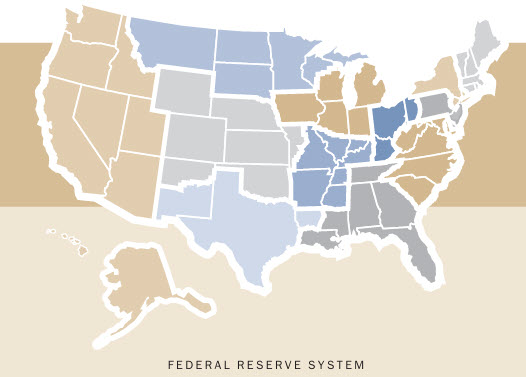
The Federal Reserve's October Beige Book, released Oct. 14, found that economic activity grew slightly or modestly across most districts, while commercial real estate conditions varied by region. Higher borrowing costs, tighter credit conditions, and rising construction expenses continued to weigh on investment and development. (Beige Book, Oct. 14 | GlobeSt., Oct. 16)
Regional CRE Trends
New York: Commercial property sales slowed as rising interest rates reduced demand, despite strong Manhattan office leasing and industrial demand driven by data centers. Banks reported slightly tighter credit standards for commercial mortgages, with concerns over interest rate exposure and refinancing costs. (New York Fed)
Chicago: Construction and real estate activity declined slightly, although commercial real estate activity remained unchanged overall. Financial conditions tightened modestly, while major development projects competed for construction capacity and electrical equipment needed for data centers. (Chicago Fed)
National Outlook: Nine of the 12 Federal Reserve districts reported slight to moderate economic growth, while three reported little change. Businesses continued to face higher costs from energy, tariffs, and insurance, along with shortages of specialized technical and skilled-trade workers. (Federal Reserve)
Why It Matters
Nationally, businesses continued to report higher input costs, including pressure from tariffs, insurance, and energy prices. Several districts also noted continued shortages of specialized technical and skilled-trade workers, which could affect construction costs and development timelines. (Federal Reserve, Oct. 14)
Financing pressures and rising development costs remain key challenges for CRE investment. Higher borrowing costs and tighter lending standards can complicate refinancing and property transactions, while labor shortages and competition for construction materials and infrastructure capacity can delay new projects.
Roundtable on the Road
This week, RER President and CEO Jeffrey DeBoer joined Kristen Silverberg, Business Roundtable’s President and COO and incoming President and CEO, for a policy and business panel at Marriott International’s North America (MINA) Conference. The discussion focused on policy issues affecting the economy, job creation and investment.
The panel also addressed the upcoming elections and next year's legislative outlook. DeBoer and Silverberg encouraged business leaders to engage with state and local officials, noting that nearly 50 members of Congress previously served as mayors or governors.
RER will release its Q4 2026 Sentiment Index Report in the coming weeks, providing an updated assessment of commercial real estate executives' views on market conditions, capital availability, and the outlook for the industry.


 Menu
Close
 About Us