Update: ENERGY STAR, Codes, Building Standards and More
July 17, 2026
Federal and other officials continue to weigh a wide range of energy policies affecting commercial real estate. RER’s Sustainability Policy Advisory Committee (SPAC) is coordinating industry input to ensure these measures are practical, cost-effective, and grounded in real-world CRE development, operational, and financing decisions.
ENERGY STAR
Last month, the House Appropriations Committee approved a fiscal year 2027 agency spending bill with $33 million specified for ENERGY STAR—the same level as FY 2026.
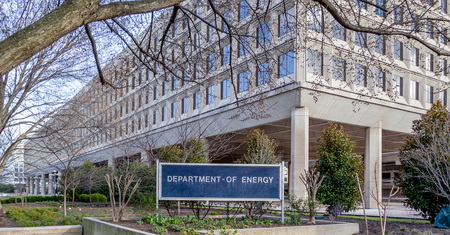
The House bill’s accompanying report directs EPA to provide regular updates on the Memorandum of Agreement (MOA) governing the program’s planned transfer to the Department of Energy (DOE). (Roundtable Weekly, March 6)
Senate Appropriations Committee Chair Susan Collins (R-ME) also sent a July 2 letter to EPA Administrator Lee Zeldin requesting information about the transition, funding, and staffingfor ENERGY STAR. (Letter, July 2)
A short-term continuing resolution to extend current funding is increasingly likely. Congress is not expected to complete FY 2027 appropriations legislation by Sept. 30, the end of the present fiscal year.
ENERGY STAR is a critical program for CRE. According to the program’s National Buildings Registry, over 7 billion square feet of U.S. commercial floor space have been ENERGY STAR certified.
Why It Matters: CRE relies heavily on Portfolio Manager, ENERGY STAR’s standard energy and water benchmarking tool, for investor reporting, capital expense (capex) planning, building certifications, and compliance with state and local requirements.
RER is preparing comments on DOE’s “cost methodology” to better reflect CRE “hold” periods and loan maturity horizons. Comments are due Aug. 3.
California Building Performance Standard (BPS)
The California Energy Commission (CEC) released its draft Building Energy Performance Strategy Report. This report lays the foundation for a future statewide building performance standard in California for large commercial and residential buildings.
RER, ICSC, and Nareit are coordinating with the California Business Properties Association (CBPA) to discuss priorities for the real estate industry’s response to California’s pre-regulatory study.
The CEC will hold a public workshop July 29 (1 pm – 3 pm ET). Written comments regarding the report are due August 21. (CEC’s filing instructions here.)
The CEC study refers to ASHRAE Standard 100 as a “starting point” for a potential statewide building performance standard in California.
RER has coordinated with ASHRAE to hold a briefing session (Tuesday, July 28, 2 pm – 3 pm ET) to inform our members on Standard 100’s building energy consumption and emissions targets. (Register here)
Solar Tax Credits
On June 6, a federal court in D.C. ruled that the so-called 5% Cost Safe Harbor applies to all solar (and wind) projects, regardless of size, as a measure to show “beginning of construction” of construction for tax credit eligibility. The opinion cites an August 2025 comment letter submitted by RER, Nareit, ICSC, and NAIOP. (Aug. 8, 2025 CRE letter | Roundtable Weekly, June 12) | PwC “Tax Insight” June 8 | Holland & Knight alert, June 8)
Solar projects that “begin construction” between July 5 –Dec 31, 2026 must be “placed in service” by the end of 2027 to qualify for federal tax credits.
The court opinion found the IRS Notice 2025-42 issued last summer illegal. Under that notice, only “low output solar facilities” (1.5 MW or less) may establish the “beginning of construction” date for federal tax credit eligibility by spending at least 5% of total project costs.
Bottom line: Projects of 1.5 megawatts or less can rely on the 5% safe harbor under existing IRS guidance. The court rulingcurrently restores the safe harbor for larger projects as well, although uncertainty remains because Treasury could appeal or issue revised guidance. (RER’s Fact Sheet -Clean Energy Tax Incentives, Aug. 27, 2025)
Quick Hits
Data Centers: The North American Electric Reliability Corporation (NERC) is on track with its Large Load Action Plan to eventually register data centers and likely require them to ultimately report their electricity use and other grid impacts. (NERC Primer | 2026 “State of Grid Reliability” Full Report and Snapshot (June 24) | Roundtable Weekly (May 8)
California Climate Reporting Rule: The California Energy Commission (CEC) released its anticipated “draft strategy report” to lay the foundation for an eventual statewide BPS law. The deadline for companies’ first public emissions disclosures has been pushed back from this coming August to November 10. (ESG Today (June 25) | KPMG alert (June 25) | JD Supra (July 3)
Permitting Reform: Senate negotiators continue working toward a bipartisan permitting reform package ahead of the August recess, with transmission policy remaining a key sticking point. Lawmakers are also divided over environmental and historic preservation reviews and limits on the administration’s authority to revoke previously approved energy project permits. (E&E News, July 13)
RER’s SPAC will continue engaging federal agencies, Congress, state regulators, and industry partners as these initiatives develop. SPAC is chaired by RER Board MemberTony Malkin (Chairman and CEO, Empire State Realty Trust). SPAC’s Vice Chair is Tamara Chernomordik (Vice President, Kimco Realty).


 Menu
Close
Menu
Close
 About Us