Senate Proposal Would Impose Tax Penalties on Data Centers
August 7, 2026
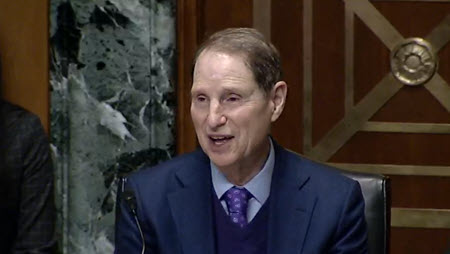
Senate Finance Committee Ranking Member Ron Wyden (D-OR) on Thursday unveiled a white paper that proposes the elimination of several federal incentives for new data center investment and a new excise tax on data center operations. (Senate Finance Committee Press Release| Politico, Aug. 6)
Data Center Tax Proposal
Sen. Wyden’s proposal would prohibitOpportunity Zone funds from investing in new data centers, subject capital assets used to build and supply data centers to longer cost recovery periods than assets used for other purposes, and effectively deny investors’ ability to participate in new data center investment through REITs. (White Paper, Aug. 6)
The proposal would also impose a gross receipts excise tax on U.S. data center operators. (White Paper, Aug. 6)
The white paper cites the current construction boom as evidence that the changes are justified, while stating the proposal “will not end data center development or put at risk the U.S. maintaining its status as the global leader in AI and other innovative technologies.” (PoliticoPro, Aug. 7)
While Sen. Wyden’s statement describes the tax provisions as removing “existing investment incentives,” in actuality the changes would create discriminatory tax penalties that expressly exclude data centers from general, long-standing rules that apply broadly to other forms of capital investment.
U.S. data center construction has quadrupled over the past four years, according to the white paper, which also cites roughly $700 billion in projected spending this year. Revenue from the proposed tax changes would be directed toward workers and communities affected by AI-driven economic disruption (White Paper | NOTUS, Aug. 6)
Sen. Wyden is seeking comments on the framework through Aug. 31 and expects to release legislative discussion draft language this fall. (AI Weekly, Aug. 7)
Why It Matters
Data center development is increasingly connected to a broader infrastructure ecosystem. A recent Academy Securities report identifies the federal Enhanced Use Lease (EUL) program as an emerging catalyst for digital infrastructure and domestic supply chains, noting that the Army, Air Force, and Department of Energy have increasingly used the program to facilitate data center development on underutilized government land. (July 29)
The model also leverages private capital for infrastructure development. The private-sector lessees under EUL arrangements bear the costs of financing, designing, building, operating, and securing facilities—illustrating the role private investment can play in meeting growing infrastructure needs.
With energy demand surging, real estate is an important partner in supporting energy investment, increasing efficiency, and delivering energy savings across the economy.
Meanwhile, in mid-August, the North American Electric Reliability Corp. (NERC) is expected to issue federal registration requirements and grid reliability standards for owners and operators of data centers. NERC’s imminent proposed standards could result in the first federal-level regulations on data centers. (Roundtable Weekly, July 17 | 24)
Permitting Reform
Bipartisan Senate permitting negotiations will continue beyond the August recess, with Sens. Shelley Moore Capito (R-WV), Sheldon Whitehouse (D-RI), Mike Lee (R-UT), and Martin Heinrich (D-NM) now targeting September for a potential agreement. Negotiators report progress, though significant issues remain over transmission, renewable energy projects, and historic preservation reviews. (E&E News, Aug. 5)
The House and Senate are scheduled to return to Washington on Sept. 14, leaving a narrow legislative window to advance permitting reform and other priorities before the midterm elections.


 Menu
Close
Menu
Close
 About Us