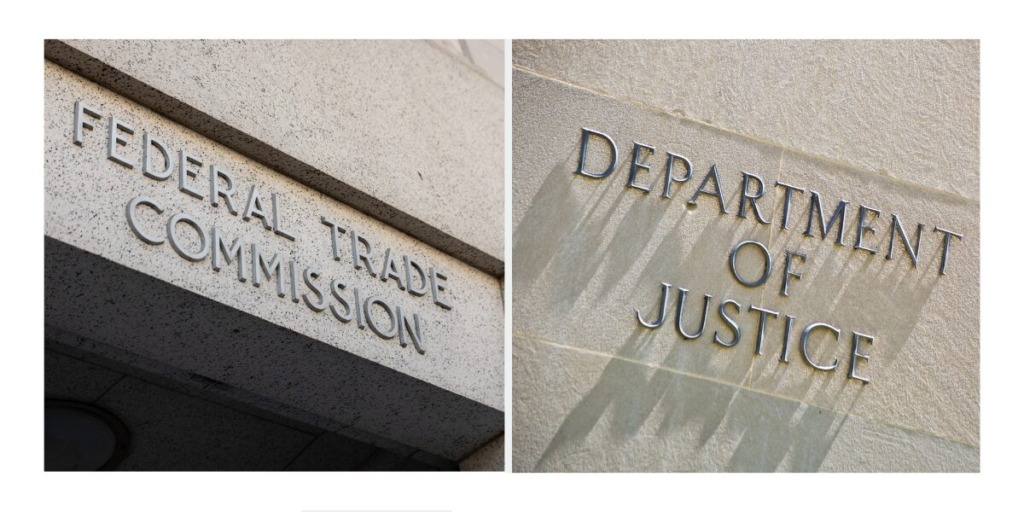
Roundtable Urges FTC, DOJ to Preserve HSR Real Estate Transaction Exemptions
The Real Estate Roundtable (RER) submitted comments this week urging the Federal Trade Commission (FTC) and Department of Justice (DOJ) to preserve longstanding real estate exemptions under the Hart-Scott-Rodino Act (HSR), warning that eliminating them would impose substantial costs and delays on lawful real estate transactions without delivering any clear antitrust benefit. (Letter, May 26)
Why It Matters
The comments respond to an FTC and DOJ request for public input on potential changes to the Premerger Notification and Report Form, including whether the agencies should revisit exemptions for certain real estate transactions. (Letter, May 26)
The real estate exemptions were adopted in 1996 because these transactions were considered unlikely to violate antitrust laws.
The exemptions cover several categories of real property acquisitions, including office, residential, retail, hotel, warehouse, agricultural, recreational, and other rental real estate assets.
At the time, the FTC said the exemptions would “remove an unnecessary burden from business” and allow the FTC and DOJ to better focus resources on transactions more likely to cause competitive harm.
The letter emphasized that the same policy and economic rationale remain sound today, given that real estate markets are local, highly fragmented, and shaped by property type, geography, zoning rules, neighborhood characteristics, and other market-specific factors.
Market Impact
Eliminating the exemptions would create new regulatory burdens for transactions that have long been considered unlikely to raise antitrust concerns. (Letter, May 26)
HSR filing fees can reach up to $2.46 million, in addition to legal, financial, and operational costs associated with preparing filings.
Potential new filing requirements could slow transactions, disrupt market liquidity, and create additional uncertainty across real estate markets at a time when capital formation remains critical to investment and development.
The agencies have not provided evidence that circumstances have changed materially since the exemptions were adopted, or that exempted real estate transactions have had a negative effect on competition.
RER board member Ross Perot Jr. (Chairman, The Perot Companies and Hillwood), discussed the real estate market and how developers are keeping up with demand this week on CNBC’s The Exchange. He emphasized the need for pro-growth tax and regulatory policies to support investment, job creation, AI infrastructure, and responsible development in communities across the country.(CNBC, May 29)
Housing Supply
The letter warned that removing the exemptions would not be a targeted way to address concerns about single-family housing acquisitions by large institutional investors. (Letter, May 26)
The vast majority of transactions covered by the exemptions do not involve single-family housing, and many single-family housing transactions would not meet the $133.9 million HSR filing threshold even if the exemptions were removed.
Large institutional investors collectively own less than 1% of single-family homes nationally and make less than 3% of annual home purchases in the U.S. (Roundtable Weekly, Jan. 9)
The costs and delays of HSR reporting would fall disproportionately on smaller buyers such as homebuilders and residential developers acquiring land for new housing projects, potentially increasing development costs and slowing efforts to address the nation’s housing shortage.
Preserving the exemptions would help avoid unnecessary regulatory burdens, support market liquidity, and protect the capital needed to expand housing supply and strengthen the broader economy.
Housing
Housing Bill Returns to Senate as HUD Moves to Streamline Reviews
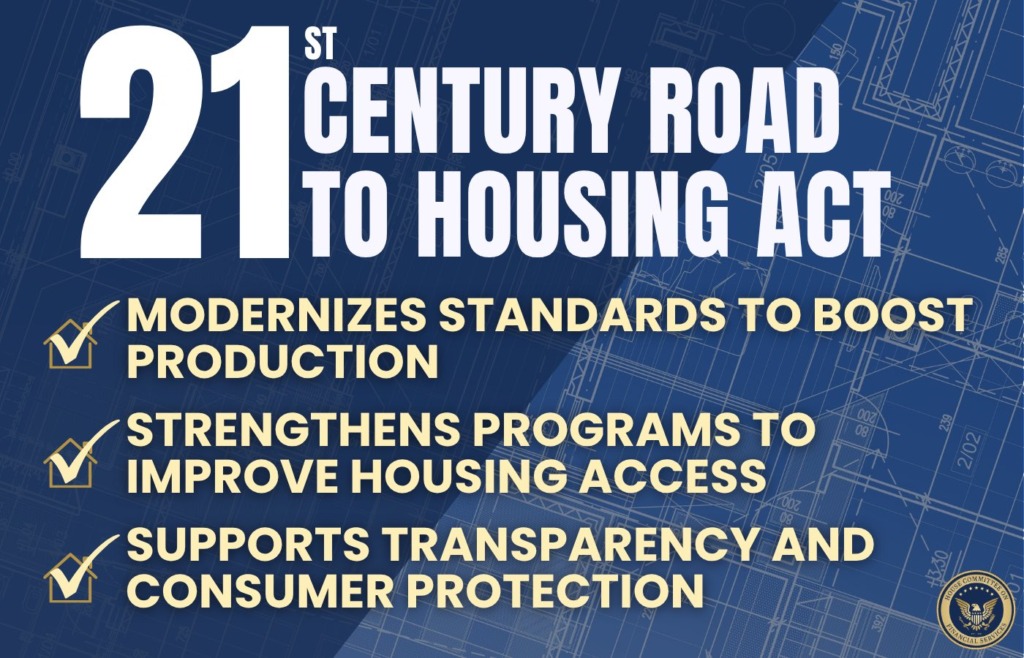
The House and Senate return from recess next week as lawmakers continue negotiations on the bipartisan 21st Century ROAD to Housing Act, following the House's 396-13 vote last week to pass the amended housing package. (Politico, May 24 | May 25)
What’s Next
The House-passed bill now returns to the Senate, where lawmakers must decide whether to accept the amended package or pursue additional changes as both chambers resume work next week. The Senate returns Monday, June 1, with no floor action on the housing bill scheduled yet. (Roundtable Weekly, May 22)
The White House said it “strongly supports” the House-amended bill and urged the Senate to pass it, asking both chambers to “resolve any remaining differences expeditiously.” (White House SAP, May 20 | CNBC)
Senate Banking Committee Chairman Tim Scott (R-SC) and Ranking Member Elizabeth Warren (D-MA) said there is “still work to be done” on a final bill. (Politico, May 21)
Neither Senate Majority Leader John Thune (R-SD) nor Senate Minority Leader Chuck Schumer (D-NY) has publicly said whether they support the House-amended package. (Politico, May 21)
The Real Estate Roundtable (RER) joined more than 125 housing advocacy and industry groups in supporting the House amendment and urging the Senate to pass the legislation. (Financial Services Committee Press Release, May 29 | Coalition Letter, May 18 | Statement May 20)
Key Reforms
The House-passed bill preserves core Senate provisions designed to expand housing supply, modernize federal housing programs, streamline environmental reviews, reduce barriers to new construction, improve affordability, support manufactured housing, and encourage local zoning and land-use reforms. (View Bill Text | One-Pager | Section-by-Section | Bipartisan Policy Center, May 20)
The most significant change is the removal of the Senate’s unconstitutional seven-year forced-sale mandate for build-to-rent (BTR) housing. Limits on large institutional investors remain, with exceptions for newly built and renovated housing. (Axios, May 21)
Over the last several months, RER led efforts to raise constitutional concerns about the Senate’s forced-sale mandate, including through a white paper by former U.S. Solicitor General Paul Clement, which framed the provision as an unprecedented federal market intervention and detailed a “triple threat” to the U.S. Constitution. (RER’s One Pager, May 18 | RER Letter, May 12 | Roundtable Weekly, April 17)
HUD Regulatory Action
The Department of Housing and Urban Development (HUD) published an interim final rule this month to shorten environmental reviews for large, federally supported multifamily developments. The rule removes an additional approval step for projects with more than 200 units or a mortgage of more than $5 million. (Bisnow, May 27)
The change goes into effect June 22, and HUD is accepting public comments through July 21.
The rule is part of a broader federal effort to cut red tape, speed up housing construction, and help address rising costs. (PoliticoPro, May 22)
RER will continue working with policymakers to ensure the final housing package remains focused on increasing housing supply, improving affordability, protecting private property rights, and supporting the capital needed to build more homes nationwide.


 Menu
Close
Menu
Close
 About Us