


 About Us


This week, President Donald Trump signed an Executive Order directing federal agencies to restrict large institutional investors from purchasing single-family homes, framing the action as part of a broader effort to restore housing affordability and expand homeownership. (WSJ, Jan. 20)
State of Play
- The Executive Order directs leaders at HUD, Treasury, FHFA, USDA, VA, and GSA to issue guidance limiting federal programs and government-sponsored enterprise (GSE) activities that facilitate institutional purchases of single-family homes that could otherwise be purchased by owner-occupants. (White House EO, Jan. 20)
- The Order instructs the Treasury Secretary to develop formal definitions of “large institutional investor” and “single-family home” within 30 days, signaling that further details on implementation are to come. (White House EO, Jan. 20)
- Agencies are also directed to promote first-look policies and disclosure requirements favoring individual buyers, while including narrow exceptions for build-to-rent communities planned and constructed as rental housing, and potentially other types of projects. (White House EO, Jan. 20)
- DOJ and the FTC are instructed to review large-scale investor acquisitions in local housing markets for potential anticompetitive behavior, including coordinated vacancy or pricing strategies. (White House EO, Jan. 20)
- Notably, the Order appears to focus on future acquisitions and does not contain language requiring sale, divestment, or unwinding of existing holdings, instead assuming continued ownership by requiring disclosure from current owners of single-family rentals. (White House EO, Jan. 20)
Remarks from Davos
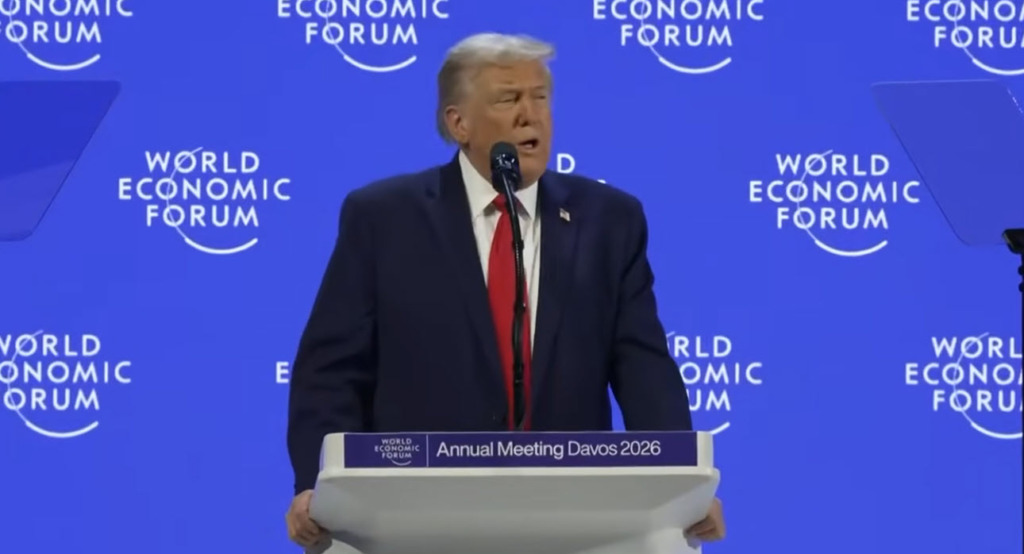
- Speaking at the World Economic Forum in Davos, Switzerland this week, President Trump reiterated many of the key points from the Executive Order.
- In his speech, President Trump argued that institutional investors have distorted the housing market, stating that “homes are built for people, not for corporations,” and asserting that large firms purchasing “as much as 10 percent of houses on the market” have crowded out families and first-time buyers. (CNBC, Jan. 21)
- President Trump also noted a complementary effort to lower borrowing costs, stating, “I’ve instructed government-backed institutions to purchase up to $200 billion in mortgage bonds to bring down interest rates.” (CNBC, Jan. 21)
Activity on Capitol Hill
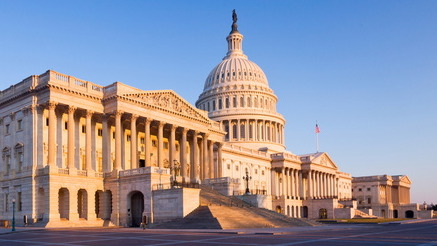
- Housing affordability was also a focus for leaders on Capitol Hill this week. HUD Secretary Scott Turner told the House Financial Services Committee that the administration is prioritizing housing supply expansion and regulatory rollback.
- Sec. Turner cited HUD’s elimination of the Affirmatively Furthering Fair Housing (AFFH) rule—which he said “did not build one home” and functioned as a de facto national zoning mandate—as part of a larger push to cut red tape, empower local decision-making, and promote homeownership. (HUD Secretary Turner Testimony, Jan. 21)
- On Thursday, the House Oversight Subcommittee on Economic Growth held a hearing titled “Housing Affordability: Saving the American Dream,” examining regulatory barriers, supply constraints, and market-based approaches to lowering housing costs. (House Oversight Committee, Jan. 22)
- NAHB Chairman Buddy Hughes testified that regulatory burdens are a central driver of affordability challenges, noting that “nearly 24 percent of the price of a new single-family home is due to regulatory regimes at the state, local and federal levels,” which he said directly increase costs and limit housing production. (Witness Statement, Jan. 22)
- AEI Housing Center Co-Director Edward Pinto told lawmakers that restrictive state and local land-use regulations are an “immovable object” constraining supply and driving prices higher, while demand-side measures alone risk exacerbating price pressures. (Witness Statement, Jan. 22)
What’s Next
- The White House has indicated that additional housing-related executive actions are under consideration, particularly measures aimed at first-time homebuyers, as the administration looks to demonstrate progress on housing affordability ahead of the midterm elections. (Washington Post, Jan. 9)
- The administration has also signaled its intent to pursue legislation that codifies elements of the Executive Order banning institutional investors from purchasing single-family homes, though prospects remain uncertain given jurisdictional, legal, and political hurdles. (White House EO, Jan. 20 | FOX Business, Jan. 21)
RER Advocacy

- RER has consistently emphasized that expanding housing supply—not restricting capital—is the most effective path to improving affordability.
- During this week’s RECPAC meeting, Genger Charles (Amherst), Sheila Greenwood (Invitation Homes), Lou Hayden (American Homes), and Ama Romaine (Pretium) participated in a member panel examining proposals to restrict institutional investment in single-family homes and the implications for housing supply, affordability, and capital formation.
- Panelists emphasized that institutional investors are one piece of the housing ecosystem—not the reason homebuyers are being priced out, pointing instead to chronic supply shortages, elevated interest rates, and local regulatory barriers that raise costs and constrain production.
- RER has also highlighted research showing affordability pressures are driven primarily by supply shortages, construction costs, and mortgage rates—not institutional ownership levels. (Roundtable Weekly, Jan. 9)
- RER President and CEO Jeffrey DeBoer has stressed that “the gap between supply and demand is the true cause of today’s housing crisis,” calling for common-sense reforms that remove barriers to development and maintain incentives for the capital needed to build, modernize, and expand the nation’s housing stock. (Roundtable Weekly, Jan. 9)
RER will continue working with policymakers and the administration to advance supply-forward housing solutions that increase production, preserve access to capital, and help families—whether renters or homeowners—achieve the American Dream.