CRE Leaders Gather in Washington to Discuss Housing, Tax Policy, National Security, Energy, and More
The Real Estate Roundtable’s (RER) Spring Roundtable Meeting brought commercial real estate leaders to Washington this week for bipartisan discussions on national security, housing, tax policy, energy, and economic growth. The meeting (Roundtable-level members only) came as Congress continued to debate housing legislation, implementation of the One Big Beautiful Bill Act, and broader questions of U.S. competitiveness and leadership. (RER’s Spring 2026 Policy Priorities and Executive Summary)
Across the agenda, speakers echoed similar concerns and priorities, including strengthening the workforce pipeline, expanding career and technical education, permitting reform, reducing regulatory burdens, and ensuring reliable energy infrastructure to support AI, data centers, and long-term economic growth.
Roundtable Leadership
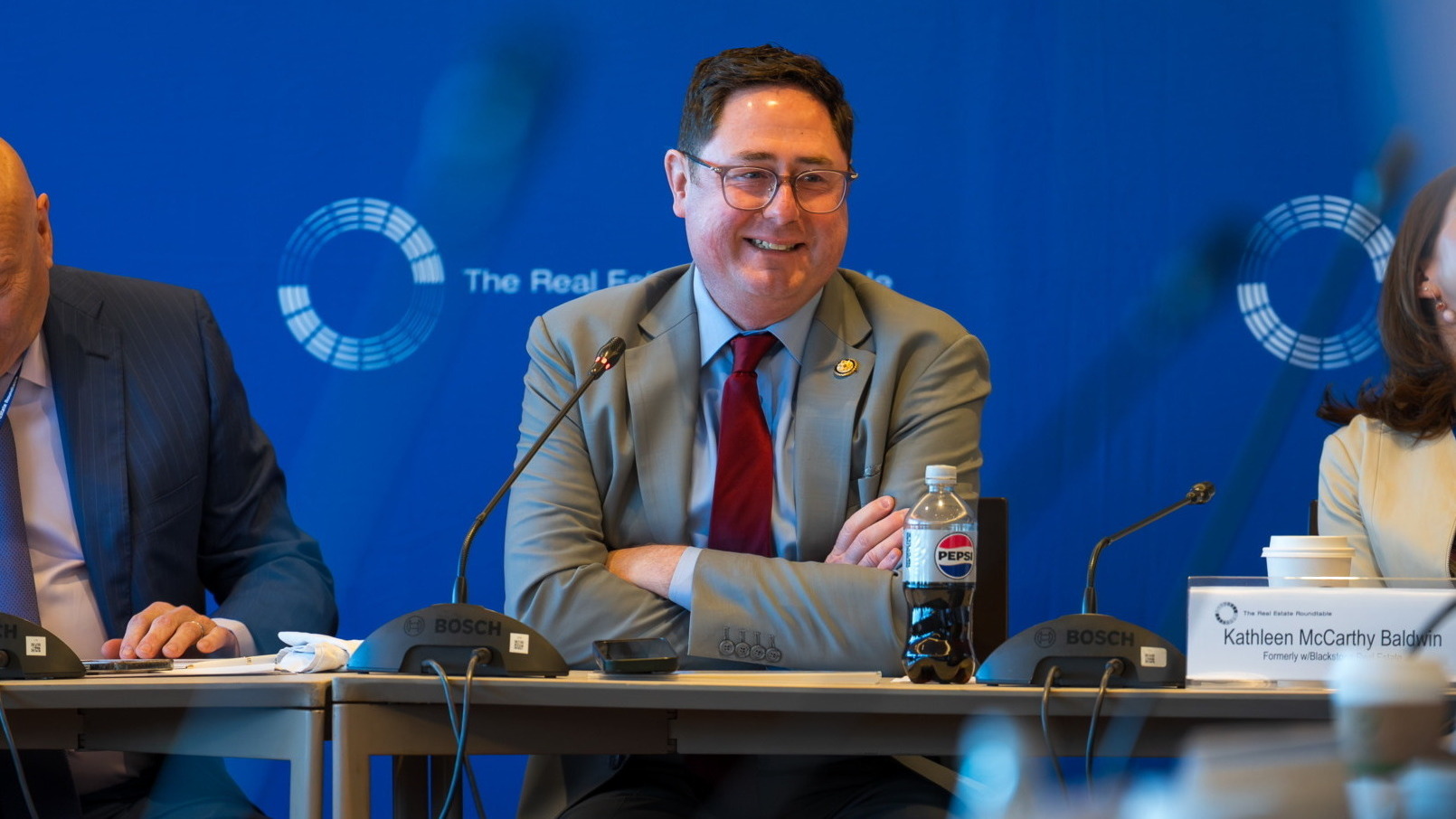
RER Board Chair Kathleen McCarthy Baldwin (Former Global Co-Head of Blackstone Real Estate) opened the meeting by highlighting the value of convening industry leaders in Washington and recognizing the strong leadership across the organization, including the nominating committee's work and the incoming board members' efforts to position RER for the year ahead.
RER President and CEO Jeffrey DeBoer said that RER’s impact in Washington is built on active member involvement, strong committee engagement, and continued support for REALPAC. “Our voice is strongest when members are engaged, our committees are active, and we continue to invest in the advocacy efforts that help advance the industry’s priorities.”
Speakers & Policy Issues
Roundtable members engaged in policy discussions with the following guests:
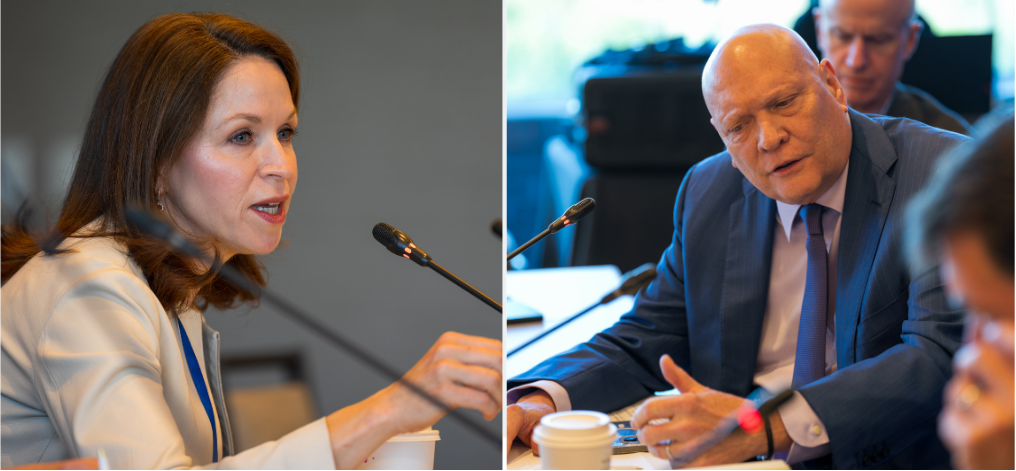
(R-L): Rep. Joe Neguse (D-CO) (House Assistant Democratic Leader; Committees: Natural Resources, Rules, and Judiciary), Rep. Ritchie Torres (D-NY) (Committees: Financial Services; Select Committee on the Strategic Competition Between the United States and the Chinese Communist Party), and Rep. George Whitesides (D-CA) (Committees: Science, Space and Technology; Armed Services) joined Monday evening’s dinner conversation on the political landscape, affordability, housing, immigration, and the policy choices shaping the run-up to the midterms. The panel also explored housing supply strategies, bipartisan problem-solving, and what voters are looking for from both parties on economic opportunity and cost-of-living concerns.
Sen. Bill Hagerty (R-TN) (Committees: Appropriations; Banking, Housing and Urban Affairs; and Foreign Relations) discussed national security, trade, China, workforce development, and the policy environment needed to strengthen American competitiveness. He also addressed housing supply and his recently introduced Freedom to Build Act, which is intended to incentivize deregulation, expand housing supply, and make homes more affordable by aligning existing federal incentives with communities that reduce barriers to building. (Roundtable Weekly, April 17)
Rep. Mike Flood (R-NE) (House Financial Services Committee) weighed in on the housing bills and the path toward bridging House and Senate priorities, with particular focus on concerns that Section 901 of the Senate-passed 21st Century ROAD to Housing Act could reduce housing supply and create new market uncertainty. He also addressed TRIA reauthorization, mortgage market stability, access to credit, and the need for practical housing solutions that expand supply.
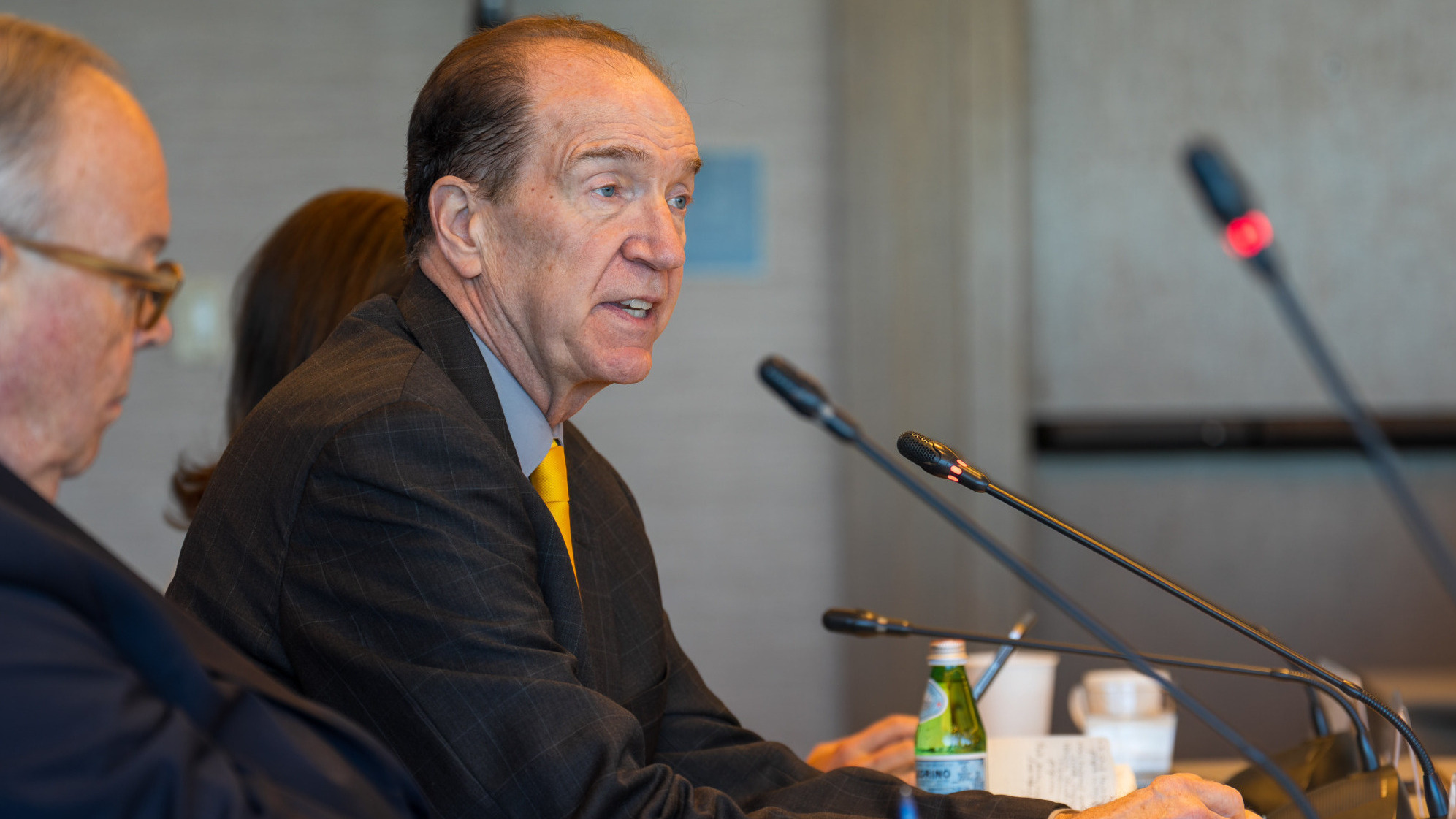
David Malpass (former President of the World Bank and former Under Secretary for International Affairs at the U.S. Department of the Treasury) offered his perspective on global economic ambiguity, energy policy, domestic production, labor shortages, and U.S. leadership. He also spoke about permitting reform, workforce development, interest rates, and the policy changes needed to support stronger long-term growth.
(L-R): Josh Parker (Chairman & CEO, Ancora Group Capital; Chair, RER's Tax Policy Advisory Committee), Tony Chereso (President & CEO, The Inland Real Estate Group, LLC), and Ryan McCormick (Senior Vice President & Counsel, RER) led a tax policy panel on Treasury implementation of the One Big Beautiful Bill Act, Section 892 regulations, Opportunity Zones implementation, FIRPTA, foreign capital, and other issues affecting real estate investment and capital formation.
Next on RER’s meeting calendar is the all-member Annual Meeting on June 9-10, 2026, in Washington, D.C., which will include policy advisory committee sessions.
Housing
Bipartisan House Coalition Presses Leadership to Remove Section 901
A bipartisan group of 76 House lawmakers urged congressional leaders to remove or revise Section 901 of the Senate-passed 21st Century ROAD to Housing Act, arguing that the provision would undermine the bill’s affordability goals by discouraging build-to-rent (BTR) housing and reducing rental options for American families. (Punchbowl News, | PoliticoPro, April 22)
Why It Matters
The push adds to growing House resistance as negotiators weigh how to reconcile the two chambers’ housing packages.
The letter, led by members of the Congressional Real Estate Caucus and Build America Caucus, warns that Section 901 “would have far-reaching and unintended consequences that run counter to the bill’s stated goal of expanding housing opportunity,” and that the provision goes “far beyond its intended purpose” by threatening to reduce rental options. (Letter | PoliticoPro April 22)
Lawmakers argue the provision’s broad definition would also capture the construction of new single-family rental communities—threatening a growing source of housing supply at a time when the nation remains millions of units short. (Letter | Punchbowl News, April 22)
Section 901 would require certain large institutional investors to sell newly built single-family rental homes after seven years—a change that could disrupt the long-term ownership model behind BTR communities, constrain capital, and reduce housing options for families seeking the flexibility of a single-family rental home.
The housing bill was a major focus at The Real Estate Roundtable’s (RER) Spring Roundtable Meeting this week, where members and policymaker guests discussed the growing pushback to Section 901 and the need for any final package to preserve the bill’s pro-supply provisions. (See story above)
State of Play
Since the Senate passed its version of the bill, progressive and conservative groups alike have cited numerous benefits that single-family rental owners and builders deliver for U.S. housing markets, including expanding supply, maintaining housing stock, and providing families the opportunity to live in communities where homeownership remains out of reach. (Progressive Policy Institute, February 2026 | Competitive Enterprise Institute, February 2026)
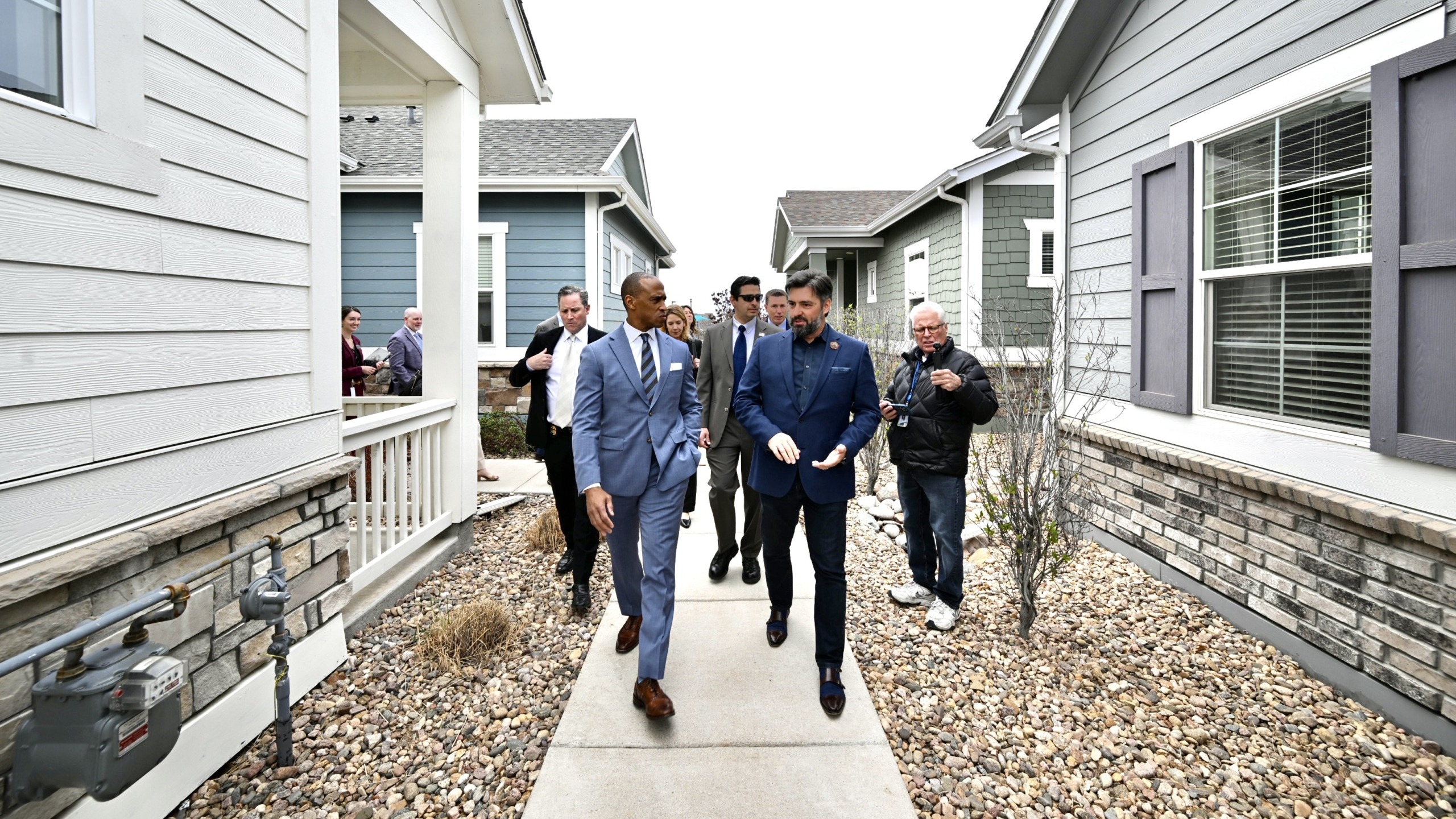
Housing and Urban Development (HUD) Secretary Scott Turner recently toured a build-to-rent (BTR) community with the project’s developer, operator, and industry representatives, underscoring the growing visibility of BTR. (The Real Deal, April 18 | NMHC, April 13)
RER & Industry Advocacy
RER and other housing advocates continue to urge lawmakers to preserve the bill’s pro-supply provisions while removing language that could reduce rental housing production and discourage new investment.
RER and broad housing coalitions have consistently emphasized that housing affordability is driven by supply shortages, construction costs, and mortgage rates—not institutional ownership levels—and that restricting institutional capital would only make it harder to meet the nation’s growing housing needs. (Roundtable Weekly, Jan. 9 | Jan. 16 | Jan. 23 | Feb. 27| March 6 | March 13 | March 20 | March 27 | April 3 | April 10 | April 17)
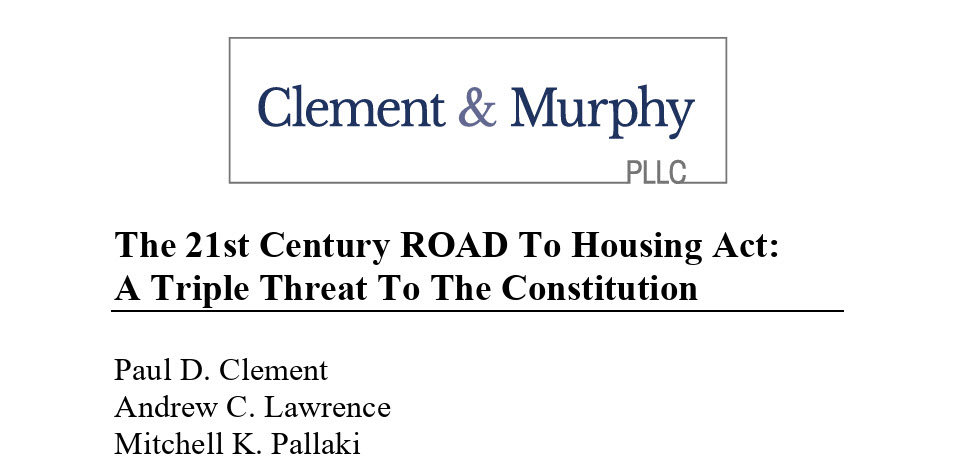
Last week, RER shared with members of Congress a recent white paper by Paul Clement of Clement & Murphy, PLLC, arguing that Section 901’s forced-sale requirement raises serious constitutional concernsunder the Takings Clause, and also raises equal protection and federalism concerns. (Roundtable Weekly, April 17)
As lawmakers work to address the housing shortage, the focus should remain on expanding supply and lowering barriers to development—not on punitive restrictions that threaten new investment, undermine build-to-rent housing, and worsen affordability challenges.


 Menu
Close
Menu
Close
 About Us