Senate Banking Committee Advances TRIA Reauthorization
The Senate Banking Committee voted 24–0 on Sept. 17 to advance the bipartisan Terrorism Risk Insurance Program Reauthorization Act of 2026 (S. 4395), moving a long-term extension of the federal terrorism insurance program toward full Senate consideration. (Coalition Letter, Sept. 16 | Insurance Journal, Sept. 17)
State of Play
As introduced, the Senate legislation would extend the program for seven years through Dec. 31, 2034, maintaining its existing framework. TRIA is currently scheduled to expire on Dec. 31, 2027. (Senate Banking Statement, Sept. 17 | Bill Text)
On June 29, the House voted 373–15 to pass its bipartisan reauthorization bill (H.R. 7128), also extending the program through 2034. (Roundtable Weekly, July 17)
The House measure would also raise the minimum loss threshold for terrorism certification from $5 million to $10 million beginning in 2029 and establish a 90-day timeframe for Treasury certification decisions. (Roundtable Weekly, July 17)
Roundtable Advocacy
Ahead of the vote, RER, the Coalition to Insure Against Terrorism (CIAT), and a broad group of trade associations submitted a letter to Senate Banking Committee Chairman Tim Scott (R-SC) and Ranking Member Elizabeth Warren (D-Mass.), urging them to advance S. 4395 to the full Senate. (Coalition Letter, Sept. 16
The coalition warned that policyholders are already negotiating coverage extending beyond TRIA’s 2027 expiration. Past reauthorization delays have prompted insurers to include conditional exclusions that eliminate terrorism coverage if the program lapses.
RER, which co-chairs CIAT, has consistently urged Congress to act early. The latest letter builds on the coalition’s July call to include long-term TRIA reauthorization in must-pass legislation this year. (Coalition Letter, July 29)
Why It Matters
Following the Sept. 11 attacks, terrorism insurance became largely unavailable, disrupting commercial real estate financing and construction. TRIA’s public-private partnership helps maintain access to coverage needed to finance projects, protect jobs, and support investment. (Roundtable Weekly, May 1)
Since 2002, the program has served as a public-private risk-sharing mechanism that helps maintain the availability of terrorism insurance at virtually no cost to taxpayers.
The bill now heads to the full Senate for consideration. RER and its coalition partners will continue urging Senate passage and enactment of a long-term TRIA extension this year.

Energy Policy
RER Recommends Clear, Workable Standards for Data Centers and Grid Reliability
The Real Estate Roundtable (RER) submitted comments on Thursday to the North American Electric Reliability Corporation (NERC) supporting efforts to address the grid impacts of large computational loads, while urging the organization for clear, workable standards to reflect how data centers are actually owned, leased and operated. (Letter, Sept. 17)
State of Play
NERC’s Project 2026-02 would establish new definitions, registration criteria and mandatory reliability standards for certain data centers called, “large computational loads,” connected to the U.S. electric grid.
The proposal would require Computational Load Owners (CLOs) and Computational Load Operators (CLOPs) to register with NERC when a site has at least 50 megawatts of total connected load and meets a separate 100-kilovolt connection criterion.
The proposed standards address data-center interconnections, grid-impact studies and modeling, operational communications, information sharing, and monitoring of how facilities respond to grid disturbances.
RER Recommendations
RER’s comments call for clear responsibilities based on which entity owns or controls the property, equipment, operations, and information covered by each requirement. (Letter, Sept. 17)
Distinguish owners from operators. At many leased and colocation facilities, the entity that owns the land and buildings is separate from the tenant that controls the servers, computing equipment, and associated electricity load. NERC’s definitions should account for these distinct roles and assign compliance responsibilities accordingly.
Clearly define covered sites. RER recommended that NERC limit the definition of a “Computational Load Site” to properties primarily used by information technology infrastructure to process, store, transmit or manipulate digital information—including cloud services, artificial intelligence and cryptocurrency mining.
Clarify the 50-MW threshold. “Total Connected Load” should include computational load as well as electricity used for HVAC, lighting, elevators, security, fire-safety equipment, and other building systems. NERC should also provide examples showing how the threshold applies across different leasing arrangements.
Define a “single location.” Objective criteria are needed to determine when electricity use from separate buildings or leased spaces must be combined for registration purposes, particularly at multi-building data-center campuses.
Identify the voltage measurement point. RER asked NERC to clarify where the proposal’s 100-kV threshold should be measured, using a point reasonably attributable to the site’s electricity use rather than a remote point farther upstream on the grid.
Require two-way information sharing. NERC should establish reciprocal obligations for owners and operators to confidentially and timely exchange the data each needs to comply with the proposed standards.
Why It Matters
Data centers often operate under complex ownership and leasing arrangements. A building owner may be responsible for the property and its connection to the grid while having limited control over the tenant-owned equipment and operating decisions that drive computational demand.
RER raised concerns about assigning a compliance obligation to one entity when another party controls the information, equipment or operational capability needed to satisfy it.
Clear definitions and appropriately assigned responsibilities can support grid reliability while giving data-center owners, operators and tenants a workable framework for compliance.
Data Center Policy Developments
The House passed the bipartisan Ratepayer Protection Act (H.R. 9340) on Wednesday by a vote of 417–3, marking Congress’ first major legislative action addressing the potential energy costs associated with the rapid expansion of AI and data centers.
The bill would require states to consider standards preventing data centers and other large power users from shifting infrastructure costs onto existing customers. (Utility Dive, Sept. 17)
On Thursday, Sen. Martin Heinrich (D-NM) blocked Sen. Jon Husted’s (R-OH) effort to pass companion legislation by unanimous consent, preventing immediate Senate passage. (The Hill, Sept. 17)
House Democrats Release Energy Policy Framework

House Democrats and the Sustainable Energy and Environment Coalition (SEEC) Institute released the Thriving Economy Project, a collection of more than 800 energy, environmental and economic policy proposals that may be considered in the next session of Congress. (Report, Sept. 15)
The recommendations include an ENERGY STAR-equivalent program for AI tools, data-center energy and water reporting, energy benchmarking for commercial and residential buildings, and disclosure of energy costs in sales and leases. (Roll Call, Sept. 15)
Other proposals include high-performance building standards tied to federal housing and infrastructure programs, along with stronger federal siting, design, and efficiency standards for data centers.
Data center recommendations also include mandatory NERC reliability standards, requirements to cover the infrastructure costs their electricity demand creates, and waste heat reuse to support heating and cooling nearby buildings.
What’s Next
RER will continue working with NERC and other stakeholders to support reliability standards that protect the electric grid, provide clear regulatory accountability, and reflect the operational realities of data-center ownership and leasing.

Tax Policy
Tax Policy Roundup: Foreign Investment, Demolition Expenses, Data Centers, and Partnership Taxes
The Real Estate Roundtable (RER) submitted recommendations this week aimed at removing barriers to foreign investment in US real estate and reforming the tax treatment of demolition costs, as lawmakers introduced data center tax legislation and a federal appeals court ruled on the self-employment tax treatment of limited partners.
FIRPTA: RER Requests Repeal of IRS Notice
This week, RER submitted a letter to Treasury Secretary Scott Bessent requesting revocation of IRS Notice 2007-55, citing its negative impact on foreign investment in U.S. commercial real estate. (Letter, Sept. 15)
The IRS Notice took the position that REIT distributions are not exempt from tax under the tax exemption for foreign governments (section 892). It also treats REIT liquidating distributions as sales of real property subject to tax under the Foreign Investment in Real Property Tax Act (FIRPTA).
The letter notes that nearly 20 years have passed without regulations implementing the Notice. Since that time, statutory changes to FIRPTA have eliminated much of its original rationale, and foreign capital’s importance to U.S. real estate investment and jobs has only increased. (Letter, Sept. 15)
RER contends that the Notice creates unnecessary transaction costs, limits investment flexibility, and discourages otherwise productive transactions. (Letter, Sept. 15)
“[S]ound legal reasoning, good governance, and favorable economic policy strongly support an administrative action to revoke Notice 2007-55,” wrote RER President and CEO Jeffrey DeBoer. “Repeal of the Notice would align squarely with the Administration’s stated priority of ‘unleashing prosperity through deregulation.’”
Property Redevelopment and Demolition Costs: Coalition Seeks Tax Reforms
On Wednesday, RER and 13 other national real estate organizations sent Congress a letter encouraging changes to the tax treatment of demolished buildings and demolition expenses. (Letter, Sept. 15)
Current treatment: Section 280B generally requires both demolition expenses and a demolished building’s remaining tax basis to be added to the basis of nondepreciable land. Owners typically cannot recover those amounts for tax purposes until the land is sold, potentially years or decades later.
“This treatment can delay or deter redevelopment projects that would otherwise support increased housing supply and commercial activity, particularly in high-cost areas and downtown corridors facing elevated vacancy rates,” the 14 organizations wrote. (Letter, Sept. 15)
Proposed changes: The coalition recommends allowing taxpayers to deduct as a loss any remaining tax basis of a demolished building and allowing taxpayers to deduct the actual demolition expenses. The reforms should be paired with reasonable guardrails to protect historic buildings and ensure timely redevelopment of the property.
The issue was recently highlighted in an op-ed written by RER Tax Policy Advisory Committee Chairman Joshua Parker and published in The Hill. (The Hill, Aug. 30 | Roundtable Weekly, Sept. 11)
Future legislation in this area could also restore the deductibility of environmental remediation expenses.
The recently enacted, bipartisan ROAD to Housing Act removed many barriers to creating new housing. The organizations’ proposal would continue building on these efforts by promoting productive real estate investment.
Data Centers: House Democrats Propose Tax Restrictions

Reps. Kristen McDonald Rivet (D-MI) and Don Davis (D-NC) introduced the Reverse Big Ugly Tax Breaks for Data Centers Act on Sept. 16, seeking to exclude covered data centers from investment incentives expanded in the 2025 tax law. (Politico | Rep. Rivet Press Release, Sept. 16)
The bill would deny 100% bonus depreciation and Opportunity Zone eligibility to covered data-center property. Its definition covers facilities exceeding 50 megawatts of maximum rated power capacity or total peak power load, including property dedicated to their operation. (Bill text)
The legislation follows an August white paper from Senate Finance Committee Ranking Member Ron Wyden (D-OR) addressing bonus depreciation, Opportunity Zones and REIT treatment for data centers, along with a proposed excise tax on operators. (Senate Finance proposal, Aug. 6 | Roundtable Weekly, Aug. 7)
Partnership Taxes: Second Circuit Rules in Soroban
The U.S. Court of Appeals for the Second Circuit on Sept. 17 affirmed the Tax Court’s decision in Soroban Capital Partners LP v. Commissioner, holding that three principals did not qualify for the limited partner exception from self-employment tax because they exercised managerial control over the firm. (Opinion, Sept. 17)
The court focused on the partners’ actual responsibilities, including managing investments, serving on governing committees, and directing personnel decisions. It clarified that partners may provide some services and still qualify for the exception if those activities do not involve controlling, managing or running the business. (Bloomberg Law, Sept. 17)
The opinion appears to align, at least in significant part, with the Fifth Circuit’s revised approach in K Alain, formerly Sirius Solutions. (Court Opinion | JD Supra, Aug. 12)
RER filed an amicus brief supporting the taxpayer in Soroban as part of its broader challenge to the IRS’s restrictive interpretation of the limited partner exception from self-employment tax. RER also filed briefs supporting taxpayers in Sirius Solutions in the Fifth Circuit and Denham Capital in the First Circuit. (Roundtable Weekly, Jan. 30 | Feb. 13 | Sept. 11)
RER will continue working with Congress, Treasury and the IRS to advance tax policies that expand access to capital, encourage redevelopment and support long-term economic growth.
The Fed
Fed Raises Rates for the First Time Since 2023
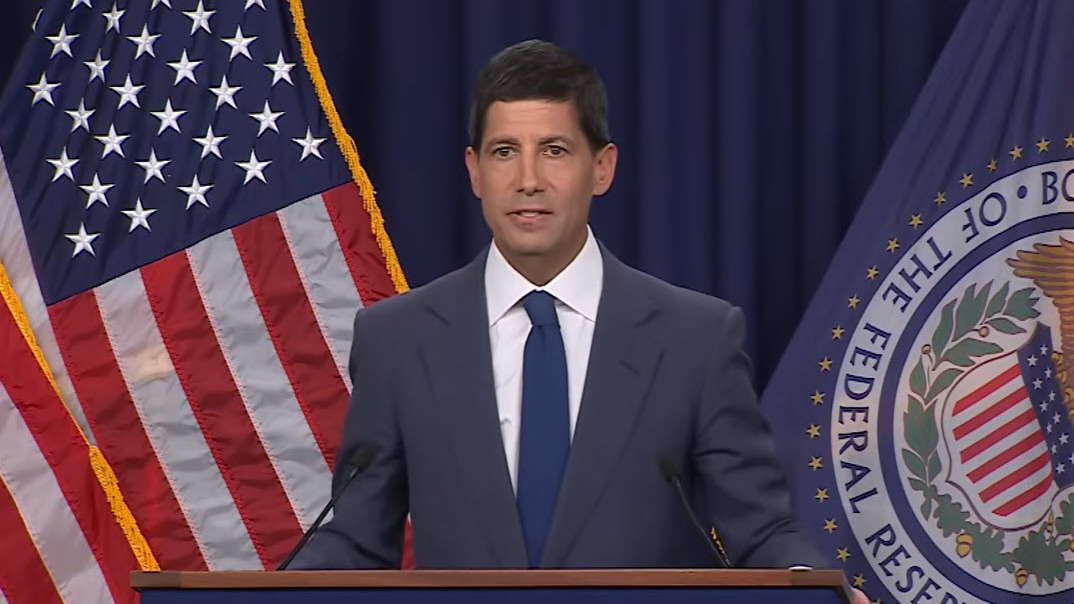
The Federal Reserve raised its benchmark interest rate by a quarter point on Wednesday to a target range of 3.75-4 percent, its first increase since 2023. The Federal Open Market Committee (FOMC) voted unanimously, a sharp turn from July when three officials dissented in favor of a hike. (Cushman & Wakefield, Sept. 17)
Fed’s Decision
The FOMC voted 12-0 to raise the target range by 25 basis points, citing economic activity expanding at a solid pace, resilient domestic spending, strong productivity growth, robust capital investment, and job gains keeping pace with the workforce. (Federal Reserve | Implementation Note, Sept. 16)
Chair Warsh said this summer’s readings do not show underlying inflation trends meaningfully improving, putting 12-month total PCE inflation at roughly 3.6 percent in August, with too many categories still running above 3 percent. (Opening Statement, Sept. 16)
Repeating a point from Jackson Hole, Warsh said he would be “hard-pressed to describe broad financial conditions as restrictive,” a view he said the Committee widely shared. (Opening Statement, Sept. 16)
The Summary of Economic Projections put median real GDP growth at 2.3 percent this year, total PCE inflation at 3.7 percent falling to 2.3 percent next year, and unemployment steady near 4.1 percent. (Projections | Opening Statement, Sept. 16)
Housing and CRE Outlook
The 10-year Treasury breached 5 percent on Sept. 15, and the 30-year topped 5.4 percent, both the highest since 2007. Most permanent commercial mortgages price off Treasury benchmarks rather than the federal funds rate. (Scotsman Guide, Sept. 16)
Lenders report that higher debt service costs are reducing loan proceeds and widening the gap between buyers and sellers, requiring sponsors to contribute more equity. Deal structures are adapting, with more cash-in refinancings, recapitalizations, and loan sales as lenders grow less willing to extend. (Commercial Observer, Sept. 16)
What to Watch
The FOMC next meets Oct. 27-28, followed by Dec. 8-9. With the median projection pointing to one more increase this year, attention will remain on both meetings for signs of when the Fed could make its next move. (Federal Reserve Calendar)
Nearly $983 billion of U.S. commercial real estate mortgages are estimated to mature in 2027. Sustained higher long-term yields would increase refinancing costs as those loans come due. (RER Policy Priorities, Capital & Credit)
RER will continue to advocate for policies that strengthen capital markets, preserve access to credit, and support the capital formation needed to drive long-term economic growth.