Roundtable Submits Recommendations to Further Improve New Opportunity Zone Transition Relief
RER Recommends Reforms to DOE’s Methods for Cost-Effective Energy Codes
RER, CIAT Urge Senate to Advance Long-Term TRIA Reauthorization
Fed Holds Rates Steady as Inflation Risks Persist
Roundtable Weekly
July 31, 2026
Roundtable Submits Recommendations to Further Improve New Opportunity Zone Transition Relief

The Real Estate Roundtable (RER) submitted comments this week on IRS Notice 2026-40, welcoming the guidance as an important step in the transition from Opportunity Zones (OZ) 1.0  (TCJA) to the permanent OZ framework enacted under the One Big Beautiful Bill (OB3) Act. RER urged the Treasury Department and IRS to clarify the Notice’s Written Plan and Ordinary Course safe harbors for multiphase investments and allow opportunity funds to continue investing in OZ 1.0 census tracts through their statutory expiration on Dec. 31, 2028. (Letter, July 29)

OZ Transition Recommendations

  • The Notice incorporated several concepts previously recommended by RER and has helped unlock capital that had been delayed by uncertainty surrounding investments in expiring OZ 1.0 census tracts. (Roundtable Weekly, June 26)
  • Post-2026 investments in OZ 1.0 census tracts must comply with either (1) the “Written Plan” exception, which requires compliance with the existing working capital safe harbor rules and related funding requirements; or (2) the “Ordinary Course” exception, which relates to the purposes of the expenditures (e.g., the permissible modernization or continued operations of the trade or business, as opposed to impermissible expansion of the business or starting a new trade or business).
  • RER’s July 29 comments urged Treasury to make both exceptions clear and workable for real estate investors, developers, and entrepreneurs undertaking long-term and multiphase projects. (Letter, July 29)
  • Additional clarifications would provide helpful certainty, reduce regulatory risk, and further unlock capital for greater investment in low-income communities. (Letter, July 29)
  • Under the Written Plan exception, RER asked Treasury to confirm that capital provided after 2026 does not need to come from the same Qualified Opportunity Fund (QOF) that financed the project earlier and that subsequent phases of an existing real estate business may qualify. (Letter, July 29)
  • For the Ordinary Course exception, RER requested administrable rules distinguishing permissible upgrades—such as energy-efficiency measures, accessibility improvements and interior reconfigurations—from business expansions. The letter also seeks clarity for projects involving new floors, conversions of existing space, parking structures, and other improvements that may fall between those categories.
  • RER also asked Treasury to allow new QOF equity to fund qualifying ordinary-course improvements, rather than requiring projects to rely on debt, existing cash, or non-QOF equity.
  • RER further encouraged Treasury to allow QOFs in OZ 1.0 census tracts to continue investing and acquiring property outside the two exceptions through the tracts’ statutory expiration on Dec. 31, 2028—two years longer than contemplated by the Notice. (Letter, July 29)

RER Advocacy

  • RER has consistently urged Treasury and the IRS to provide workable transition rules for OZ 1.0 projects, including through a December 2025 letter, follow-up comments and draft guidance submitted by RER’s Opportunity Zone Working Group in March 2026, and meetings with agency officials. (Roundtable Weekly, March 6) (Roundtable Weekly, Dec. 2025)
  • RER’s Opportunity Zone Working Group developed the recommendations. Principal drafters included Orla O’Connor and Michael McMahon of KPMG; Gary Hecimovich and Adam Wallwork of Deloitte Tax LLP; Sandy Presant and Jim Lang of Greenberg Traurig LLP; Greg Berger of Brownstein Hyatt Farber Schreck LLP; Angeline Rice and David Sobochan of Cohen & Co Advisory, LLC; Andrea Whiteway of Ernst & Young LLP; and Steven Kennedy of PwC US.

RER’s Opportunity Zone Working Group will continue engaging with Treasury and the IRS to support clear, workable implementation of the permanent OZ framework.

RER Recommends Reforms to DOE’s Methods for Cost-Effective Energy Codes
Workers on sustainable energy project on rooftop of building

The Real Estate Roundtable submitted comments this week in response to the U.S. Department of Energy (DOE) request for information on its methodology for evaluating the consumer costs and benefits of residential and commercial building energy codes. (Letter, July 31)

Building Codes and Affordability

  • Under federal law, DOE is required to assess the cost-effectiveness of recurring updates to “model” building energy codes – such as ASHRAE Standard 90.1 for new commercial construction and major renovations. Each update to the standard brings requirements for more stringent efficiency levels – with higher costs.
  • RER’s comments recognize the important role energy codes play in improving building efficiency, resilience and occupant comfort. (Letter, July 31)
  • The comments also encourage DOE to put more emphasis on consumer “affordability” because its decades-long analysis periods obscure more direct and immediate costs of compliance—borne by families and businesses—with ever more stringent energy codes. 

Why It Matters

  • Commercial owners, developers, and investors pay upfront costs for code compliance when a building is constructed. Yet, projected utility savings may accrue decades later—often to future owners or tenants, not to the businesses making initial investments.
  • RER’s recommendations would provide a more accurate picture of how code requirements affect project feasibility, housing affordability and investment decisions across markets and property types.

RER’s Recommendations

  • Realistic payback periods: DOE’s current 30- and 40-year lifecycle method makes code updates appear cost-effective, because energy savings are stretched over very long periods. RER recommends that DOE also publish results over 3-, 5-, 10-, 15- and 20-year periods—to reflect common practices in commercial ownership duration, loan maturity terms, and building capital expenditure budgeting. (Letter, July 31)
  • Market-based financing assumptions: The letter urges DOE to use multiple discount rates reflecting the different costs of construction loans, permanent mortgages, mezzanine debt and equity—not a single, “one-size-fits-all” rate.
  • Upfront and regional costs: DOE should account for lengthy federal depreciation periods, as well as regional differences in labor, materials, permitting expenses and energy prices that can significantly affect whether a project remains financially viable.
  • Greater transparency: RER recommends a publicly available database detailing the market costs, data sources, electricity-price forecasts and assumptions used in DOE’s analyses. The agency should also test modeled energy savings against actual building data from ENERGY STAR Portfolio Manager and DOE’s Building Performance Database.
  • Cumulative regulatory burdens: DOE should consider how other regulations, including rent restrictions, can limit multifamily owners’ ability to finance and recover the costs of energy-efficiency investments.
  • Consistent treatment of building standards: DOE should apply the same affordability and cost-effectiveness methodology to state, local, and model Building Performance Standards that receive federal funding or technical support.

The Real Estate Roundtable (RER) and its Sustainability Policy Advisory Committee (SPAC) will continue working with DOE and industry stakeholders to ensure building energy code analyses reflect real-world costs, financing practices and affordability impacts for commercial and multifamily buildings.
RER, CIAT Urge Senate to Advance Long-Term TRIA Reauthorization

The Real Estate Roundtable (RER), the Coalition to Insure Against Terrorism (CIAT), and a broad group of business organizations urged congressional leaders this week to include a seven-year extension of the Terrorism Risk Insurance Program (TRIA) in any must-pass legislation considered this year. (Letter, July 29)

Coalition Letter

  • The coalition called for action on the bipartisan Senate Terrorism Risk Insurance Program Reauthorization Act of 2026 (S. 4395), warning that waiting until the final year of TRIA’s authorization would create uncertainty for insurers and policyholders that are already negotiating policies extending beyond the program’s Dec. 31, 2027 expiration. (Roundtable Weekly, July 17)
  • The letter emphasized that maintaining the current framework is critical to ensuring insurers of all sizes remain in the market, and sufficient capacity is available for businesses seeking terrorism coverage. (Letter, July 29)
  • TRIA remains a critical public-private partnership that helps ensure terrorism insurance coverage remains available and affordable for commercial businesses, educational institutions, nonprofit organizations, and other policyholders. (Letter, July 29)

State of Play

  • Last month, the House voted 373-15 to pass the bipartisan TRIA Program Reauthorization Act of 2026 (H.R. 7128), which would extend the program through 2034. The bill would also raise the minimum loss threshold from $5 million to $10 million beginning in 2029 and establish a 90-day timeframe for Treasury certification decisions. (PoliticoPro, June 29 | Legis1, July 1)
  • The Senate’s seven-year reauthorization bill (S. 4395) has garnered more than 30 bipartisan cosponsors. Both the House and Senate proposals maintain TRIA’s existing structure, which the coalition emphasized is critical to keeping insurers of all sizes in the market and preserving sufficient coverage capacity. (Roundtable Weekly, May 1)

Why It Matters

  • TRIA has provided stability to terrorism insurance markets since its enactment following the Sept. 11 attacks, helping businesses, property owners, lenders, and insurers manage risks that the private market cannot fully absorb. (Roundtable Weekly, Sept. 19)
  • Since 2002, the program has served as a public-private risk-sharing mechanism that helps maintain the availability of terrorism insurance at virtually no cost to taxpayers.
  • A 2026 Treasury Department report warned that allowing TRIA to expire—or even lapse temporarily—could disrupt insurance markets, affect unrelated lines of coverage, and delay projects in critical sectors. (Letter, July 29)
  • The letter also cited federal assessments of evolving threats to critical infrastructure, including real estate.

Roundtable Advocacy

  • RER, which co-chairs CIAT, has consistently urged Congress to act well ahead of TRIA’s Dec. 31, 2027 expiration.

RER and its industry partners will continue to urge Senate leaders to include TRIA on any must-pass legislation this year.
Fed Holds Rates Steady as Inflation Risks Persist

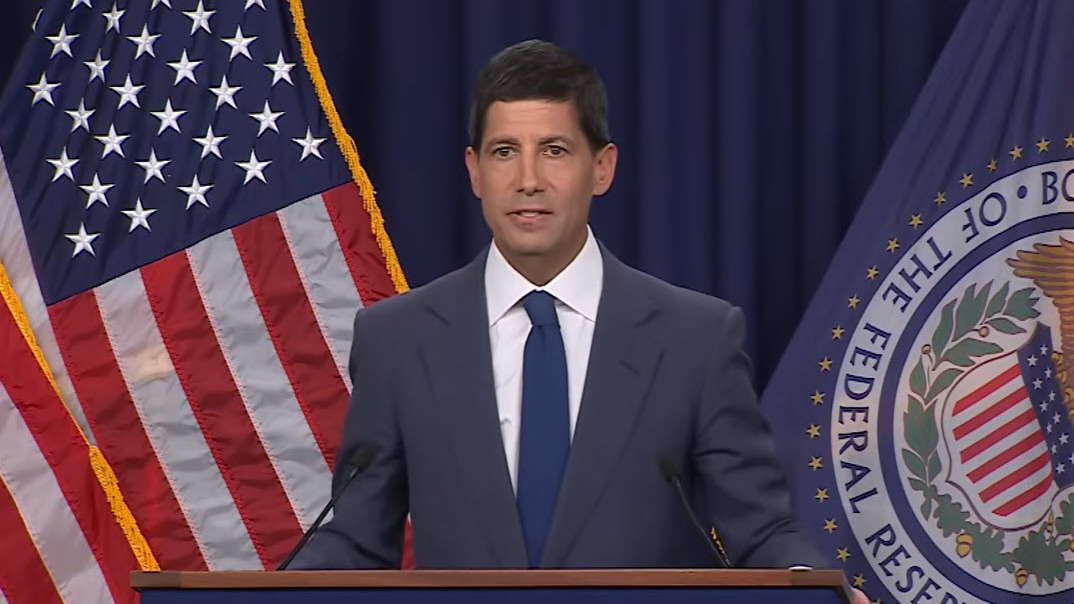
The Federal Reserve held its benchmark interest rate steady at 3.50-3.75 percent for a fifth consecutive meeting on Wednesday, with three officials dissenting in favor of a quarter-point hike. Chair Kevin Warsh said inflation remains above the Fed’s 2 percent target, partly reflecting energy-related supply shocks, and reaffirmed the Committee’s commitment to restoring price stability.

Fed’s Decision

  • The Federal Open Market Committee (FOMC) voted 9-3 to hold rates steady. Cleveland Fed President Beth Hammack, Minneapolis Fed President Neel Kashkari, and Dallas Fed President Lorie Logan preferred a 25-basis-point increase. It was the first time since 2016 that three officials dissented in favor of the same policy action. (Federal Reserve, July 29; CNN, July 29)
  • The policy statement was nearly unchanged from June, citing solid economic growth, strong productivity and investment, stable labor conditions and inflation that remains above the Fed’s 2 percent goal. (Federal Reserve, July 29; Opening Statement, July 29)
  • Chair Warsh said Treasury yields had risen materially since June, with some of the increases ranking among the largest of the past two decades. (Opening Statement, July 29; Watch Press Conference)
  • He described the Committee’s stance as “watchful thinking, not watchful waiting.” He said higher interest rates could be part of the solution if inflation remains elevated, while stopping short of signaling a specific September move. (Federal Reserve Calendar; Wall Street Journal Transcript, July 29)

Housing and CRE

  • The decision provides near-term stability in short-term rates, but many CRE financing costs remain tied to longer-term yields. The 10-year Treasury yield was about 4.66 percent Wednesday afternoon, while the average 30-year fixed mortgage rate was about 6.6 percent for the week ending July 23. (Wall Street Journal, July 29; USA Today, July 29)
  • Chair Warsh said AI-related investment is growing nearly 20 percent, a trend that could support continued demand for data centers and related infrastructure development.(Opening Statement, July 29)
  • Major banks are selectively returning to CRE lending. Bank of America, U.S. Bancorp, PNC and Truist reported year-over-year CRE loan growth ranging from more than 8 percent to about 25 percent, concentrated in multifamily housing, industrial, and data-center projects. While banks see attractive growth opportunities, office exposure continues to be approached cautiously. (Wall Street Journal, July 23)
  • The Fed’s next meeting on Sept. 15-16 will provide updated economic projections and a clearer indication of whether the growing internal divide is moving the Committee closer to a rate increase.

Policy Outlook

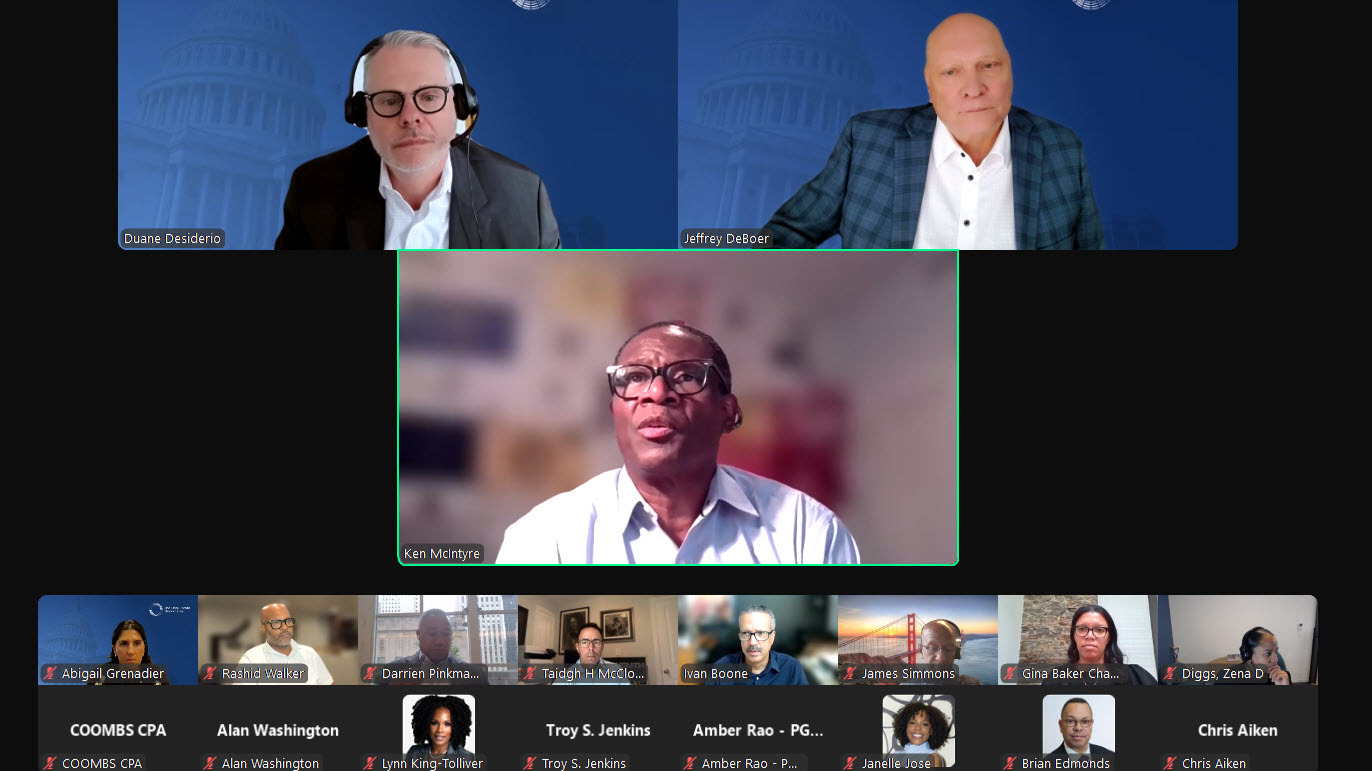
  • RER President and CEO Jeffrey DeBoer and SVP and Counsel Duane Desiderio joined Real Estate Executive Council (REEC) CEO Ken McIntyre for REEC’s monthly virtual town hall with members on the policy landscape in Washington, what CRE can expect in the coming months and RER’s advocacy priorities.

The discussion also covered housing affordability, electricity demand and emerging data center legislation, as well as RER’s efforts during negotiations over the 21st Century ROAD to Housing Act to remove the unconstitutional forced-sale provision that could have set a damaging precedent for other property types.