

 About Us


As the Senate-passed 21st Century ROAD to Housing Act awaits House action, new federal data and rising development cost estimates are reinforcing a key point in the housing debate: affordability challenges are driven by supply constraints, and federal policy should not make it harder or more expensive to build. (Washington Post, April 6)
What the Data Shows
- At the center of the debate is Section 901, which would force large institutional investors to sell certain newly built single-family rental homes after seven years—a provision that could undermine build-to-rent housing and reduce supply. (Roundtable Weekly, April 3)
- A new GAO report found that institutional investor ownership of single-family rental homes increased in six metro areas from 2018 to 2024, but still accounted for a very small share of all single-family homes in those markets—ranging from less than 1 percent to 3 percent. (GAO Report, March 24 | Highlights, March 24)
- The findings add new weight to the argument that institutional ownership is not the main driver of the nation’s affordability challenges.
- The Washington Post noted this week that forcing build-to-rent homes to be sold within seven years would weaken a fast-growing source of new single-family housing. (Washington Post, April 6)
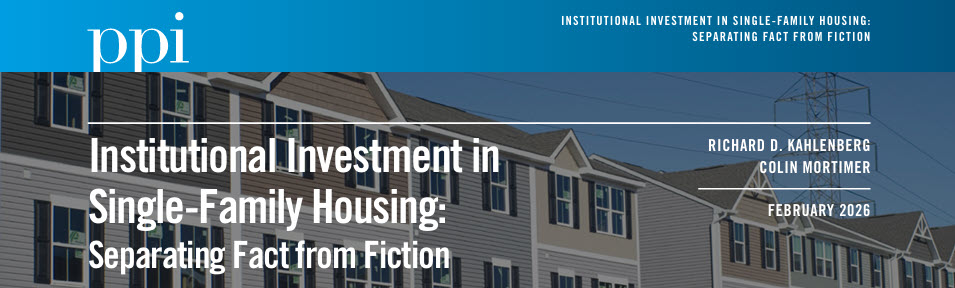
- A separate February report from the Progressive Policy Institute (PPI) reached a similar conclusion, finding that institutional investors own less than 1 percent of all single-family homes nationwide and account for less than 2 percent of all home purchases, and concluding that the broader affordability problem is rooted in supply-demand imbalances rather than investor concentration. (Progressive Policy Institute, February 2026)
- The reports undercut the argument that restricting institutional investment is likely to meaningfully improve affordability, particularly when housing shortages, financing costs, regulatory barriers, and construction expenses remain the primary constraints on supply.
Market Impact
- As Barron’s reported this week, Section 901’s proposed restrictions on institutional investors are already having a chilling effect on investments in single-family housing, with investment managers indicating that pension funds and other large investors may pause or reconsider deals until there is greater clarity around housing policy. (Barron’s, April 7)
- Research from John Burns Research & Consulting suggests the Senate bill has “already paralyzed” the build-to-rent development industry, with new development slowing and capital “now frozen,” impacting project viability “from day one, not just in seven years.” (Barron’s, April 7)
Tariffs & Construction Costs
- A Joint Economic Committee Democratic report released April 7 found that tariff policy and related uncertainty are exacerbating housing supply challenges, with copper prices up 25 percent year over year in February and steel mill products up 21 percent. (JEC Minority Report, April 7)
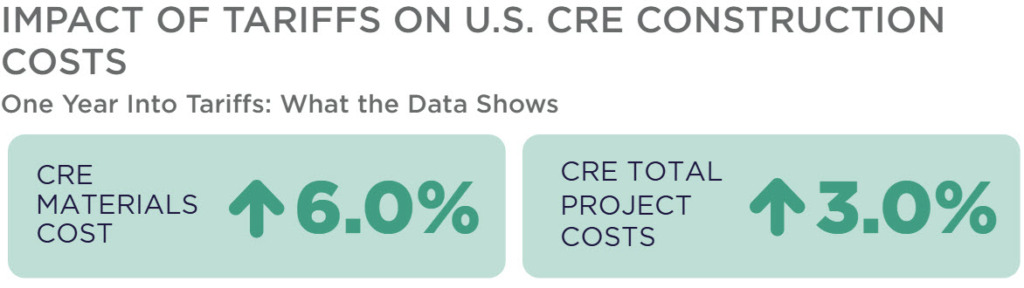
- A new Cushman & Wakefield report found that tariff rates in effect as of April 7 would raise construction materials costs by 6.0 percent relative to a 2024 baseline and increase total project costs by roughly 3.0 percent, adding more pressure to housing and commercial real estate development. (Cushman & Wakefield, April 8)
RER & Industry Advocacy
- RER and broad housing coalitions have consistently emphasized that housing affordability is driven by supply shortages, construction costs, and mortgage rates—not institutional ownership levels—and that restricting institutional capital would only make it harder to meet the nation’s growing housing needs. (Roundtable Weekly, Jan. 9 | Jan. 16 | Jan. 23 | Feb. 27 | March 6 | March 13 | March 20 | March 27 | April 3) (Letter, March 5 | Letter, March 13)
- Research continues to show that restricting institutional capital is unlikely to improve affordability and could create new supply constraints. The PPI report, for example, notes that build-to-rent development is becoming an increasingly important source of new housing supply. (Progressive Policy Institute, February 2026)
What’s Next
- Congress returns next week with a robust agenda. The Senate is set to return April 13 and the House on April 14, with unresolved DHS funding, a possible new reconciliation push, and the administration’s budget request all competing for floor time and political attention.
- That packed schedule could make it harder for housing legislation to advance quickly.
The Senate-passed ROAD to Housing Act and broader housing policy will be a major focus at the upcoming Spring Roundtable Meeting April 20-21 in Washington, D.C. (Roundtable-level members only).