RER’s State of the Industry Meeting Spotlights Housing Affordability, Energy, Tax Policy, Capital Markets, and Homeland Security
This week, The Real Estate Roundtable’s (RER) State of the Industry (SOI) Meeting brought together policymakers, industry leaders, and experts to examine the market and policy landscape shaping the economy and commercial real estate in 2026—from housing affordability and financing conditions to energy constraints, tax policy, homeland security, and geopolitical uncertainty. (Agenda, Jan. Executive Summary, Policy Priorities)
The general themes emphasized throughout the meeting by RER members and guests centered on the value of communicating smart, timely issue analysis to policymakers, as well as the benefits to business risk management from political engagement.
RER’s policy advisory committees on capital and credit, tax, sustainability, and homeland security were highlighted for producing trusted, fact-based analysis that strengthens the organization’s credibility and effectiveness. Similarity noted was RER’s political action committee (REALPAC), in supporting the industry’s advocacy goals.
RER leaders underscored that Washington policymaking is strategic, coordinated, and increasingly consequential for real estate investment and operations—and that staying engaged is essential as today’s debates will shape tomorrow’s legislative outcomes.
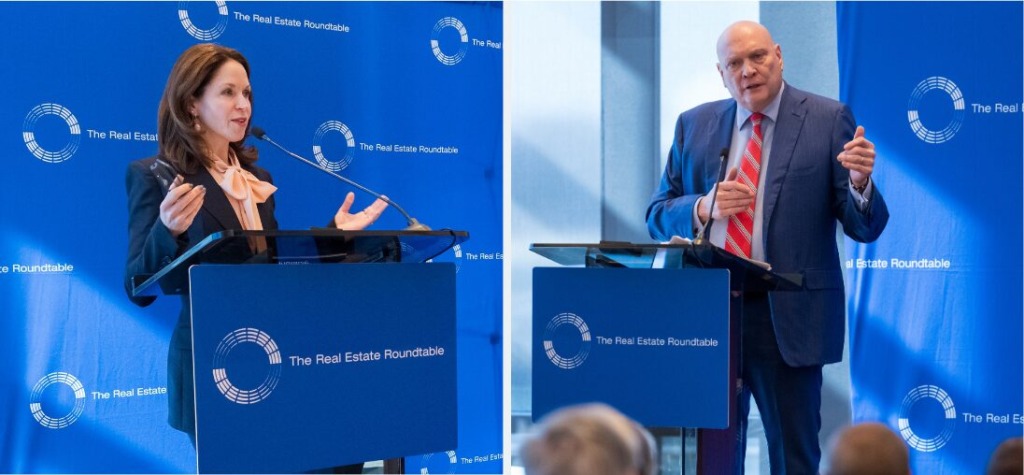
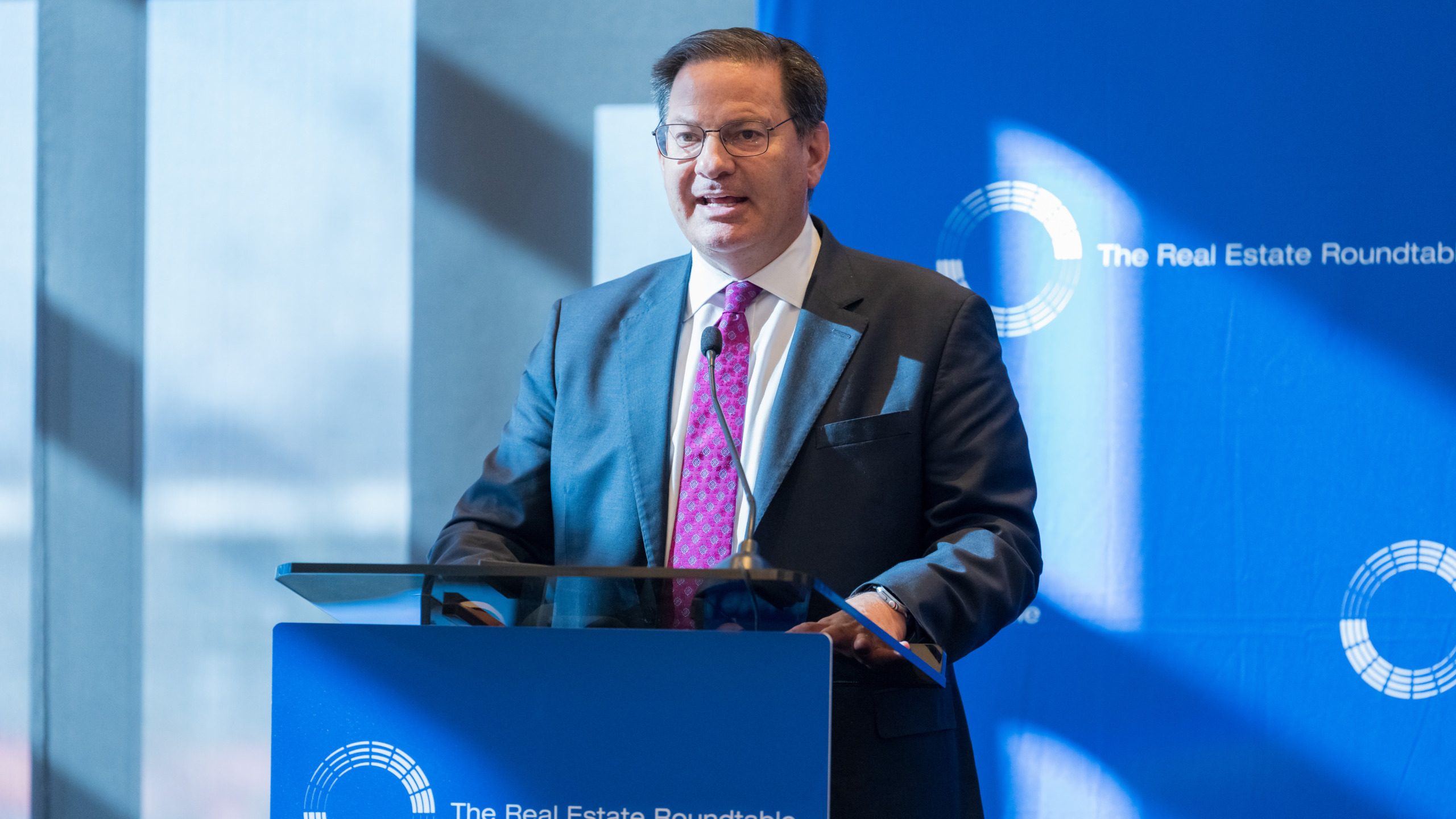
Meeting Speakers
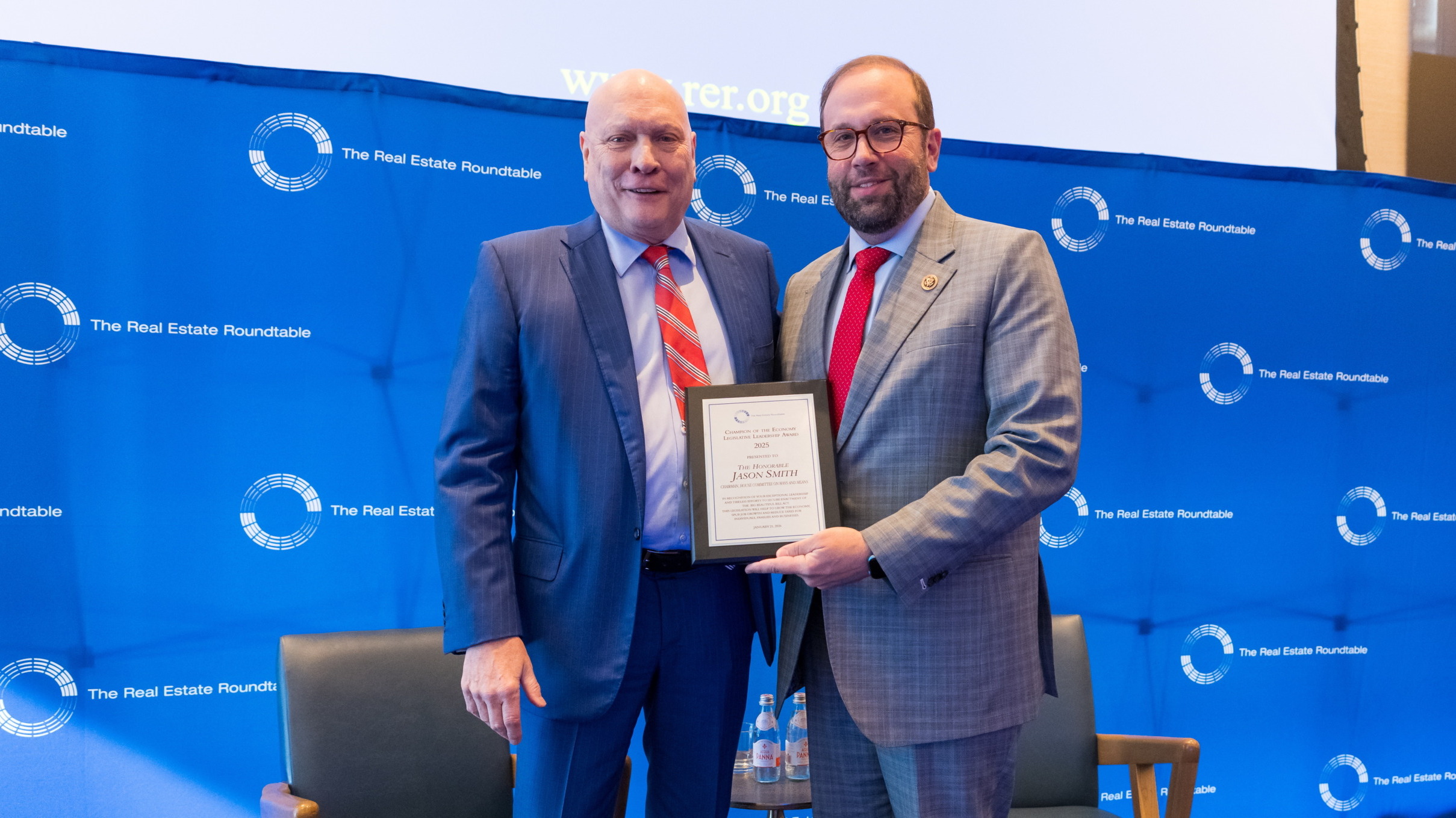
Rep. Jason Smith (R-MO) (Chair, House Ways and Means Committee) was presented RER’s Champion of the Economy Legislative Leadership Award for his efforts on the One Big Beautiful Bill Act (OB3). He discussed the committee’s work ahead on bipartisan tax initiatives, trade issues, affordability, and housing-related incentives such as the low-income housing tax credit (LIHTC).
Mark Halperin (Editor-in-Chief, 2WAY; Host, “Next Up”) provided an overview of the current political environment, discussing President Trump’s governing style, the dynamics shaping the 2026 midterms, and early positioning for the 2028 presidential field.
Rep. Andy Barr (R-KY) (Chairman of the Financial Institutions Subcommittee on the House Financial Services Committee; Member, House Committee on Foreign Affairs) discussed the committee’s expected early action to extend the TRIA Program Reauthorization Act of 2026 (H.R. 7128), emphasized the importance of regulatory reform to strengthen capital formation and credit availability, discussed the Committee’s the bipartisan Housing for the 21st Century Act (H.R. 6644) and argued that boosting housing supply—and supporting financing capacity— is essential to improving affordability.
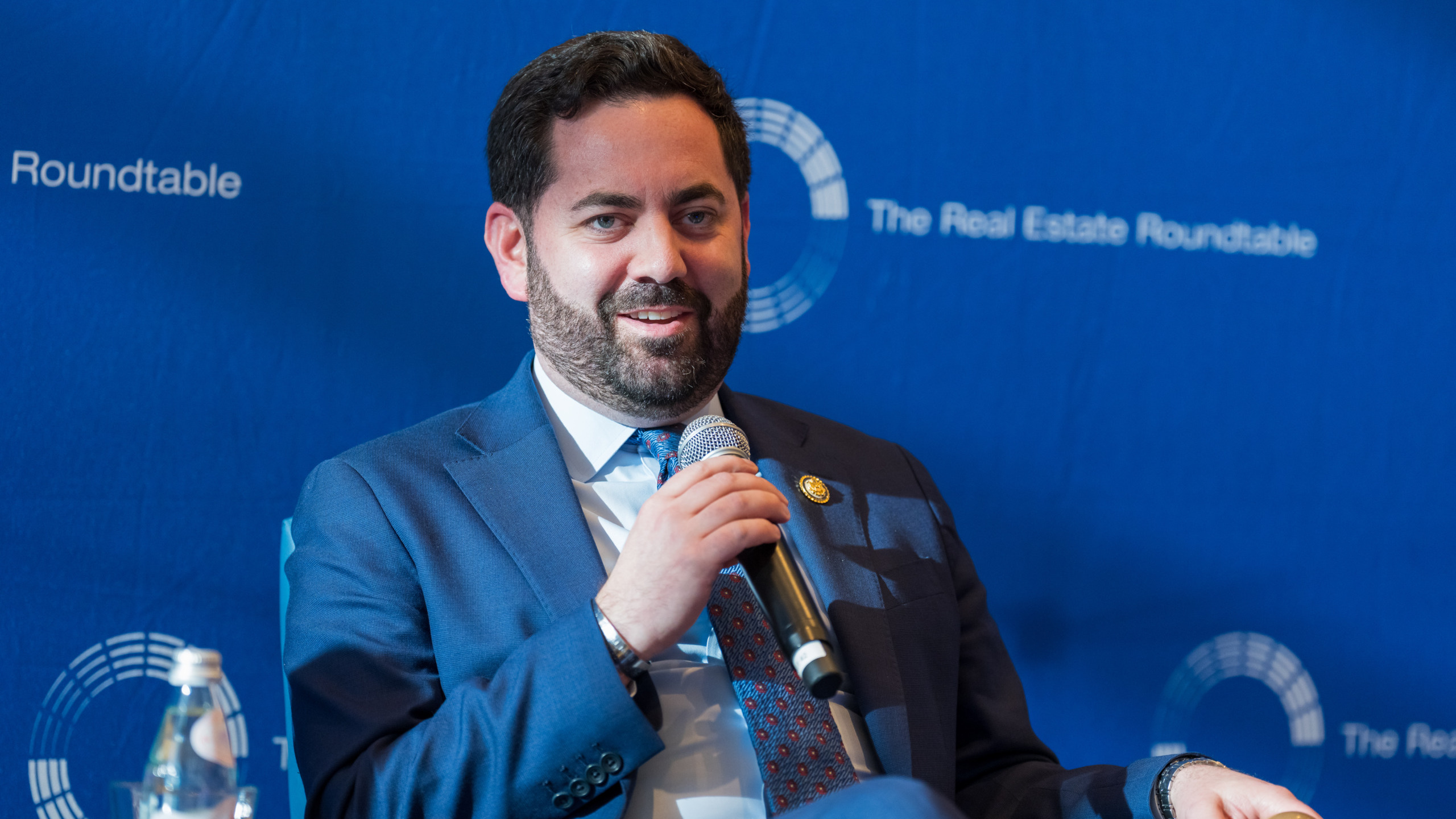
Rep. Mike Lawler (R-NY) (Member, House Committees on Financial Services and Foreign Affairs) stressed the importance of bipartisan legislating, framed housing affordability as a supply-and-investment challenge, and urged regulatory relief to spur new development. He also highlighted his bipartisan, bicameral transit-oriented housing bill, Build Housing, Unlock Benefits and Services (HUBS) Act, which would cut red tape and expand federal infrastructure loan tools to support transit-oriented development and boost housing supply. (Roundtable Weekly, Jan. 16)
Philip L. Swagel (Director, Congressional Budget Office) delivered a macroeconomic outlook on growth, inflation, and interest rate expectations, and highlighted long-term fiscal pressures, tariff and immigration dynamics, and the need to reduce regulatory bottlenecks that constrain housing supply and infrastructure investment.
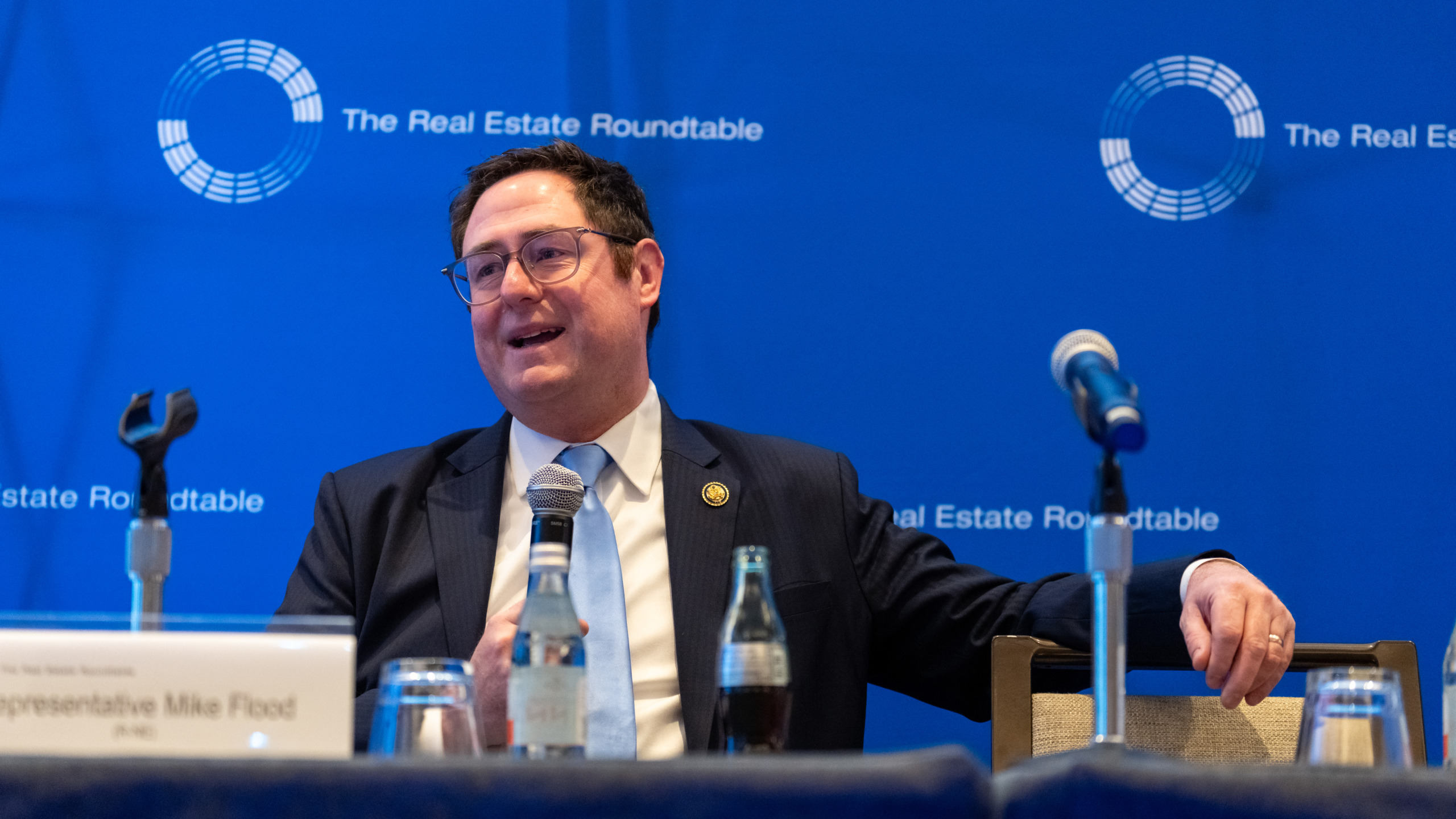
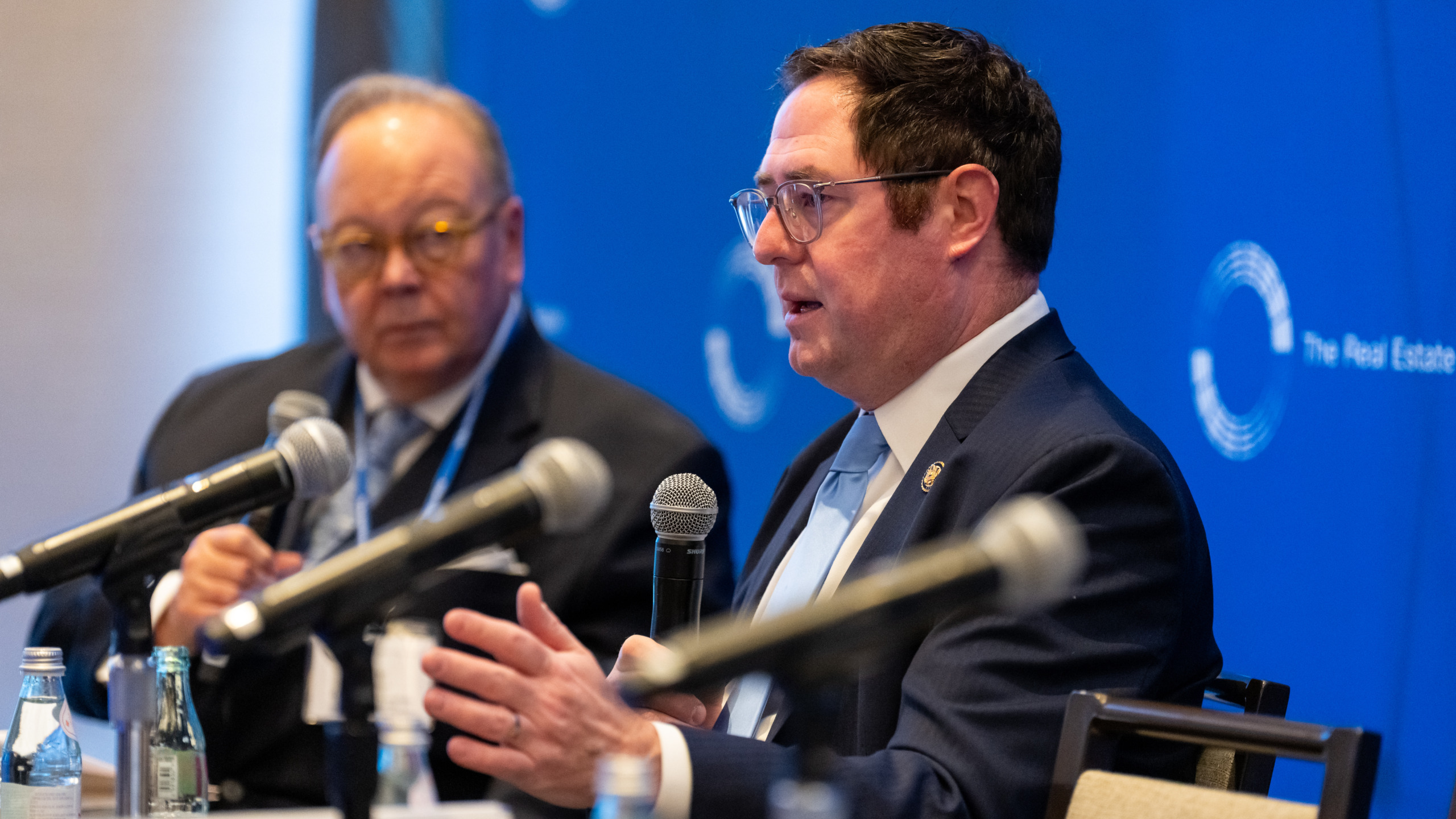
Rep. Mike Flood (R-NE) (Chairman, House Financial Services Committee, Subcommittee on Housing and Insurance) joined a joint session of RER’s Real Estate Capital Policy Advisory Committee (RECPAC) and Research Committee to address housing and insurance priorities for the year ahead, including his TRIA Program Reauthorization Act of 2026 (H.R. 7128), the National Flood Insurance Program, and efforts to improve housing supply and affordability.
Committee Meetings
Joint Real Estate Capital Policy Advisory Committee (RECPAC) and Research Committee
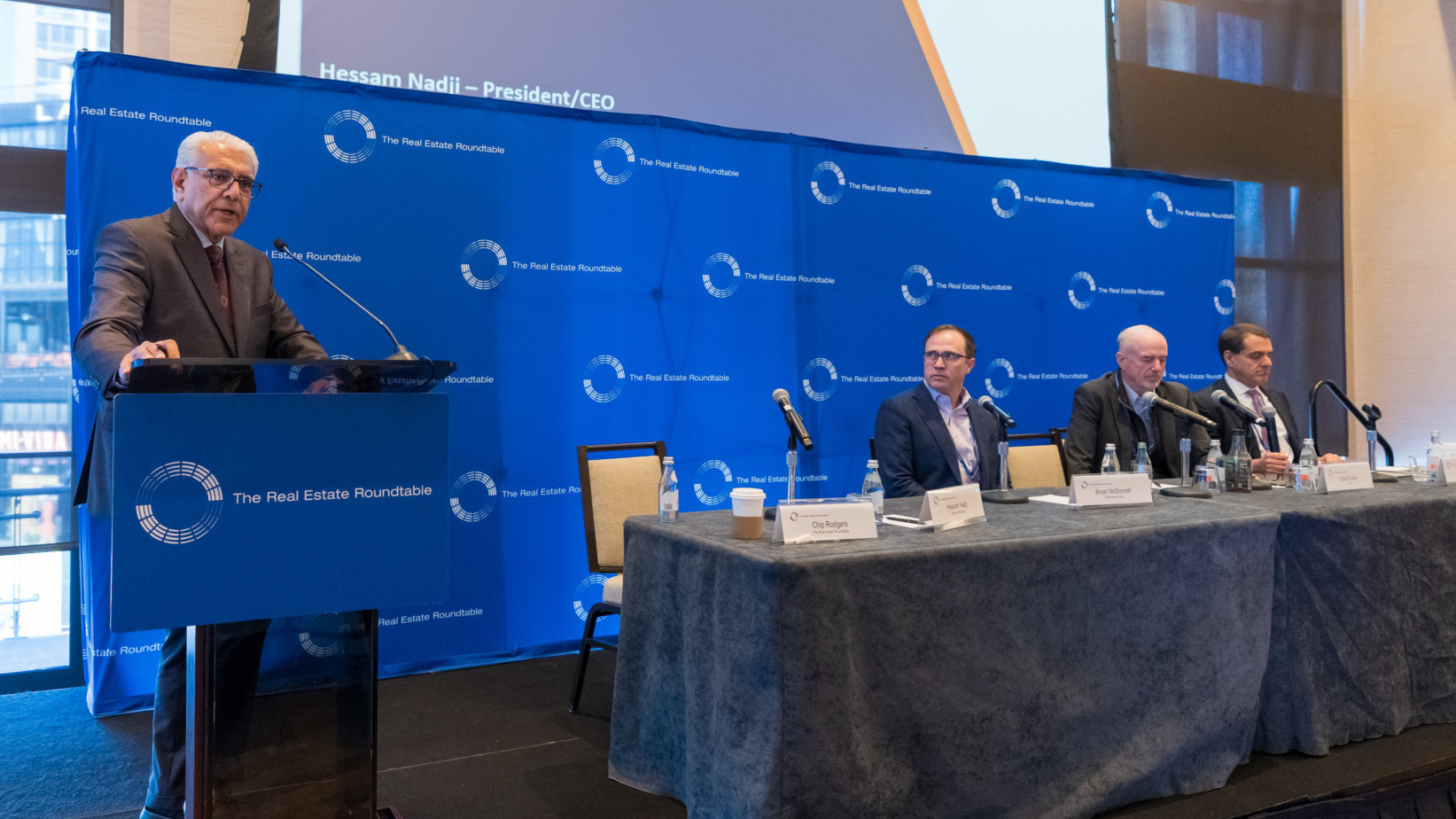
During the joint session, Hessam Nadji, (President & CEO, Marcus & Millichap) made a presentation on the Commercial Real Estate Investment Outlook for 2026 and led a market discussion with RECPAC Co-Chair Bryan McDonnel (Managing Director, Chair of Global Debt & Agriculture, PGIM Real Estate), David Fowler (BNY), and Andy Richard (Citigroup Global Markets Inc.). Genger Charles (Amherst), Sheila Greenwood (Invitation Homes), Lou Hayden (American Homes), and Ama Romaine (Pretium), held a panel on addressing the administration’s proposed restriction on institutional investments in single-family rentals. (See more in Housing story below)(See more in Housing story below) (Agenda & Speakers)
Tax Policy Advisory Committee (TPAC)
Kevin Salinger (Treasury Deputy Assistant Secretary, U.S. Treasury Department), Thomas Barthold (Chief of Staff, Joint Committee on Taxation), and other government speakers joined TPAC Chair Joshua M. Parker (Chairman & Chief Executive Officer, Ancora L&G), TPAC Vice Chair David Friedline (Partner, Deloitte Tax LLP) and committee members to discuss the continuing implementation of the OB3 Act, recent policy developments affecting sovereign investors in U.S. real estate, and the outlook ahead for tax legislation and regulatory changes. (Agenda & Speakers)
Sustainability Policy Advisory Committee (SPAC)
SPAC Vice Chair Tamara Chernomordik (VP, Corporate Responsibility, Kimco Realty led discussions on federal-state energy policy dynamics, the solar outlook, ENERGY STAR and Better Buildings, permitting reform, electricity reliability, AI-related load growth, and building performance standards. (Agenda & Speakers)
Homeland Security Task Force (HSTF)
Co-Chairs John Giacalone (VP, Global Safety and Security, Hilton Worldwide) and Amanda Mason (Executive Director, Global Intelligence, Related Companies) led a series of discussions on the evolving physical and cyber threat picture. Also joining the discussion were representatives of the FBI who discussed their new Homeland Security Task Force, Foreign Terrorist Organizations (FTO), and Criminal Activity; and Sports and Gaming (in light of the World Cup). The Task Force also discussed the growing importance of data center security as AI drives new operational and counterintelligence challenges. (Agenda & Speakers)
Next on RER’s FY 2026 meeting calendar is the Spring Roundtable Meeting in April. The Spring Meeting is limited to Roundtable-level members only.
Homeland Security
House Financial Services Committee Advances Long-Term TRIA Reauthorization Legislation
The coalition letter emphasized that acting in 2026 would provide long-term certainty and help avoid disruptions if reauthorization were to slip into the program’s final year.
The legislation would also shorten the Treasury Department’s certification window for determining an act of terrorism from 90 days to 30 days, enabling claims to move sooner, along with other technical updates.
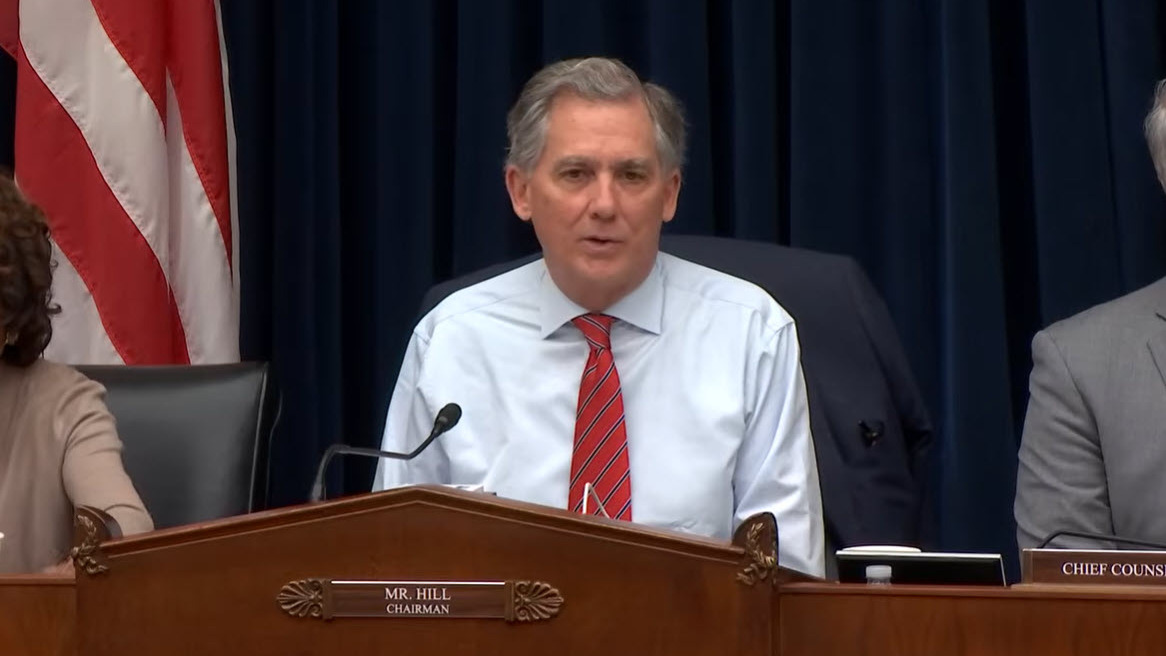
House Financial Services Committee Chairman French Hill (R-AR) said in his opening statement, “Extending TRIA not only safeguards American businesses but ensures that our economy remains resilient against potential threats.” (Press Release, Jan. 22)
Why It Matters
TRIA was originally enacted in 2002, following the 9/11 attacks. The program has been reauthorized four times—in 2005, 2007, 2015, and 2019—and is currently set to expire on Dec. 31, 2027.
While TRIA has never been triggered, it has provided a crucial backstop against losses from terrorist attacks for nearly two decades.
At almost no cost to the taxpayer, the TRIA Program has been the key factor in ensuring that the private insurance market has remained intact and continues to meet the needs of commercial policyholders during the on-going threat of a future terrorist attack—all while minimizing federal taxpayer exposure.
Roundtable Advocacy
Rep. Mike Flood (R-NE), lead sponsor of the bill at RER'S SOI RECPAC meeting
Since 9/11, RER has been at the forefront of efforts to enact a federal program to enable American businesses to secure the terrorism risk insurance coverage they need.
RER helped establish CIAT, a broad coalition of commercial insurance consumers formed immediately after 9/11 to ensure that businesses could obtain comprehensive and affordable terrorism insurance. (CIAT Talking Points on TRIA Reauthorization)
In September 2025, the House Housing and Insurance Subcommittee held a hearing on TRIA reauthorization, where members and witnesses from both parties voiced strong support for renewing the program ahead of its expiration. CIAT also sent a letter before that hearing, warning that a lapse would trigger “a period of profound economic slowdown, posing a very real threat to our economic and homeland security.” (Roundtable Weekly, Sept. 19)
The bill (H.R. 7128) now advances to the full House for consideration. RER and its CIAT coalition will continue working with policymakers to secure a long-term TRIA reauthorization ahead of 2027
Housing
Executive Order Seeks to Restrict Institutional Single-Family Home Purchases Amid Affordability Push
This week, President Donald Trump signed an Executive Order directing federal agencies to restrict large institutional investors from purchasing single-family homes, framing the action as part of a broader effort to restore housing affordability and expand homeownership. (WSJ, Jan. 20)
State of Play
The Executive Order directs leaders at HUD, Treasury, FHFA, USDA, VA, and GSA to issue guidance limiting federal programs and government-sponsored enterprise (GSE) activities that facilitate institutional purchases of single-family homes that could otherwise be purchased by owner-occupants. (White House EO, Jan. 20)
The Order instructs the Treasury Secretary to develop formal definitions of “large institutional investor” and “single-family home” within 30 days, signaling that further details on implementation are to come. (White House EO, Jan. 20)
Agencies are also directed to promote first-look policies and disclosure requirements favoring individual buyers, while including narrow exceptions for build-to-rent communities planned and constructed as rental housing, and potentially other types of projects. (White House EO, Jan. 20)
DOJ and the FTC are instructed to review large-scale investor acquisitions in local housing markets for potential anticompetitive behavior, including coordinated vacancy or pricing strategies. (White House EO, Jan. 20)
Notably, the Order appears to focus on future acquisitions and does not contain language requiring sale, divestment, or unwinding of existing holdings, instead assuming continued ownership by requiring disclosure from current owners of single-family rentals. (White House EO, Jan. 20)
Remarks from Davos
Speaking at the World Economic Forum in Davos, Switzerland this week, President Trump reiterated many of the key points from the Executive Order.
In his speech, President Trump argued that institutional investors have distorted the housing market, stating that “homes are built for people, not for corporations,” and asserting that large firms purchasing “as much as 10 percent of houses on the market” have crowded out families and first-time buyers. (CNBC, Jan. 21)
President Trump also noted a complementary effort to lower borrowing costs, stating, “I’ve instructed government-backed institutions to purchase up to $200 billion in mortgage bonds to bring down interest rates.” (CNBC, Jan. 21)
Activity on Capitol Hill
Housing affordability was also a focus for leaders on Capitol Hill this week. HUD Secretary Scott Turner told the House Financial Services Committee that the administration is prioritizing housing supply expansion and regulatory rollback.
Sec. Turner cited HUD’s elimination of the Affirmatively Furthering Fair Housing (AFFH) rule—which he said “did not build one home” and functioned as a de facto national zoning mandate—as part of a larger push to cut red tape, empower local decision-making, and promote homeownership. (HUD Secretary Turner Testimony, Jan. 21)
On Thursday, the House Oversight Subcommittee on Economic Growth held a hearing titled “Housing Affordability: Saving the American Dream,” examining regulatory barriers, supply constraints, and market-based approaches to lowering housing costs. (House Oversight Committee, Jan. 22)
NAHB Chairman Buddy Hughes testified that regulatory burdens are a central driver of affordability challenges, noting that “nearly 24 percent of the price of a new single-family home is due to regulatory regimes at the state, local and federal levels,” which he said directly increase costs and limit housing production. (Witness Statement, Jan. 22)
AEI Housing Center Co-Director Edward Pinto told lawmakers that restrictive state and local land-use regulations are an “immovable object” constraining supply and driving prices higher, while demand-side measures alone risk exacerbating price pressures. (Witness Statement, Jan. 22)
What's Next
The White House has indicated that additional housing-related executive actions are under consideration, particularly measures aimed at first-time homebuyers, as the administration looks to demonstrate progress on housing affordability ahead of the midterm elections. (Washington Post, Jan. 9)
The administration has also signaled its intent to pursue legislation that codifies elements of the Executive Order banning institutional investors from purchasing single-family homes, though prospects remain uncertain given jurisdictional, legal, and political hurdles. (White House EO, Jan. 20 | FOX Business, Jan. 21)
RER Advocacy
RER has consistently emphasized that expanding housing supply—not restricting capital—is the most effective path to improving affordability.
During this week’s RECPAC meeting, Genger Charles (Amherst), Sheila Greenwood (Invitation Homes), Lou Hayden (American Homes), and Ama Romaine (Pretium) participated in a member panel examining proposals to restrict institutional investment in single-family homes and the implications for housing supply, affordability, and capital formation.
Panelists emphasized that institutional investors are one piece of the housing ecosystem—not the reason homebuyers are being priced out, pointing instead to chronic supply shortages, elevated interest rates, and local regulatory barriers that raise costs and constrain production.
RER has also highlighted research showing affordability pressures are driven primarily by supply shortages, construction costs, and mortgage rates—not institutional ownership levels. (Roundtable Weekly, Jan. 9)
RER President and CEO Jeffrey DeBoer has stressed that “the gap between supply and demand is the true cause of today’s housing crisis,” calling for common-sense reforms that remove barriers to development and maintain incentives for the capital needed to build, modernize, and expand the nation’s housing stock. (Roundtable Weekly, Jan. 9)
RER will continue working with policymakers and the administration to advance supply-forward housing solutions that increase production, preserve access to capital, and help families—whether renters or homeowners—achieve the American Dream.
Energy Policy
RER, Nareit Urge Practical GHGP “Scope 2” Standards for Real Estate’s Energy Purchases
This week, The Real Estate Roundtable (RER) and Nareit submitted joint feedback to the Greenhouse Gas Protocol (GHGP) on proposed updates to its Scope 2 Guidance. The submission urges GHGP to preserve optional hourly and narrow geographic matching for bulk clean energy purchases, rather than make these strict “24/7” procurement conditions mandatory. (Summary memo | detailed comments, Jan. 23)
Background
Scope 2 emissions result from the generation of electricity, steam and other power purchased or acquired by a customer from a utility provider or grid operator. These emissions are not directly controlled by building owners or tenants, but depend on the types of fuels that power off-site grid infrastructure. (US-EPA)
Last year, GHGP unveiled a set of proposed revisions to its Scope 2 Guidance. GHGP’s recommended modification to its global guidelines would require companies to match clean energy procurements (such as renewable energy certificates or power purchase agreements) to their actual electricity consumption on an hour-by-hour basis, rather than on an annual basis—a practice often referred to as “24/7 matching.” (GHGP Press Release, Oct. 20)
The changes also proposed tight narrowing of geographic deliverability standards, requiring the purchased clean energy to be co-located on-site and/or within the same local grid segment.
RER and Nareit Collaboration
The comments RER and Nareit submitted this week emphasize that 24/7 matching is not practicable for the vast majority of U.S. businesses that use GHGP guidance to voluntarily account for Scope 2 emissions.
As RER and Nareit explained, 24/7 matching is not workable as a “one size fits all” standard practice for commercial building owners because they do notcontrol how much energy tenants use. Owners of multi-tenant buildings do not have dependable access to leased space energy data on a monthly—much less hourly—basis. (Summary memo)
The joint RER-Nareit comments also explain that there is not enough solar or wind generation in many U.S. markets to support GHGP’s restrictive geographic deliverability mandate, and market and policy headwinds are expected to make corporate investments in renewables more challenging in the short term.
Further, RER and Nareit raised concerns about scientific validity, noting that electricity does not physically flow in accordance with contractual arrangements and that strict hourly “matching” is a misleading accounting construct.
RER and Nareit back an alternative approach put forth by GHGP working group participants that would maintain the current Scope 2 Guidance approach, allowing for—but not requiring—optional 24/7 matching.
Why It Matters
GHGP’s existing Scope 2 “quality control” criteria are a proven, successful framework that have helped spur significant growth in U.S. clean power purchases since 2015. The 24/7 matching mandate would reverse this trend.
Mandating strict time and place restrictions for corporate procurements like RECs will make compliance burdens with the Scope 2 Guidelines more onerous, increase costs, disincentivize private sector investments in clean energy—and not result in better information for investors.
January 31 Deadline
Individual companies that use the Scope 2 Guidance may decide to submit their own comments to GHGP, by the group’s Jan. 31 deadline via its online “public consultation” survey portal.
Real estate companies and their assurance providers submitting direct feedback to GHGP may wish to incorporate points from the joint RER/Nareit summary memo and detailed comments.
RER, Nareit and allied real estate stakeholders will remain engaged to advocate for a practical, science-based Scope 2 framework as GHGP moves to adopt new guidance.


 Menu
Close
Menu
Close
 About Us