Policymakers and Industry Leaders Address CRE Policy Priorities at Annual Meeting
The Real Estate Roundtable’s (RER) 2026 Annual Meeting this week included discussions with policymakers and industry leaders on issues affecting commercial real estate, including housing supply, tax policy, capital and credit markets, energy and grid reliability, federal buildings, data centers, tariffs, foreign capital, and evolving security threats. (RER Policy Priorities | Executive Summary)
Roundtable Leadership
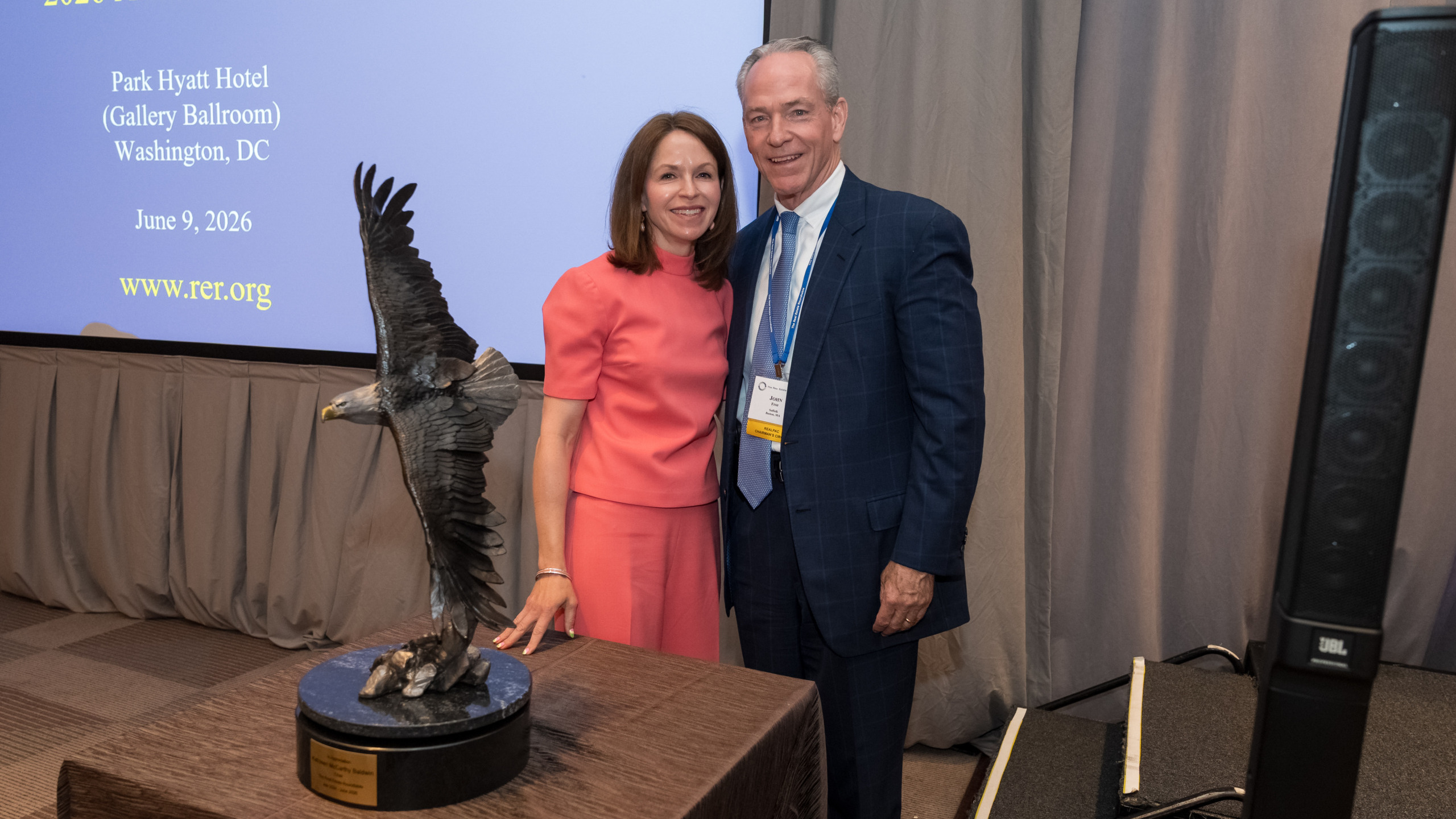
L-R: RER Chair Kathleen McCarthy Baldwin & Immediate Past Chair John Fish
RER Chair Kathleen McCarthy Baldwin (Former Global Co-Head of Real Estate, Blackstone) opened the meeting by welcoming members and highlighting the importance of RER’s policy advisory committees to the industry’s advocacy work. (RER Policy Priorities | Executive Summary)
Immediate Past Chair John Fish (Chairman & CEO, SUFFOLK) commended McCarthy Baldwin’s service and dedication as Chair of RER.
“Kathleen’s impact can be seen in nearly every aspect of The Roundtable today,” Fish said. “She has strengthened our communications, elevated our meetings, and helped ensure RER remains a powerful, respected voice for real estate in Washington.”
McCarthy Baldwin thanked the board, membership, and staff, calling it a “huge honor” to chair an organization that is effective in advancing policies that shape the built environment and support the people who live, work, and visit buildings across the country.
Owen D. Thomas (Chairman and CEO, BXP) will begin his three-year term as RER Chair on July 1, 2026.
During the meeting, RER members approved the nominees for its FY2027 board of directors and policy advisory committees chairs, which were presented by RER Nominating Committee Chair Anthony E. Malkin (Chairman and Chief Executive Officer, Empire State Realty Trust, Inc.; Chair, RER Sustainability Policy Advisory Committee).
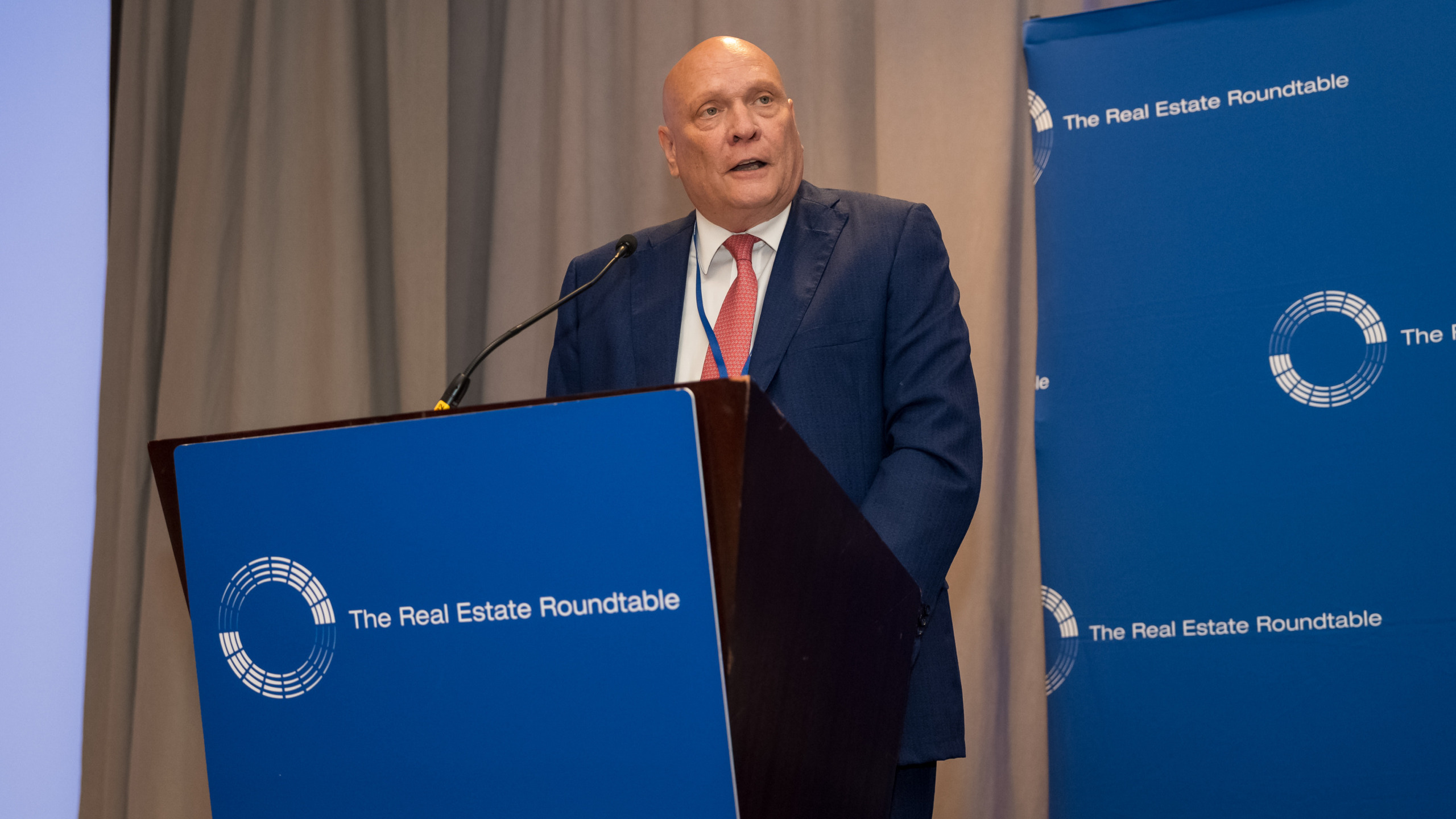
RER President and CEO Jeffrey DeBoer
Addressing the membership, RER President and CEO Jeffrey DeBoer said the past 12 months were “among the most complex and fast-moving in political history,” requiring smart, coordinated advocacy on housing supply, tax policy, energy, terrorism risk insurance, cyber information sharing, and capital markets. (DeBoer Remarks, June 10)
He emphasized that RER’s strength comes from its “big tent” approach, bringing together members, policy advisory committees, and national real estate partners to deliver a unified, data-driven voice in Washington and advance policies that support smart supply, appropriate capital, and business certainty.
Meeting Speakers
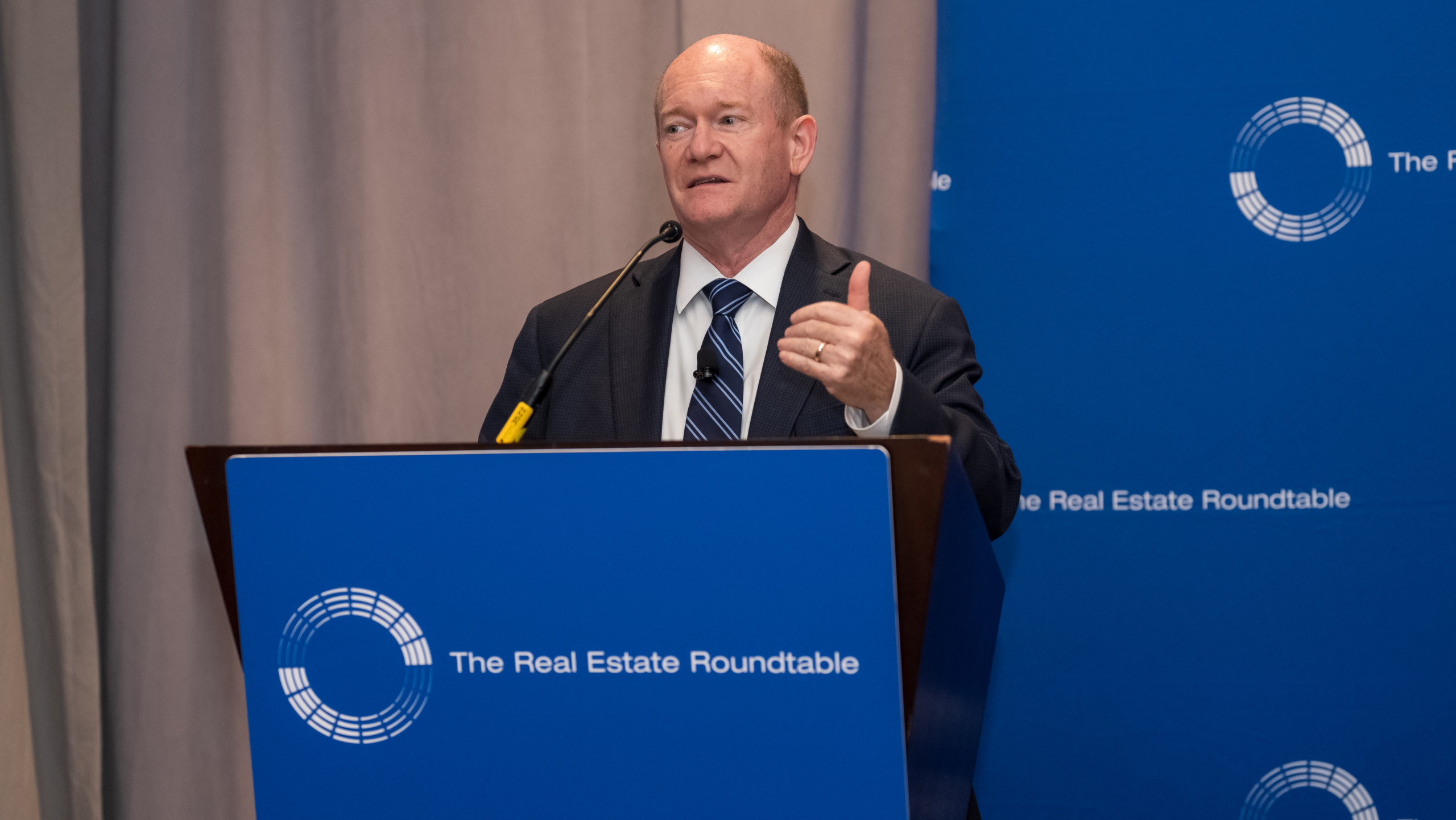
Sen. Chris Coons (D-DE) (Committees: Appropriations, Foreign Relations, Judiciary, Small Business and Entrepreneurship, and Ethics) connected the housing supply crisis to broader questions of economic growth, affordability, infrastructure, and U.S. competitiveness, emphasizing the need for bipartisan solutions on workforce housing, building conversions, tariffs, grid reliability, data centers, and global instability.
Curt Beaulieu (Senior Policy Adviser to House Speaker Mike Johnson) joined RER Tax Policy Advisory Committee (TPAC) Chair Josh Parker (Chairman & CEO, Ancora Group Capital), and Ryan McCormick (Senior Vice President and Counsel, RER) for a policy discussion on the One Big Beautiful Bill Act; the House Leadership’s tax, housing, and affordability agenda; potential legislation in the remainder of 2026; and the role industry leaders play in educating lawmakers.
The Honorable Edward Forst (Administrator, General Services Administration; Acting Archivist, The National Archives) outlined GSA’s efforts to consolidate and modernize the federal real estate footprint, improve transparency, and identify opportunities to reuse federal assets in cities across the country.
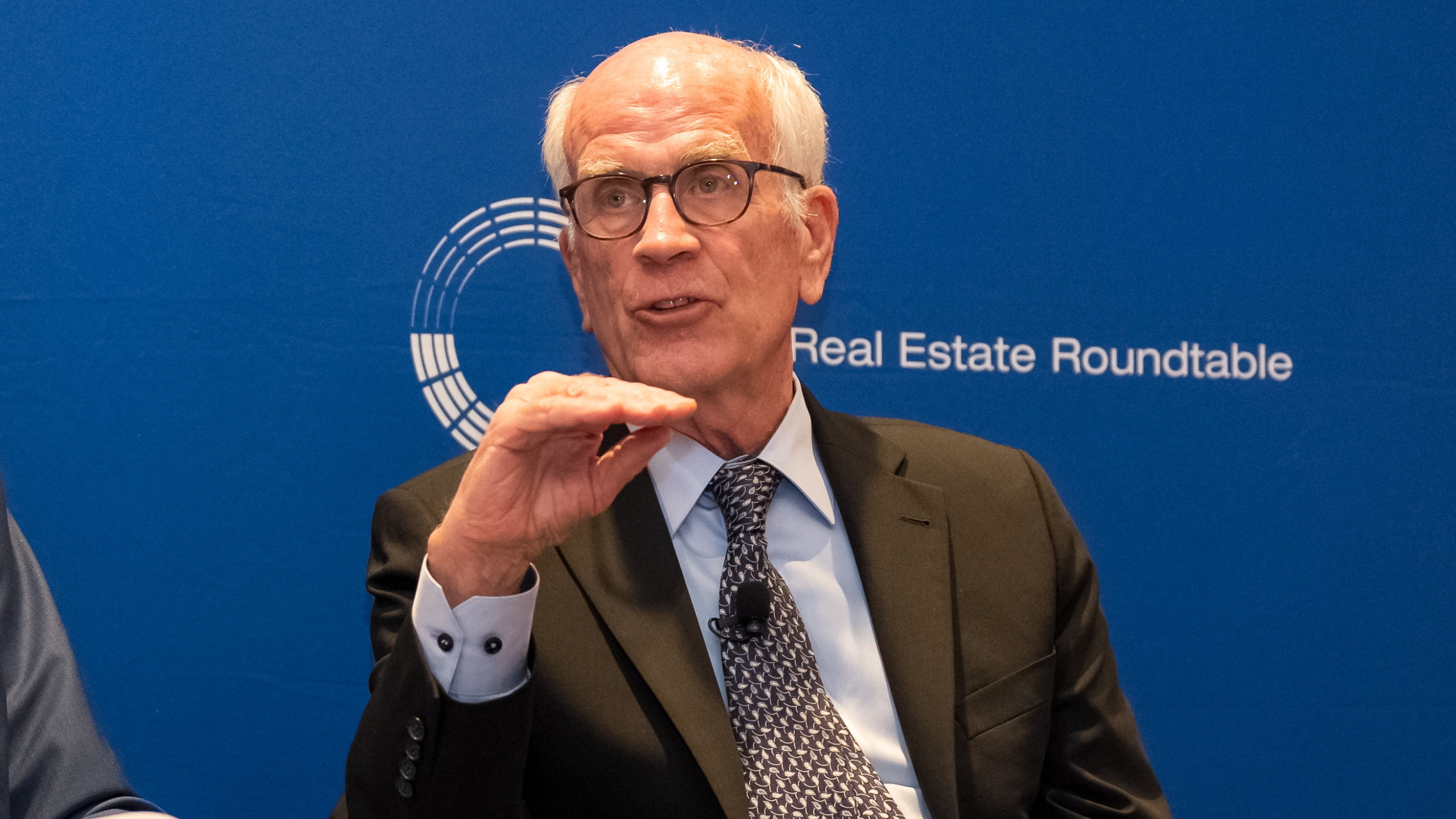
Sen. Peter Welch (D-VT) (Committees: Agriculture, Judiciary, Finance, and Rules & Administration) commented on Energy Star and energy efficiency, artificial intelligence, data centers, and the growing energy demands affecting property development and infrastructure.
Rep. Bill Huizenga (R-MI) (Vice Chair, House Financial Services Committee; House Foreign Affairs Committee) highlighted the Financial Services Committee’s work this year on terrorism risk insurance reauthorization, the 21st Century ROAD to Housing Act, and ongoing House-Senate efforts to advance the housing package to the president’s desk.
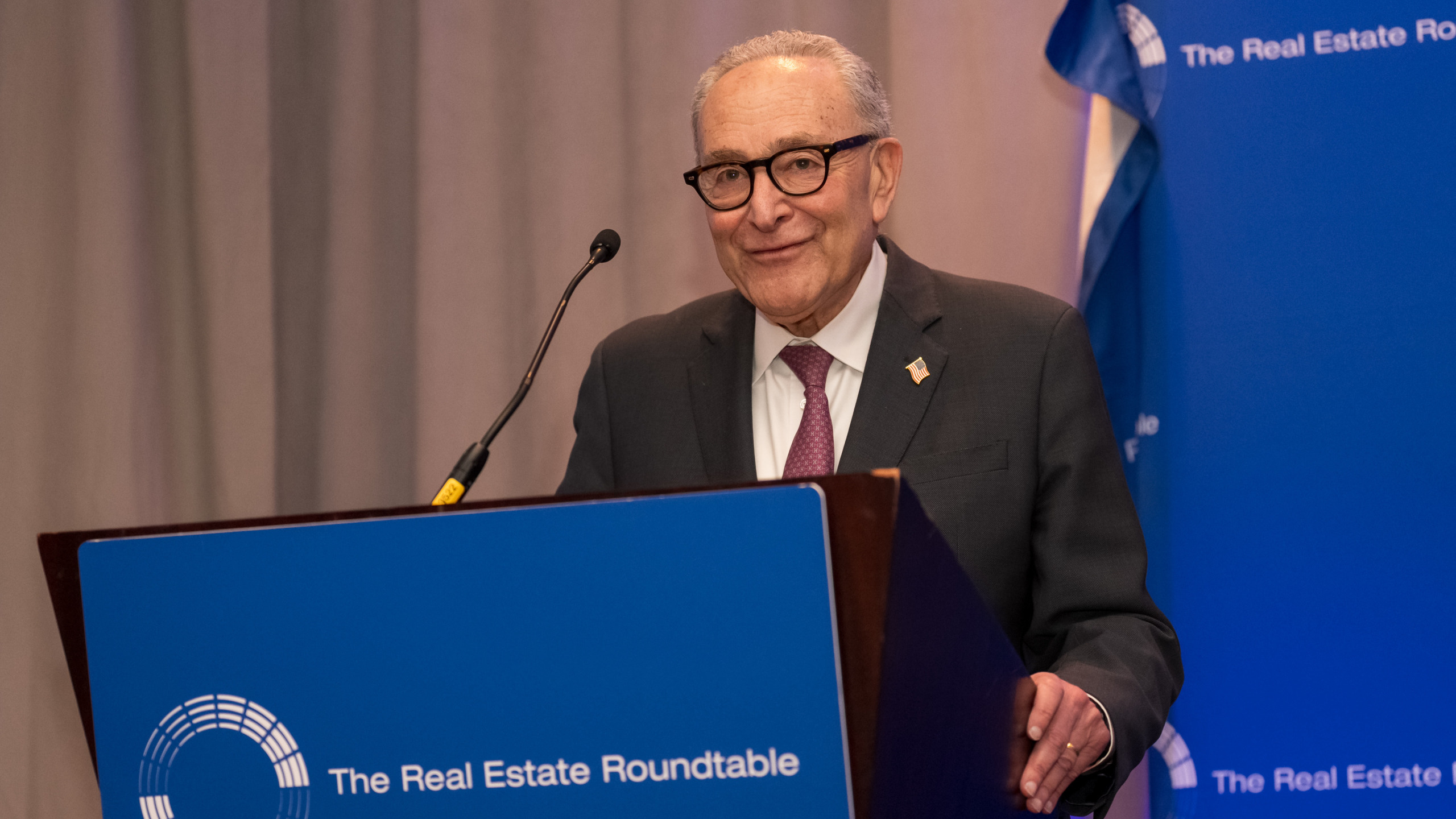
Senate Democratic Leader Charles Schumer (D-NY) outlined the policy and political challenges shaping the housing and economic debate, including tariffs, rising building costs, housing supply constraints, local zoning reform, tax incentives to convert obsolete buildings into housing, the Low-Income Housing Tax Credit, and the need to restore certainty to the economy.
Jonathan Martin (Politics Bureau Chief and Senior Political Columnist, Politico) discussed the political forces shaping Washington, the upcoming midterm elections, and the role of technology, media, and political identity in transforming American life.
RER’s 2026 Annual Report will be distributed in July. Next on RER’s FY 2027 meeting calendar is the Fall Meeting, which will take place on Nov. 11-12 and is restricted to Roundtable-level members only.
Roundtable Annual Meeting
Inside RER’s Policy Committee Discussions on Capital Markets, Tax Policy, Sustainability, and Homeland Security
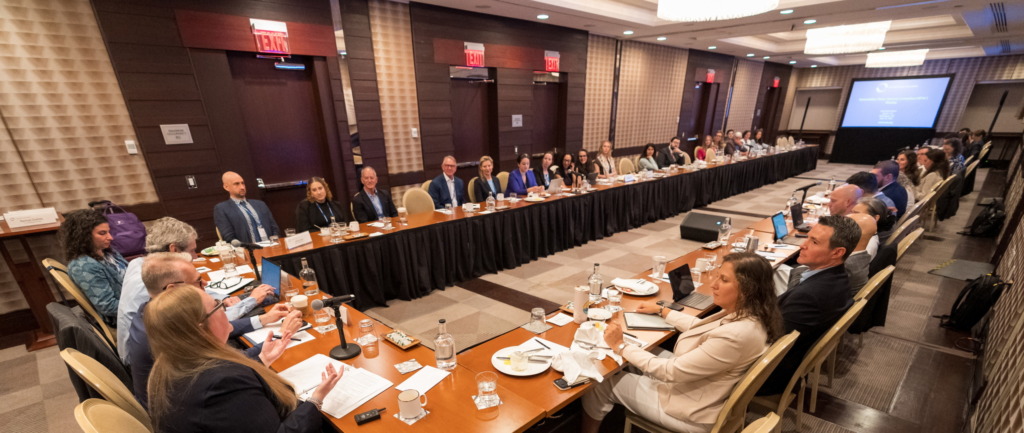
The Real Estate Roundtable’s (RER) policy advisory committees met this week during the 2026 Annual Meeting for focused discussions on the federal policy issues shaping commercial real estate, from capital formation and housing supply to tax policy, grid reliability, data centers, and security threats.
Joint Real Estate Capital Policy Advisory Committee (RECPAC) and Research Committee
The joint Real Estate Capital Policy Advisory Committee (RECPAC) and Research Committee meeting focused on financial regulation, capital markets, housing, terrorism risk insurance, the economic outlook, and market conditions. (RECPAC Research Agenda | RER's Capital & Credit Policy Priorities)
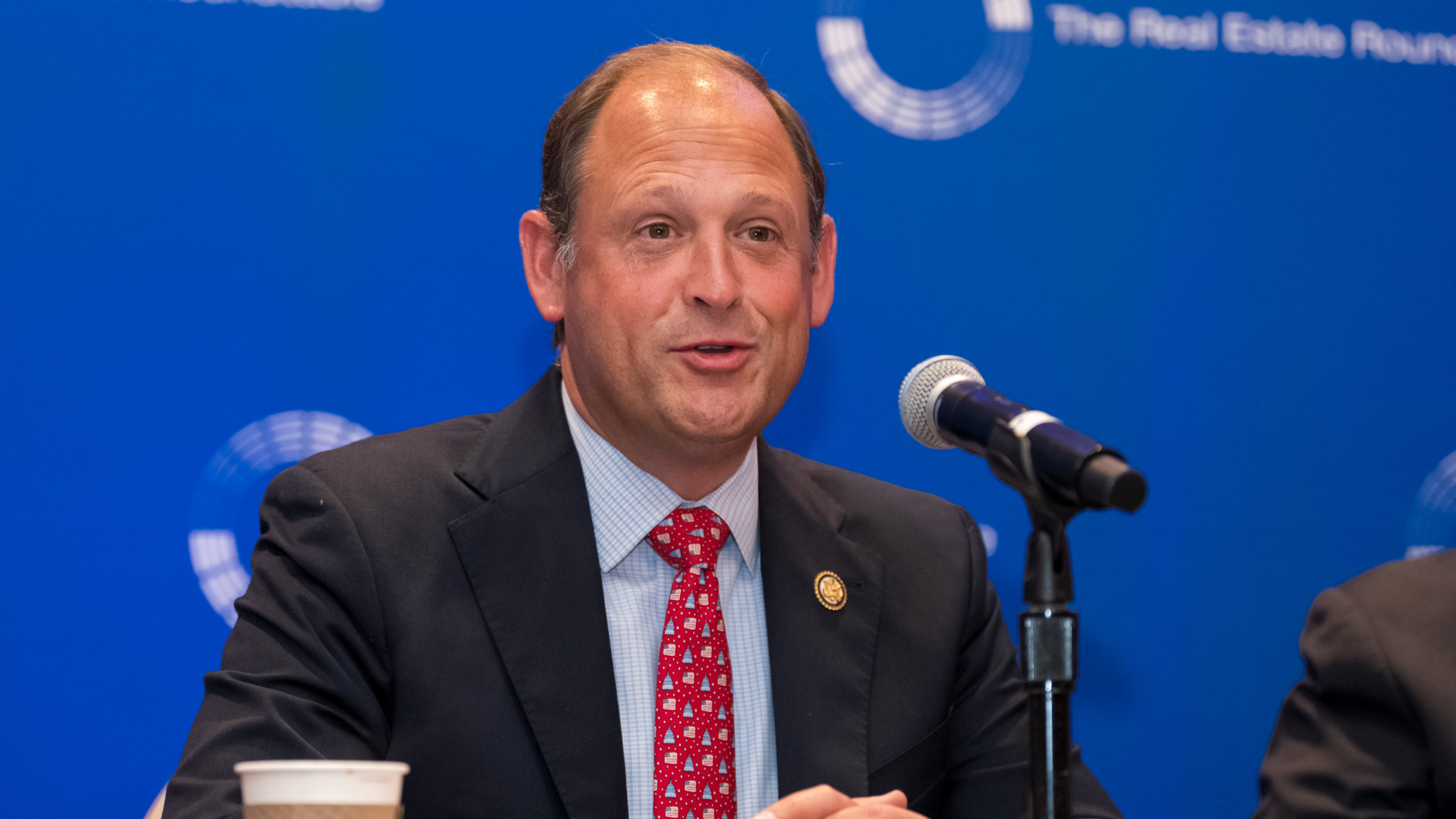
Rep. Andy Barr (R-KY)
Rep. Andy Barr (R-KY) (Chairman, House Financial Services Subcommittee on Financial Institutions; Member, Committee on Foreign Affairs) discussed the policy issues shaping credit capacity and capital formation for real estate, including the Basel III Endgame, the flow of institutional investment capital into real estate and housing, data centers, and U.S. competitiveness with China on artificial intelligence. He also highlighted the HFSC’s work on the TRIA Program Reauthorization Act of 2026 (H.R. 7128), the 21st Century ROAD to Housing Act, and his hope that the Senate will move the bipartisan housing package forward.
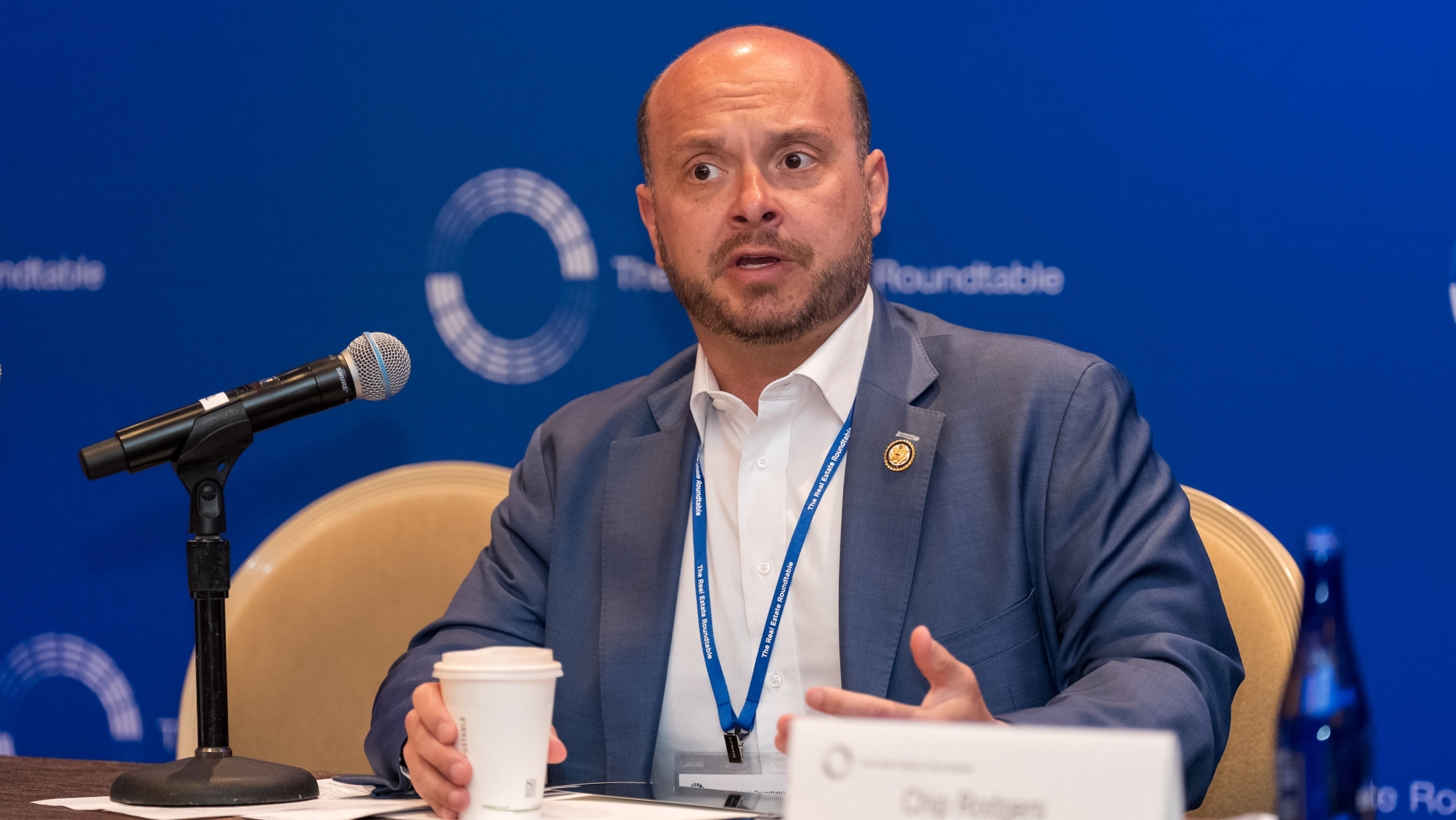
Rep. Andrew Garbarino (R-NY)
Rep. Andrew Garbarino (R-NY) (Chairman, House Homeland Security Committee; Vice Chairman, House Financial Services Subcommittee on Capital Markets) briefed members on terrorism risk insurance (TRIA), housing affordability, data centers, foreign capital and the Foreign Investment in Real Property Tax Act (FIRPTA). Rep. Garbarino emphasized the need to renew TRIA by the end of the year, ahead of its 2027 expiration.
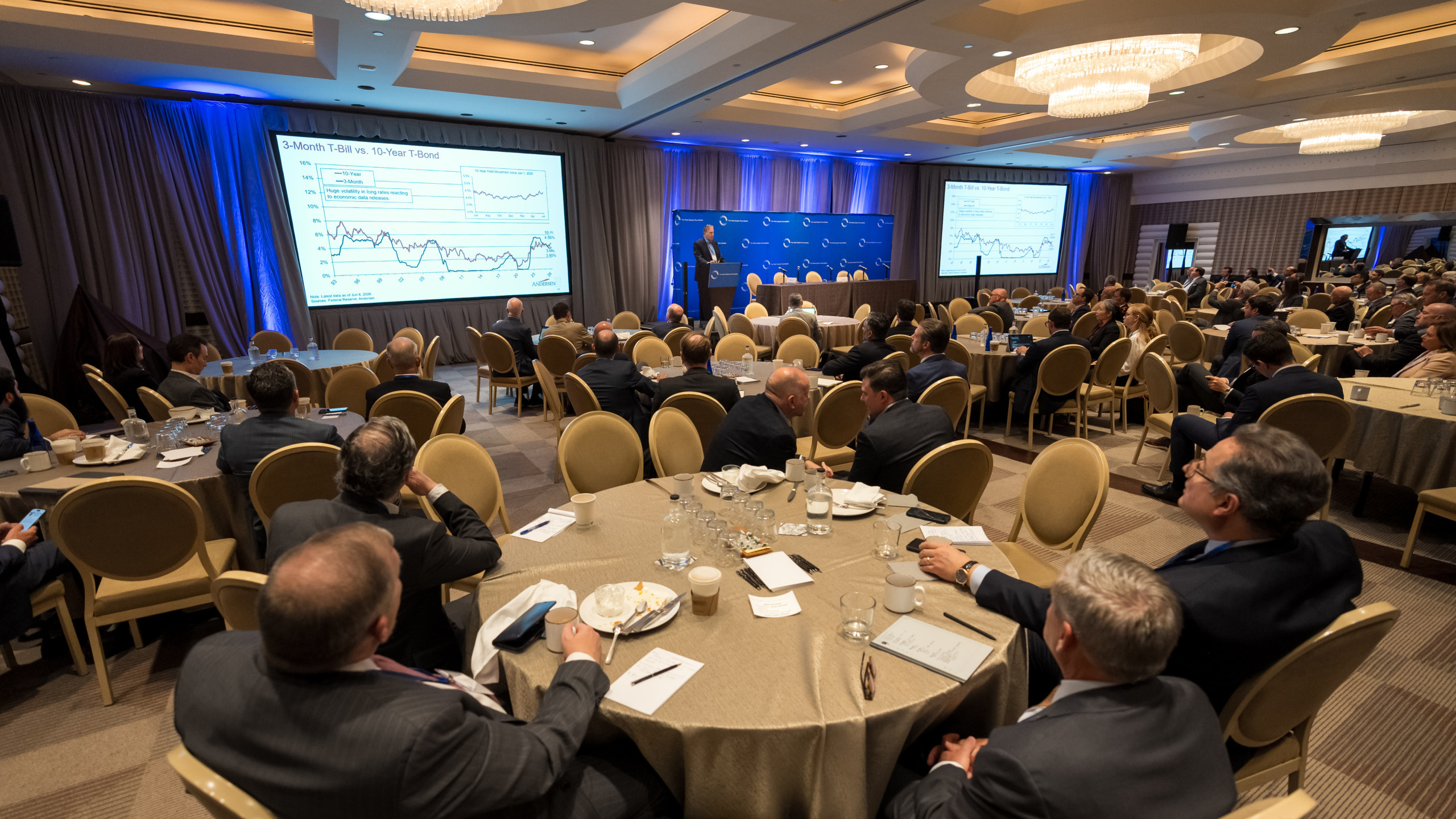
Kenneth Rosen (Managing Director, Andersen; Chair, Fisher Center for Real Estate and Urban Economics at the Haas School of Business, University of California, Berkeley) presented an overview of real estate markets, the outlook for interest rates and market conditions, and the role of AI and the growth of data center development. His talk also included the outlook for labor markets, the “K-shaped” economy, and varying conditions across real estate sectors.
Spencer Levy (Global Client Strategist & Senior Economic Advisor, CBRE) moderated a market discussion with Sam Chandan (Director, Chao-Hon Chen Institute for Global Real Estate Finance, NYU Stern School of Business); Rich Hill (Senior Managing Director and Global Head of Research & Strategy, Principal Asset Management); Darin Mellott (Head of U.S. Investor Research, CBRE); and Nicholas Seidenberg (Managing Director, Eastdil Secured).
The panel discussed real estate credit and capital market conditions, occupancy and sector-specific market trends, the outlook for housing, data center development and financing, and investment trends shaping the industry.
Tax Policy Advisory Committee (TPAC)
Tax Policy Advisory Committee (TPAC) Chair Josh Parker (Chairman & CEO, Ancora Group Capital) led discussions on tax legislation and regulatory issues affecting real estate, including reconciliation, the Rental Housing Investment Act, pass-through tax issues, housing investment, foreign investment tax policy, and other tax priorities under consideration in Washington. (TPAC Agenda | RER's Tax Policy Priorities)
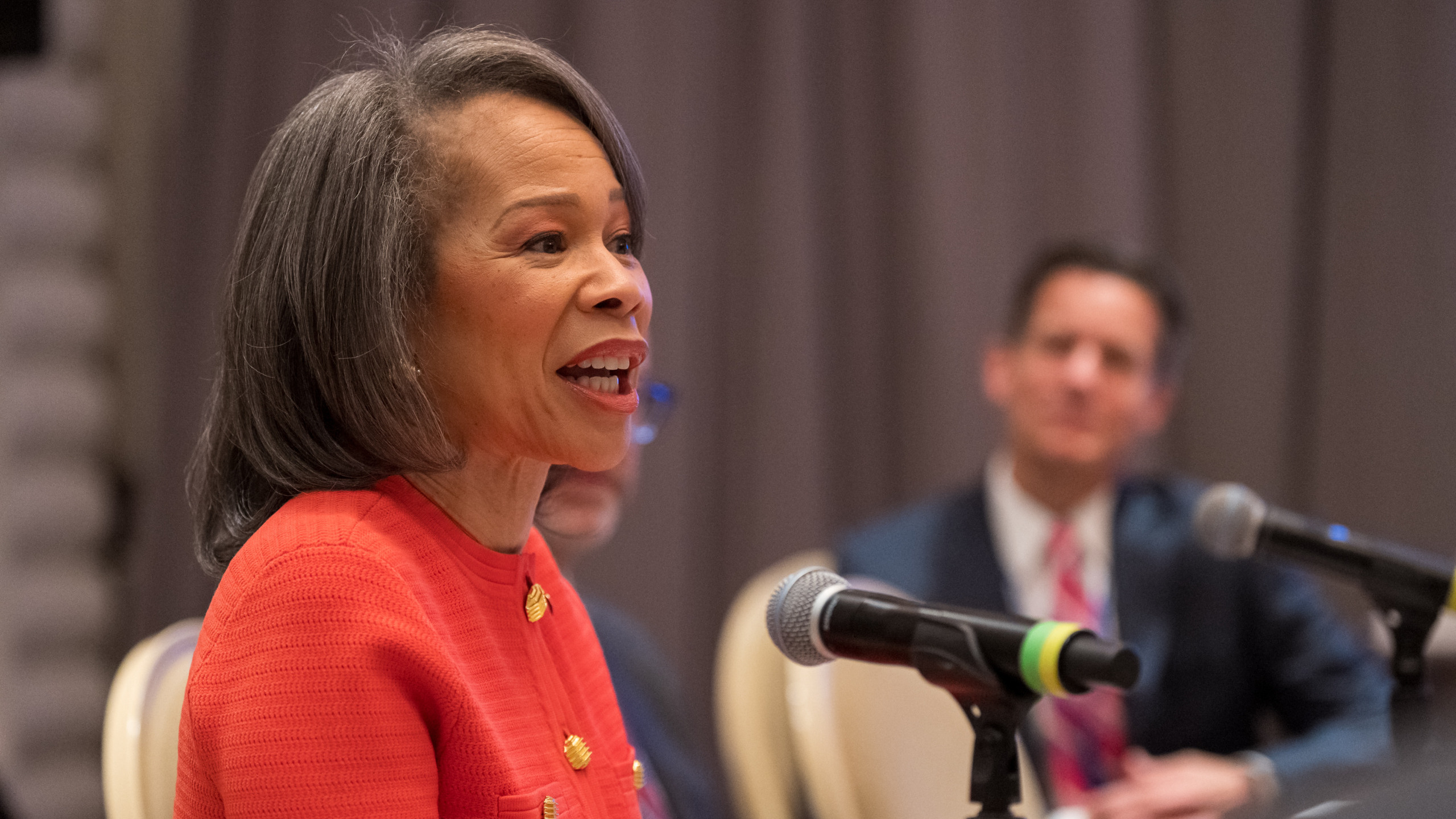
Sen. Lisa Blunt Rochester (D-DE)
Sen. Lisa Blunt Rochester (D-DE) (Committees: Banking, Housing, and Urban Affairs; Commerce, Science, and Transportation; Environment and Public Works; and Health, Education, Labor, and Pensions) joined TPAC members to discuss housing affordability and supply, including her legislation, the RER-supported Rental Housing Investment Act, as well as transit-oriented development and bipartisan approaches to expanding rental housing options. (Roundtable Weekly, March 27)
Andrew Grossman (Chief Tax Counsel, House Ways and Means Committee Democrats), Michael Gould (Tax Counsel, Senate Finance Committee Republicans), and Bobby Andres (Tax Advisor, Senate Democratic Leader Chuck Schumer) joined TPAC to discuss Congressional tax policy priorities, real estate, and the outlook ahead.
Treasury Tax Legislative Counsel Krishna Vallabhaneni provided an update on OBBBA implementation, Treasury regulatory initiative, and tax guidance projects affecting the real estate industry.
CJ Aberin (Principal and Co-founder, KBKG); Corey Husak (Director of Tax Policy, Center for American Progress); William McBride (Chief Economist, Tax Foundation); and Gilbert J. Winn (CEO, WinnCompanies) discussed new federal tax incentive proposals aimed at boosting housing supply. (RER's Housing, Infrastructure and Cities Policy Priorities)
Sustainability Policy Advisory Committee (SPAC)
SPAC Chair Anthony E. Malkin (Chairman and Chief Executive Officer, Empire State Realty Trust, Inc.) and Vice Chair Tamara Chernomordik (President of Strategic Projects & Change Management, Kimco Realty) led discussions on state-level energy policy, building performance, federal energy data, electricity prices, grid reliability, large load growth, data centers, and global transition risk. (SPAC Agenda)
SPAC special guests presented on an alert from the North American Electric Reliability Corp. (NERC) that may result in data center federal-level registration and reporting; state-level energy policy; energy management across the U.S. military’s real estate portfolio; and the U.S. Department of Energy’s Building Performance Database. (RER's Energy Policy Priorities)
The meeting came as energy, data centers, and permitting reform remained in focus in Washington this week. At the POLITICO Energy Summit, FERC Chair Laura Swett said the commission will soon act on a proposal to accelerate data center interconnections, while top Senate permitting negotiators expressed optimism that Congress could still reach a permitting deal this year. (POLITICO | E&E News, June 11)
Homeland Security Task Force (HSTF)
The Homeland Security Task Force (HSTF) Chair Amanda S. Mason (Executive Director, Global Intelligence, Related Companies) led discussions on evolving security threats affecting the commercial facilities sector, including cyber risk, physical security, operational continuity, data center security, and reauthorization of terrorism risk insurance. (RER's Homeland Security Policy Priorities)
HSTF members received briefings from the FBI Counterterrorism Division, Cyber Division, and the FBI DC Field Office on Threats from Iran and its Proxies: Priority International Terrorism Threats; and Cyber and Espionage Threats to Commercial Facilities and Data Centers.
To discuss the risk management challenges for real estate in today’s market, Duncan Ellis, Industry Practice Leader for Marsh’s U.S. and Canada Real Estate & Hospitality, provided an update on commercial insurance markets and TRIA reauthorization.
The meeting included a briefing from a representative from the DHS Office of Intelligence and Analysis, who delivered a briefing on lone offender threats associated with the World Cup games
The next in-person policy committee meetings are scheduled for RER's State of the Industry Meeting, Jan. 28-29, 2027. (Meeting Calendar)
Energy
Solar Credit “Safe Harbor” Restored; Court Cites RER Comments
A Washington, D.C. federal court this week fully restored the long-standing “5% Safe Harbor” as a valid method for solar projects to establish the key “beginning of construction” date—before certain energy tax credits start phasing out under the GOP’s tax law passed last summer. (Reuters, June 8 | Holland & Knight, June 8)
Why It Matters
The June 6 court decision restores a key tax credit pathway that real estate owners, developers, and investors have relied on for more than a decade to plan rooftop solar and other clean energy investments.
The court’s opinion cited comments submitted by The Real Estate Roundtable (RER) and coalition partners urging the IRS to preserve the long-standing, clear-cut rule to establish “beginning-of-construction” based on expenditure of 5% of project costs. (Letter, Aug. 8 | Roundtable Weekly, Sept. 5, 2025)
Under the ruling, projects that spend 5% of project costs by July 4, 2026, have a longer time period to preserve tax credit eligibility under the beginning-of-construction deadline set by the One Big Beautiful Bill (OB3) Act. (McGuire Woods, June 8)
RER Advocacy
RER, Nareit, NAIOP, and ICSC submitted a joint letter to Treasury in August 2025, urging the IRS to continue allowing taxpayers to rely on both the 5% Safe Harbor and the Physical Work Test to show “beginning of construction.” (Letter, Aug. 8 | RW, Sept. 5, 2025)
The court cited the RER coalition letter, explaining that businesses have relied on the 5% cost test as a valid method for tax credit eligibility “for more than twelve years.” (Memorandum Opinion, June 6)
The court also cited the letter in recognizing the coalition’s concerns to avoid “stranding capital already invested” in rooftop solar and similar projects that relied upon the well-established safe harbor. (Memorandum Opinion, June 6)
The U.S. District Court for the District of Columbia found that the IRS acted arbitrarily and capriciously under the Administrative Procedure Act when it eliminated the 5% Safe Harbor for most wind and solar facilities. (Memorandum Opinion, June 6)
The court vacated Notice 2025-42, issued last August, which kept the 5% cost rule in place only for small-scale solar and wind facilities generating 1.5 megawatts (MW) or less. (Roundtable Weekly, Sept. 5 | Clean Energy Council, Aug. 18)
Most commercial building rooftop projects met the small-scale threshold—but this week’s court decision reinstates the cost-based safe harbor for large-scale installations as well. (JD Supra, June 9 | Nixon Peabody, June 10)
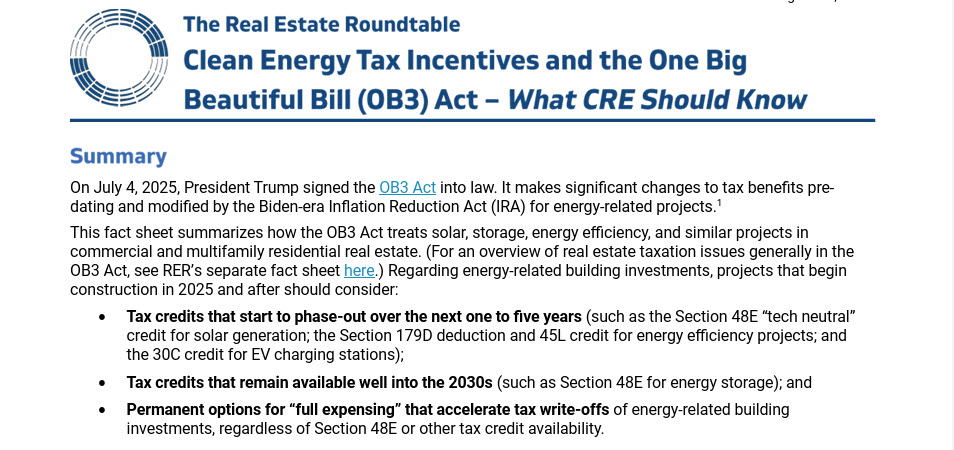
The ruling does not change the OB3 Act’s underlying “beginning of construction” deadlines. Projects that start construction by this coming July 4 must be “placed in service” by the end of 2030. Projects that start construction after this coming July 4 must be “placed in service” by the end of 2027. (RER Fact Sheet, Aug. 27)
The IRS could issue revised guidance or appeal the court’s ruling. In the meantime, the decision restores the 5% Safe Harbor as a planning tool for clean energy projects seeking to meet the July 4 "beginning-of-construction" deadline.
Housing
Senate Leaders Signal Momentum on Bipartisan Housing Package
Congress appears to be moving closer to a final agreement on the 21st Century ROAD to Housing Act, as Senate and House leaders work to resolve remaining differences and send the bipartisan housing package to President Trump’s desk. (PoliticPro, June 11)
State of Play
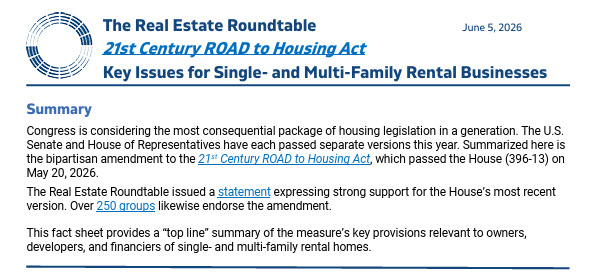
The Senate and House each passed separate versions of the bill this year. The House-passed bipartisan amendment, approved 396-13 on May 20, is now awaiting Senate action. (Roundtable Weekly, May 22)
Senate Banking Committee Chairman Tim Scott (R-SC) said Thursday he is “optimistic” the Senate and House can reach a bicameral agreement and send the bill to President Trump “in the next week or so.” (PoliticoPro, June 11)
Scott said he met with House leaders on Tuesday to discuss compromise language “that’s on the table,” adding that the package “maintains all of the House product and most of ours.” (PoliticoPro, June 11)
Senate Majority Leader John Thune (R-SD) said hehopes the Senate can pass an updated version of the housing package and send it back to the House before the July 4 recess. (PoliticoPro, June 11)
The White House has indicated support for the House version as lawmakers work toward final passage. (White House SAP, May 20)
What They’re Saying
At RER’s Annual Meeting this week,senators and representatives from both sides of the aisle also expressed optimism that Congress could reach an agreement and move the housing package forward. (See stories above)
House Financial Services Committee Chairman French Hill (R-AR) worked with House leadership, Democrats, and the White House to advance compromise language that secured overwhelming bipartisan support on the House floor. (PoliticoPro, June 8)
“It’s in the best interest of both chambers and in the interest of both political parties to have a win on housing,” Chairman Hill told Politico. (PoliticoPro, June 8)
Why It Matters
The bill is the most consequential housing package in a generation, with reforms aimed at increasing housing supply, boosting homeownership, and improving affordability.
The House-passed bill preserves the core housing supply and affordability provisions in the Senate package, including reforms to streamline environmental reviews, reduce barriers to new construction, modernize HUD programs, support manufactured housing, and encourage local zoning and land-use reforms. (Bipartisan Policy Center, May 20)
The most significant change was the removal of the Senate’s unconstitutional seven-year forced-sale mandate for build-to-rent housing, which would have required certain owners to sell newly built single-family rental homes after seven years. (RER Fact Sheet, June 8)
RER members and other housing stakeholders warned that the mandate would be counterproductive—discouraging new construction and undermining efforts to increase housing supply.
The measure includes provisions relevant to owners, developers, and financiers of single- and multi-family rental housing, including reforms to modernize outdated housing programs, reduce barriers to development, and give local communities more flexibility. (RER Fact Sheet, June 8)
RER and its coalition partners will continue working with lawmakers to ensure the final package remains focused on increasing housing supply, improving affordability, protecting private property rights, and supporting the capital needed to build more homes nationwide.


 Menu
Close
Menu
Close
 About Us