
Housing Bill Awaits Final Action After Bipartisan Passage
IRS Issues Long-Awaited Transition Guidance for Opportunity Zones
Roundtable Weekly Will Resume Publication on July 17, 2026
Roundtable Weekly
June 26, 2026
Housing Bill Awaits Final Action After Bipartisan Passage

Congress this week passed the 21st Century ROAD to Housing Act with overwhelming bipartisan support, clearing the Senate 85–5 and the House 358–32 after months of negotiations over the most significant federal housing package in decades. (Politico | Axios | CNBC | Bill Text | One-pager | Section-by-Section, June 24)

State of Play

  • House Republican leaders are transmitting the bipartisan housing bill to the White House following Speaker Mike Johnson’s (R-LA) meeting with President Trump on Thursday, starting the 10-day window for the president to sign or veto the measure once it is formally delivered. (Politico, June 26)
  • “Congress has work to do, and that’s what we’re going to do,” Johnson said after the meeting. He also said he expects Trump to sign the bill. (ABC News, June 25)
  • If Trump does not sign or veto the bill within 10 days, excluding Sundays, it becomes law without his signature under the Constitution. The bill passed both chambers this week with veto-proof majorities. (Axios, June 25)
  • The move follows the White House’s decision Wednesday to cancel a planned signing ceremony after Trump said he would not sign the measure until Congress passes the SAVE America Act. (Truth Social, June 24 | NYT, June 25)
  • In a joint statement, Senate Banking Committee Chairman Tim Scott (R-SC) and Ranking Member Elizabeth Warren (D-MA) called the Senate’s bipartisan vote “an important step toward addressing America’s housing affordability crisis” and said the bill reflects years of work with the White House, Senate, and House to increase supply and expand access to affordable housing. (Senate Banking Press Release, June 22)
  • After final passage in the House on Tuesday, Chairman French Hill said, “This is a true bicameral, bipartisan product that demonstrates what can happen when both chambers work together to deliver real solutions.” (Press Release, June 23)

Why It Matters

  • The bill is the most consequential housing package in a generation, with reforms aimed at increasing housing supply, boosting homeownership, and improving affordability. (One-pager | Section-by-Section, June 24)
  • The package advances major reforms to modernize federal housing programs, streamline environmental reviews, reduce barriers to construction, support manufactured housing, build more homes in Opportunity Zones, encourage transit-oriented development, and promote local zoning and land-use reforms. (Roundtable Weekly, May 22 | June 18)
  • For CRE, the most significant change remains the removal of the unconstitutional seven-year forced-sale mandate for build-to-rent housing, which would have required certain owners to sell newly built single-family rental homes after seven years. (RER Fact Sheet, June 8)
  • The Real Estate Roundtable (RER) and other housing stakeholders warned that the mandate would be counterproductive—discouraging new construction and undermining efforts to increase housing supply.

RER Advocacy

  • RER commended congressional leaders for their work to advance the amended 21st Century ROAD to Housing Act in a statement from RER President and CEO Jeffrey D. DeBoer. (RER Statement, June 18)
  • “This landmark, bicameral legislation advances a comprehensive package of reforms to help build more homes, improve affordability, protect private property rights, and preserve the capital needed to finance housing nationwide,” DeBoer said.
  • DeBoer noted that the bill includes major reforms to modernize federal housing programs, streamline environmental reviews, reduce barriers to new construction, support manufactured housing, build more homes in Opportunity Zones, restore critical community banking provisions, encourage transit-oriented development, and promote much-needed land-use and zoning reforms. (RER Fact Sheet, June 8)
  • DeBoer also emphasized that the reforms will take time to reach the housing marketplace. “These reforms are significant, but they will take time to fully filter into the housing marketplace and begin correcting the supply imbalance caused by years of underbuilding and regulatory barriers,” DeBoer said.

What’s Next

The bipartisan housing package now awaits final action. RER continues to urge swift enactment of the bill to advance supply-focused reforms that can help address the nation’s long-standing housing affordability crisis.

IRS Issues Long-Awaited Transition Guidance for Opportunity Zones

The Treasury Department and IRS issued new guidance last week, IRS Notice 2026-40, providing transition rules for Opportunity Zone investments made or initiated under the original OZ 1.0 regime.

The notice previews rules Treasury and IRS intend to include in forthcoming regulations. It focuses on new OZ designations going forward, transition rules for investors with existing deferred gains, and transition rules for Qualified Opportunity Funds (QOFs) and Qualified Opportunity Zone Businesses (QOZBs) operating in OZs designated under the prior law. (Tax Notes, June 18 | Reuters, June 22)

Why It Matters
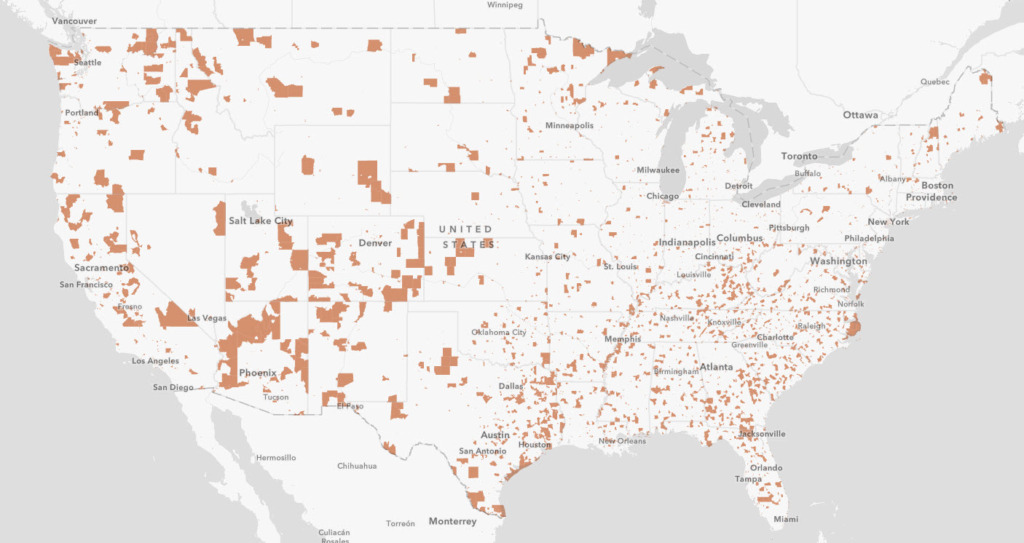
  • The guidance is a major development for Opportunity Funds and OZ businesses with projects in OZ 1.0 census tracts as the program transitions to the new permanent OZ framework under the One Big Beautiful Bill (OB3)Act.
  • While the OB3 Act permanently extended and improved the OZ tax incentives, it left unresolved tax questions affecting investments in expiring OZ 1.0 tracts, including how far along a project must be before a census tract expires and whether future capital expenditures can continue to qualify for the tax incentives.

The Notice

  • Under the notice, property acquired after Dec. 31, 2026, in a previously designated OZ may still qualify if certain conditions are met. (Seyfarth, June 23)
  • To qualify, the OZ business must have a written working capital plan in place by Dec. 31, 2026; future property acquisitions must be consistent with that plan; the business must receive at least 10% of its estimated working capital assets by year-end; and it must expend at least 5% of those assets by Dec. 31, 2026. (IRS Notice 2026-40, June 18)
  • The notice also clarifies how OZ compliance tests apply after an OZ 1.0 census tract expires. In certain cases, a previously designated OZ can continue to be treated as a qualifying zone for purposes of the “substantial use” test and the requirement that at least 50% of a business’s gross income be derived from the active conduct of a trade or business in a qualified OZ. (IRS Notice 2026-40, June 18 | Reuters, June 22)
  • The guidance provides important certainty for real estate investors, developers, and businesses seeking to move forward with projects in low-income communities during the transition from OZ 1.0 to the new permanent OZ framework.

RER Advocacy

  • RER has consistently urged Treasury and the IRS to provide transition rules for OZ 1.0 projects, including through a December 2025 letter, March 2026 follow-up comments, and draft guidance developed by RER’s Opportunity Zone Working Group. (Roundtable Weekly, March 6)
  • RER emphasized that unresolved questions surrounding expiring census tract designations could delay projects, discourage new fund formation, and undermine housing production and community development efforts.
  • While the notice includes many important details that remain under review, its issuance marks a major step forward in providing greater certainty for long-term OZ investment in underserved communities.

RER’s Opportunity Zone Working Group will review the implications of Notice 2026-40 in the days ahead and continue to engage with Treasury and the IRS to support clear, workable implementation of the new OZ framework.

Roundtable Weekly Will Resume Publication on July 17, 2026

The Roundtable’s policy news digest will resume publication on Friday, July 17, 2026.

Recent issues of Roundtable Weekly can be searched by keyword here.