
House Passes Main Street Capital Access Act with Bipartisan Support

The House passed the Main Street Capital Access Act (H.R. 6955) on Tuesday by a bipartisan vote of 270-155-1, with 56 Democrats joining 213 Republicans and one independent in support. The Real Estate Roundtable (RER) endorsed the legislation earlier this year as an important step toward right-sizing bank regulation and expanding access to capital. (HFSC Press Release, July 21)

State of Play
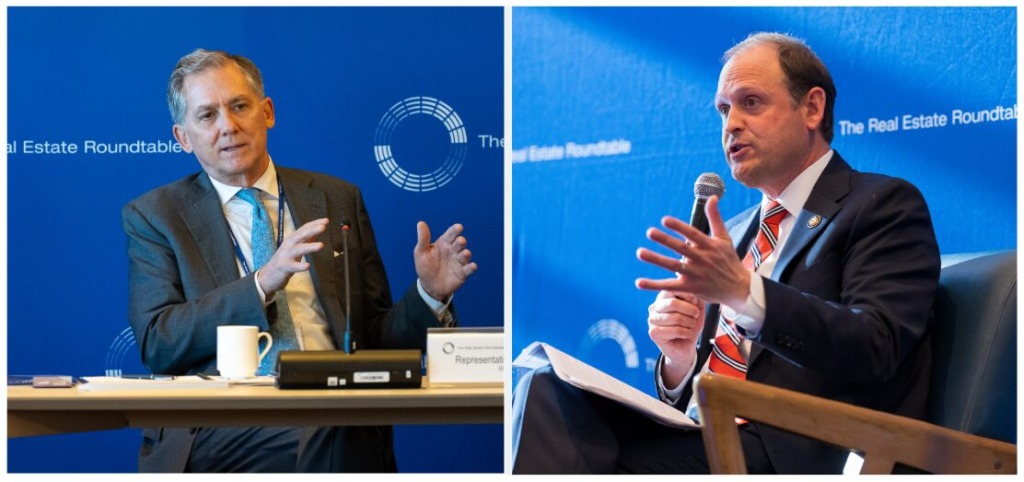
  • Sponsored by House Financial Services Committee Chairman French Hill (R-AR) and Financial Institutions Subcommittee Chairman Andy Barr (R-KY), the package is designed to encourage new bank formation, tailor regulation for community and regional banks, and remove barriers to local lending. (Bill text | Section-by-Section | One-Pager)
  • “Expanding access to capital means entrepreneurs can invest, businesses can grow, and families can build wealth,” Hill said following the vote, adding that he looks forward to the Senate considering the legislation. (Legis1, July 22)
  • Community and regional banks are important sources of financing for housing and commercial real estate, particularly in smaller and underserved markets.
  • RER has consistently advocated for appropriately tailored financial regulation that maintains bank safety and soundness while supporting liquidity, capital formation, housing production, and economic growth. (Roundtable Weekly, Jan. 16)

RER Advocacy

  • RER submitted a letter of support for the Main Street Capital Access Act in January, emphasizing the critical role community and regional banks play in financing commercial and residential real estate. (Roundtable Weekly, Jan. 16)
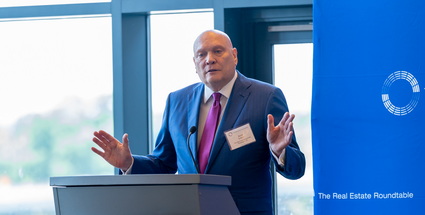
  • “The Main Street Capital Access Act will help revitalize communities across the nation by encouraging local bank formation and enhancing credit capacity,” said RER President and CEO Jeffrey D. DeBoer. “By easing outdated regulatory burdens for community banks, it will help unlock more capital for housing and small businesses.”

21st Century ROAD to Housing Act Implementation

  • RER is forming a member working group to engage with Treasury, HUD, and other federal agencies as they develop implementing regulations for the recently enacted 21st Century ROAD to Housing Act, with a particular focus on Section 1001 and its implications for single-family rental and build-to-rent investment.
  • Members interested in participating in the working group should contact RER’s SVP, Clifton E. (Chip) Rodgers, Jr. (crodgers@rer.org).

The legislation now moves to the Senate for consideration. RER will continue working with policymakers to advance measures that strengthen credit capacity and expand access to capital for housing, commercial real estate, and communities across the country.

RER Backs Community Banking Reform to Expand Credit and Local Investment

The Real Estate Roundtable (RER) submitted a letter of support this week for the Main Street Capital Access Act (H.R. 6955). RER praised the bill as a long-overdue step toward “common sense tailoring” of bank regulation in comments sent to House Financial Services Chairman French Hill (R-AR) and Financial Institutions Subcommittee Chairman Andy Barr (R-KY). (Letter, Jan. 8)

Background

  • Introduced on Jan. 7, the Main Street Capital Access Act looks to ease regulations on small and mid-size banks and increase their access to capital.  
  • The measure bundles 29 bills that advanced through the full House Financial Services Committee last year, several of which received overwhelming bipartisan support.
  • Chairman Hill said, “Over the past year, the Subcommittee on Financial Institutions under Chair Barr’s leadership has worked tirelessly to examine outdated regulations, listen directly to small businesses, and confront barriers to access capital for small and mid-sized banks. I am proud to introduce the Main Street Capital Access Act with Chair Barr to reinvigorate our community banks and return commonsense back to Main Street.”
  • Chair Barr will be a featured speaker at RER’s State of the Industry Meeting next week.
  • The package includes legislation that promotes new bank formation, expands local community access, tailors bank regulation, fosters fair and transparent bank supervision, and supports competition, innovation, and responsible bank partnerships.

Roundtable Advocacy

  • RER’s letter emphasizes that community and regional banks are vital to the financing ecosystem for commercial and residential real estate, and therefore play a key role in addressing the nation’s housing shortage.
  • “The Main Street Capital Access Act will help revitalize communities across the nation by encouraging local bank formation and enhancing credit capacity,” wrote RER President and CEO Jeffrey DeBoer. “By easing outdated regulatory burdens for community banks, it will help unlock more capital for housing and small businesses and permit Main Street community lenders to focus on serving families and local economies, making life more affordable for Americans.”
  • DeBoer also underscored the impact of the decline in new bank formation in recent years. “This lack of ‘de novo’ or ‘new’ bank activity, coupled with ‘banking deserts’ that are common in rural areas, has led to higher costs for households and less access to capital and investment for small and medium-sized businesses,” DeBoer added.

Why It Matters

  • Community banks serve as a primary capital source for local housing and commercial real estate projects, particularly in underserved markets where larger institutions may have little presence.
  • RER has consistently advocated for right-sized financial regulation that promotes liquidity in the CRE market while maintaining safety and soundness in the banking system. The Main Street Capital Access Act aligns with this principle by streamlining oversight and promoting innovation in the small-bank sector.

Next Steps

RER will continue to work with Congress and the administration to advance policy measures that encourage capital formation, enhance credit capacity, support housing production, and foster economic development in communities around the country.