
RER, Nareit Urge Practical GHGP “Scope 2” Standards for Real Estate’s Energy Purchases

This week, The Real Estate Roundtable (RER) and Nareit submitted joint feedback to the Greenhouse Gas Protocol (GHGP) on proposed updates to its Scope 2 Guidance. The submission urges GHGP to preserve optional hourly and narrow geographic matching for bulk clean energy purchases, rather than make these strict “24/7” procurement conditions mandatory. (Summary memo | detailed comments, Jan. 23)

Background

  • Scope 2 emissions result from the generation of electricity, steam and other power purchased or acquired by a customer from a utility provider or grid operator. These emissions are not directly controlled by building owners or tenants, but depend on the types of fuels that power off-site grid infrastructure. (US-EPA) 
  • Last year, GHGP unveiled a set of proposed revisions to its Scope 2 Guidance. GHGP’s recommended modification to its global guidelines would require companies to match clean energy procurements (such as renewable energy certificates or power purchase agreements) to their actual electricity consumption on an hour-by-hour basis, rather than on an annual basis—a practice often referred to as “24/7 matching.” (GHGP Press Release, Oct. 20) 
  • The changes also proposed tight narrowing of geographic deliverability standards, requiring the purchased clean energy to be co-located on-site and/or within the same local grid segment. 

RER and Nareit Collaboration

  • The comments RER and Nareit submitted this week emphasize that 24/7 matching is not practicable for the vast majority of U.S. businesses that use GHGP guidance to voluntarily account for Scope 2 emissions. 
  • As RER and Nareit explained, 24/7 matching is not workable as a “one size fits all” standard practice for commercial building owners because they do notcontrol how much energy tenants use. Owners of multi-tenant buildings do not have dependable access to leased space energy data on a monthly—much less hourly—basis. (Summary memo)  
  • The joint RER-Nareit comments also explain that there is not enough solar or wind generation in many U.S. markets to support GHGP’s restrictive geographic deliverability mandate, and market and policy headwinds are expected to make corporate investments in renewables more challenging in the short term.
  • Further, RER and Nareit raised concerns about scientific validity, noting that electricity does not physically flow in accordance with contractual arrangements and that strict hourly “matching” is a misleading accounting construct.
  • RER and Nareit back an alternative approach put forth by GHGP working group participants that would maintain the current Scope 2 Guidance approach, allowing for—but not requiring—optional 24/7 matching.

Why It Matters

  • GHGP’s existing Scope 2 “quality control” criteria are a proven, successful framework that have helped spur significant growth in U.S. clean power purchases since 2015. The 24/7 matching mandate would reverse this trend.
  • Mandating strict time and place restrictions for corporate procurements like RECs will make compliance burdens with the Scope 2 Guidelines more onerous, increase costs, disincentivize private sector investments in clean energy—and not result in better information for investors.

January 31 Deadline

  • Real estate companies and their assurance providers submitting direct feedback to GHGP may wish to incorporate points from the joint RER/Nareit summary memo and detailed comments.

RER, Nareit and allied real estate stakeholders will remain engaged to advocate for a practical, science-based Scope 2 framework as GHGP moves to adopt new guidance.

House Committees Mark Up Key Housing and Energy Bills

Policymakers marked up a series of housing and energy measures this week focused on streamlining project approvals, updating efficiency standards, and addressing federal funding for state and local energy laws. The discussions highlighted bipartisan momentum around reforms to bolster grid reliability and reduce housing costs.

SPEED Act Mark Up

  • The House Natural Resources Committee on Thursday marked up the Standardizing Permitting and Expediting Economic Development (SPEED) Act (H.R. 4776) and adopted a bipartisan amendment limiting executive-branch authority to cancel energy project permits, a key issue in broader negotiations. (PoliticoPro, Nov. 20 | Watch Mark-Up)
  • The bill would amend the National Environmental Policy Act (NEPA) to streamline environmental reviews and reduce litigation delays for projects requiring federal funding and permits. (The Hill, Nov. 17)
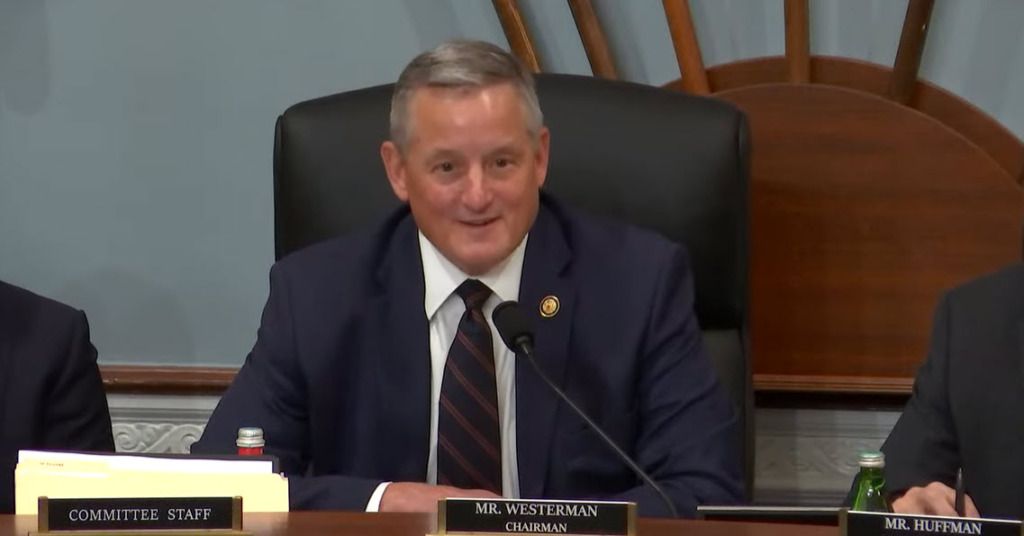
  • House Natural Resources Committee Chair Bruce Westerman (R-AR) said, “NEPA reform helps everything. “It helps electrical transmission. It helps pipelines. It helps traditional energy sources. It helps new energy sources. It helps transportation and infrastructure projects.”  If NEPA reform passes “everybody wins,” he added.
  • Jeffrey DeBoer, RER President and CEO, said, “Permitting reform is essential to strengthening the nation’s electric grid and infrastructure. The current patchwork of federal, state and local approvals delays the delivery of affordable, reliable power to homes and commercial buildings. The Roundtable supports efforts—like the SPEED Act—to modernize permitting, improve grid resilience, and ensure the infrastructure needed for long-term economic growth.”
  • The SPEED Act is expected to continue to draw bipartisan support in the House. Ongoing Senate negotiations are reportedly addressing renewable-energy protections, emissions-reduction provisions, and a potential broader package blending transmission policy, clean-energy safeguards, and litigation limits. (E&E News, Nov. 17)
  • Rep. Scott Peters (D-CA) called the bill a “huge step forward,” and urged Democratic colleagues to support it, while seeking further adjustments to curb the executive branch’s ability to cancel energy project permits. (Press Release | PoliticoPro, Nov. 20)

House Energy & Commerce Mark Ups

  • On Wednesday, a House Energy and Commerce subcommittee marked up eight energy-related bills, reflecting contrasting approaches to energy affordability and building efficiency standards as lawmakers debate rising energy and housing costs. (PoliticoPro, Nov. 19 | Committee Press Release )
  • The subcommittee approved several CRE-relevant bills that now move to the full committee for consideration.
  • Energy Choice Act (H.R. 3699): Advanced by voice vote. Aims to prevent state/local laws that would ban the use of natural gas in buildings. (A “ban on gas bans” aligns with RER’s 20-Point Policy Guide on Building Performance Standards)
  • Affordable Housing Over Mandating Efficiency Standards Act (H.R. 5184): Advanced by voice vote. Aims to reduce stringent energy efficiency codes for manufactured housing and negatively impact housing affordability.
  • Homeowner Energy Freedom Act (H.R. 4758): Approved 16–14 along party lines. Aims to eliminate federal funding under the Biden-era Inflation Reduction Act, which provides grants to states and localities to support the highest-level energy codes, building electrification mandates, and other building performance standards. (Roundtable Weekly, Feb. 28)
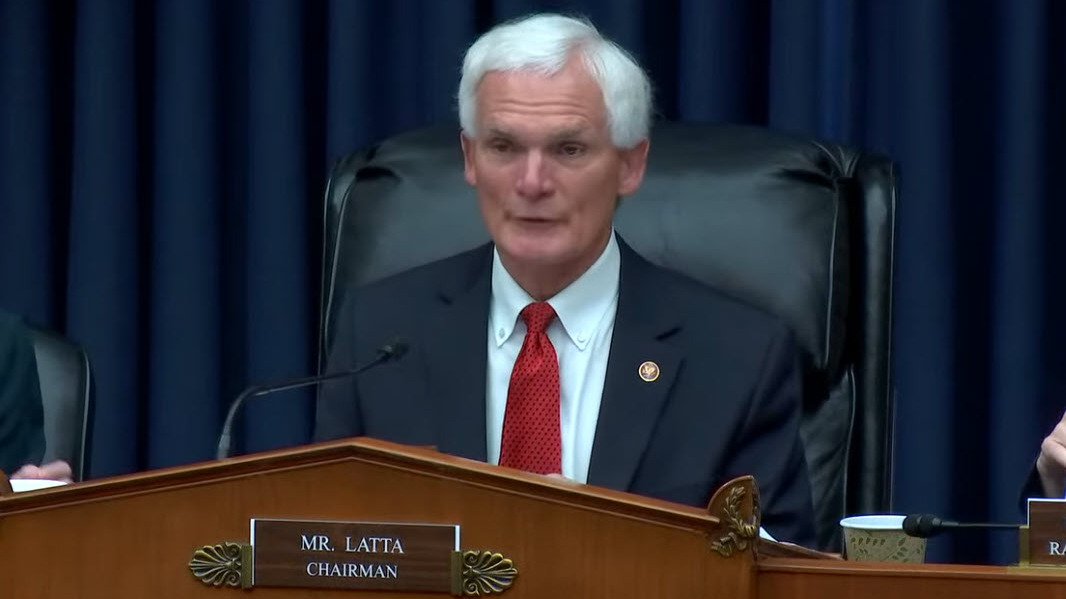
  • Energy Subcommittee Chair Bob Latta (R-OH) said, “The legislation before us today represents an opportunity for this committee to implement reforms that re-prioritize energy efficiency policies toward the items that matter most to consumers: Affordability, availability, and durability.” (PoliticoPro, Nov. 19)

Climate Disclosure Law

  • In other energy news this week, a federal appeals court issued a preliminary injunction halting enforcement of California’s SB 261, requiring companies with at least $500M in global revenue to report climate-related financial risks starting January 2026. (ESG Dive | PoliticoPro, Nov. 18)
  • The court blocked SB 261, pending litigation over First Amendment concerns. It did not block SB 253, which requires corporations with $1B+ in revenue to begin reporting scope 1 and 2 emissions in 2026, and scope 3 in 2027. The trial on the First Amendment claim is scheduled for October 2026. (RER Fact Sheet, 2023; RW Sept. 2023)

RER will continue working with policymakers as Congress weighs permitting reform and energy policy measures that directly affect commercial real estate investment, housing supply, and the reliability of the nation’s power grid

Administration Unveils Principles for Carbon Offset Markets

The Biden administration on Tuesday released principles to enhance the integrity and effectiveness of voluntary carbon markets (VCMs) and incentivize companies to prioritize reducing their emissions. These principles can guide real estate businesses that seek to offset greenhouse gas (GHG) emissions. (White House fact sheet, May 28)

All-of-Government Approach

  • The principles and joint policy statement were signed by the Treasury, Energy and Agriculture Secretaries, and White House officials directing national economic and climate policy.
  • VCMs can “channel a significant amount of private capital to support the energy transition and combat climate change, with the right incentives and guard rails in place,” they wrote
  • Markets that provide credits for greenhouse gas (GHG) mitigation are crucial for meeting the administration’s climate goals to cut emissions in half by 2030 and reach net zero by 2050.

Focus on Market Integrity

  • The principles support carbon markets based on independently verified emissions savings. “[S]takeholders must be certain that one credit truly represents one tonne of carbon dioxide (or its equivalent) reduced or removed from the atmosphere.”
  • The principles reflect the U.S.’s intentions to play a leadership role in standardizing international carbon markets.
  • Today, VCMs are around $2 billion annually. With the potential of more private capital into climate projects through VCMs, Morgan Stanley projected that the voluntary market could grow to $100 billion by 2030. (Axios, May 28)

Relevance for CRE

  • Companies may finance GHG mitigation projects such as reforestation, carbon capture, and increasing renewable energy supplies. (WSJ, May 28)
  • These tools can help real estate and other companies offset their Scope 1 “direct” emissions, as well as controversial Scope 3 emissions from supply chain sources.
  • “Concerns about the credible use of credits (for example, to address a portion of Scope 3 emissions) must also be adequately addressed for VCMs to truly drive decarbonization.” (Joint Policy Statement, May 28)
  • Specific instruments known as Renewable Energy Certificates (RECs) are commonly used in U.S. markets to address Scope 2 emissions, which are generated by power plants for the electricity used by tenants and other building occupants. (US-EPA, “Offsets and RECs – What’s the Difference?”)

The Roundtable’s Sustainability Policy Advisory Committee (SPAC) continues to work closely with the White House on climate initiatives impacting commercial real estate.