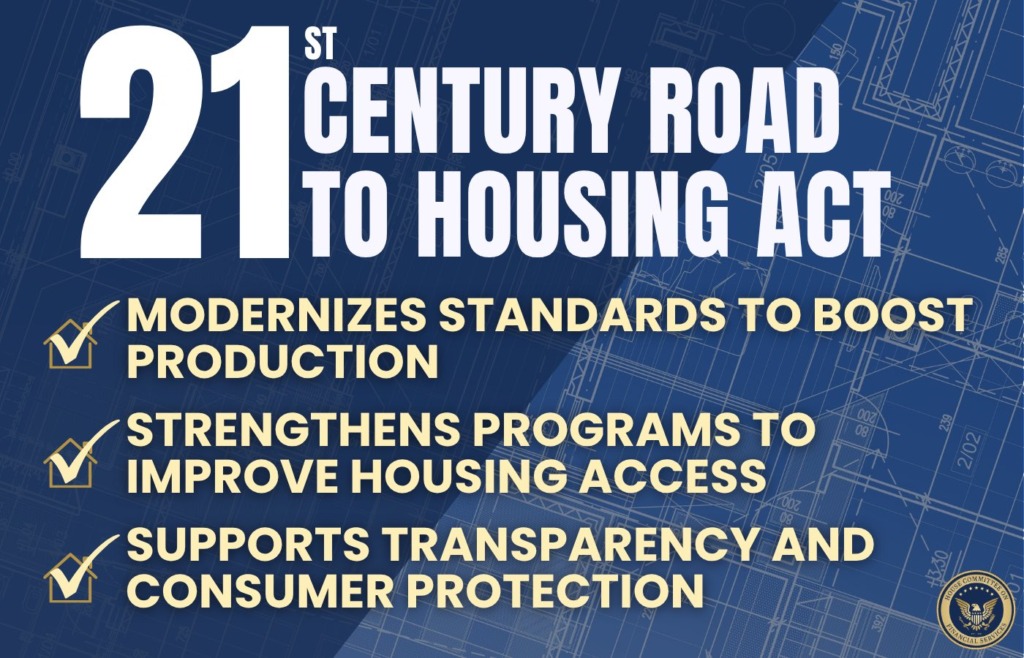
The landmark, bipartisan, bicameral 21st Century ROAD to Housing Act became law Saturday without President Trump’s signature, culminating months of congressional work and advocacy by The Real Estate Roundtable and its housing coalition partners. (NYT, July 11| Bill Text | One-pager | Section-by-Section, June 24)
State of Play
The Senate approved the final package 85–5 on June 22, followed by a 358–32 vote in the House on June 23. (Roundtable Weekly, June 26)
President Trump canceled a planned June 24 signing ceremony and later declined to sign the measure in protest over the Senate’s failure to pass the unrelated SAVE America Act. (Axios, July 10 | 11)
Because he neither signed nor vetoed the housing bill, it became law July 11 under the Constitution’s 10-day provision. (CBS News, July 11)
The bill was championed by House Financial Services Committee Chairman French Hill (R-AR), Ranking Member Maxine Waters (D-CA), Senate Banking Committee Chairman Tim Scott (R-SC), and Ranking Member Elizabeth Warren (D-MA).
“Homeownership should be within reach for more Americans, and this law moves us closer to that goal,” Chairman Hill said Saturday. (Rep. Hill Press Release, July 11)
Why It Matters
The bill is the most consequential housing package in a generation, with reforms aimed at increasing housing supply, boosting homeownership, and improving affordability. (One-pager | Section-by-Section, June 24)
The package advances major reforms to modernize federal housing programs, streamline environmental reviews, reduce barriers to construction, support manufactured housing, build more homes in Opportunity Zones, encourage transit-oriented development, and promote local zoning and land-use reforms. (Roundtable Weekly, May 22 | June 18)
For RER, a significant achievement is the removal of the Senate bill’s unconstitutional seven-year forced-sale mandate, which would have required certain owners to sell newly constructed build-to-rent homes to individual buyers. (RER Fact Sheet, July 17)
RER and other housing stakeholders warned that the mandate would be counterproductive—discouraging new construction and undermining efforts to increase housing supply.
RER Advocacy
Over the past several months, RER and its housing partners worked throughout the legislative process to preserve the package’s supply-focused reforms and remove the forced-sale mandate targeting build-to-rent housing through letters to Congress, coalition letters of support, and direct engagement with lawmakers.
RER also led efforts to raise constitutional concerns about the Senate’s forced-sale mandate, through a white paper by former U.S. Solicitor General Paul Clement, which characterized the provision as an unprecedented federal market intervention and outlined a “triple threat” to the U.S. Constitution. (RER’s One Pager, May 18 | RER Letter, May 12 | Roundtable Weekly, April 17)
“Enactment of the 21st Century ROAD to Housing Act is a historic bipartisan achievement that will help expand housing supply, reduce barriers to construction, and improve affordability nationwide,” said RER President and CEO Jeffrey DeBoer.
“This law protects private property rights and preserves the capital needed to build more homes, while advancing practical reforms to reduce regulatory barriers, modernize federal housing programs, and expand rental and homeownership opportunities. We commend Chairman Hill, Ranking Member Waters, Chairman Scott, Ranking Member Warren, and congressional leaders for their persistence in getting this comprehensive package across the finish line.” DeBoer said. (RER Fact Sheet, June 8)
DeBoer noted that the reforms will take time to reach the housing marketplace. “These reforms are significant, but they will take time to fully filter into the housing marketplace and begin correcting the supply imbalance caused by years of underbuilding and regulatory barriers,” DeBoer said. (RER Statement, June 18)
What’s Next
The institutional investor purchase restrictions are scheduled to take effect six months after enactment and expire after 15 years.
HUD, working with the Treasury, the Securities and Exchange Commission, and the Federal Housing Finance Agency, is directed to develop and implement regulations to avoid adverse effects on consumers and communities.
As federal agencies begin implementing the law’s numerous housing and banking provisions, RER will remain engaged throughout the process.
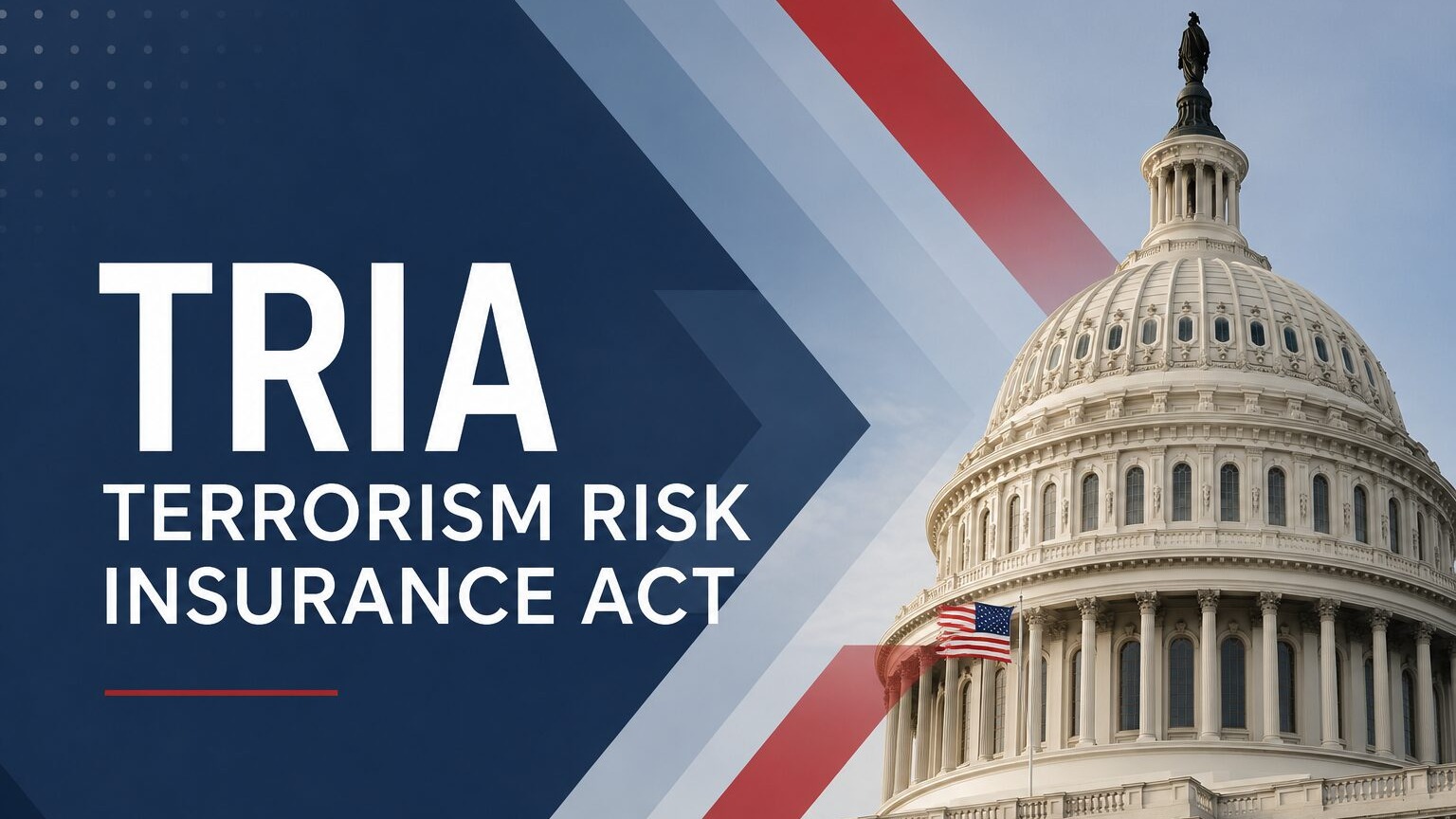
The bill, sponsored by House Financial Services Subcommittee on Housing and Insurance Chairman Mike Flood (R-NE), would extend the Terrorism Risk Insurance Program for seven years beyond its current Dec. 31, 2027 expiration. (Rep. Flood Press Release | PoliticoPro, June 29)
The measure would also increase the minimum loss threshold for an event to qualify as an act of terrorism under the program from $5 million to $10 million beginning in 2029 and establish a 90-day timeframe for Treasury certification determinations. (Insurance Journal, June 30)
The House Financial Services Committee previously advanced the legislation in January by a 51-2 vote. (Roundtable Weekly, Jan 23)
Following the Sept. 11 attacks, terrorism insurance became largely unavailable, disrupting commercial real estate financing and delaying billions of dollars in transactions. TRIA has since provided a public-private mechanism to maintain access to coverage that the private market alone cannot fully provide.
The coalition emphasized TRIA remains a critical public-private partnership that ensures the continued availability of terrorism insurance coverage and supports the broader economy. (Letter, June 29)
“While no insurance program can eliminate terrorism risk, TRIA provides a critical economic backstop that helps businesses, lenders, and insurers manage the financial consequences of an attack,” said RER President and CEO Jeffrey D. DeBoer. “We urge the Senate to act promptly on a long-term reauthorization well in advance of the program’s expiration at the end of 2027.”
This week, RER continues to work through CIAT and with other business and insurance organizations to encourage Senate leaders to include TRIA reauthorization in the FY2027 National Defense Authorization Act (NDAA).
However, the Fiscal Year 2027 National Defense Authorization Act (NDAA) (H.R.8800) is currently stalled in the Senate.
RER and its coalition support Amendment #5879, offered by Sens. Dave McCormick (R-PA), Tina Smith (D-MN), Thom Tillis (R-NC), and Ruben Gallego (D-AZ), for inclusion in the FY 2027 NDAA. The amendment is identical to the Senate TRIA reauthorization bill, S. 4395, and would extend TRIA for seven years. (Roundtable Weekly, May 1)
RER’s advocacy builds on comment letters submitted to the House Financial Services Committee in September 2025 and January 2026, urging action well before TRIA’s scheduled expiration. (Letter, Jan., 2026 | Letter, Sept., 2025) (Roundtable Weekly, Jan 23)
Amendment #5879 to the FY2027 NDAA could provide a path for sending a seven-year TRIA reauthorization to the president’s desk this year.
RER and its industry partners urge Senate leaders to include the amendment in the NDAA and secure a long-term extension well ahead of the program’s 2027 expiration.
Energy Policy
Update: ENERGY STAR, Codes, Building Standards and More
Federal and other officials continue to weigh a wide range of energy policies affecting commercial real estate. RER’s Sustainability Policy Advisory Committee (SPAC) is coordinating industry input to ensure these measures are practical, cost-effective, and grounded in real-world CRE development, operational, and financing decisions.
ENERGY STAR
Last month, the House Appropriations Committee approved a fiscal year 2027 agency spending bill with $33 million specified for ENERGY STAR—the same level as FY 2026.
The House bill’s accompanying report directs EPA to provide regular updates on the Memorandum of Agreement (MOA) governing the program’s planned transfer to the Department of Energy (DOE). (Roundtable Weekly, March 6)
Senate Appropriations Committee Chair Susan Collins (R-ME) also sent a July 2 letter to EPA Administrator Lee Zeldin requesting information about the transition, funding, and staffingfor ENERGY STAR. (Letter, July 2)
A short-term continuing resolution to extend current funding is increasingly likely. Congress is not expected to complete FY 2027 appropriations legislation by Sept. 30, the end of the present fiscal year.
ENERGY STAR is a critical program for CRE. According to the program’s National Buildings Registry, over 7 billion square feet of U.S. commercial floor space have been ENERGY STAR certified.
Why It Matters: CRE relies heavily on Portfolio Manager, ENERGY STAR’s standard energy and water benchmarking tool, for investor reporting, capital expense (capex) planning, building certifications, and compliance with state and local requirements.
RER is preparing comments on DOE’s “cost methodology” to better reflect CRE “hold” periods and loan maturity horizons. Comments are due Aug. 3.
California Building Performance Standard (BPS)
The California Energy Commission (CEC) released its draft Building Energy Performance Strategy Report. This report lays the foundation for a future statewide building performance standard in California for large commercial and residential buildings.
RER, ICSC, and Nareit are coordinating with the California Business Properties Association (CBPA) to discuss priorities for the real estate industry’s response to California’s pre-regulatory study.
The CEC will hold a public workshop July 29 (1 pm – 3 pm ET). Written comments regarding the report are due August 21. (CEC’s filing instructions here.)
The CEC study refers to ASHRAE Standard 100 as a “starting point” for a potential statewide building performance standard in California.
RER has coordinated with ASHRAE to hold a briefing session (Tuesday, July 28, 2 pm – 3 pm ET) to inform our members on Standard 100’s building energy consumption and emissions targets. (Register here)
Solar Tax Credits
On June 6, a federal court in D.C. ruled that the so-called 5% Cost Safe Harbor applies to all solar (and wind) projects, regardless of size, as a measure to show “beginning of construction” of construction for tax credit eligibility. The opinion cites an August 2025 comment letter submitted by RER, Nareit, ICSC, and NAIOP. (Aug. 8, 2025 CRE letter | Roundtable Weekly, June 12) | PwC “Tax Insight” June 8 | Holland & Knight alert, June 8)
Solar projects that “begin construction” between July 5 –Dec 31, 2026 must be “placed in service” by the end of 2027 to qualify for federal tax credits.
The court opinion found the IRS Notice 2025-42 issued last summer illegal. Under that notice, only “low output solar facilities” (1.5 MW or less) may establish the “beginning of construction” date for federal tax credit eligibility by spending at least 5% of total project costs.
Bottom line: Projects of 1.5 megawatts or less can rely on the 5% safe harbor under existing IRS guidance. The court rulingcurrently restores the safe harbor for larger projects as well, although uncertainty remains because Treasury could appeal or issue revised guidance. (RER’s Fact Sheet -Clean Energy Tax Incentives, Aug. 27, 2025)
Quick Hits
Data Centers: The North American Electric Reliability Corporation (NERC) is on track with its Large Load Action Plan to eventually register data centers and likely require them to ultimately report their electricity use and other grid impacts. (NERC Primer | 2026 “State of Grid Reliability” Full Report and Snapshot (June 24) | Roundtable Weekly (May 8)
California Climate Reporting Rule: The California Energy Commission (CEC) released its anticipated “draft strategy report” to lay the foundation for an eventual statewide BPS law. The deadline for companies’ first public emissions disclosures has been pushed back from this coming August to November 10. (ESG Today (June 25) | KPMG alert (June 25) | JD Supra (July 3)
Permitting Reform: Senate negotiators continue working toward a bipartisan permitting reform package ahead of the August recess, with transmission policy remaining a key sticking point. Lawmakers are also divided over environmental and historic preservation reviews and limits on the administration’s authority to revoke previously approved energy project permits. (E&E News, July 13)
RER’s SPAC will continue engaging federal agencies, Congress, state regulators, and industry partners as these initiatives develop. SPAC is chaired by RER Board MemberTony Malkin (Chairman and CEO, Empire State Realty Trust). SPAC’s Vice Chair is Tamara Chernomordik (Vice President, Kimco Realty).


 Menu
Close
Menu
Close
 About Us