House Releases Revised Housing Package Focused on Supply and Affordability
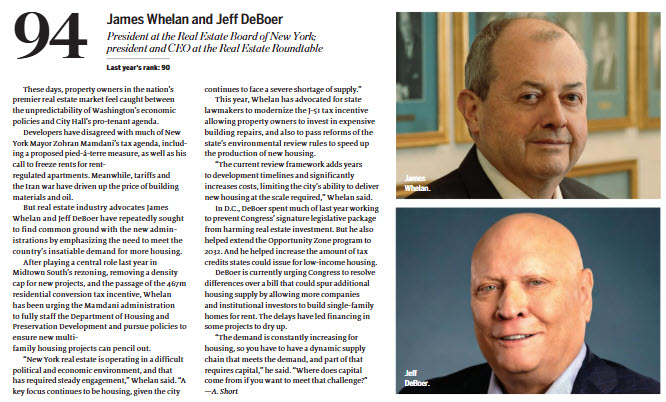
Roundtable Leaders Recognized on Commercial Observer’s 2026 Power 100 List
Op-Ed Calls for Action on Aging Federal Buildings
Roundtable Weekly
May 15, 2026
House Releases Revised Housing Package Focused on Supply and Affordability
U.S. Capitol building

House leaders this week released amended text of the Senate-passed 21st Century ROAD to Housing Act, preserving major pro-housing provisions aimed at increasing supply, improving affordability, and expanding housing options across the country. The revised package is expected to receive a House vote next week, before returning to the Senate for final approval. (Politico | Bisnow | The Hill, May 14)

State of Play
  • House Republican leaders continued reworking the Senate-passed 21st Century ROAD to Housing Act this week, even as President Donald Trump publicly urged Congress to pass the Senate bill as written. (Politico, May 11)
  • Speaker Mike Johnson (R-LA) said Friday that he still intends for the House to vote on changes to the Senate’s housing package, despite opposition from White House officials and Senate Republicans. “We’re focused on producing a housing bill that meets all the objectives,” Speaker Johnson said. “It’ll be bipartisan, bicameral.” (Politico, May 15)
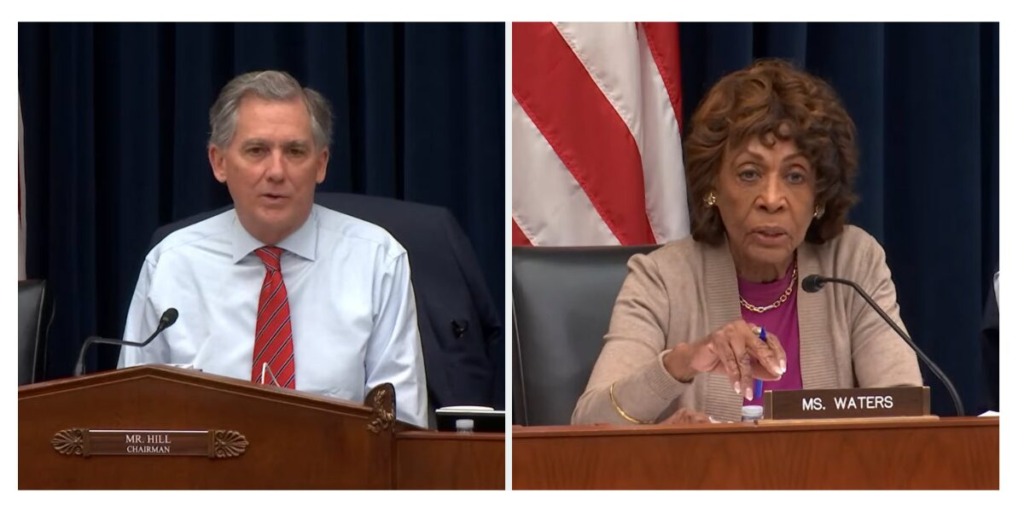
  • House Financial Services Committee Chairman French Hill (R-AR) and Ranking Member Maxine Waters (D-CA) released the House’s amended text Thursday, with leadership aiming to bring the bill to the floor next week. (The Hill, May 14)
  • Rep. Hill said the bipartisan amendment reflects concerns raised by members and stakeholders, adding that it “cuts unnecessary barriers to new home construction, modernizes Department of Housing and Urban Development (HUD) programs, and allows banks to more freely deploy funding into their communities.” (Rep. Hill Statement, May 14)

  • Speaking to reporters Friday, Rep. Hill said the House bill addresses legal concerns raised by the Senate’s investor restriction language, including its forced-sale requirement for certain build-to-rent homes. “It’s in the bill in the right way. I think it removes some of the legal challenges that we felt that were in the structure of the Senate bill. We think this has made a better bill.” (Politico, May 15)

  • Rep. Waters said the updated bill “restores key provisions to hold institutional investors accountable and protect renters, while expanding access to affordable housing opportunities for families across the country.”  (Rep. Waters Statement, May 15)
  • In a statement following the release, RER said the amended bill makes significant improvements by removing the forced-disposition requirement that would have raised serious constitutional concerns, chilled investment in new rental housing, prevented the construction of thousands of homes, and worsened supply constraints in markets across the country. (RER Statement, May 14)

  • Progressive and conservative groups alike have cited numerous benefits that single-family rental (SFR) owners and builders deliver to U.S. housing markets, including increasing supply, maintaining and improving homes, and providing opportunities for families to live in communities with strong education systems where homeownership may be out of reach. (Progressive Policy Institute | Competitive Enterprise Institute, February 2026) (Roundtable Weekly, April 17 | April 10)

Key House Revisions

  • The package includes broad housing supply and affordability reforms to reduce barriers to new construction, support manufactured housing innovation, streamline environmental reviews, and modernize HUD programs.
  • The updated House text removes the Senate bill’s forced-disposition requirement for build-to-rent housing, while retaining restrictions and enforcement provisions related to future single-family home acquisitions by large institutional investors. (The Hill, May 14)
  • Additionally, it would create grant programs for converting abandoned buildings into housing, expand community lending, and strengthen tools to encourage local zoning and pro-housing policies.

Roundtable Advocacy

  • RER and broad housing coalitions have consistently emphasized that housing affordability is driven by supply shortages, construction costs, and mortgage rates—not institutional ownership levels—and that restricting institutional capital would only make it harder to meet the nation’s growing housing needs. (Roundtable Weekly, Jan. 9 | Jan. 16 |  Jan. 23 | Feb. 27March 6 | March 13 | March 20 | March 27 | April 3 | April 10 | April 17 | April 24 | May 1 | May 8)
  • Following the release of the amended text, RER and a broad housing coalition urged Congress to pass the bill quickly, calling it a major opportunity to expand supply, improve affordability, and broaden housing choice. (Coalition Letter | Coalition Statement | May 14)
  • The housing crisis cannot be solved without building more affordable homes of every type, in every market and for every stage of life — including rental housing, workforce housing and paths to homeownership,” said RER President & CEO Jeffrey DeBoer. “Restricting capital will only make that shortage worse. Increasing supply is the path forward.” (RER Statement | May 14)

HUD Raises Concerns

  • HUD Secretary Scott Turner wrote to congressional leaders Friday to remove parts of the House-amended bill related to institutional investor restrictions and a new tenant hotline, warning they could create significant operational challenges for HUD and expand the department’s role in state and local housing matters. (PoliticoPro, May 15)
  • Sec. Turner also testified before House and Senate appropriators this week on the administration’s fiscal 2027 HUD budget request, emphasizing the need to reduce regulatory barriers, streamline permitting, and lower housing production costs. (Politico, May 12)
  • Sec. Turner cited local zoning restrictions, environmental reviews, and federal regulations as major drivers of housing costs, while lawmakers in both parties raised concerns about proposed HUD funding cuts. (House Appropriations Subcommittee Hearing, May 12)
  • Lawmakers also highlighted Opportunity Zones (OZs) and public-private partnerships as housing production tools. Sec. Turner defended OZs as “very transformative,” saying public-private partnerships are “crucial and key” to increasing affordable housing supply and revitalizing communities. (Senate Appropriations Subcommittee Hearing, May 14)

RER and its coalition partners appreciate the bipartisan work of House and Senate leaders and urge swift passage of the housing bill to expand access to homeownership and rental housing opportunities nationwide.

Roundtable Leaders Recognized on Commercial Observer’s 2026 Power 100 List

Commercial Observer this week released its 2026 “Power 100” list of leading commercial real estate executives, recognizing numerous Real Estate Roundtable (RER) members, board leaders, and RER President and CEO Jeffrey DeBoer among the industry’s most influential voices. (Commercial Observer, May 12)

Power 100 List

  • Commercial Observer’s annual list highlights the executives and organizations shaping the future of commercial real estate across capital markets, development, housing, office, data centers, and emerging investment trends.
  • In introducing this year’s list, Commercial Observer noted, “The story of real estate over the last year has been its own crazy quilt. One big strand of the story has been the surge in artificial intelligence, and the incumbent data centers, power sources, and office space necessary to cater to it.” (Commercial Observer, May 12)

Roundtable Leaders Recognized

  • Commercial Observer highlighted DeBoer’s work in Washington to prevent major federal legislation from undermining real estate investment, while also advancing key industry priorities, including extending the Opportunity Zone program through 2032 and increasing state allocations of Low-Income Housing Tax Credits. (DeBoer’s listing)

DeBoer also emphasized the importance of private capital in meeting the nation’s housing needs. “The demand is constantly increasing for housing, so you have to have a dynamic supply chain that meets the demand, and part of that requires capital,” he said. “Where does capital come from if you want to meet that challenge

Op-Ed Calls for Action on Aging Federal Buildings

Real Estate Roundtable (RER) President and CEO Jeffrey D. DeBoer joined General Services (GSA) Administrator Edward C. Forst and JBG SMITH Chairman and CEO Matt Kelly in a Washington Times op-ed this week, urging Congress to address chronic underinvestment in the federal government’s real estate portfolio as the nation approaches its 250th anniversary. (Washington Times, May 13)

Federal Building Backlog

  • The op-ed warns that the federal government is “depriving one of its largest real estate portfolios of investment,” eroding asset value and driving up long-term costs for taxpayers. (Washington Times, May 13)
  • The authors note that federally owned buildings are deteriorating because GSA lacks timely access to resources for basic upkeep, even as agencies pay rent into the Federal Buildings Fund. (Washington Times, May 13)
  • Administrator Forst reinforced that message during a May 13 Senate Appropriations hearing on GSA’s FY2027 budget request, urging Congress to give GSA full annual access to the fund, stop redirecting it to non-GSA programs, and raise the prospectus threshold for routine repairs. (Senate Appropriations Subcommittee Hearing, May 13)
  • Administrator Forst testified that Congress has diverted $15.6 billion from the Federal Buildings Fund since 2011, while GSA’s repair backlog has increased by 408% to roughly $50 billion, leaving nearly half of its inventory in “fair” or “poor” condition. (Forst Testimony, May 13 | Legis1, May 7)

Why It Matters

  • The op-ed contrasts private-sector real estate management with a federal process that can take more than 400 days just to approve routine repairs—nearly as long as it took to build the Empire State Building. (Washington Times, May 13)
  • “Delayed spending is value destruction,” the authors write. “In the federal system, delays are built into the process.” (Washington Times, May 13)

The op-ed urges Congress to align resources, incentives, and execution authority so GSA can preserve asset value, support federal workers, and protect historic public buildings.