Treasury Extends Tax Relief to Foreign Governmental Investors in U.S. Real Estate

The U.S. Department of the Treasury and Internal Revenue Service (IRS) took a positive step last Friday in response to The Real Estate Roundtable (RER) and other stakeholder concerns, partially withdrawing and modifying proposed regulations on the taxation of sovereign wealth funds and other foreign governmental investors. (Treasury Press Release, May 29)

Why It Matters

  • Foreign investment, including investment by sovereign wealth funds, foreign pension funds, and other government entities, is a critical source of financing for capital-intensive U.S. real estate projects.
  • Section 892 of the tax code generally exempts from U.S. tax certain dividends, interest, and gains earned by foreign governments, unless the income is treated as commercial activity income or income from a controlled commercial entity. Foreign investors rely heavily on Section 892 when planning and structuring U.S. real estate investments.
  • In December, Treasury issued proposed regulations addressing two key questions under Section 892: (1) when a foreign government has effective control of an entity engaged in commercial activities, and (2) when an acquisition of debt is considered commercial activity. (Tax Notes, June 1)
  • The new regulations published on June 1 would ensure that existing foreign government investments, as well as investments acquired during a transition period, are not subject to the more stringent standards in the 2025 proposed rules. (Skadden, May 29)
  • As Treasury and the IRS continue to evaluate the underlying substantive issues, this most recent action ensures that the new rules will not retroactively increase the tax burden on existing real estate investments or have a chilling effect on foreign real estate investments currently under consideration.

RER Advocacy

  • In February, RER submitted comments urging Treasury to avoid imposing a retroactive new tax on existing investments and recommended clear grandfathering and transition rules as part of any final Section 892 regulations. The new Treasury proposal is a positive step that directly addresses those concerns. (Letter | Roundtable Weekly, Feb. 13 | Feb. 27)
  • RER also provided detailed comments on the underlying section 892 issues, urging Treasury to clarify that customary minority investor protections do not create effective control, confirming withholding agents may rely on foreign government self-certifications, and establishing safe harbors for certain debt-related situations. (Roundtable Weekly, Feb. 27)
  • In March, TPAC Chair Joshua Parker (Founder, Chairman and CEO, Ancora) reinforced RER’s concerns in a Bloomberg Tax op-ed urging Treasury to modernize Section 892 rules without discouraging sovereign investment in U.S. real estate and other long-term assets. (Roundtable Weekly, March 13)

What’s Next

  • Treasury Secretary Scott Bessent said the new guidance provides certainty for current investments and transition relief for sovereign investors, while Treasury continues to evaluate feedback to “uphold established market practices” and maintain a stable environment for sovereign wealth fund investment. (Treasury Press Release, May 29)
  • Treasury has not yet modified the substantive provisions related to effective control, commercial activity, and acquisitions of debt.
  • RER will continue working with Treasury and IRS to ensure final Section 892 rules preserve foreign government capital flows into U.S. real estate while maintaining the statute’s distinction between tax-exempt investment activity and taxable commercial activity.

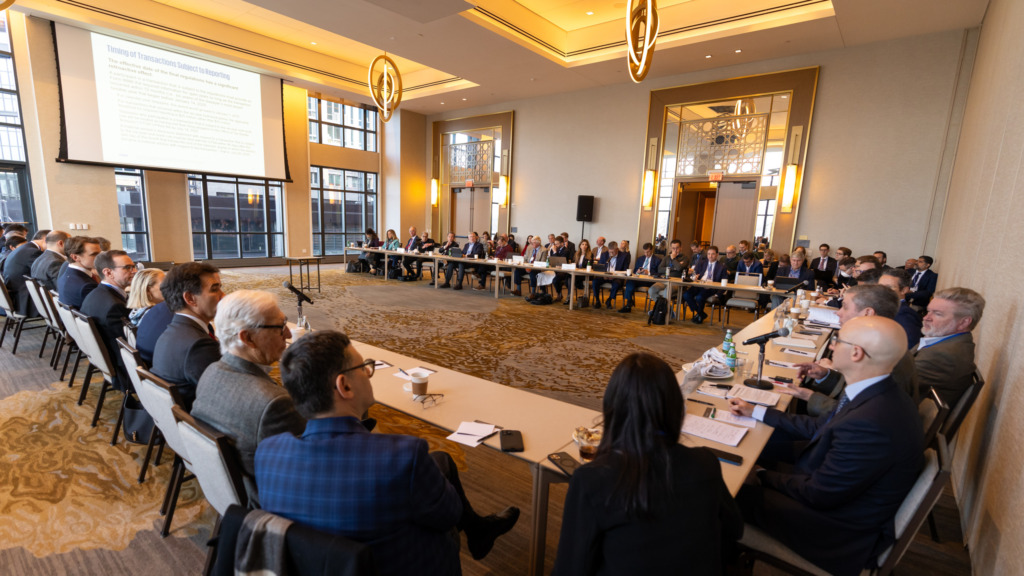
Section 892 regulations and other foreign investment tax policy issues will be discussed next week during RER’s Tax Policy Advisory Committee meeting on June 10.

In the News: Roundtable TPAC Chair Urges Treasury to Modernize Foreign Investment Tax Rules, Preserve U.S. Access to Foreign Capital

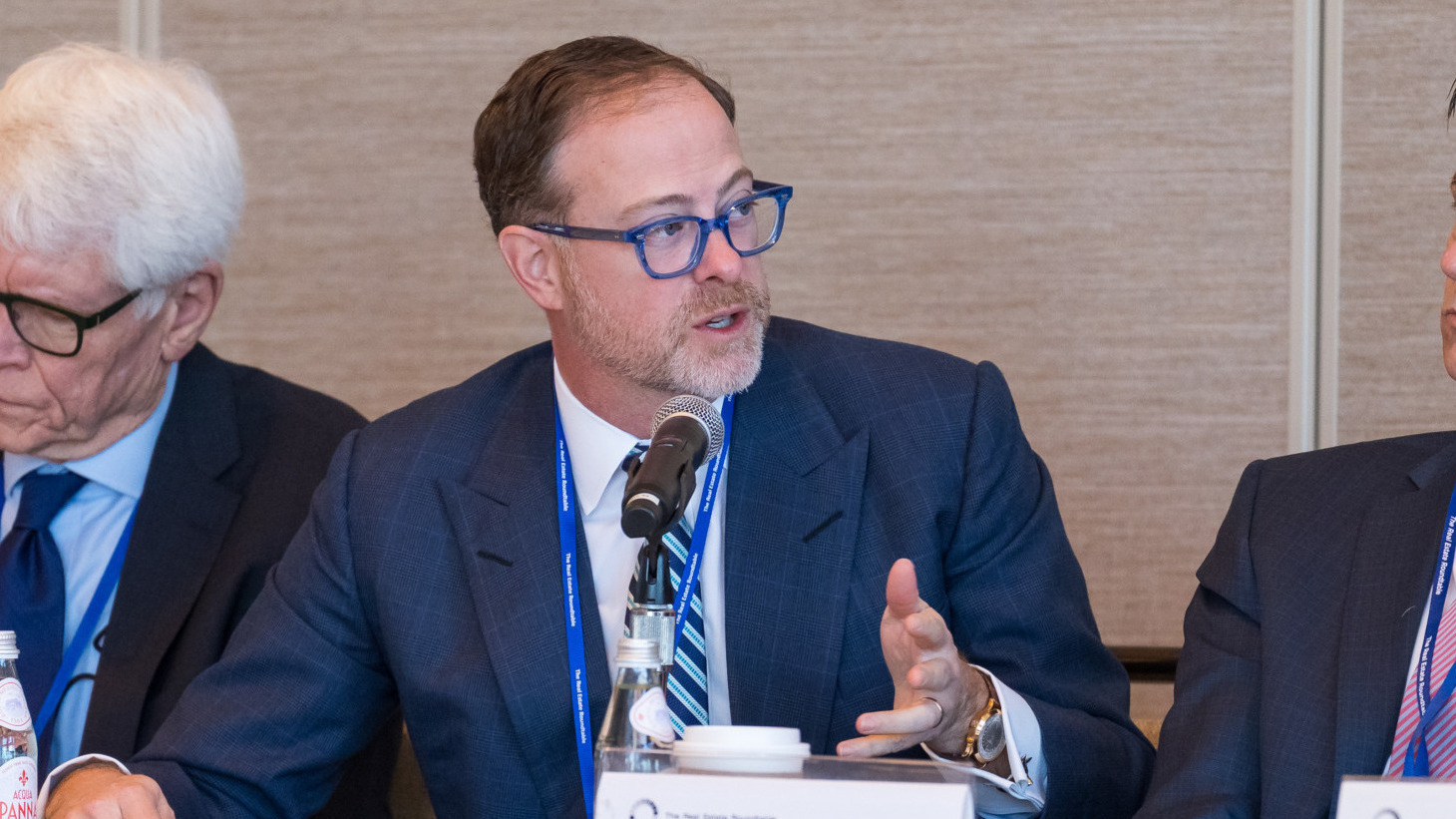
A new Bloomberg op-ed by RER Tax Policy Advisory Committee Chair Joshua Parker (Founder, Chairman and Chief Executive Officer, Ancora) reinforces The Real Estate Roundtable’s (RER) push for Treasury to modernize Section 892 regulations without discouraging sovereign investment in U.S. real estate and other long-term assets. (Bloomberg Tax, March 11)

Op-Ed Highlights

RER Tax Policy Advisory Committee Chair Joshua Parker
  • Section 892 of the tax code generally exempts investment income earned by foreign governments, including sovereign wealth funds, from U.S. income tax. The 892 exemption does not apply, however, if the foreign government effectively controls the U.S. business or is deemed to be engaged in a commercial activity.
  • Parker writes that Treasury’s regulatory effort is “constructive and necessary,” but cautions that the rules must distinguish between legitimate investor stewardship and effective control of a business. (Bloomberg Tax, March 11)
  • The op-ed argues that Section 892 needs to catch up with major changes in capital markets, including the growth of private credit, direct lending, and co-investment strategies that were not significant features of the market when the statute was enacted.
  • Parker emphasizes that policymakers should not “sweep fundamentally different forms of investor participation into the same regulatory framework.
  • Responsible investors “must exercise fiduciary oversight, manage risk, and ensure disciplined capital deployment,” Parker adds. Customary minority protections such as consent rights, veto rights, and approval of extraordinary actions are forms of stewardship, not day-to-day business control.

Why It Matters

  • Since 2011, foreign governmental investors have invested more than $100 billion in U.S. commercial real estate. (Roundtable Weekly, Feb. 13)
  • Foreign capital invested in the U.S. has supported housing supply, infrastructure development, research facilities, and place-based economic growth. (Bloomberg Tax, March 11| RER Letter, Feb. 12)

RER Advocacy

  • In February, RER submitted a comment letter to Treasury Secretary Scott Bessent on the Section 892 regulations and proposed rules, urging clear grandfathering rules and changes to prevent disruptions to sovereign investment in U.S. real estate. (Letter, Feb. 12 | Roundtable Weekly, Feb. 27)

RER will continue engaging Treasury to ensure the final rules provide clarity for investors while avoiding unintended disruptions to U.S. real estate capital formation.

Treasury Signals Revisions for Proposed Section 892 Rules After Industry Feedback

The U.S. Department of the Treasury is revising its proposed Section 892 regulations after the investment and real estate industries raised concerns that aspects of the framework could raise their cost of capital by deterring passive investment by foreign governments, including sovereign wealth funds.

State of Play

  • A Treasury Department spokesperson told Bloomberg Law the agency is “revising the proposal to address key issues and ensure it supports stable, long-term capital flows,” citing feedback from the investment and real estate industry, including The Real Estate Roundtable (RER). (Bloomberg Law, Feb. 20)
  • The proposed Section 892 regulations (REG-101952-24) address two critical questions that can trigger U.S. tax liability: when a foreign government has effective control of an entity engaged in commercial activities, and when an acquisition of debt by a foreign government is considered to be commercial activity.
  • Treasury tax policy officials also indicated the proposed regulations—if finalized—will not be applied retroactively to existing transactions and structures. (Tax Notes, Feb. 23)

RER Advocacy

  • Earlier this month, RER submitted a comment letter to Treasury Secretary Scott Bessent on the Section 892 final and proposed rules, urging clear grandfathering rules and changes to prevent disruptions to sovereign investment in U.S. real estate. (Letter, Feb. 12)
  • The letter recommended targeted fixes, including clarifying that customary minority protections do not create effective control; confirming that withholding agents may rely on foreign government self-certifications; and adding safe harbors (including for certain distressed-debt modifications).
  • RER’s recommendations would ensure U.S. real estate owners and developers can continue to mobilize capital from foreign government sources while preserving Section 892’s fundamental distinction between tax-exempt investment activities and taxable commercial activities. (Roundtable Weekly, Feb. 13)

RER’s Tax Policy Advisory Committee (TPAC) Advocacy

  • The letter was developed by TPAC’s Section 892 Working Group, which includes representatives from a diverse group of foreign investors, U.S. real estate sponsors, and outside advisors.The principal drafter was TPAC member and Skadden partner Nickolas Gianou.

RER will continue engaging Treasury to ensure the final Section 892 regulations do not discourage sovereign capital that supports U.S. real estate investment and jobs.

Roundtable Urges Treasury to Modify Proposed Regulations on Sovereign Investment in U.S. Real Estate

The Real Estate Roundtable (RER) submitted a comment letter to Treasury Secretary Scott Bessent on Treasury’s recently issued Section 892 regulations and related proposed rules that could materially affect sovereign investment in U.S. real estate. (Letter, Feb. 12)

Why It Matters

  • Foreign investment, including investment by sovereign wealth funds, foreign pension funds, and other government entities, is a critical source of financing for capital-intensive U.S. real estate projects.
  • Since 2011, foreign governmental investors have invested over $100 billion in U.S. commercial real estate.
  • “This patient and long-duration foreign capital drives ambitious and transformative investments that create new housing supply, lower housing costs, and spur job growth and economic opportunity in American cities,” wrote Roundtable President and CEO Jeffrey DeBoer.
  • Section 892 generally exempts from U.S. tax certain dividend and interest income—and gains on sales of securities—earned by foreign governments, unless the income is treated as commercial activity income or income from a controlled commercial entity. The provision traces back to 1917.
  • On Dec. 15, Treasury released final Section 892 regulations and issued new proposed regulations addressing two key questions: (1) when a foreign government has effective control of an entity engaged in commercial activities, and (2) when an acquisition of debt is considered commercial activity.
  • These issues have important consequences for existing and future sovereign investment in U.S. real estate.

RER Recommendations

  • The RER letter commends Treasury for its general approach and for clarifying specific issues. At the same time, RER expressed concerns regarding aspects of the proposed regulations that could disrupt inbound real estate investment and raise the cost of capital for U.S. real estate projects.
  • For example, the proposed rules can be read to restrict foreign governmental investors’ ability to secure certain investor protections, such as veto rights over major investment and financing decisions. Such restrictions could deter and discourage foreign governments from investing in the United States.
  • The letter highlights these concerns while offering specific solutions that Treasury could incorporate in its final rulemaking. These include:
  • Clarifying that customary minority investor veto rights do not create effective control;
  • Grandfathering existing investments;
  • Confirming U.S. withholding agents can rely on self-certifications from foreign governments;
  • Clarifying that certain modifications of distressed debt are not commercial activity; and
  • Establishing debt-related safe harbors for specific situations.
  • In short, RER’s recommendations would ensure U.S. real estate owners and developers can continue to mobilize capital from foreign government sources while preserving Section 892’s fundamental distinction between tax-exempt investment activities and taxable commercial activities.

RER’s Tax Policy Advisory Committee (TPAC) Advocacy

  • The letter was developed by TPAC’s Section 892 Working Group, which includes representatives from a diverse group of foreign investors, U.S. real estate sponsors, and outside advisors. The principal drafter was TPAC member and Skadden partner Nickolas Gianou.

The current Administration and Treasury leadership have emphasized the importance of passive foreign investment to U.S. job creation and growth. Treasury has not yet indicated when it anticipates finalizing the new Section 892 proposed regulations.