Executive Order Seeks to Restrict Institutional Single-Family Home Purchases Amid Affordability Push

This week, President Donald Trump signed an Executive Order directing federal agencies to restrict large institutional investors from purchasing single-family homes, framing the action as part of a broader effort to restore housing affordability and expand homeownership. (WSJ, Jan. 20)

State of Play

  • The Executive Order directs leaders at HUD, Treasury, FHFA, USDA, VA, and GSA to issue guidance limiting federal programs and government-sponsored enterprise (GSE) activities that facilitate institutional purchases of single-family homes that could otherwise be purchased by owner-occupants. (White House EO, Jan. 20)
  • The Order instructs the Treasury Secretary to develop formal definitions of “large institutional investor” and “single-family home” within 30 days, signaling that further details on implementation are to come. (White House EO, Jan. 20)
  • Agencies are also directed to promote first-look policies and disclosure requirements favoring individual buyers, while including narrow exceptions for build-to-rent communities planned and constructed as rental housing, and potentially other types of projects. (White House EO, Jan. 20)
  • DOJ and the FTC are instructed to review large-scale investor acquisitions in local housing markets for potential anticompetitive behavior, including coordinated vacancy or pricing strategies. (White House EO, Jan. 20)
  • Notably, the Order appears to focus on future acquisitions and does not contain language requiring sale, divestment, or unwinding of existing holdings, instead assuming continued ownership by requiring disclosure from current owners of single-family rentals. (White House EO, Jan. 20)

Remarks from Davos

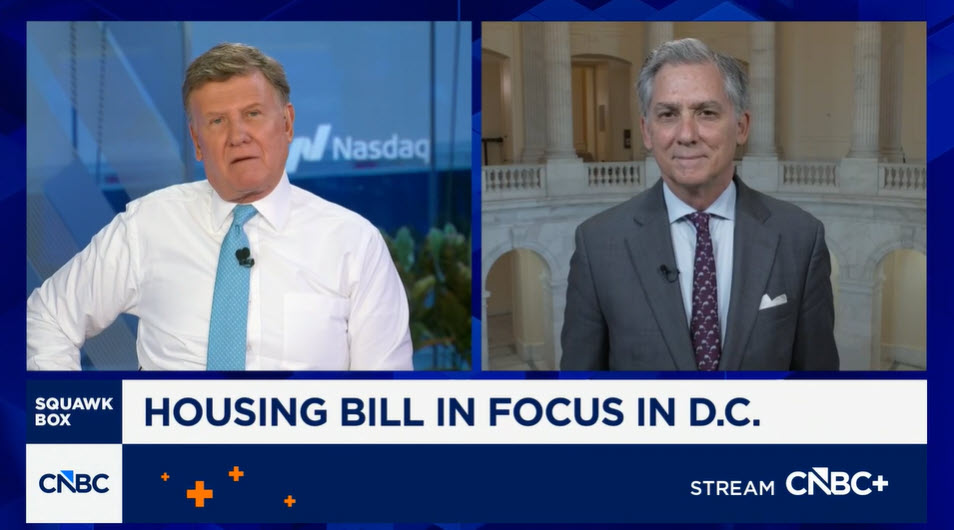
  • Speaking at the World Economic Forum in Davos, Switzerland this week, President Trump reiterated many of the key points from the Executive Order.
  • In his speech, President Trump argued that institutional investors have distorted the housing market, stating that “homes are built for people, not for corporations,” and asserting that large firms purchasing “as much as 10 percent of houses on the market” have crowded out families and first-time buyers. (CNBC, Jan. 21)
  • President Trump also noted a complementary effort to lower borrowing costs, stating, “I’ve instructed government-backed institutions to purchase up to $200 billion in mortgage bonds to bring down interest rates.” (CNBC, Jan. 21)

Activity on Capitol Hill

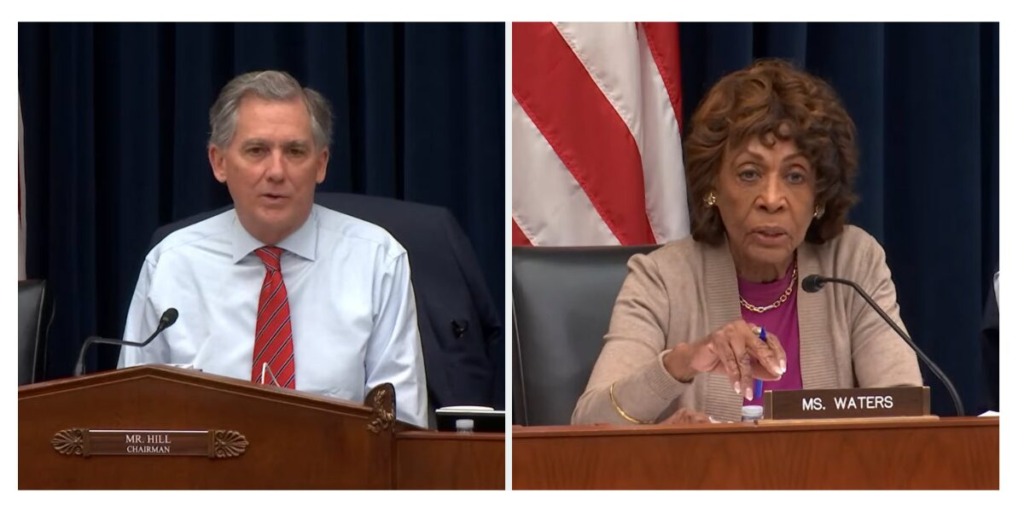
  • Housing affordability was also a focus for leaders on Capitol Hill this week. HUD Secretary Scott Turner told the House Financial Services Committee that the administration is prioritizing housing supply expansion and regulatory rollback.
  • Sec. Turner cited HUD’s elimination of the Affirmatively Furthering Fair Housing (AFFH) rule—which he said “did not build one home” and functioned as a de facto national zoning mandate—as part of a larger push to cut red tape, empower local decision-making, and promote homeownership. (HUD Secretary Turner Testimony, Jan. 21)
  • On Thursday, the House Oversight Subcommittee on Economic Growth held a hearing titled “Housing Affordability: Saving the American Dream,” examining regulatory barriers, supply constraints, and market-based approaches to lowering housing costs. (House Oversight Committee, Jan. 22)
  • NAHB Chairman Buddy Hughes testified that regulatory burdens are a central driver of affordability challenges, noting that “nearly 24 percent of the price of a new single-family home is due to regulatory regimes at the state, local and federal levels,” which he said directly increase costs and limit housing production. (Witness Statement, Jan. 22)
  • AEI Housing Center Co-Director Edward Pinto told lawmakers that restrictive state and local land-use regulations are an “immovable object” constraining supply and driving prices higher, while demand-side measures alone risk exacerbating price pressures. (Witness Statement, Jan. 22)

What’s Next

  • The White House has indicated that additional housing-related executive actions are under consideration, particularly measures aimed at first-time homebuyers, as the administration looks to demonstrate progress on housing affordability ahead of the midterm elections. (Washington Post, Jan. 9)
  • The administration has also signaled its intent to pursue legislation that codifies elements of the Executive Order banning institutional investors from purchasing single-family homes, though prospects remain uncertain given jurisdictional, legal, and political hurdles. (White House EO, Jan. 20 | FOX Business, Jan. 21)

RER Advocacy

  • RER has consistently emphasized that expanding housing supply—not restricting capital—is the most effective path to improving affordability.
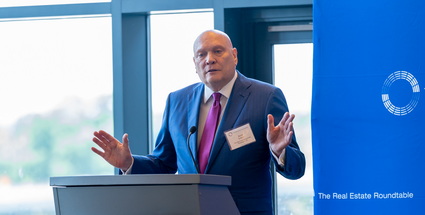
  • During this week’s RECPAC meeting, Genger Charles (Amherst), Sheila Greenwood (Invitation Homes), Lou Hayden (American Homes), and Ama Romaine (Pretium) participated in a member panel examining proposals to restrict institutional investment in single-family homes and the implications for housing supply, affordability, and capital formation.
  • Panelists emphasized that institutional investors are one piece of the housing ecosystemnot the reason homebuyers are being priced out, pointing instead to chronic supply shortages, elevated interest rates, and local regulatory barriers that raise costs and constrain production.
  • RER has also highlighted research showing affordability pressures are driven primarily by supply shortages, construction costs, and mortgage rates—not institutional ownership levels. (Roundtable Weekly, Jan. 9)
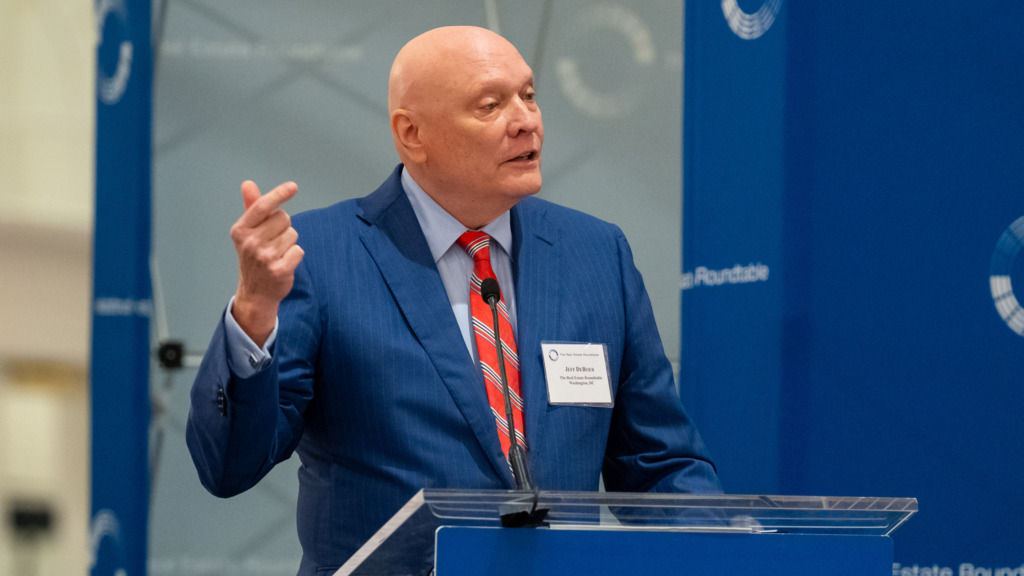
  • RER President and CEO Jeffrey DeBoer has stressed that “the gap between supply and demand is the true cause of today’s housing crisis,” calling for common-sense reforms that remove barriers to development and maintain incentives for the capital needed to build, modernize, and expand the nation’s housing stock. (Roundtable Weekly, Jan. 9)

RER will continue working with policymakers and the administration to advance supply-forward housing solutions that increase production, preserve access to capital, and help families—whether renters or homeowners—achieve the American Dream.

Washington Ramps Up Housing Agenda as Real Estate Coalition Presses for Solutions that Expand Supply

President Trump and lawmakers ramped up efforts to address housing affordability this week—floating executive actions, new financing tools, and legislative proposals aimed at lowering costs for homebuyers and renters. The Real Estate Roundtable (RER) and a broad real estate coalition are urging policymakers to stay focused on the underlying challenge: the nation’s chronic housing supply shortage.

State of Play

  • Speaking at the Detroit Economic Club, President Trump previewed additional affordability proposals, saying, “In the coming weeks, I will be laying out even more plans to help bring back affordability.” (PoliticoPro, Jan. 14)
  • Last week, Trump said he would move to ban “large institutional investors” from purchasing single-family homes—without providing details on what legal steps the administration could take or how “large” would be defined. (Bloomberg, Jan. 8 | WSJ, Jan. 7)
  • Administration officials have indicated to Axios that more details on the administration’s housing policies will come from Trump’s speech at Davos this month. (Axios, Jan. 12)
  • Trump also instructed Fannie Mae and Freddie Mac to purchase $200 billion in mortgage-backed securities, an effort the administration says is intended to help reduce mortgage rates and monthly payments. (Politico | Bloomberg, Jan. 9)
  • The administration has floated the idea of “portable mortgages,” which would allow mortgage holders to sell their house and bring their low mortgage-rate along to their new home. (Axios, Jan. 14)
  • On Tuesday, the Republican Study Committee (RSC) unveiled a new “Making the American Dream Affordable Again” policy framework for a second reconciliation package, including housing-related concepts such as a proposed down payment assistance program and ideas tied to easing mortgage “lock-in.” (The Hill, Jan. 13)

Roundtable & Real Estate Coalition View

  • Large-scale SFR investments have helped revitalize distressed properties and communities, contributing to economic growth and stability.
  • RER has consistently emphasized that restricting investment is not a substitute for increasing supply—and that institutional capital can be part of the solution when it supports new housing development and expanded rental options.
  • In a Jan. 13 coalition statement, real estate organizations urged policymakers to prioritize supply-forward policies that expand construction and keep capital flowing to housing: “The only way to lower the cost of mortgages and rent is by encouraging, not hindering, investment… by building the housing our nation needs.” (Coalition Statement, Jan. 13)
  • RER has also highlighted research showing affordability pressures are driven primarily by supply shortages, construction costs, and mortgage rates—not institutional ownership levels. (Roundtable Weekly, Jan. 9)

Sen. Gallego’s Housing Affordability Plan

  • Sen. Ruben Gallego (D-AZ) released a housing affordability plan on Wednesday centered on boosting supply, reforming zoning and permitting, lowering costs, and strengthening resilience to extreme weather. (Politico| HousingWire,  Jan. 14)
  • RER President and CEO Jeffrey D. DeBoer welcomed elements of Gallego’s plan focused on increasing supply—such as ideas to expand the Low-Income Housing Tax Credit, encourage conversions of obsolete buildings into housing, and reward jurisdictions that streamline land use and zoning rules. (Press Release, Jan. 14)
  • DeBoer said RER looks forward to working with Sen. Gallego “to advance these important proposals in the most impactful way possible.”

Bipartisan Bill Incentivizes Transit-Oriented Housing

  • A bipartisan, bicameral group introduced the Build Housing, Unlock Benefits and Services (HUBS) Act to cut red tape and expand federal infrastructure loan tools to support transit-oriented development and boost housing supply. (One PagerFull Text)
  • Sens. Lisa Blunt Rochester (D-DE) and John Curtis (R-UT) are leading the bill in the Senate, alongside Reps. Laura Friedman (D-CA) and Mike Lawler (R-NY) in the House.
  • DeBoer said, “The Build HUBS Act is an important step to address the nation’s housing crisis. By expanding the Department of Transportation’s low-interest TIFIA/RRIF loan programs to finance housing in transit-oriented development projects, this bill will increase the supply of housing in America and bring more affordable housing options to communities across the country. We look forward to working with Congress to enact this legislation,” he added. (Press Release, Jan. 15)
  • Rep. Lawler will be a featured speaker at RER’s State of the Industry Meeting next week.

RER will continue working with policymakers and the administration to advance practical solutions that increase construction, support investment, and address the root causes driving today’s housing costs.

Coalition Statement on Making Housing More Affordable for Americans

(WASHINGTON, D.C.) — The United States is facing a housing affordability crisis driven by demand exceeding supply, causing a shortage of all types of housing—homes for sale, homes for rent, apartments, duplexes and others—that has been decades in the making. For too long, families and communities throughout the country have struggled with the high cost of housing.

The undersigned organizations appreciate the Trump Administration’s ongoing commitment to reducing housing costs and broadening housing opportunity by exploring solutions that will expand the number of homes available—the only real solution to housing affordability. While there is no single policy solution, we know it will require public and private partnerships collaborating with communities nationwide to build the housing America needs.

The cost of housing is one of the most critical issues facing many Americans. The only way to lower the cost of mortgages and rent is by encouraging, not hindering, investment and constructing the housing that individuals and families can build lives upon.

President Trump has made increasing housing supply and addressing today’s shortage a top priority, and rental housing providers are the very organizations to partner with to solve our housing affordability challenges.

As a coalition, we urge policymakers of both parties and at all levels of government to embrace solutions that will have the greatest positive impact on housing supply and make a meaningful difference in Americans’ lives by building the housing our nation needs.

We look forward to learning more about the Administration’s housing proposals and partnering with the Administration in developing a national housing policy that will ensure that generations of Americans have the freedom to choose from a wide range of affordable housing options.

Download Statement

Council for Affordable and Rural Housing

Institute of Real Estate Management

Manufactured Housing Institute

NAIOP, Commercial Real Estate Development Association

Nareit

National Association of Housing Cooperatives

National Affordable Housing Management Association

National Apartment Association

National Association of Home Builders

National Leased Housing Association

National Multifamily Housing Council

National Rental Home Council

The Real Estate Roundtable 

Trump Proposes Restricting Institutional Investment in Single-Family Housing

President Donald Trump on Wednesday said he would move to ban “large institutional investors” from purchasing single-family homes, framing the proposal as part of a broader push to improve housing affordability. (Washington Post | CNBC, Jan. 7)

State of Play

  • “I am immediately taking steps to ban large institutional investors from buying more single-family homes, and I will be calling on Congress to codify it. People live in homes, not corporations,” Trump wrote in a post on Truth Social. (Bloomberg, Jan. 8)
  • He indicated plans to discuss the issue at the World Economic Forum in Davos, Switzerland, later this month. (WSJ, Jan. 7)
  • The White House did not specify what executive actions, if any, would be taken, nor how it would define “large institutional investors.”
  • As currently described, the proposal would apply only to future acquisitions and would not require existing owners to divest their single-family rental (SFR) portfolios. (GlobeSt., Jan. 8)
  • Codifying a ban would require clear statutory language passed by Congress and signed into law—raising complex questions around thresholds, exemptions, and enforcement.
  • Legal challenges would likely follow, including claims related to takings, equal protection, and interstate commerce. Absent congressional authorization, the executive branch lacks clear authority to impose such a restriction solely through regulation. (Propmodo, Jan. 8)
  • Former House Financial Services Committee Chair Patrick McHenry said on Bloomberg on Thursday that housing affordability challenges are driven largely by state and local land-use and regulatory barriers, noting that institutional investors account for only a small share of the housing market. (Bloomberg, Jan. 8)
  • Also this week, Trump wrote on Truth Social that he is directing Fannie Mae and Freddie Mac to purchase $200 billion in mortgage bonds to address the national housing affordability crisis. Federal Housing Finance Director Bill Pulte said in an interview that Fannie and Freddie Mac will carry out the president’s directive by purchasing $200 billion in mortgage-backed securities from the public market. (Politico | Bloomberg, Jan. 9)

What the Data Shows

GAO Report
  • Research consistently finds that housing affordability pressures stem primarily from chronic supply shortages, high construction costs, and elevated mortgage rates—not institutional ownership levels.
  • According to SFR Analytics, the top 24 SFR owners control just over 520,000 homes—about 3.5% of rental homes and less than 1% of the total single-family housing stock—underscoring the limited market impact of large investors. (Bloomberg, Jan. 7)
  • Single-family rentals expanded after the Great Financial Crisis in 2008-2009 as investors helped absorb foreclosures, stabilize neighborhoods, and provide rental housing for households unable to buy.  (Federal Reserve Bank of St. Louis, Oct. 2025)
  • A 2024 Government Accountability Office (GAO) report found that large institutional investment expanded rental-housing options, helped stabilize neighborhoods after the financial crisis, and improved access to quality communities for low- and middle-income households. (GAO Report Highlights | Full GAO Report) (Roundtable Weekly, June 2024)
  • The GAO study also found that large-scale SFR showed that many working families desire the space provided by single-family homes, but may have low credit scores and otherwise can’t afford to buy them. Renting is commonly their best option for moving into better neighborhoods and school districts.
  • Another study out of UNC Charlotte, released in May 2024, finds that children from low- and moderate-income households see improved achievements in school when they rent single-family homes in neighborhoods where they cannot afford to buy.  (UNC Study Highlights | Full UNC Report, 2024)
  • An August 2025 report from the American Enterprise Institute found that institutional investors are not a primary driver of housing unaffordability, noting that housing shortages stem largely from restrictive zoning, limited new construction, and inflationary pressures. (American Enterprise Institute Report, Aug. 2025)
  • Stephen Scherr, co-president of Pretium Partners, which owns Progress Residential (RER member) one of the nation’s largest SFR operators, said on CNBC today that institutional investors help expand housing supply by de-risking large developments through purchase commitments that enable projects to move forward. He added that many renters they serve are not mortgage-eligible and use renting as a pathway to eventual homeownership. (CNBC, Jan. 9)

Roundtable View

  • Expanding the supply of housing across the geographic and economic spectrum is essential for the nation’s economic vitality.
  • Large-scale SFR investments have helped revitalize distressed properties and communities, contributing to economic growth and stability.
  • The Real Estate Roundtable (RER) has consistently emphasized that restricting capital will not solve the affordability crisis, and that increasing housing supply is the most effective path forward.
  • RER President and CEO Jeffrey DeBoer said: “Access to affordable housing is central to the American Dream, a dream that for some families means renting a home and for others means owning a home. For more than a decade, our nation’s supply of both owner-occupied and rental housing has, for a variety of reasons, not kept up with demand. This gap between supply and demand is the true cause of today’s housing crisis. The supply of housing must be increased.”
  • “This will require, among other actions, common sense policy reforms to local permitting and zoning regulations, recognizing in both national and local policy actions the reality of escalating labor and material costs and, importantly, the need to maintain and improve incentives to encourage the capital needed to develop, redevelop, and modernize the nation’s housing stock,” DeBoer said. “We work with all policymakers to advance initiatives that remove barriers to housing development, incentivize capital investment in housing, and help people achieve the American Dream.” 
  • In March 2025, RER and Nareit submitted comments to the Federal Trade Commission (FTC) in response to the agency’s inquiry into the impact of large-scale SFR operators and institutional investors on home prices and rents. (Letter, March 2025)
  • The letter emphasized that institutional investors account for a small fraction of home purchases and play a limited, but constructive role in expanding supply, rather than driving affordability challenges. (Roundtable Weekly, March 2025)
  • This week, RER member Sean Dobson (Chairman, CEO & CIO, Amherst) said restricting investment would not improve affordability. “Banning investors from putting capital into the housing market is not going to make affordability any better,” Dobson said during an appearance on Wednesday on Bloomberg Markets. (Bloomberg, Jan. 7)

Without meaningful steps to expand housing supply, proposals to limit institutional participation are unlikely to address the root causes of affordability pressures facing renters and would-be homebuyers, reinforcing RER’s ongoing work with policymakers and the administration to promote policies that increase housing supply and improve affordability.

RER Statement on Restricting Institutional Investment in Single-Family Housing

Statement by Real Estate Roundtable (RER) President and CEO Jeffrey D. DeBoer

(WASHINGTON, D.C.) — “Access to affordable housing is central to the American Dream, a dream that for some families means renting a home and for others means owning a home.

For more than a decade, our nation’s supply of both owner-occupied and rental housing has, for a variety of reasons, not kept up with demand.

This gap between supply and demand is the true cause of today’s housing crisis.

The supply of housing must be increased.

This will require, among other actions, common sense policy reforms to local permitting and zoning regulations, recognizing in both national and local policy actions the reality of escalating labor and material costs and, importantly, the need to maintain and improve incentives to encourage the capital needed to develop, redevelop, and modernize the nation’s housing stock.

We work with all policymakers to advance initiatives that remove barriers to housing development, incentivize capital investment in housing, and help people achieve the American Dream.”

Housing Policy Updates: Comment Letter to FTC on Single-Family Rental Industry , GSE Considerations, and Tenant Protection Policy Developments

Housing policy remains at the forefront this week as The Real Estate Roundtable (RER) responded to the Federal Trade Commission’s (FTC) request for public comment on the impact that the large-scale single-family rental (SFR) owner-operators are having on the housing market; the Trump administration continues to explore privatizing Fannie Mae and Freddie Mac; and Federal Housing Finance Agency (FHFA) Director Bill Pulte rescinded a renter protection directive.

Single-Family Rental Housing Study

  • RER and Nareit responded this week to the FTC’s request for public comment  regarding the impact that large-scale Single-Family Rental (SFR) operators and institutional investors are having on home prices and rents in the single-family housing. (Letter)
  • The FTC aims to assess whether “mega investors” influence housing prices negatively.
  • The letter underscores that institutional capital is essential to expanding housing supply and addressing the chronic housing shortage affecting affordability nationwide.
  • As stated in the letter, “Single-family rentals, now part of an institutionally supported asset class, add balance to the U.S. housing market.  SFRs play an important role in the nation’s housing landscape by boosting supply and offering flexible, high-quality housing options that have broad demographic appeal at lower price points compared to home ownership.” 
  • SFR homes constitute only 32 percent of rental units nationally, consistent with historical averages.
  • Institutional investors accounted for a mere 0.3 percent of single-family home purchases in the past year. (BisNow, Feb. 3)
  • The letter emphasized that institutional investors own less than 0.5 percent of U.S. single-family homes, thus not driving the housing affordability crisis.

GSE Reform

  • The Trump administration is actively exploring housing finance reform options, including privatizing Fannie Mae and Freddie Mac. (WSJ, March 23)
  • Recent proposals suggest transferring the Treasury’s stakes to a newly envisioned U.S. sovereign wealth fund. Treasury Secretary Scott Bessent recently discussed this possibility on a podcast, although he provided limited details. (Bloomberg, March 23)
  • Director Bill Pulte and Sec. Bessent have stated that they would like Freddie and Fannie to go private, but not at the cost of disrupting mortgage rates. (Commercial Observer, March 21)
  • An executive order is also under consideration, which could direct federal departments to examine the privatization of Fannie and Freddie.
  • This proposal has drawn substantial attention from housing industry leaders concerned about potential impacts on mortgage markets and affordable housing.

Tenant Protection Policy Rescinded

  • This week, FHFA Director Pulte rescinded a Biden-era directive requiring multifamily housing providers with Fannie Mae or Freddie Mac-backed mortgages to provide renters a 30-day rent increase notice, lease term expirations and a five-day late payment grace period. (GlobeSt, March 26)
  • Pulte contended that this directive increased compliance burdens for lenders and property owners, noting existing state and local regulations already cover lease notices and late fee guidelines.
  • RER along with other national real estate organizations Industry groups such as the National Apartment Association and the National Multifamily Housing Council had opposed the policy, arguing it imposed undue burdens on housing providers. (Bisnow, March 25 | Roundtable Weekly, Jan. 2023)
  • This move aligns with broader industry efforts advocating fewer regulatory constraints to foster housing market stability.

Department of Housing & Urban Development (HUD) Secretary Scott Turner will be a featured speaker at The Roundtable’s Spring Roundtable Meeting on April 8, 2025 (Roundtable-level members only).