Roundtable Calls for Congress to Pass Cyber Security Bill, Increase Digital Competitiveness

The bipartisan Cyber Diplomacy Act (H.R. 3776) will advance America’s public and private efforts to safeguard cyberspace and enhance the nation’s economic competitiveness in a global digital economy.  That is the message sent by The Roundtable, U.S. Chamber of Commerce and five other national trade organizations in a joint letter last week to Senate Majority Leader Mitch McConnell (R-KY), Minority Leader Chuck Schumer (D-NY) and all other U.S. Senators. (Joint Letter, Sept. 26)

The  Roundtable and six other national trade organizations sent a Sept. 26 joint letter on cybersecurity policy to all members of the U.S. Senate. (Joint Letter)

  • The bill – introduced by House Foreign Affairs Committee Chairman Ed Royce (R-CA) – passed the House in January, was reported out of the Senate Committee on Foreign Relations in June and is currently under consideration by the Senate.
  • H.R. 3776 would task the State Department with establishing a unified Office for Cyberspace and Digital Economy, which would consolidate efforts relating to international cybersecurity, internet access, internet freedom, digital economy, cybercrime, deterrence, and international responses to cyber threats.  (The Washington Times, Sept. 27)
  • The Sept. 26 joint letter states, “We believe that a focused, centralized, and appropriately placed office led by an ambassador-rank official would aid U.S. cybersecurity and digital economy efforts. We believe that enactment of this bill would send a powerful message that the U.S. intends to preserve and protect a secure, reliable, and open internet.” 
  • The cybersecurity issue is a key focus of The Roundtable’s Homeland Security Task Force (HSTF), which encourages measures to address the global cyber threat and effective information sharing..

The Roundtable’s Homeland Security Task Force will discuss cyber security and other issues affecting real estate during its upcoming meetings at FBI offices in New York (Oct. 18) and Washington, DC (Nov. 13).


FBI Briefs Roundtable’s HSTF on Commercial Sector Holiday Security; Real Estate Information Sharing and Analysis Center Featured in Homeland Security Today; FINCEN Expands Metro Areas Subject to Real Estate Purchase Review

A day-long briefing this week by senior officials of the Federal Bureau of Investigation (FBI) to The Roundtable’s Homeland Security Task Force (HSTF) and the National Retail Federation focused on maintaining vigilance in the commercial sector during the holiday season; counterterrorism trends; criminal gang trends; organized retail crime; terrorism financing and an analysis of recent active shooter and workplace violence incidents.     

This week, the  Real Estate Information Sharing and Analysis Center ( RE-ISAC ) was featured in an article in Homeland Security Today written by Roundtable SVP Clifton “Chip” Rodgers Jr. and Andy Jabbour of Gate15, which provides support to the RE-ISAC. 

  • “Terrorism continues to pose a clear and present danger to our nation, to the American economy and to the commercial facilities sector.”  Homeland Security Today notes, “In response to these ongoing threats, the RE-ISAC has brought together industry organizations to work together with federal, state and local law enforcement and intelligence agencies to prevent, detect and respond to terrorist threats and malicious incidents.”
  • The article also states, “The RE-ISAC is the designated conduit of terrorism, cyber and natural hazard warning and response information between the government and the commercial facilities sector.”    
  • The Real Estate Roundtable in February 2003 organized the RE-ISACas a public-private partnership between the U.S. commercial facilities sector and federal homeland security officials to proactively manage risk and strengthen the security and resilience of the U.S. commercial facilities/real estate critical infrastructure.
  • While the Department of Homeland Security’s National Protection and Programs Directorate (NPPD) is the primary federal partner of the RE-ISAC, the organization also works with the FBI, the National Joint Terrorism Task Force, Federal Emergency Management Agency (FEMA) and a number of other law enforcement and intelligence agencies.
  • DHS announced yesterday that Congress passed legislation to reorganize the NPPD, creating the Cybersecurity and Infrastructure Security Agency – CISA. (DHS, Nov. 13)
  • The CISA Act (H.R. 3359), which passed the House yesterday, the Senate in October, and was signed by President Trump today, will prioritize CISA’s mission as “the Federal leader for cyber and physical infrastructure security.”

Separately, The Financial Crimes Enforcement Network (FinCEN) on Nov. 15 announced the issuance of revised Geographic Targeting Orders (GTOs) that require U.S. title insurance companies to identify the natural persons behind shell companies used in all-cash purchases of residential real estate.  The purchase amount threshold, which previously varied by city, is now set at $300,000 for each covered metropolitan area.  The GTOs cover certain counties within the following major U.S. metropolitan areas: Boston; Chicago; Dallas-Fort Worth; Honolulu; Las Vegas; Los Angeles; Miami; New York City; San Antonio; San Diego; San Francisco; and Seattle. (Wall Street Journal, Nov. 15)


Financial Accounting Standards Board (FASB) Rejects Bank Proposal on Loan Losses

The Financial Accounting Standards Board (FASB) this week voted to reject a proposal by regional banks to soften the impact of a change that will force banks to book losses on bad loans much faster.  This rejection means that the Current Expected Credit Loss (CECL) accounting standard will proceed as planned at the beginning of 2020 for publicly traded U.S. banks and later for other financial institutions.  A business coalition that included The Real Estate Roundtable last month had urged further study amid concerns that CECL may soon begin to reduce aggregate bank lending.  (Coalition Letter, March 5)


The Financial Accounting Standards Board (FASB) this week voted to reject a proposal by regional banks to soften the impact of a change that will force banks to book losses on bad loans much faster.

  • The new CECL model will require certain financial institutions to estimate the expected loss over the life of a loan beginning in January 2020 – a significant change to the way banks calculate reserves on assets.  CECL may cut into earnings and regulatory capital by forcing some banks to boost their loan-loss reserves.  (Wall Street Journal, April 3) 
  • For real estate, there is concern is that banks may reduce lending volumes as they build up additional capital reserves to be in compliance with CECL.  (Roundtable Weekly, March 8) 
  • The regulatory change in how banks estimate loan and lease losses (ALLL) will require substantial changes in data analytics and financial methodologies.  Details on FASB’s April 3 Tentative Board Decision are available here
  • The March 5 coalition letter cited a 2018 KPMB survey showing companies are struggling to make certain accounting, modeling and data decisions to be in compliance with CECL.  (KPMG, “Financial institutions feeling the crunch in countdown to CECL implementation”)  
  • Rep. Blaine Luetkemeyer (R-MO) and Ranking Member Patrick McHenry (R-NC) recently wrote to Securities and Exchange Commission Chairman Jay Clayton expressing concerns about the coming CECL loan loss accounting approach and its effects on markets and investors.  Luetkemeyer and McHenry wrote that they are worried CECL implementation-which begins in 2020 for publicly traded banks-could have unanticipated effects on the financial and housing industries with questionable benefit.  
  • The CECL accounting rule change was issued by the Financial Accounting Standards Board (FASB) in June 2016 as a result of the 2008 financial crisis.  (FASBCredit Losses
  • The Roundtable’s Real Estate Capital Policy Advisory Committee (RECPAC) will continue to address the potential impact of the new accounting standard and work with the CECL business coalition on CECL implementation issues. 

In addition to The Roundtable, the 8 signatories to the March 5 coalition letter were the U.S. Chamber of Commerce, American Bankers Association, Bank Policy Institute, Commercial Real Estate Finance Council, Mortgage Bankers Association, National Association of Realtors, Credit Union National Association and National Association of Federal Credit Unions. 

Treasury Issues Highly Anticipated and Favorable Opportunity Zones Guidance

The Treasury Department on Wednesday released a highly-anticipated, second set of Opportunity Zone (OZ) regulations that seek to provide certainty to potential OZ investors and drive economic development in economically distressed communities nationwide. (reference: 169-page Treasury regulations and IRS news release, April 17) 

President Donald Trump with Scott Turner, executive director of the White House Opportunity and Revitalization Council,  at the April 17 Opportunity Zone Conference with state, local, tribal and community leaders. (Official White House Photo by Shealah Craighead)  

  • A White House Opportunity Zones event on Wednesday featured President Trump, Treasury Secretary Steven Mnuchin and officials from local governments around the country.  (White House Remarks and  Video, April 17)
  • The Treasury Department designated more than 8,700 low-income census tracts as Qualified Opportunity Zones last June. (IRS Notice 2018-48).  Treasury estimates that Opportunity Zones will boost investment in these targeted areas by $100 billion.  According to White House Chief Economist Kevin Hassett (citing Zillow data), property values in Opportunity Zones have appreciated by about 20 percent since zone designations were made in early 2018. 
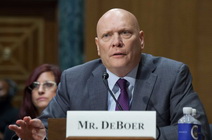
  • Roundtable President and CEO Jeffrey DeBoer said, “We are pleased that these proposed regulations provide answers to many key structural and operational questions that have concerned potential opportunity zone investors, developers, and business owners.   The opportunity zone program, designed to stimulate investment in economically struggling communities nationwide, has tremendous potential.   We look forward to continuing to work with policymakers to reduce unnecessary, counterproductive aspects of the new law.”

The Roundtable previously submitted two comment letters to policymakers on Opportunity Zones, one in June 2018 and one in December 2018. (Roundtable WeeklyOct. 19, and  Dec. 21). The rules issued this week expanded on the previously proposed regulations and address a variety of OZ investment issues.  Positive developments in the newly proposed regulations include the following:

The  169-page Treasury regulations and IRS news release, April 17

  • Opportunity Funds that own more than one property can sell assets individually after a 10-year holding period and fund investors can exclude the gain, without a requirement that the fund investor sell his or her interest in the fund.  In addition, the regulations clarify that multi-asset Opportunity Funds that choose to set up separate funds for individual assets can reduce the administrative burden on their investors through the use of a “feeder” fund that aggregates the fund interests;
  • Opportunity Funds can make nontaxable, debt-financed distributions to fund investors during the 10-year holding period, provided they comply with “disguised sale” rules that limit distributions made during the first 2 years;
  • Land (improved and unimproved) is qualified opportunity zone business property provided it is used in an active trade or business, and it does not have to meet the “original use” or “substantial improvement” requirements that apply to structures;
  • The working capital safe harbor, which provides up to 31-months for Opportunity Funds to deploy capital, is further liberalized.  Specifically, the regulations clarify that: (1) subsequent contributions of capital to the same Opportunity Fund are subject to a new 31-month period, and (2) the 31-month period is extended if the delay is due to waiting for government action or approval;
  • Leased property, including property leased by an Opportunity Fund from a related property, can qualify as opportunity zone business property if certain requirements are met.  This clarification in particular should help existing owners of property in Opportunity Zones participate in the tax incentives without having to sell or dispose of their ownership interest; 

Roundtable President and CEO Jeffrey DeBoer said, “We are pleased that these proposed regulations provide answers to many key structural and operational questions that have concerned potential opportunity zone investors, developers, and business owners.”

  • Real estate that straddles an Opportunity Zone border can qualify as opportunity zone business property as long as the portion of the property that is inside the zone is substantial relative to the total property;
  • While the sale of an asset during the 10-year holding period is generally a taxable event for the Opportunity Fund investors, the regulations infer that a fund could do a like-kind exchange and as long as the replacement property is qualified opportunity zone business property, the gain would be deferred for the investors;
  • Lastly, the regulations include a number of changes that aim to facilitate investment in operating businesses, which should increase tenant demand for commercial real estate located in Opportunity Zones.

The IRS has scheduled a public hearing on the second set of proposed rules for July 9, 2019. Comments are due 60 days after the proposed rules are published in the Federal Register. A third set of proposed guidelines is expected on Opportunity Fund’s reporting requirements to measure the effectiveness of the program.

The OZ program’s goals and incentives were the focus of a Jan. 29 discussion during The Real Estate Roundtable’s State of the Industry Meeting, which featured Sen. Scott and Roundtable member Geordy Johnson (CEO, Johnson Development Associates, Inc.). (Roundtable Weekly, Feb. 15) 

The Roundtable’s Tax Policy Advisory Committee (TPAC) plans to continue its work with policymakers on the OZ program and regulations affecting Qualified Opportunity Funds.


Bipartisan lawmakers unveil “Invest in America Act”

Legislation would spur American job creation and investment in U.S. communities, infrastructure and Opportunity Zones

 
(WASHINGTON, DC) — The American Institute of Architects (AIA) and The Real Estate Roundtable (RER) are pledging support for the “Invest in America Act” (H.R. 2210), which was unveiled yesterday afternoon by U.S. Reps. John Larson (D-CT) and Kenny Marchant (R-TX).
 
The legislation has the potential to create as many as 284,000 American jobs and attract as much as $125 billion in global investment in U.S. communities, which would support addressing America’s aging buildings and crumbling infrastructure. 
 
The legislation does so by repealing the “Foreign Investment in Real Property Tax Act” (FIRPTA). Originally enacted in 1980, FIRPTA is an arcane tax that deflects global capital from U.S. cities and towns by imposing a capital gains tax on global investors that finance any U.S. real property. Consequently, the law greatly inhibits state and local leaders from partnering with global investors—in addition to leveraging domestic partners—to improve their communities, including renovating aging buildings; constructing roads, bridges, tunnels, hospitals and airports; developing affordable housing; and utilizing new Opportunity Zones.
 
“Under current law, global investment is discouraged in the United States and investors are driven to other countries,” said AIA EVP/Chief Executive Officer Robert Ivy, FAIA. “This legislation will put the U.S. on equal footing in the competition for investment dollars, which can be put directly into American communities through partnerships with local and state governments. This will result in meaningful jobs not only for architects but other professionals in design and construction as well as manufacturing and service industries.”
 
A partial repeal of FIRPTA occurred in 2015 with passage of the “Protecting Americans from Tax Hikes Act.” Changes to the law increased global investment in U.S. cities of all sizes and locations by 33 percent, proving that a full repeal would have a significant benefit to many more state and local economies. 
 
“The FIRPTA regime is an anti-competitive outlier that deflects global capital to other countries,” said RER President and CEO Jeffrey DeBoer. “Our infrastructure challenges demand a holistic approach and innovative solutions. Now is the time to build on the recent success of the 2015 reforms by eliminating FIRPTA outright and unlocking private capital for even more job growth and infrastructure improvements.”
 
Learn more about the legislation by visiting the Invest in America Coalition’s website.
 

Bipartisan lawmakers unveil “Invest in America Act

Legislation would spur American job creation and investment in U.S. communities, infrastructure and Opportunity Zones

 
(WASHINGTON, DC) — The American Institute of Architects (AIA) and The Real Estate Roundtable (RER) are pledging support for the “Invest in America Act” (H.R. 2210), which was unveiled yesterday afternoon by U.S. Reps. John Larson (D-CT) and Kenny Marchant (R-TX).
 
The legislation has the potential to create as many as 284,000 American jobs and attract as much as $125 billion in global investment in U.S. communities, which would support addressing America’s aging buildings and crumbling infrastructure. 
 
The legislation does so by repealing the “Foreign Investment in Real Property Tax Act” (FIRPTA). Originally enacted in 1980, FIRPTA is an arcane tax that deflects global capital from U.S. cities and towns by imposing a capital gains tax on global investors that finance any U.S. real property. Consequently, the law greatly inhibits state and local leaders from partnering with global investors—in addition to leveraging domestic partners—to improve their communities, including renovating aging buildings; constructing roads, bridges, tunnels, hospitals and airports; developing affordable housing; and utilizing new Opportunity Zones.
 
“Under current law, global investment is discouraged in the United States and investors are driven to other countries,” said AIA EVP/Chief Executive Officer Robert Ivy, FAIA. “This legislation will put the U.S. on equal footing in the competition for investment dollars, which can be put directly into American communities through partnerships with local and state governments. This will result in meaningful jobs not only for architects but other professionals in design and construction as well as manufacturing and service industries.”
 
A partial repeal of FIRPTA occurred in 2015 with passage of the “Protecting Americans from Tax Hikes Act.” Changes to the law increased global investment in U.S. cities of all sizes and locations by 33 percent, proving that a full repeal would have a significant benefit to many more state and local economies. 
 
“The FIRPTA regime is an anti-competitive outlier that deflects global capital to other countries,” said RER President and CEO Jeffrey DeBoer. “Our infrastructure challenges demand a holistic approach and innovative solutions. Now is the time to build on the recent success of the 2015 reforms by eliminating FIRPTA outright and unlocking private capital for even more job growth and infrastructure improvements.”
 
Learn more about the legislation by visiting the Invest in America Coalition’s website.
 

Opportunity Zones: Treasury Regs Expected Soon; Reporting Legislation Discussed; White House Hosts Opportunity and Revitalization Council Meeting

President Trump yesterday hosted the first meeting of the White House Opportunity and Revitalization Council and introduced its new Executive Director – Texas state legislator and former NFL player Scott Turner – to lead a coordinated Administration effort to revitalize economically distressed communities.   (White House tweet, April 4 and Scott Turner intro video)


President Trump yesterday hosted the first meeting of the White House Opportunity and Revitalization Council and introduced its new Executive Director – Texas state legislator and former NFL player Scott Turner – to lead a coordinated Administration effort to revitalize economically distressed communities.   (White House tweet, April 4 and Scott Turner intro video)

– enlarge White House photo above –

  • Trump stated during the cabinet-level meeting, “We’re providing massive tax incentives for private investment in these areas to create jobs and opportunities where they are needed the most.  This Council will further leverage federal resources and authorities to support these communities however possible.  We will work to streamline regulations, improve education, promote affordable housing, reduce crime, and expand jobs and skilled training for Americans all throughout our country.  Our actions will directly improve the lives of countless low-income Americans.”  (Remarks by President Trump at the White House Opportunity and Revitalization Council Meeting, April 4)
  • Treasury Assistant Secretary for Tax Policy David Kautter stated at an April 1 conference that the highly-anticipated, second set of Treasury Opportunity Zone (OZ) regulations could be issued in “a couple of weeks.”  Those regulations have been under review since mid-March and according to Kautter, their release will likely include a request for comments concerning the type of information the IRS should consider.  (Tax Notes, April 5)
  • Sen. Tim Scott (R-SC), who led the effort in Congress for enactment of the OZ program, said he is discussing legislation with Sen. Cory Booker (D-NJ) that would reinstate reporting requirements—including investor asset class, zones receiving investment, poverty reduction, and job creation—showing the effects of OZ tax breaks on local communities.  (BloombergTaxMarch 28 and March 27)
  • The OZ program’s goals and incentives were the focus of a Jan. 29 discussion during The Real Estate Roundtable’s State of the Industry Meeting, which featured Sen. Scott and Roundtable member Geordy Johnson (CEO, Johnson Development Associates, Inc.). (Roundtable Weekly, Feb. 15)
  • Last June, the Treasury Department designated more than 8,700 low-income census tracts in the United States, Puerto Rico, and territories as qualified Opportunity Zones. (IRS Notice 2018-48)  

Congress created the Opportunity Zone tax incentive program in the 2017 Tax Cuts and Jobs Act. Incentives reward Opportunity Fund investors with a capital gains deferral or exclusion on their invested capital in low-income communities.  (Roundtable  Opportunity Zones webpage)

House Ways & Means Committee Signals Upcoming Tax Legislation; Roundtable Weighs in Regarding Carried Interest, FIRPTA Repeal

The House Ways and Means Committee this week signaled its upcoming tax policy priorities after holding a hearing on the 2017 Tax Cuts and Jobs Act (“TCJA”) entitled “The 2017 Tax Law and Who It Left Behind.”  The March 27th hearing was the first one focused on the TCJA since Democrats took control of the House, with policymakers examining which provisions they plan to reverse or refine. 

House Ways and Means Committee Chairman Richard Neal (D-MA) signaled the committee’s upcoming tax policy priorities 

  • Ways and Means Chairman Richard Neal (D-MA) on Wednesday also announced the committee will hold its first legislative mark-up next week on bills to encourage retirement savings (H.R. 1007) and bipartisan IRS reform. “Our plan here is to move legislation and we’re going to start doing that next week,” Neal said. He indicated that bills addressing other tax issues, including a tax extender package, must first be negotiated with Senate Finance Chairman Charles Grassley (R-IA).  (BGov and CQ, March 27)
  • A future Ways and Means mark-up may also address “technical corrections” to the TCJA.  On March 26, House Ways and Means Committee members Jimmy Panetta (D-CA) and Jackie Walorski (R-IN) introduced the Restoring Investment in Improvements Act

The House bill (H.R. 1869) would correct a TCJA mistake that inadvertently lengthened the cost recovery period for qualified improvement property (QIP).  A companion bill in the Senate (S. 803) was introduced earlier this month by Sens. Pat Toomey (R-PA) and Doug Jones (D-AL).  (Roundtable Weekly, March 15).  The Roundtable strongly supports the legislation.

Comment Letters – Carried Interest and FIRPTA Repeal

The Roundtable and 13 other national real estate organizations sent a letter this week to members of the House Ways and Means Committee about the adverse impact that recently introduced carried interest legislation (H.R. 1735) would have on U.S. real estate and entrepreneurial risk taking.

  • The letter notes how the bill would result in a huge tax increase on Americans who use partnerships in businesses of all types and sizes – and would be particularly harmful to the nearly 8 million partners in U.S. real estate partnerships.  

    The Roundtable and 13 other national real estate organizations submitted comments about recently introduced carried interest legislation (H.R. 1735).


  • The March 26 letter states, “The false narrative surrounding the carried interest issue is that it targets only a handful of hedge fund billionaires and Wall Street executives.  The carried interest legislation is far broader and would apply to real estate partnerships of all sizes—from two friends owning and leasing a townhome to a large private real estate fund with institutional investors.”
  • Additionally, The Roundtable and 19 national trade organizations – representing every aspect of constructing, developing, financing, owning, and managing real estate and infrastructure in the United States – wrote to Ways and Means Committee Members and other key House lawmakers on March 28, urging them to support the Invest in America Act
  • The legislation would repeal the arcane and punitive Foreign Investment in Real Property Tax Act (FIRPTA) of 1980.  FIRPTA imposes a discriminatory layer of capital gains tax on foreign investment—a tax burden that does not apply to any other asset class.  Private investors cite FIRPTA as a principal obstacle to attracting greater foreign capital for infrastructure projects. (Roundtable  FIRPTA Letter, March 28)
  • Reps. John Larson (D-CT) and Kenny Marchant (R-TX) are expected to introduce the bipartisan legislation soon.

Repealing FIRPTA is a key policy action Congress could take to help spur infrastructure improvements and contribute to economic growth, according to recommendations submitted March 20 by The Real Estate Roundtable to the House Ways and Means Committee.  (Roundtable Statement for the Record)

Democrats Reintroduce Legislation to Tax Carried Interest At Ordinary Income Rate

Legislation to reform the taxation of carried interest was introduced on March 13 by Sen. Tammy Baldwin (D-WI) and House Ways and Means Committee member Bill Pascrell, Jr. (D-NJ).  (News releasesBaldwin and Pascrell)

Legislation to reform the taxation of carried interest was introduced on March 13 by Sen. Tammy Baldwin (D-WI) and House Ways and Means Committee member Bill Pascrell, Jr. (D-NJ). 

  • The Carried Interest Fairness Act of 2019 would reverse decades of partnership tax law by characterizing profits earned through certain investment partnerships as ordinary income.  The legislation would recast capital gains earned by some partners—including gain associated with the sale of appreciated real estate—as income taxable at the maximum individual rate.  The current top capital gains rate is 20 percent and the top tax rate on ordinary income is 37 percent.  
  • Similar legislation was introduced in the 115th Congress.  The 2017 tax overhaul included a change to carried interest taxation, increasing the length of time from one to three years that partners with a carried interest must hold their investment to qualify for long-term capitals gains treatment. (The Hill, March 13)
  • The Democrats’ carried interest bill is under consideration by congressional tax-writing committees as a possible revenue offset for separate legislation to extend temporary tax breaks that lapsed on Jan. 1, 2018.  According to one press report, when asked whether carried interest could be an offset for his tax bill, House Ways and Means Chairman Richard Neal (D-MA) responded, “I think you’re on the right track.”  (CQ password-protected, March 14)

The Real Estate Roundtable opposes proposals such as the Carried Interest Fairness Act.  General partners earning a carried interest in a real estate partnership bear significant risks beyond direct capital contributions.  These risks can include funding predevelopment costs, guaranteeing construction budgets and financing, and exposure to potential litigation over countless possibilities. 

Roundtable’s DeBoer Profiles Industry Policy Agenda, Including TRIA, Infrastructure, FIRPTA

Roundtable President and CEO Jeffrey DeBoer yesterday discussed the organization’s national policy priorities in the current Congress with Roundtable Board Member Holly Neber (CEO, AEI Consultants and President, CREW Network) during the 2019 Connect Los Angeles conference.  (Watch video of DeBoer’s discussion, March 21)

RER President and CEO Jeffrey DeBoer yesterday discussed the organization’s national policy priorities in the current Congress with Roundtable Board Member Holly Neber during the 2019 Connect Los Angeles conference 

The policy discussion, “What’s Next!? What’s Happening in Washington and What Does it Mean for Your Business?” explored topics such as terrorism, infrastructure, foreign investment and tax reform before a standing-room only crowd of more than 500. (Video, LA Connect)

  • DeBoer profiled several compelling policy issues of importance to commercial real estate, including terrorism risk insurance.  DeBoer explained, “… TRIA, the Terrorism Risk Insurance Act, put in place after 9-11 because the direct insurance industry and the resinsurance industry said they couldn’t measure and predict a terrorism attack.  If they can’t measure and predict it, they can’t offer the product.  If they can’t offer the product, businesses can’t get all-risk insurance.  If you can’t get all-risk insurance, you can’t get financing.  So this issue of TRIA being extended … since being in place since 2002, is very important to liquidity. It’s very important to market stability.  And we want to get it extended by the end of this Congress, by the end of 2020.”    
  •  TRIA was enacted in 2002 and was extended in 2005, 2007 and 2015. Without Congressional reauthorization, the program will expire on December 31, 2020.
  • DeBoer also addressed the need for Congress to pass legislation that will address infrastructure improvements on a national level.  “We need to recognize that we are in a new transportation revolution.  And it’s changing and we’re going to change in the next 10, 15 years; the way we access our infrastructure.  We want to get this infrastructure bill done.  We want to get it as broad as possible.  We want to bring in as much private capital as we can,” DeBoer said, emphasizing that public-private partnerships can play a major role in infrastructure improvement projects.  (see Infrastructure story above)
  • He also discussed tax policy priorities, including repeal of the Foreign Investment in Real Property Tax Act (FIRPTA) and recently introduced legislation that would change taxation of carried interest (see Tax Policy story above).

The Roundtable released its 2019 National Policy Agenda during its January State of the Industry Meeting in Washington (Roundtable Weekly, Feb. 1).