Fed’s Beige Book Reports Widespread Concern About Tariffs Despite Economic Growth; CRE Activity Improves

Commercial real estate activity in the Fed’s 12 regional districts show mostly positive results, yet concerns about trade tariffs are widespread, according to the Federal Reserve’s latest “Beige Book” report about economic conditions. (The Fed, April 18)

Commercial real estate activity in the Fed’s 12 regional districts show mostly positive results, yet concerns about trade tariffs are widespread, according to the Federal Reserve’s latest  “Beige Book” report  about economic conditions. (The Fed, April 18) 

A new focus on the threat of a trade war appears in the report, with the word “tariff” used 36 times, compared with zero references in the prior survey.  The second line in the report states, “Outlooks remained positive, but contacts in various sectors including manufacturing, agriculture, and transportation expressed concern about the newly imposed and/or proposed tariffs.”  (Reuters, April 18)

The report summary also notes that steel and aluminum prices rose, “sometimes dramatically” due to the new duties imposed by the Trump Administration. (Roundtable Weekly, March 9)  The Beige Book is one of the first official reports showing the economic impact of the new tariffs on domestic business. (Wall Street Journal, April 18)
Contacts in nine of the 12 districts commented directly on the impacts of tariffs, citing concerns related to rising prices, future uncertainty, investment decisions, and how to pass increased costs on to consumers.

summary of each Fed district is included in the report, which shows economic expansion at a modest to moderate pace throughout March and early April, with the labor market described as “tight.”

Although the Fed reports that commercial real estate activity and construction has improved since March, prices have increased for building materials, especially for lumber, drywall, and concrete.  (GlobeSt, April 19)

The Fed will consider the Beige Book findings during its next meeting on May 1-2.  On Monday, New York Fed President William Dudley said the Fed would likely rise interest rates three or four times in 2018.  (Fed Calendar and CNBC, April 16)

Roundtable President and CEO Jeffrey DeBoer noted the commercial real estate industry’s concerns earlier this month, stating, “Proposed tariffs, coupled with the earlier tariffs on steel and ongoing dispute with China could have unfortunate and unintended effects on the U.S. economy by raising construction costs, and reducing jobs in real estate development.  China has continually taken advantage of trade practice laws, particularly intellectual property-vital for the U.S. to continue developing new technology, whether it be machinery, software, or energy efficient building solutions and should be held accountable but in a measured way.”  (Roundtable Weekly, April 6)

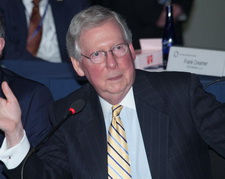
The economy and CRE will be a focus at The Roundtable’s Spring Meeting next week in Washington, which will include Senate Majority Leader Mitch McConnell (R-KY) as a featured guest.

Trump Administration Announces Tariffs on China Imports; China Responds Swiftly With Similar Duties Targeting American Imports

On Thursday, President Trump escalated ongoing trade tensions with China by instructing U.S. trade officials to consider tariffs on an additional 100 billion dollars in imports from China, in addition to the tariffs issued earlier this week— totaling 150 billion dollars in Chinese imports across 1,300 categories of products.  This action prompted a swift response from the Chinese government, with import levies on American soybeans, cars, chemicals and airplanes. (The Washington Post, April 4)

President Trump escalated ongoing trade tensions with China by instructing U.S. trade officials to consider tariffs on an additional 100 billion dollars in imports from China, in addition to the tariffs issued earlier this week— totaling $150 billion in Chinese imports.

This decision by President Trump comes a month after he authorized levies of 25 percent on imported steel and 10 percent on aluminum, while exempting Canada, Mexico and potentially other countries, based on a country-by-country review of bilateral security agreements. President Trump justified the tariffs by citing alleged violations of U.S. intellectual property laws and unbalanced trade practice. (Roundtable Weekly, March 9)

Roundtable President and CEO Jeffrey DeBoer noted the commercial real estate industry’s concerns, stating, “These proposed tariffs, coupled with the earlier tariffs on steel and ongoing dispute with China could have unfortunate and unintended effects on the U.S. economy by raising construction costs, and reducing jobs in real estate development.  China has continually taken advantage of trade practice laws, particularly intellectual property—vital for the U.S. to continue developing new technology, whether it be machinery, software, or energy efficient building solutions and should be held accountable but in a measured way.” (The Washington Post, April 5)

Since the announcement last month, along with the addition of more tariffs this week, U.S. and global market volatility show no signs of letting up, leaving two of the world’s largest economies on the brink of a possible trade war that could negatively impact U.S. agriculture and industry.

Newly appointed National Economic Council  Director and Assistant to the President for Economic Policy, Larry Kudlow, said that he expected the U.S. and China to resolve their issues, noting that the announcements by both countries where just “proposals.” (Financial Times, April 5)

Kudlow, who comes to the Trump administration as a former Wall Street economist, CNBC commentator and advocate of free trade, still believes that the U.S. can strike a deal with China—anticipating continued trade will eventually lead to faster growth and higher wages in the U.S. (Politico, April 4; BNA, April 6)

Commerce Secretary Wilbur Ross echoed Kudlow’s reassurance, noting that the U.S. tariffs won’t take effect before the end of May, after a period for public comment, and that the administration may seek to resolve the trade dispute at the bargaining table. The next opportunity for both parties to discuss the ongoing dispute will be later this month at the meeting of the International Monetary Fund and World Bank and in Washington, D.C. (The Washington Post, April 4; Reuters, April 4)

House Considers Changes to Senate-Passed Dodd-Frank Reform Bill That Includes Roundtable-Backed HVCRE Provision

The House of Representatives is considering adding changes to bipartisan Dodd-Frank reform legislation (S. 2155) passed last week by the Senate that includes a Roundtable-supported measure to reform the Basel III High Volatility Commercial Real Estate (HVCRE) Rule.  (Roundtable Weekly, March 16)

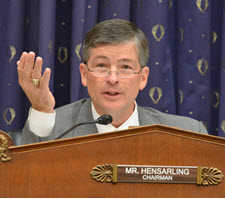
House Republicans and Financial Services Committee Chairman Jeb Hensarling (R-TX) are motivated to push for more changes to the Senate bill in an effort to rollback more financial industry rules in the Dodd-Frank Act.

House Republicans, led by Financial Services Committee Chairman Jeb Hensarling, (R-TX) are motivated to push for more changes to the Senate bill in an effort to rollback more financial industry rules in the Dodd-Frank Act.

Proposals approved by the committee on Wednesday include a change to the Volcker Rule that would put the Federal Reserve in charge of enforcing the Dodd-Frank Act ban on proprietary trading – instead of the five agencies now assigned to the task.  (BNA, March 21)

Substantive changes to the “Volcker Rule” and other provisions by the House would likely send an amended bill back to the Senate, which could threaten support by Senate moderates and require a legislative conference between the two chambers.  (NREI, March 21)

The HVCRE measure included in the Senate-passed Economic Growth, Regulatory Relief, and Consumer Protection Act originally was introduced in the House as the Clarifying Commercial Real Estate Loans bill (H.R. 2148).  An identical HVCRE measure was then included in the Senate bill (S. 2405) that passed March 14.  

The Roundtable-supported HVCRE text would modify the current, overly broad Rule by providing bank lenders with more specific requirements for acquisition, development, or construction (ADC) loans. These reforms to HVCRE loan definitions would provide greater assurances for performing loan portfolios with low risk, bolster credit capacity and preserve economically responsible commercial real estate lending. (Roundtable Weekly, Jan. 12).

HVCRE reform has been a top policy priority of The Real Estate Roundtable and its industry coalition partners, who have submitted numerous policy comment letters to policymakers since 2015. The Roundtable’s HVCRE Working Group has also played a key role in advancing these specific reforms. (Roundtable letter, March 2)


President Trump Authorizes Tariffs on Imported Steel and Aluminum; Exemptions for Canada, Mexico and Potentially Other Countries After Security Reviews

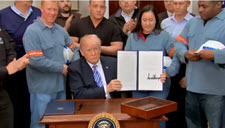
Despite pushback from GOP leaders, congressional members and allies overseas, President Trump yesterday authorized levies of 25 percent on imported steel and 10 percent on aluminum to take effect March 23, while exempting Canada, Mexico and potentially other countries based on a country-by-country review of bilateral security agreements.  (MarketWatch, March 8 and Bloomberg, March 9)

President Trump authorized levies of 25 percent on imported steel and 10 percent on aluminum. 

The Presidential Proclamation exempts Canada and Mexico based on renegotiation of terms in the North American Free Trade Agreement (NAFTA) and includes a degree of flexibility for exempting other nations.

Roundtable President and CEO Jeffrey DeBoer noted the commercial real estate industry’s concerns, stating “For every job in the steel production industry, there are more than 50 jobs in the US construction industry (140,000 vs. 7-10 million). New tariffs on construction materials like steel could have the unfortunate, unintended side effect of raising construction costs and reducing jobs in real estate development. Exemptions will be important to mitigating the harm to the US economy.”

In response to Trump’s initial tariff announcement last week, Senate Majority Leader Mitch McConnell (R-KY) commented on Tuesday, “There is a lot of concern among Republican senators that this could sort of metastasize into a larger trade war.” (NPR, March 8)

Roundtable President and CEO Jeffrey DeBoer: “New tariffs on construction materials like steel could have the unfortunate, unintended side effect of raising construction costs and reducing jobs in real estate development. Exemptions will be important to mitigating the harm to the US economy.”

March 7 letter to Trump from 107 House Republicans, including Ways and Means Chairman Kevin Brady, expressed concern that “adding new taxes in the form of broad tariffs would undermine” the economic benefits in recently-passed Tax Cuts and Jobs Act legislation. The letter also suggests conditions for imposing tariffs to minimize negative consequences.  

European Central Bank (ECB) President Mario Draghi said in a news conference yesterday, “If you put tariffs against what are your allies, one wonders who the enemies are.”  Discussing the potential effects of the tariffs, he added, “Is there going to be a retaliation or not? What’s going to be the response of the exchange rate? …and the effect on confidence is very difficult to assess.” (CNBC, March 8)

The tariff announcement comes after a recent White House infrastructure proposal that seeks to leverage $200 billion in federal funding to leverage $1.5 trillion in local, state and private funding over the next decade. Higher tariffs on imported steel and aluminum could present new challenges to obtain the raw materials needed for extensive infrastructure projects.  Funding options for the Trump administration’s infrastructure proposal were discussed during a March 6 House Transportation and Infrastructure Committee that featured Transportation Secretary Elaine Chao. (Hearing, March 6)

Trump Administration Proposes Framework for Nationwide Infrastructure Improvements

The Trump Administration on Monday released its long-awaited Legislative Outline for Rebuilding Infrastructure in America, which proposes at least $1.5 trillion in new investment across infrastructure asset classes; incentivizing greater state and local funding; shortening the project permitting process to two years; investing in rural projects; and improving worker training. (White House Fact Sheet, Feb. 12)

The Trump Administration on Monday released its long-awaited Legislative Outline for Rebuilding Infrastructure in America  , which proposes at least $1.5 trillion in new investment across infrastructure asset classes. ( White House Fact Sheet  , Feb. 12)    

President Trump proposes that the government would spend $200 billion in infrastructure investment to spur states, localities and the private sector to raise the $1.3 trillion balance. 

According to the Administration’s proposal, states, localities and the private sector are asked to “step-up” their presence to catalyze a larger, modernized, and broader investment market.  New federal funds would be allotted to boost existing federal infrastructure financing (like the TIFIA loan program for surface transportation) and expand federal financing platforms to reach airports, ports, short-line and passenger rail, rural broadband, stormwater, flood remediation and prevention, Brownfields remediation, and others. 

Transportation Secretary Elaine Chao will appear before Senate and House infrastructure panels in early March to discuss the Administration’s proposal. (Bloomberg Law, Feb. 13)   

Since odds for passing a bill with additional spending this year are slim, serious consideration of a specific infrastructure bill is not expected until after the mid-term elections and a new Congress is sworn-in. 

Roundtable President and CEO Jeffrey DeBoer commented on the positive economic benefits that such an infrastructure program would bring to the nation. “Modernizing our roads, tunnels, mass transit, drinking water, power grid, and telecommunications systems – in rural and urban areas alike – are vitally important to economic growth, productivity and America’s global competitiveness,” DeBoer said. 

He added, “Real Estate Roundtable members are experienced in addressing the financing, permitting and government partnership issues that frequently slow or stop infrastructure projects.  We intend to provide positive feedback and ideas to all policymakers working to facilitate improvements in our nation’s infrastructure.”  (Roundtable Letter on Infrastructure Funding, Jan. 11) 

Janet Yellen Concludes Tenure as Federal Reserve Chair; Jerome Powell Begins Four-Year Term on Feb. 5

Janet Yellen concluded her final meeting as chair of the Federal Reserve on Wednesday after four-years of overseeing a cautious approach to monetary policy at the central bank.  The Fed released a statement the same day about positive trends in the national economy, citing information “that the labor market has continued to strengthen and that economic activity has been rising at a solid rate.” (Federal Reserve Statement, Jan 31)

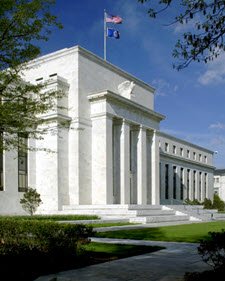
The  Federal Reserve in Washington, DC

The Senate on Jan. 23 voted 84-13 to confirm Fed Governor Jerome “Jay” Powell as the next Fed chairman.  After the Fed’s Federal Open Market Committee (FOMC) this week unanimously affirmed Powell as its chair, he will be sworn into office for a four-year term on Feb. 5. 

President Trump now has the opportunity to fill four of seven seats empty on the Fed’s board.  

Powell is expected to continue monetary policies pursued in the Yellen-era.  In December, Ms. Yellen said, “There is strong consensus in the committee for the gradual approach that we’ve been pursuing, and governor Powell has been part of that consensus.”  (Wall Street Journal, Jan. 31) 

During her tenure, Yellen raised borrowing costs five times since late 2015 and recently initiated a reduction process in the central bank’s 4.5 trillion dollar balance sheet.  Most economists foresee another interest rate increase when the Fed meets for its next scheduled policy meeting in March under Chairman Powell.  (Los Angeles Times, Jan. 31) 

Before President Barack Obama appointed him to serve as Fed Governor in 2012, Powell served at the Treasury Department under President George H.W. Bush and served as a managing director at Carlyle Group.

Trump Administration Prepares to Unveil Nationwide Infrastructure Proposal; Roundtable Submits Specific Suggestions for Innovative Infrastructure Financing Sources

six-page document leaked to the media this week purports to show details of the White House’s anticipated infrastructure plan just before President Trump is scheduled to offer his first State Of The Union address on Jan. 30.  White House spokeswoman Lindsay Walters declined to comment on the contents of the leaked document, but said the Administration looks forward to announcing a plan “in the near future.” (Axios, Jan. 22)

six-page document  leaked to the media this week purports to show details of the White House’s anticipated infrastructure plan just before President Trump is scheduled to offer his first State Of The Union address on Jan. 30.

According to the document, leaked Monday to Axios and Politico, approximately 10 percent of the plan’s funds would go to  “transformative projects” – a category that includes a “commercial space” sector that could compete for funds.  (CQ, Jan. 25)
 
The  Roundtable on Jan. 11 sent a comment letter to President Trump offering specific suggestions on how innovative financing sources may be used to help pay-for infrastructure – and how restructuring a lengthy permitting process and cutting unnecessary red tape will help control project costs and delays. 
 
Sen. John Barrasso (R-WY), chairman of the Senate Environment and Public Works Committee, said that permit streamlining would be an important part of an infrastructure plan. (CQ, Jan. 23).  Barrasso’s committee oversees all public works projects and the Environmental Protection Agency, which would be a path to streamlining EPA and other agencies’ permitting approvals.
 
The  Roundtable letter suggests several innovative financing sources, including:

  • Responsibly and sustainably increase the federal gas “user fee;”
  • Allow states to capture lost tax revenues from Internet sales – and devote it to infrastructure;
  • Attract more foreign investment to U.S. infrastructure by repealing or scaling back the Foreign Investment in Real Property Tax Act (FIRPTA);
  • Assess whether IRS “volume caps” and other limitations on private-activity bonds (PABs) should be revised to boost infrastructure development;

The Roundtable on Jan. 11 sent a comment letter to President Trump offering specific suggestions on how innovative financing sources may be used to help pay-for infrastructure – and how restructuring a lengthy permitting process and cutting unnecessary red tape will help control project costs and delays.

  • Couple successful federal loan programs (like TIFIA) with state and local “value capture” techniques to re-pay that debt – and attract private investors;
  • Develop best practices that channel public-private partnerships (P3s) for appropriate projects in appropriate geographies;
  • Prioritize the limited proceeds from the Highway Trust Fund with a “Fix it First” strategy;
  • Limit “formula grants” and move toward performance-based criteria;
  • Enact common sense reform measures that limit taxpayers’ carrying costs for exorbitant liability insurance premiums on public infrastructure projects. 
  • Ease regulatory burdens for projects of same size and scope in same location as existing infrastructure.

More details on each of the suggestions above are included in The Roundtable letter.  
 
Also this week, Special Assistant to the President for Infrastructure Policy DJ Gribbin met on Tuesday with Roundtable members in an open exchange of ideas about a national infrastructure plan.  On Thursday, Gribbin spoke to the U.S. Conference of Mayors about the Trump Administration’s upcoming plan, stating that it will not require any new funding.  Gribbin said that 200 billion dollars in existing federal funds would be shifted to infrastructure projects, which would be leveraged to attract an additional 800 billion in state and private investment. (CQ, Jan. 25)
 
Infrastructure was a major topic of discussion during The Roundtable’s Jan. 24-25 State of the Industry meeting (see story above).  The Roundtable will remain engaged with policymakers as the Administration’s infrastructure plan moves forward in 2018.

Roundtable Debuts 2018 Policy Agenda, Engages Policymakers on Key Issues

Top U.S. policymakers and industry leaders met this week for The Roundtable’s State of the Industry (SOI) Meeting in Washington, DC to discuss policy issues of compelling interest to CRE.

Launching the SOI meeting on Wednesday, Roundtable Chair William C. Rudin (  Rudin Management Company, Inc.  ), right, and Roundtable President and CEO Jeffrey DeBoer, left,  noted how Roundtable efforts are the result of research and analysis to find correct answers that benefit economic growth and job creation.

The Roundtable also issued its 2018 National Policy Agenda: Building For The Future. Specific issues included in the Policy Agenda were identified after a comprehensive, annual membership survey; frequent meetings held by The Roundtable’s policy advisory committees (see below); and participation by The Roundtable’s Board of Directors

Launching the SOI meeting on Wednesday, Roundtable Chair William C. Rudin (Rudin Management Company, Inc.) noted how Roundtable efforts are the result of research and analysis to find correct answers that benefit economic growth and job creation.  Rudin also said that the organization consistently communicates positions to policymakers that illustrate how healthy real estate markets are intertwined with the entire economy.  This approach – “analysis first, followed by advocacy” – will continue to be the model for The Roundtable through 2018 and beyond, Rudin commented. 

Illustrating how The Roundtable relies on member participation, he commented on the organization’s successful 2017 policy year regarding tax policy, sustainability and other efforts: “This past year we had great participation from Roundtable members who traveled to Washington when needed to personally meet with policymakers and discuss the obvious, and sometimes not so obvious, consequences of a policy decision.”   

He added, “We testified, wrote comment letters, led industry coalitions, submitted economic analysis, organized targeted meetings, and continued to brand The Roundtable as a trusted voice on national policy issues.” 

Illustrating how The Roundtable relies on member participation, Rudin spoke about the organization’s successful 2017 policy year regarding tax policy, sustainability and other efforts to the SOI audience.

Rudin also outlined various policy initiatives The Roundtable will focus on in the upcoming fiscal year with the Trump Administration and Congress, including implementation of the new tax law; financial regulatory issues; internet sales tax; infrastructure; attracting overseas tourists through the “Visit U.S.” coalition; and high performance buildings — all vital to spurring job creation and sustaining economic growth. 

Roundtable President and CEO Jeffrey DeBoer then offered an overview of the recent changes in tax law, along with upcoming issues in play.  He also noted the vital role of The Roundtable’s 17 national real estate trade association partners in presenting a unified voice on issues to policymakers in Washington. 

Policy Issues and Meeting Speakers  

Five U.S. Senators were among the featured SOI guests, which included: 

Senate Minority Leader Chuck Schumer (D-NY) engaged Roundtable members on the need for a massive plan to revamp the nation’s airports, bridges, roads, seaports, broadband and other critical infrastructure.

  • Senate Minority Leader Chuck Schumer (D-NY) engaged Roundtable members on the need for a massive plan to revamp the nation’s airports, bridges, roads, seaports, broadband and other critical infrastructure. Sen. Schumer emphasized how critical infrastructure improvements are to commercial real estate, job creation and the national economy.  He also spoke about the need to pass the Marketplace Fairness Act to bolster states’ collection of internet sales taxes, which could be used to assist state funding of infrastructure improvements. 
  • Sen. Mark Warner (D-VA) emphasized the need for bipartisanship in Congress in light of the recent tax legislation passed by Republicans. He noted that bipartisan efforts on issues such as GSE and housing finance reform could provide relief to the housing affordability crisis, while encouraging capital flows and competition.  Sen. Warner said that regulatory relief on Dodd-Frank was also possible in upcoming months in Congress.  
  • Sen. Ron Wyden (D-OR), ranking member of the Senate Finance Committee, spoke about the need for a bipartisan effort to address low income housing needs. Sen. Wyden described the “Build America Bonds” program, which he helped create, as an example of successful legislation that could spur infrastructure investment through innovative tax financing. Temporarily authorized in 2009 and now expired, 181 billion dollars in Build America Bonds were issued in the years immediately following the financial crisis. 

    Sen. Ron Wyden (D-OR), left, ranking member of the Senate Finance Committee, spoke about the need for a bipartisan effort to address low income housing needs.

  • Sen. Ron Johnson (R-WI)  spoke with Roundtable members on the need for more deregulation and pro-growth policies.  He also described his central role in ensuring that tax reform provided relief for all job-creating businesses, including pass-throughs.  As the chairman of the Senate Homeland Security and Governmental Affairs Committee, Rep. Johnson also discussed the increasing need for cybersecurity in an age where future geopolitical conflicts will increasingly be conducted in cyberspace. 
  • Sen. Doug Jones (D-AL)  commented about his recent election, appointment to the Senate Banking Committee and the need for broadband internet access in rural areas as part of an infrastructure program.  Serving his first month in Congress, Sen. Jones noted he is receptive to all approaches to policy that encourage economic growth and looks forward to working with The Roundtable. 
  • Jim VandeHei — the co-founder of and CEO of Axios, gave a candid view of upcoming mid-term elections; prospects of the House flipping to Democrat majority; and the news dissemination role of large tech companies like FaceBook in past and future elections. 
  • Bob Schieffer —  the former Face the Nation moderator participated in a discussion with incoming Roundtable Chair Deb Cafaro (Chairman & CEO, Ventas, Inc.) about the emerging era of “fake news” within a media landscape of fractured outlets and a deluge of partisan information.

Roundtable Policy Committees

In conjunction with the SOI Meeting, The Roundtable’s Policy Advisory Committees met on Jan. 24-25, discussing policy issues in detail with high-level congressional and agency staff.

In the wake of the most significant tax measures passed in 31 years, TPAC attracted a large audience to address the details of what lay ahead in implementing the new tax law.

  • Research and Real Estate Capital Policy Advisory Committee (RECPAC) 
    During this joint committee meeting, two panels of industry experts addressed the current real estate market cycle and provided an update on the state of real estate capital and debt markets.  Participants also discussed High Volatility Commercial Real Estate (HVCRE) and the Roundtable’s response to the recently proposed High Volatility Acquisition, Development or Construction Loans (HVADC) rule, as well as potential GSE reform.
  • Tax Policy Advisory Committee (TPAC) 
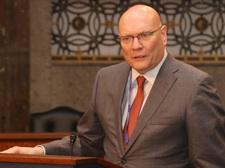
    In the wake of the most significant tax measures passed in 31 years, TPAC attracted a large audience to address the details of what lay ahead in implementing the new tax law.  A panel of experts from the congressional tax-writing committees described the evolution of the key partnership and real estate-related provisions. Following presentations by TPAC members, Dana Trier, Deputy Assistant Secretary of Treasury for Tax Policy, outlined the rulemaking process going forward and provided insight on how Treasury may resolve certain open questions important to real estate investment. 

    SPAC hosted Dr. Joseph Allen, Assistant Professor, Harvard T.H. Chan School of Public Health, right and John Mandyck, Chief Sustainability Officer, United Technologies Corporation, left, who presented new research on the health co-benefits of Green Buildings.

  • Sustainability Policy Advisory Committee (SPAC) 
    In addition to other guests, SPAC heard updates from Environmental Protection Agency (EPA) staff on the ENERGY STAR building- and tenant-level recognition programs, which recognizes leased spaces for high-performance design, construction and energy efficiency in CRE assets. 
  • Homeland Security Task Force meeting (HSTF) and Risk Management Working Group (RMWG) 
    Representatives of the FBI briefed the Joint Meeting on the current threat picture and discussed psychological profiles of the recent homegrown violent extremists (HVEs).  The Task Force was also briefed on current cyber threat picture and how businesses should be addressing this risk.

Next on The Roundtable’s FY2018 meeting calendar is the Spring Roundtable Meeting on April 25 at The Newseum in Washington, DC.  This meeting will be restricted to Roundtable-level members only.

Shutdown Looms Over Federal Funding Debate; Roundtable Submits Requests to Treasury for Guidance on New Tax Laws

Without a last-minute funding deal before midnight tonight, much of the federal government will shut down on the one-year anniversary of President Trump’s inauguration. The budget affects issues of importance to commercial real estate such as the National Flood Insurance and  EB-5 foreign investment programs.

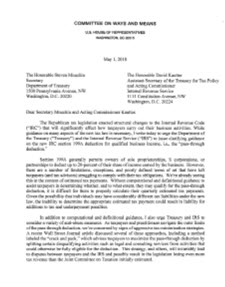
In an effort to identify temporary or immediate guidance that would provide a boost to economic growth and jobs, Real Estate Roundtable President & CEO Jeffrey DeBoer yesterday wrote to Treasury Secretary Mnuchin, offering several suggestions aimed at ensuring the long-term success of the Tax Cuts and Jobs Act (TCJA).  [Roundtable Letter, Jan. 18]   

Despite White House talks today between Minority Leader Chuck Schumer (D-NY) and President Trump, disagreements on immigration policies such as the Deferred Action for Childhood Arrivals (DACA, or “Dreamers”) program threaten to scuttle a possible Senate vote on a government funding bill.  If a deal is reached, the House is prepared to act again – after passing a fourth “Continuing Resolution” (CR) in FY2018 last night, which would extend government funding through Feb. 15. 

The budget battle comes on the heels of last December’s enactment of the largest overhaul of the tax code in 31 years. As businesses and individuals adjust to the new tax law’s various provisions, it is expected that the IRS will issue guidance on technical questions affecting commercial real estate and other industries.  

In an effort to identify temporary or immediate guidance that would provide a boost to economic growth and jobs, Real Estate Roundtable President & CEO Jeffrey DeBoer yesterday wrote to Treasury Secretary Mnuchin, offering several suggestions aimed at ensuring the long-term success of the Tax Cuts and Jobs Act (TCJA).  [Roundtable Letter, Jan. 18]

The Jan. 18 Roundtable letter is based on input received from real estate leaders across the country, who share the goals of avoiding economic disruptions and reducing inefficient business restructuring or inactivity pending the issuance of final rules.  

The Roundtable letter identifies several areas where rulemaking would reduce uncertainty and  facilitate continued investment, including: 

  • the scope of the real estate exception to the new limitation on business interest deductibility;
  • the requirements that apply when calculating a taxpayer’s eligibility for the new 20% deduction for pass-through business income; and 
  • the applicable cost recovery periods under the new tax law.    

The letter describes each issue and suggests clarifications that would be useful, in the short term, to ensure the new tax law spurs investment, growth and job creation. 

In conjunction with next week’s Roundtable State of the Industry Meeting in Washington, DC, the Tax Policy Advisory Committee (TPAC) will analyze these areas in detail.  Additionally, The Roundtable’s business meeting will feature key congressional leaders, including Senate Minority Leader Schumer, who will engage attendees in a variety of policy discussions, including the current budget situation.

Congress Considering Another Continuing Resolution To Avoid Government Shutdown Next Week

House Republicans this week said efforts on a two-year budget deal to fund government programs and agencies are progressing as the current, short-term government funding extension is set to expire on Jan. 19. 

Consensus on outstanding policy disagreements did not emerge this week, despite a bipartisan meeting at the White House on Tuesday between President Trump and congressional leaders.  (  White House video  , Jan. 9)

Congress may pass a fourth “Continuing Resolution” (CR) for FY2018 to fund the government until mid-February and buy time to address spending limits on military and nondefense programs – including immigration policies such as border security and the Deferred Action for Childhood Arrivals (DACA, or “Dreamers”) program. 

The budget affects other issues of importance to CRE such as the National Flood Insurance and  EB-5 foreign investment programs.  If an agreement among policymakers is not forged next week and another CR cannot be passed, the government will shut-down. 

House Minority Leader Nancy Pelosi (D-CA) told reporters yesterday that a negotiated solution on both spending caps and Dreamers is uncertain. “There is no point in having another CR unless we have an agreement on DACA and funding, disaster aid, a number of issues that have to be dealt with,” Pelosi said.  

House Majority Leader Kevin McCarthy (R-CA) this week said, “I believe we can get to a solution here in the next day or two so we can move forward.  If we’re able to have that budget agreement, we’ll need some time for appropriators to do their work, so we’d have a continuing resolution.” (CQ, Jan. 11) 

Consensus on outstanding policy disagreements did not emerge this week, despite a bipartisan meeting at the White House on Tuesday between President Trump and congressional leaders.  (White House video, Jan. 9)  

Other issues under discussion include the fate of a bill introduced by Senate Finance Committee Chairman Orrin Hatch (R-UT) late last year that would extend various expired energy and other temporary tax provisions. (Wall Street Journal, Dec. 21, 2017) 

A separate tax “technical corrections” bill to address gaps and inconsistencies in last year’s landmark Tax Cuts and Jobs Acts is expected this quarter.

House Ways and Means Chairman Kevin Brady (R-TX) said this week that several extenders may be included in an upcoming CR. “I think it’s important for Democrats and Republicans to really come together on a lot of key issues … I’m hopeful they all stay at the table and bring us either in one or two steps what we need to do,” Brady said. 

It is unclear whether Senate Majority Leader Mitch McConnell (R-KY), with only a slim one-vote majority in the chamber, will be able to attract enough votes to pass a budget resolution. 

A separate tax “technical corrections” bill to address gaps and inconsistencies in last year’s landmark Tax Cuts and Jobs Acts is also expected this quarter.  Republicans would need to attract Democratic votes to reach a 60-vote threshold to pass another tax measure. (Roundtable Weekly, Jan. 5) 

The Roundtable and its Tax Policy Advisory Committee will discuss these issues in detail during The Roundtable’s Jan. 24-25 State of the Industry Meeting in Washington. Among the prominent policymakers who will engage Roundtable members during the business meeting is Senate Finance Committee Ranking Member Ron Wyden (D-OR) and the Treasury Department’s Deputy Assistant Secretary for Tax Policy Dana Trier.