Regulators Signal Capital Relief as House Hearing Sharpens Focus on Bank Requirements

The House Financial Services Committee held an oversight hearing this week on prudential regulators, as federal agencies continue to reassess large bank capital standards. Ahead of the hearing, The Real Estate Roundtable (RER) and a coalition of business organizations urged regulators to modernize capital requirements to support lending, investment, and U.S. competitiveness.

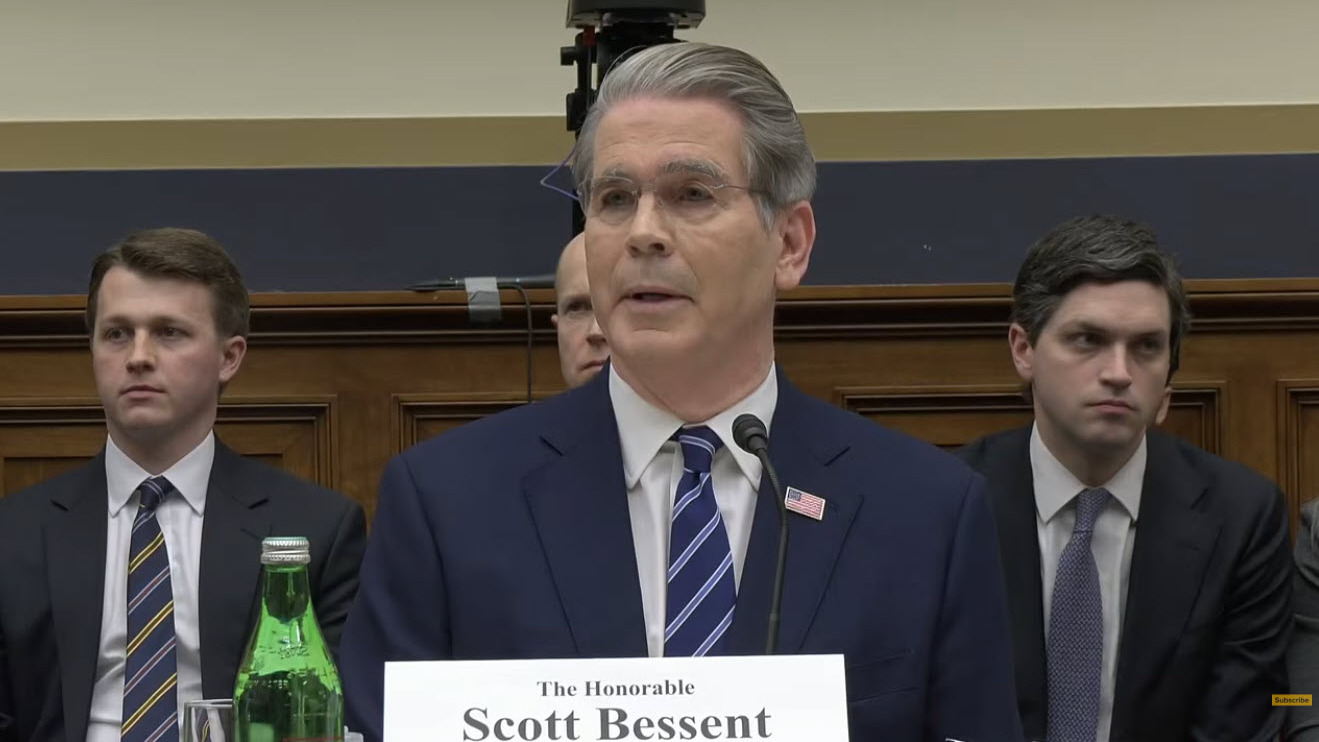
House Financial Services Committee Hearing

  • Ahead of Tuesday’s hearing, Sen. Jerry Moran (R-KS) led a letter urging regulators to design the Basel III Endgame and GSIB Surcharge proposals to consider policies that would limit the adverse effects of disincentivizing banks from offering hedging products to industries sensitive to price volatility in commodity markets. (PoliticoPro, Dec. 2)
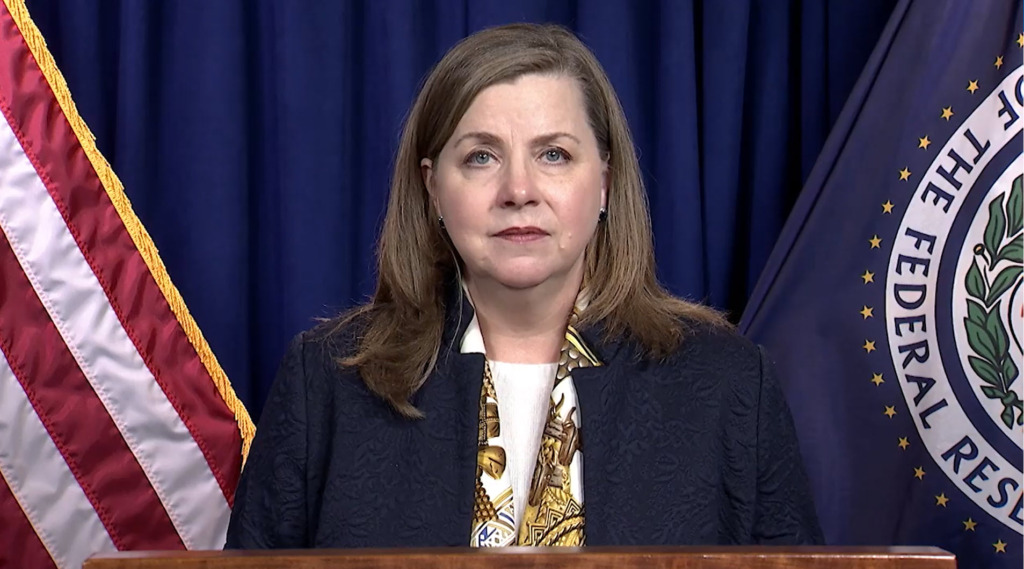
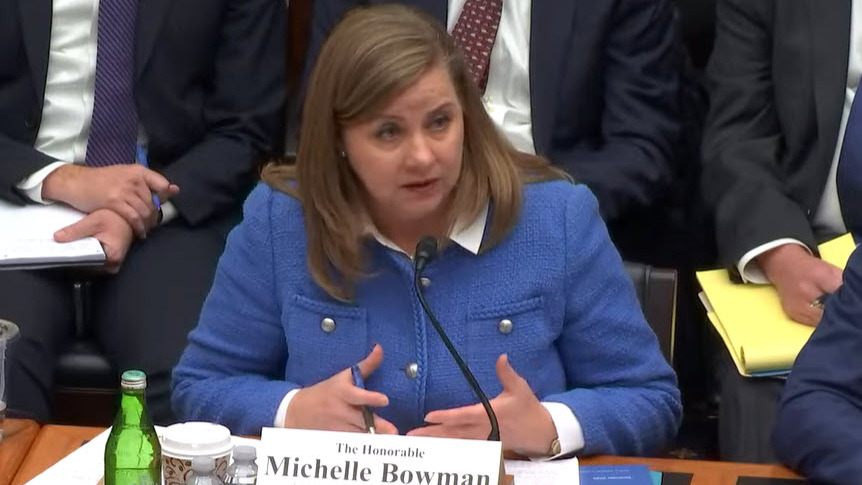
  • Federal Reserve Vice Chair for Supervision Michelle Bowman testified that regulators are not seeking to keep the “overall level of capital in the banking system the same,” leaving open the possibility that requirements may be reduced. (PoliticoPro, Dec. 2)
  • Trump-appointed regulators are negotiating a revised proposal to implement international Basel standards agreed to in 2017. The Biden-era draft would have significantly raised capital requirements and faced strong industry opposition. Earlier comments from Fed and FDIC officials suggested a “capital neutral” approach—but Bowman’s testimony indicated the final outcome could allow for lower aggregate requirements. (PoliticoPro, Dec. 2)
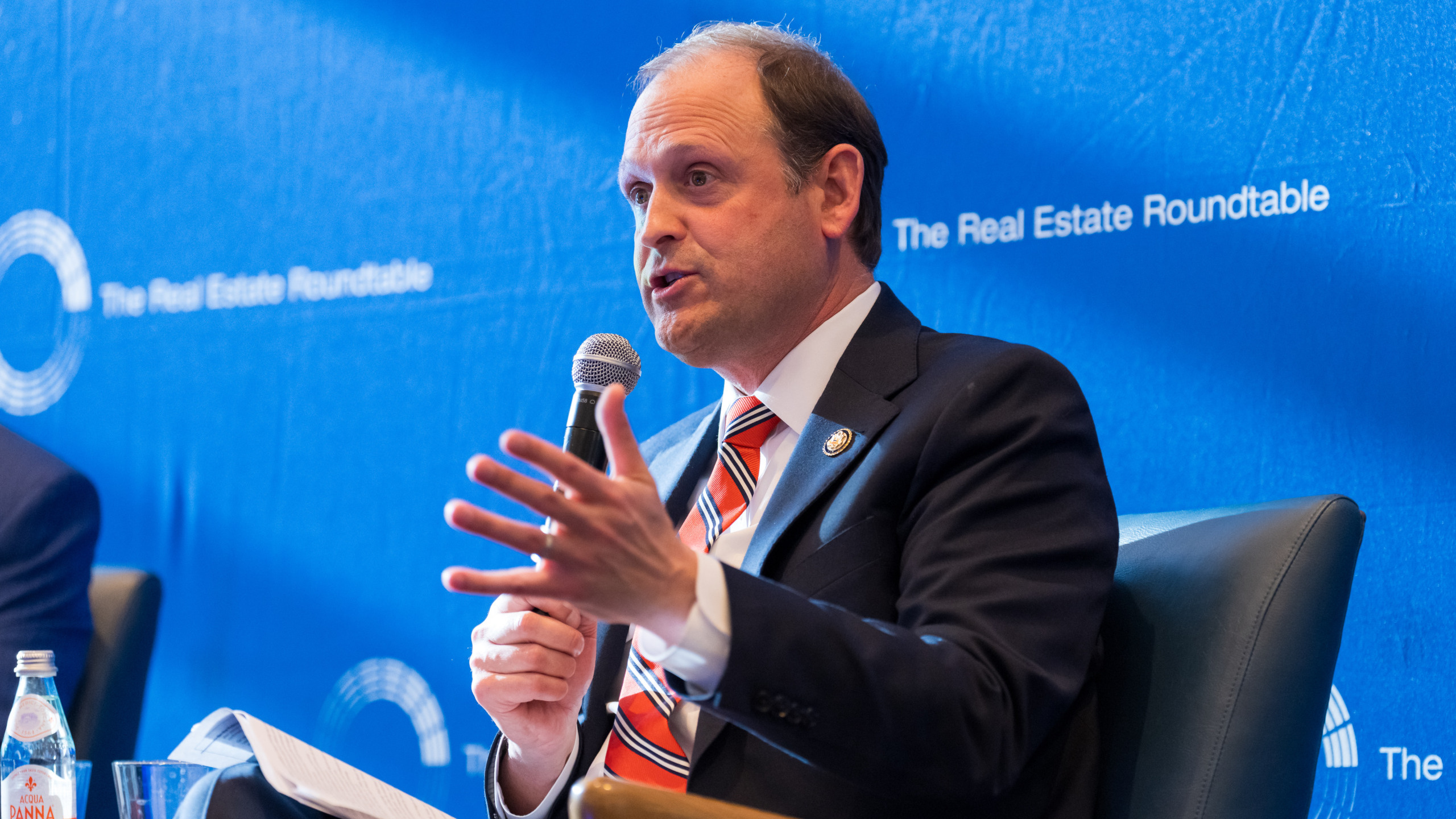
  • During the hearing, Rep. Andy Barr (R-KY) pressed regulators on whether they intend to issue a revised Basel III proposal that “predetermines a capital-neutral outcome even if some risks continue to be over-capitalized.” (PoliticoPro, Dec. 2)

Roundtable Advocacy

  • Ahead of the hearing, RER and a coalition of leading business trade organizations urged prudential regulators to examine and modernize large bank capital requirements so they continue supporting consumers, businesses, and the broader U.S. economy. (Letter, Dec. 2)
  • The coalition letter underscored the negative economic impacts of inappropriately calibrated capital rules, highlighted risks to American competitiveness, and commended ongoing agency efforts to improve the regulatory framework. (News Release, Dec. 2)

Enhanced Supplementary Leverage Ratio (eSLR)

  • The FDIC, OCC, and Federal Reserve signed off on the final version of a rule that reduces the size of the capital buffer large banks must maintain against total assets—recalibrating the enhanced supplementary leverage ratio to better reflect post-crisis market conditions. (Reuters, Nov. 25; PoliticoPro, Nov. 26)
  • The final rule, largely unchanged from the June proposal, adds a new cap on subsidiary-level capital buffers, a shift regulators say will modestly reduce aggregate requirements. (Roundtable Weekly, June 27)
  • The rule takes effect April 1, with banks permitted to adopt the looser standards starting Jan. 1. The FDIC also approved a proposed rule to lower leverage requirements for smaller banks.
  • In August, RER and Nareit provided comments to the FDIC, Treasury, and OCC supporting key elements of the proposed eSLR adjustments. (Letter, August, 15)
  • These changes add momentum to broader efforts to recalibrate bank capital rules ahead of the Basel III Endgame proposal expected in the coming months. (PoliticoPro, Nov. 26)

As regulators continue work on a revised Basel III Endgame proposal, RER will remain engaged to ensure capital reforms protect safety and soundness without constraining credit flows essential to commercial real estate, economic activity, and long-term investment.

RECPAC Meeting Examines Market Shifts, AI’s Impact, and Fed Uncertainty

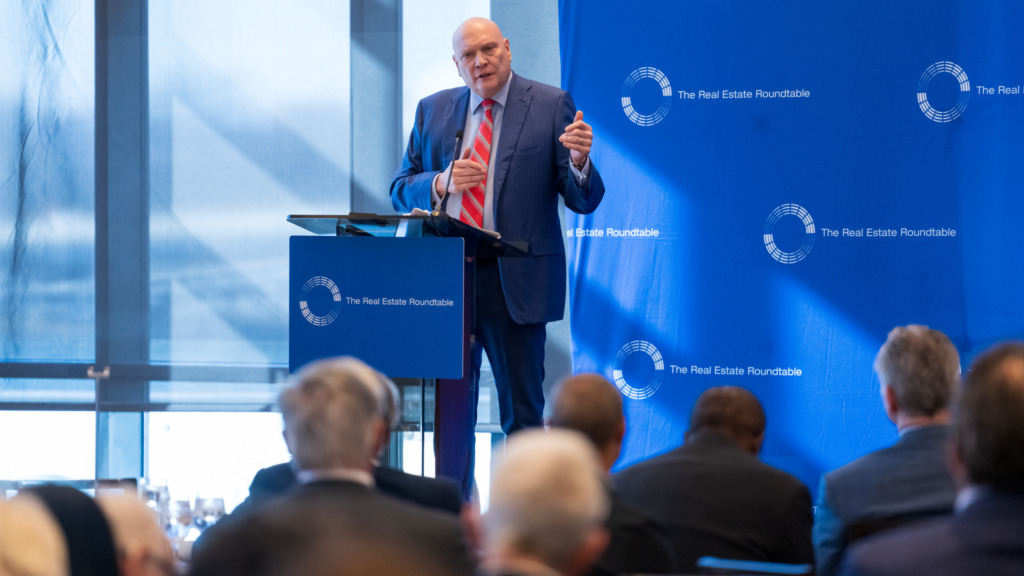
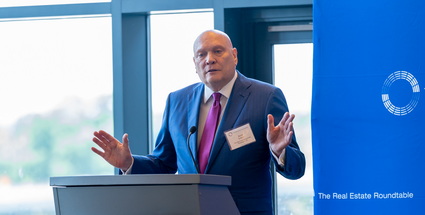
The Real Estate Roundtable’s Real Estate Capital Policy Advisory Committee (RECPAC) convened this week in New York to discuss market conditions, the evolving political and regulatory landscape, and emerging trends reshaping commercial real estate—including artificial intelligence (AI) infrastructure and the Federal Reserve’s policy trajectory.

Fall RECPAC Meeting

  • RECPAC met Thursday, under the leadership of RECPAC Co-Chairs Bryan McDonnell (Head of U.S. Debt and Chair of Global Debt, PGIM Real Estate), Rex Rudy (EVP, Head of Commercial Real Estate, US Bank), Miriam Wheeler (Global Head Real Estate Finance, Goldman Sachs Asset Management), and Working Group Chair Eric Wu (Sr. Managing Director, Real Estate, Blackstone) to discuss top policy issues heading into 2026.
  • RER Chair Kathleen McCarthy (Global Co-Head, Blackstone Real Estate) kicked off the meeting by welcoming RECPAC members and sharing her insights on real estate credit and capital markets. Other discussions included:
  • Roundtable Senior Vice President Chip Rodgers moderated a fireside chat with Alex Katz (Sr. Managing Director of Government Relations, Blackstone) and discussed the political environment, the recent elections, and issues affecting financial services policy, credit capacity, and capital formation.
  • Trey Morsbach (JLL Capital Markets) moderated a roundtable discussion with Kwasi Benneh (Morgan Stanley), Dan Mullinger (PNC Real Estate), Joel Traut (KKR), and Michael Lavipour (Affinius Capital) on real estate credit markets, liquidity, pricing, and financing.
  • Frank Long (Goldman Sachs) hosted a fireside chat with Eric Wu (Blackstone), followed by a discussion with Brian Baker (J.P. Morgan), Quynh Tran (SMBC), and Andrew Winchall (Blackstone Real Estate Debt Strategies) on the economics and energy demands of Artificial Intelligence (AI). AI is reshaping commercial real estate, as the massive energy demands and high costs of data centers redefine investment and financing metrics.

Interest Rates & The Fed

Tom Barkin
  • The Bureau of Labor Statistics released its September jobs report this week, but due to the government shutdown, it will not publish October or November payroll data until Dec. 16—a week after the Federal Reserve’s Dec. 9-10 policy meeting. (Axios, Nov. 20)
  • The absence of timely data is compounding internal divisions, as minutes show policymakers split over further rate cuts amid high inflation and weakening labor indicators. (Axios, Nov. 19)
  • Richmond Federal Reserve President Thomas Barkin noted the economy is in an “unattractive” balance and said upcoming data will be essential to determining the path forward. (Reuters, Nov. 18)
  • On Monday, Fed Governor Christopher Waller said a December cut was needed to stem further job-market deterioration. (NBC News, Nov. 20)
  • Speaking at the Central Bank of Chile Centennial Conference this morning, New York Fed president John Williams said, “I still see room for further adjustment in the near term to the target range for the federal funds rate to move the stance of policy closer to the range of neutral.” (Axios, Nov. 21)

Roundtable on the Road

  • RER Senior Vice President & Counsel Ryan McCormick spoke at NYU’s Institute on Federal Taxation in San Francisco this week, outlining key One Big Beautiful Bill (OB3) Act implementation priorities, prospects for future real estate tax legislation, and major litigation and guidance affecting partnerships and real estate transactions.
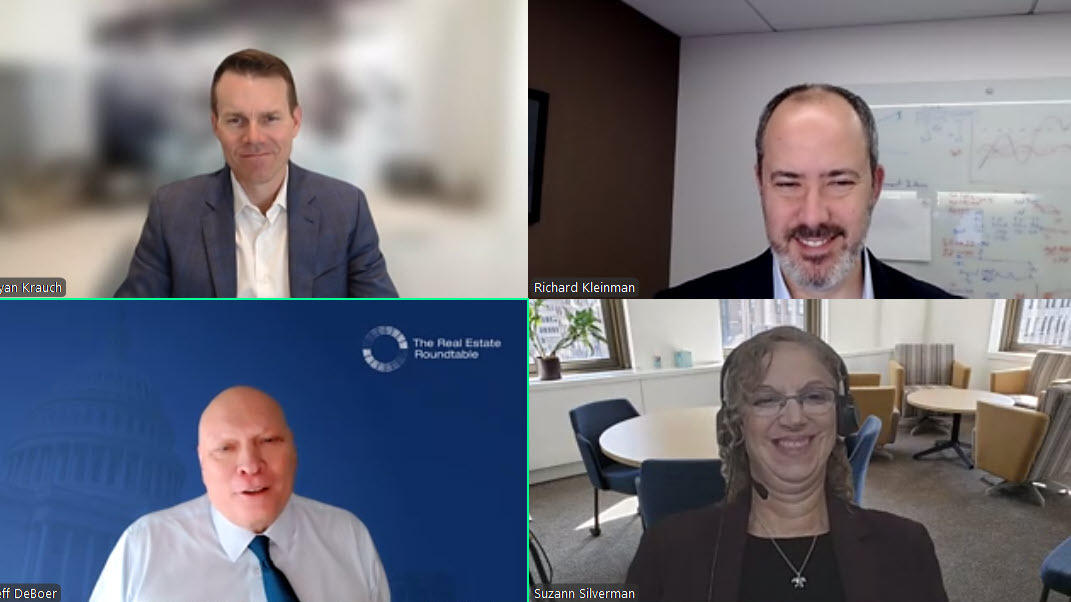
  • Also this week, RER President & CEO Jeffrey DeBoer participated in Commercial Property Executive’s 2026 CRE Outlook webinar, highlighting interest rates, energy and housing affordability, immigration reforms, TRIA reauthorization, and capital-access challenges as key issues for the year ahead. He added that, despite uncertainty around tariff policy, “betting against the U.S. is a bad bet.” (Commercial Property Executive, Nov. 19)

Next on RER’s meeting calendar is the all-member State of the Industry (SOI) Meeting, which will include policy advisory committee sessions, on January 21-22, 2026, in Washington, DC.

Coalition Pushes Back on FSOC Nonbank Rules Amid Broader Scrutiny of Financial Oversight

The Real Estate Roundtable (RER) and a coalition of national trade associations submitted a joint letter on July 14 to Treasury Secretary Scott Bessent, urging the Financial Stability Oversight Council (FSOC) to rescind its 2023 interpretive guidance and reinstate the Council’s 2019 framework for designating nonbank financial companies.

Coalition Letter

  • The 2023 guidance significantly alters FSOC’s designation process, removing procedural safeguards such as cost-benefit analysis and coordination with a company’s primary regulator. (Letter, July 14)
  • The letter warns that FSOC’s shift away from an activities-based approach creates regulatory uncertainty that could chill capital formation, disrupt access to credit, and hinder innovation in risk management. (Pensions & Investments, July 14)
  • The letter signed by RER, the U.S. Chamber of Commerce, Mortgage Bankers Association, American Investment Council, and others, calls on FSOC to withdraw the 2023 guidance, refocus on systemic activities rather than specific firms, and restore due process protections.

Congressional Hearing

  • Lawmakers expressed concern that the 2023 guidance could revive pre-Dodd-Frank regulatory “blind spots” by enabling opaque designations that sidestep traditional supervisory processes. (PoliticoPro, July 16)
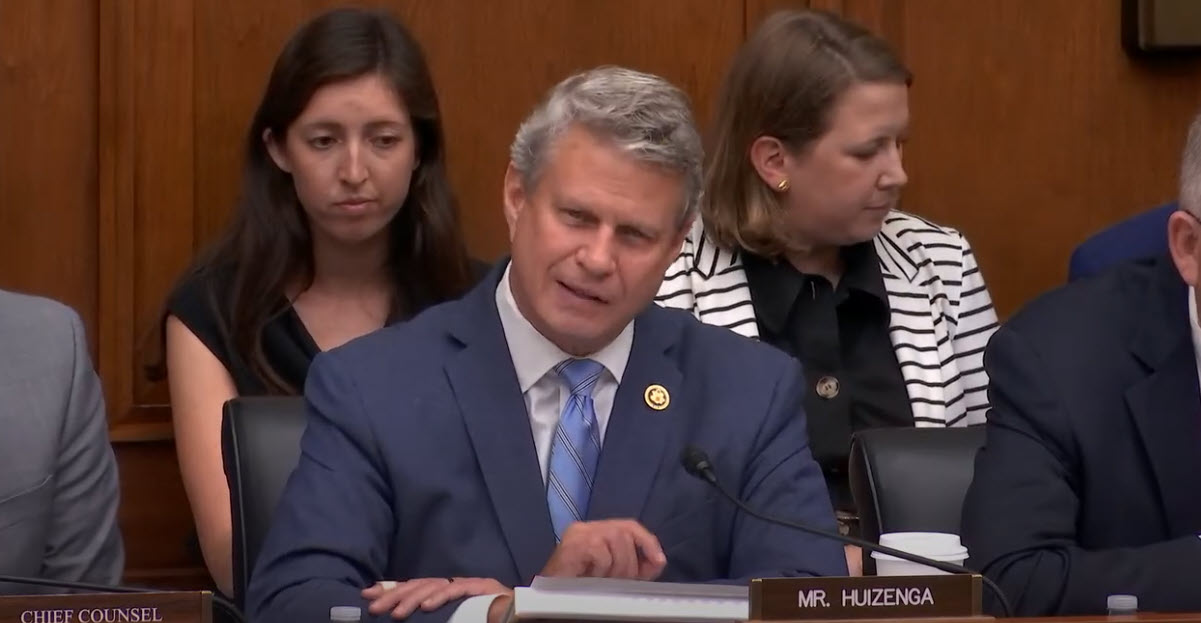
  • Committee Vice Chair Rep. Bill Huizenga (R-MI), also raised concerns, and introduced the prospect of curbing FSOC’s authority (American Banker, July 15)
  • At the hearing, lawmakers critically examined the expansive regulatory bureaucracy created by the law and its structural impact on CRE lending. Federal Reserve and FDIC data show that small and midsize banks (assets under $250B) now account for a majority of all CRE lending, particularly construction and land development loans. Exempted from some of Dodd-Frank’s most burdensome provisions, smaller lenders are stepping in to fill the gap left by larger banks scaling back amid accelerating debt maturities. (GlobeSt. July 16)
  • Some members also highlighted the need to restore bipartisan consensus around the Council’s systemic risk role, especially as market complexity grows.

The Fed

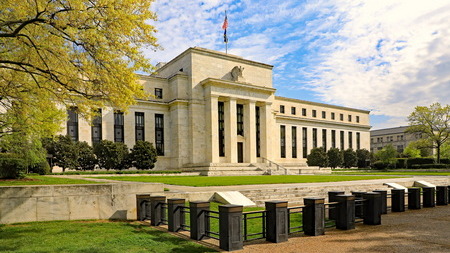
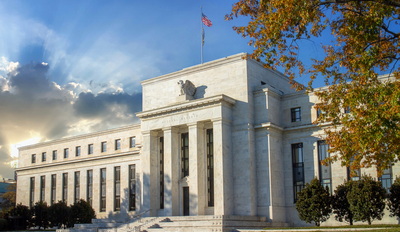
The Federal Reserve in Washington, DC
  • The Fed’s independence was also in the spotlight this week as President Trump floated—but ultimately backed off removing Fed Chair Jerome Powell, citing frustration over interest rate policy and the central bank’s headquarters renovation. (PoliticoPro, July 17)
  • Tensions over the Fed’s future rattled markets, with bond yields spiking and CRE leaders cautioning against politicizing monetary policy. (GlobeSt., July 17 | Axios, July 17)
  • JPMorgan Chase CEO Jamie Dimon warned that “playing around with the Fed” could carry serious consequences for U.S. financial credibility. (WSJ, July 15)

The Fed’s next policy meeting is scheduled for July 29–30. Policymakers are expected to keep interest rates steady at 4.25% to 4.5%—marking the fifth consecutive meeting without a change since the central bank paused rate cuts in December. (Reuters, July 17 | Axios, July 18)

Fed Chair Powell Testifies on Monetary Policy Outlook, Proposal to Ease Bank Capital Requirements, and Basel III Endgame

In a busy week for Fed policy, Federal Reserve Chair Jerome Powell delivered his semiannual monetary policy report to Congress, testifying at a pair of House and Senate hearings on the state of the U.S. economy. Powell also fielded questions from policymakers on a new proposal unveiled this week to ease capital requirements for large banks and the state of Basel III Endgame.

Policy Outlook

  • In testimony before the House Financial Services Committee and Senate Banking, Housing, and Urban Affairs Committee, Chair Powell defended the Fed’s decision to hold interest rates steady last week. (Roundtable Weekly, June 20)

  • With consumer confidence weakening and inflation risks from tariffs and Middle East tensions rising, the Fed faces competing pressures that could challenge price stability.
  • On Capitol Hill this week, Chair Powell reiterated the Fed’s wait-and-see approach, saying, “For the time being, we are well positioned to wait to learn more about the likely course of the economy before considering any adjustments to our policy stance.” (Federal Reserve, June 24)
  • Two Trump-appointed Fed officials, Vice Chair for Supervision Michelle Bowman and board member Christopher Waller, signaled support for cutting interest rates as soon as July. Their public stance diverges from the majority of Fed officials, seven of whom do not anticipate any rate cuts this year, highlighting an unusual divergence among Fed leadership. (Axios, June 24)

The Fed’s New Proposal

  • On Wednesday, the Fed advanced a proposal to reform the enhanced supplementary leverage ratio (SLR) in a 5-2 vote, which would reduce capital requirements for relatively low-risk assets, like U.S. Treasury markets. (Reuters, June 25)
  • The SLR was originally designed as a backstop to risk-based capital requirements to ensure that large banks hold a sufficient amount of capital, regardless of the riskiness of those assets. (ABA Journal, June 23)
  • Sen. Tim Scott (R-SC), Chair of the Senate Banking, Housing, and Urban Affairs Committee, noted at the Senate hearing with Chair Powell, the backstop has “too often” acted as a binding requirement for U.S. banks, which could harm the effective functioning of U.S. Treasury markets during periods of distress and discourage banks from engaging in low-risk activity.
  • The proposed modifications are intended to make it less expensive for large banks to hold less risky assets, so that more capital is freed up for banks to invest in Treasuries and other low-risk markets.

  • Vice Chair Bowman touted the proposal as an “important first step in balancing the stability of the financial system and Treasury market resilience, while preserving safety and soundness and restoring the SLR as a backstop.” (PoliticoPro, June 25)

  • Chair Powell similarly highlighted the benefits of the reform proposal, noting that “it will not in any way diminish the safety and soundness of the financial system.” (Senate Hearing, June 25)

  • The Fed published a notice of proposed rulemaking on the proposal, opening it for public comment.
  • RER plans to comment on the proposal and its implications for the commercial real estate industry.  The organization’s Real Estate Capital Policy Advisory Committee (RECPAC) is working on a response to the notice of proposed rulemaking and welcomes member input.

Basel III Endgame

The Federal Reserve in Washington, DC
  • Chair Powell was also asked about the Fed’s plans for Basel III Endgame, which stalled after the proposal was met with widespread criticism from policymakers and industry associations last year.

  • Chair Powell told policymakers that the Fed would take a “fresh start” at Basel III in light of the feedback it received. He agreed that the original proposal’s capital requirements were excessive and “very significantly exceeded” the Basel requirements, suggesting that it will be further revised. (American Banker, June 25)

  • RER strongly opposed the original Basel III proposal, pointing out the significant economic costs it would incur without clear benefits to the economy, recommending that it be withdrawn and only reissued after further study.
  • Bowman, the newly appointed Vice Chair for Supervision at the Federal Reserve, is actively involved in reviewing and potentially reforming the Basel III endgame proposal to make it more capital-neutral for U.S. banks.
  • Tighter capital requirements and higher costs would come at a time when the commercial real estate industry is facing a wave of maturing loans, undermining the ability of owners and developers to restructure debt and fill the equity gap. So it is important for the Agencies to recalibrate their proposal accordingly to avert increased borrowing costs and reduced credit capacity for real estate and the overall economy.

Chair Powell’s term at the Fed isn’t up until May 2026—but reports indicate that President Trump is considering announcing his pick to succeed Powell far in advance, potentially a candidate who is more amenable to lowering interest rates on an accelerated timeline.

RECPAC Fall Meeting Spotlights Upcoming Policy Opportunities and Challenges in Real Estate Capital Markets

The Real Estate Roundtable’s Real Estate Capital Policy Advisory Committee (RECPAC) convened this week in New York to address market conditions, pressing policy issues, including Basel III Endgame, shifts in capital markets, and the evolving political and regulatory landscape.

Fall RECPAC Meeting

  • RECPAC met Tuesday, under the leadership of RECPAC Co-Chairs Bryan McDonnell (Head of U.S. Debt and Chair of Global Debt, PGIM Real Estate), Rex Rudy (EVP, Head of Commercial Real Estate, US Bank), Miriam Wheeler (Global Head Real Estate Finance, Goldman Sachs Asset Management), and Working Group Chair Michael Lascher (Global Head of Real Estate Debt Capital Markets, Blackstone) to discuss the new political landscape and top policy priorities for 2025.
  • Roundtable Chair Kathleen McCarthy (Global Co-Head, Blackstone Real Estate) kicked off the meeting and welcomed RECPAC members to the meeting, sharing her insights on real estate credit and capital markets. Other discussions included:
  • Overview of Real Estate Capital Markets: Mark Gibson (CEO, JLL Capital Markets, Americas) provided an overview of current economic and real estate market conditions, investment capital flows, interest rate trends, and their impact on financing.
  • Political and Regulatory Landscape: Wayne Berman (Head of Government Affairs, Blackstone) discussed the new political landscape, and its implications for financial services and tax policy, credit, and capital market issues.
  • U.S. Economic Outlook: David Mericle (Chief US Economist, Goldman Sachs) presented his views on the U.S. economic outlook, including growth prospects and recession risks.
  • Global Real Estate Credit Markets Roundtable: Nick Seidenberg (Managing Director, Eastdil) led a discussion on global real estate credit markets, joined by Jeff Krasnoff (CEO, Rialto Capital), Bryan McDonnell (Chair, Global Debt and Agriculture, PGIM), Rex Rudy (EVP, U.S. Bank), Miriam Wheeler (Global Head, Real Estate Financing, Goldman Sachs), and Greg Wolkom (Group Head, Real Estate Syndicated Finance and REIT Finance, Wells Fargo).

Committee on Foreign Investment in the U.S (CFIUS)

  • This week, the U.S. Department of the Treasury, as Chair of the Committee on Foreign Investment in the United States (CFIUS), finalized a previously proposed rule expanding both the types of military installations covered by its regulations governing reviews of real estate transactions and the number of military installations subject to those reviews. (Axios, Nov. 18)
  • Under the proposed rule issued in July, foreign land transactions within a mile of 40 additional military installations and within 100 miles of 19 additional military sites would trigger a CFIUS review. (Roundtable Weekly, July 12)
  • The finalized rule, which impacts transactions entered into on or after December 9, 2024, continues the trend toward reviews of more real estate transactions based on their proximity to a growing list of military installations deemed “sensitive,” and also allows for greater growth by changing the definition of “military installations” that can become subject to these regulations in the future. (Morgan Lewis, Nov. 18)
  • Nearly 60 military installations will be added to an existing list of military installations and approximately 10 existing installations will be extended for CFIUS jurisdiction purposes.
  • During their annual conference this week, CFIUS mentioned that the renewable energy industry has been a particular area of focus triggering jurisdiction over real estate transactions, due to the critical infrastructure component. (The National Law Review, Nov. 20)

Basel III Endgame

Federal Reserve Vice Chair for Supervision Michael Barr
  • Barr, the Fed’s top regulatory official, said the central bank will not be moving ahead with its plan to hike capital requirements for big banks, also known as Basel III Endgame, or move on any proposals to overhaul rules affecting bank liquidity and long-term debt over the next two months. (Politico Pro, Nov. 20)
  • “I expect to work with my new colleagues at the OCC and the FDIC in the coming year on those measures to get their policy input, their perspectives,” Barr said.
  • Earlier this year, RER raised industry concerns about the negative impact of the Basel III proposal in a Jan. 12 letter to the Fed and other agencies. The comments outlined how the proposal would decrease real estate credit availability, increase borrowing costs for commercial and multifamily real estate properties, and negatively impact the U.S. economy, concluding with a call to federal regulators to withdraw their proposed rulemaking. (Roundtable Weekly, Sept. 19)
  • New regulators are expected to lead the Office of the Comptroller of the Currency (OCC), the Federal Deposit Insurance Corporation (FDIC) and the Consumer Financial Protection Bureau (CFPB) when President-elect Trump takes office in January 2025.

The Roundtable’s Real Estate Capital Policy Advisory Committee (RECPAC) will continue to engage with policymakers on any further changes to the Basel III Endgame proposal and other federal policy issues impacting credit capacity and capital formation.

Fed Revises Basel III Endgame Proposal

Federal Reserve Vice Chair for Supervision Michael S. Barr previewed the latest revisions to the Basel III Endgame capital requirements this week. Amid industry opposition, Barr scaled back his initial proposal to raise capital requirements for large banks, offering a more measured approach to the rule. (Bloomberg, Sept. 10)

Basel III & CRE

  • The revised proposal would increase aggregate Common Equity Tier 1 (CET1) capital requirements for global systemically important banks by roughly 9%—half of what would have been required in the original proposal.
  • Banks with assets between $100 billion and $250 billion are now exempt from most of the proposed changes, except for recognizing unrealized gains and losses in regulatory capital. (Politico, Sept. 10)
  • “There are benefits and costs to increasing capital requirements,” Barr said during his September 9 remarks at the Brookings Institution. “The changes we intend to make will bring these two important objectives into better balance, in light of the feedback we have received.” (Barr’s Speech | Bloomberg, Sept. 10)
  • The proposal reduces risk weights for certain residential mortgages, and retail exposures, extending this reduction to low-risk corporate debt. However, commercial real estate risk weights remain unclear.
  • Non-GSIB banks would see a long-term increase of 3 to 4% in capital requirements, mainly from the inclusion of unrealized gains and losses. Other changes are expected to add just 0.5% to their capital obligations.
  • The Roundtable raised industry concerns about the negative impact of the Basel III proposal in a Jan. 12 letter to the Fed and other agencies. The comments outlined how the proposal would decrease real estate credit availability, increase borrowing costs for commercial and multifamily real estate properties, and negatively impact the U.S. economy, concluding with a call to federal regulators to withdraw their proposed rulemaking. (Roundtable Weekly, Mar. 29)

What’s Next

  • An open Board meeting is expected to be scheduled to review the revised plan, with an announcement expected as early as Sept. 19. The plan will be open to public comment for 60 days once released.
  • While this new proposal is an improvement of the original plan, we remain concerned that any increase in capital requirements will have a pro-cyclical impact on credit capacity and still carry a cost for commercial real estate and the overall economy.

The Roundtable’s Real Estate Capital Policy Advisory Committee (RECPAC) will continue to monitor and respond to any further changes to the Basel III Endgame proposal and other federal policy issues impacting credit capacity and capital formation.

Treasury Issues Proposed Rule to Expand CFIUS Coverage of Real Estate Transactions Near Military Installations

This week, the U.S. Department of the Treasury, as Chair of the Committee on Foreign Investment in the United States (CFIUS), issued a Notice of Proposed Rulemaking (NPRM) that would expand CFIUS’s jurisdiction over certain transactions by foreign persons involving real estate in the United States. (Treasury Press Release, July 8)

Proposed Rule

  • As chair of the Committee on Foreign Investment in the United States (CFIUS), the Treasury has the authority to review certain real estate transactions near specified military installations and to act in appropriate circumstances.
  • Under the new proposal, foreign land transactions within a mile of 40 additional military installations and within 100 miles of 19 additional military sites would trigger a CFIUS review.
  • The proposed rule would add over 50 military installations across 30 states to the existing list of installations for which CFIUS has jurisdiction.
  • The national security review panel has the power to block transactions entirely or impose restrictions on foreign transactions.
  • The U.S. Department of Defense (DOD), a member of CFIUS, continuously assesses its military installations and the geographic scope established under the CFIUS regulations to ensure appropriate application in light of national security considerations.
  • This proposed rule is the result of a recent comprehensive assessment conducted by the DOD regarding its military installations.

Other Key Changes

  • This latest update would vastly expand the reach of CFIUS’s real estate jurisdiction while maintaining its sharp focus on national security.
  • The proposed rule would also make other key changes:
  • Expand CFIUS’s jurisdiction over real estate transactions between 1 mile and 100 miles around eight military installations already listed in the regulations; and
  • Update the names or locations of 21 military installations already listed in the regulations to better assist the public in identifying the relevant sites.

Implications and Next Steps

  • The rulemaking comes amid growing bipartisan concern in Congress over the purchase of U.S. agricultural land and other property by China and other foreign adversaries.
  • Several GOP-led states have considered or enacted new restrictions on foreign ownership of land, targeting investors with ties to China and other countries. (PoliticoPro, July 8)
  • In response to the proposed rule, written comments will be accepted for 30 days following the NPRM’s publication in the Federal Register.

The Real Estate Roundtable’s Real Estate Capital Policy Advisory Committee (RECPAC) will continue to monitor the proposed rulemaking and plans to submit comments.

US Appeals Court Vacates SEC’s Private Fund Rule

Securities and Exchange Commission building

The Fifth Circuit Court of Appeals in New Orleans ruled in favor of six private equity and hedge fund groups, finding that the Securities and Exchange Commission (SEC) exceeded its authority by adopting the Private Fund Adviser rule in August 2023. (WSJ, June 5)

Court Ruling

  • The appellate panel stated in a 25-page opinion that the SEC had exceeded its authority by implementing the rule changes in a 3-0 decision.
  • The rules adopted by the SEC required fund managers to submit quarterly reports detailing performance, compensation, and other fees. They also restricted the ability of fund managers to provide more favorable terms or information access to investors. (WSJ, June 5)
  • The rule applied to private equity funds, hedge funds, venture capital funds, and fund managers for institutional investors.
  • The industry groups challenging the SEC rule argued it was burdensome and would harm investors by suppressing capital formation and make it harder for smaller advisers to compete. (CNBC, June 6)
  • The panel noted that the Dodd-Frank Act section used by the SEC to justify it “has nothing to do with private funds.” (Politico, June 6)
  • A spokeswoman said that the SEC is reviewing the decision and will determine its next steps. (Reuters, June 5)

Roundtable Advocacy

  • Since March 2022, The Roundtable has consistently advocated that the addition of reporting requirements presents significant compliance and operational challenges for private real estate fund sponsors with no added benefit to investors.
  • While we support efforts to protect investors and monitor risk, we believe these proposals are unnecessary and would curb the entrepreneurialism, flexibility, and investment returns that make real estate private equity an increasingly attractive option for investors. (April 2022 Comment Letter)
  • The Roundtable’s April 2022 letter stated, “As the real estate investment fund industry is required to bear more regulatory burdens and demands, the risk is that capital formation will be unduly hindered. We are therefore concerned that the Proposal, if finalized, could hinder real estate capital formation, the development and improvement of real properties, essential economic activity and jobs.”

The Roundtable’s Real Estate Capital Policy Advisory Committee (RECPAC) will continue to monitor and respond to the SEC’s various proposed regulatory initiatives with its industry and coalition partners.

FSOC Sees CRE Among Risks to U.S. Economy in 2024

Last week, the Financial Stability Oversight Council (FSOC) released its 2023 Annual Report, identifying commercial real estate among the major financial risks to the U.S. economy in 2024. (FSOC 2023 Annual Report).

Report Findings

  • Developed by the FSOC, the report reviews financial market developments, describes emerging threats to U.S. financial stability, identifies vulnerabilities in the financial system, and makes recommendations to mitigate threats and vulnerabilities.
  • Citing the almost $6 trillion of commercial real estate loans outstanding in the second quarter of 2023, roughly half of which are held by U.S. banks, the report raises concerns about  “a substantial volume” of these loans that are set to mature in the next few years. (Marketwatch, Dec. 14)
  • The report states, “Elevated interest rates, high costs, and potential structural changes in demand for CRE have heightened concerns about CRE. Maturing loans and expiring leases amid weak demand for office space have the potential to strain office sector conditions further, which could cause stress to spread beyond this segment of the CRE market.”
  • The report also cites the July 2023 policy statement by the banking agencies on Prudent Commercial Real Estate Loan Accommodations and Workouts, as requested in the Roundtable’s March comment letter, and notes that accommodations and workouts are often in the best interest of borrowers and lenders.
  • The FSOC recommends that supervisors, financial institutions, and investors continue to monitor CRE exposures and concentrations closely and track market conditions. (U.S. Department of Treasury Press Release, Dec. 14)

Looking Ahead

  • In the op-ed, Rodgers stated, “To help rebalance these maturing loans, it is important to advance measures that will encourage additional capital formation. To that end, it is essential to bring more foreign capital into U.S. real estate by lifting legal barriers to investment, as well as to repeal or reform the archaic Foreign Investment in Real Property Tax Act (FIRPTA). Importantly, policymakers must not hike the tax rate on capital gains, end carried interest, or alter the 1031 like-kind exchange provisions.” (ULI Op-ed Dec. 18)
  • The paper also cited that around one-third of all loans, and the majority of office loans, may encounter substantial cash flow problems and refinancing challenges.
  • RER board member Scott Rechler (RXR) was quoted in the Wall Street Journal this week discussing the outlook for 2024. “In 2024, it’s game time. Owners and lenders are going to have to come to terms as to where values are, where debt needs to be, and right-sizing capital structures for these buildings to be successful.”

The Roundtable’s Real Estate Capital Policy Advisory Committee (RECPAC) will discuss many of these issues at our State of the Industry Meeting on January 23, 2024.

# # #