Data Centers, Permitting Reform Await Action Post-Midterms

With affordability of energy prices top of mind for voters heading into the midterms, the Senate failed this week to advance legislation addressing data center growth and broader permitting reform. Both measures could see action during the post-election lame-duck session or the next session of Congress that starts in January, while House Democrats have outlined energy priorities they could pursue if they win the majority in November.

Regulations Versus Voluntary Agreements 

  • The Ratepayer Protection Act (H.R. 9340) stalled in the Senate on Sept. 30, even though it passed the House earlier this month by a wide bipartisan margin (417-3). (Roll Call, Sept. 30) The legislation would pressure state utility regulators to consider, but not compel adoption of, federal standards ensuring 100-MW data centers pay the full cost of grid upgrades needed to serve them. (House Energy Committee Press Release, Sept. 16)
  • Senate Majority Leader John Thune (R-SD) called the bill a “common sense” measure to codify portions of President Trump’s voluntary “Ratepayer Protection Pledge” with utilities and hyperscalers operating global data center networks. (Roll Call, Sept. 30)
  • Senate Minority Leader Charles Schumer (D-NY), meanwhile, criticized the bill as “toothless,” lacking “real guardrails on AI and data centers,” and called for legislation “to make it mandatory for data centers to cover their own costs.” (The Hill, Sept. 29)
  • Also this week, the White House issued an executive order and fact sheet (Sept. 29) “Inaugurating the Era of Super Intelligence.” Amid calls for regulations, frontier companies agreed to a voluntary pact to maintain internal controls, report safety and security incidents, and conduct third-party audits as they develop advanced AI models and agentic systems at the cutting edge of technology. (New York Times, Sept. 29)    

Permitting Reform

  • The package would streamline permitting for energy and infrastructure projects, including transmission, while requiring data centers to pay their associated transmission costs. The Senate is not expected to vote until after the midterm elections, leaving the measure for possible lame-duck action. (Bill Summary, Sept. 30 | Senate EPW Committee, Sept. 30)
  • RER supports permitting reform to improve energy affordability and meet growing electricity demand. Its letter backing the bipartisan SPEED Act (H.R. 4776) urged certainty for approved projects and warned that redundant federal reviews delay affordable, reliable power to homes and commercial buildings. (Letter, Dec. 8, 2025 | Roundtable Weekly, Dec. 12, 2025)

House Democrats’ Energy Blueprint

  • On Sept. 15, House Democrats led by Rep. Kathy Castor (D-FL) released the Thriving Economy Project (TEP), a menu of more than 800 recommendations that could shape the energy agenda if Democrats win the House in November. Democratic leadership has not formally endorsed the proposals. (TEP Report, Sept. 15 | Politico via SEEC, Sept. 16)
  • Building-related recommendations include energy benchmarking for commercial and residential buildings and disclosure of energy costs in sales and leases, as well as high-performance building standards tied to federal housing, infrastructure, disaster recovery, and mortgage programs. (TEP Report, Sept. 15)
  • Data center proposals include energy and water disclosure requirements, siting and efficiency standards, responsibility for associated grid infrastructure costs, and new DOE efficiency metrics, such as an ENERGY STAR-equivalent program for AI tools. (TEP Report, Sept. 15)

RER will continue tracking these developments and advocating for policies that support affordable and reliable electricity and timely energy infrastructure investment.


Opportunity Zone Rules and Maps Take Shape as Congress Weighs Data Center Limits

As states finalize the next Opportunity Zone maps, Treasury and the IRS are seeking input on program rules while lawmakers weigh whether data centers should qualify for OZ tax benefits.

Treasury Seeks Input on OZ Rules

  • In a Sept. 22 notice, Treasury and the IRS requested comments on how to implement the permanent OZ program, specifically regarding housing investment, working capital rules, operating businesses and the tax treatment of long-held investments. Comments are due Nov. 23. (Tax Notes, Sept. 22 | Bloomberg Law, Sept. 23)
  • The request follows proposed regulations issued Sept. 11 on reporting requirements for Qualified Opportunity Funds (QOFs) and OZ businesses, as well as fund certification and decertification. Comments on that separate proposal are due Oct. 16. (PoliticoPro, Sept. 10)

RER Advocacy

  • RER’s Opportunity Zone Working Group has urged Treasury and the IRS to adopt clear, workable rules that allow existing projects to continue through the transition to the permanent program.  The Group also recently met with Treasury and IRS staff in August to discuss guidance for projects spanning the original and permanent OZ programs.
  • The new maps and forthcoming rules will shape where and how OZ capital can support housing, redevelopment and other projects in low-income communities.

New Opportunity Zones Maps

  • Governors are finalizing nominations for the next generation of OZs ahead of a Sept. 28 deadline, with a 30-day extension available upon request. Treasury will certify the new designations, which take effect Jan. 1, 2027 and remain in place for 10 years.
  • The tighter eligibility rules are expected to significantly reduce the number of designated OZs. Roughly, 6,500 zones could be selected nationwide, nearly 26% fewer than the 8,764 designated under the original program. (Bisnow, Sept. 15)
  • The designation process will help determine where new OZ-supported investment can occur beginning in 2027. While the original program attracted significant multifamily investment, developers are now pursuing designations for a broader range of real estate projects, including mall redevelopments and data centers. (Bisnow, Sept. 15)

Data Center OZ Legislation

RER will continue working with Congress, Treasury, and the IRS to secure and improve  OZ rules to ensure the incentives support economic development and job growth, new sources of local tax revenue,  and expanded housing supply.

Tax Policy Roundup: Foreign Investment, Demolition Expenses, Data Centers, and Partnership Taxes

FIRPTA

The Real Estate Roundtable (RER) submitted recommendations this week aimed at removing barriers to foreign investment in US real estate and reforming the tax treatment of demolition costs, as lawmakers introduced data center tax legislation and a federal appeals court ruled on the self-employment tax treatment of limited partners.

FIRPTA: RER Requests Repeal of IRS Notice

  • This week, RER submitted a letter to Treasury Secretary Scott Bessent requesting revocation of IRS Notice 2007-55, citing its negative impact on foreign investment in U.S. commercial real estate. (Letter, Sept. 15)
  • The IRS Notice took the position that REIT distributions are not exempt from tax under the tax exemption for foreign governments (section 892). It also treats REIT liquidating distributions as sales of real property subject to tax under the Foreign Investment in Real Property Tax Act (FIRPTA).
  • The letter notes that nearly 20 years have passed without regulations implementing the Notice. Since that time, statutory changes to FIRPTA have eliminated much of its original rationale, and foreign capital’s importance to U.S. real estate investment and jobs has only increased. (Letter, Sept. 15)
  • RER contends that the Notice creates unnecessary transaction costs, limits investment flexibility, and discourages otherwise productive transactions. (Letter, Sept. 15)
  • “[S]ound legal reasoning, good governance, and favorable economic policy strongly support an administrative action to revoke Notice 2007-55,” wrote RER President and CEO Jeffrey DeBoer. “Repeal of the Notice would align squarely with the Administration’s stated priority of ‘unleashing prosperity through deregulation.’”

Property Redevelopment and Demolition Costs: Coalition Seeks Tax Reforms

  • On Wednesday, RER and 13 other national real estate organizations sent Congress a letter encouraging changes to the tax treatment of demolished buildings and demolition expenses.  (Letter, Sept. 15)
  • Current treatment: Section 280B generally requires both demolition expenses and a demolished building’s remaining tax basis to be added to the basis of nondepreciable land. Owners typically cannot recover those amounts for tax purposes until the land is sold, potentially years or decades later.
  • “This treatment can delay or deter redevelopment projects that would otherwise support increased housing supply and commercial activity, particularly in high-cost areas and downtown corridors facing elevated vacancy rates,” the 14 organizations wrote. (Letter, Sept. 15)
  • Proposed changes: The coalition recommends allowing taxpayers to deduct as a loss any remaining tax basis of a demolished building and allowing taxpayers to deduct the actual demolition expenses. The reforms should be paired with reasonable guardrails to protect historic buildings and ensure timely redevelopment of the property.

  • The issue was recently highlighted in an op-ed written by RER Tax Policy Advisory Committee Chairman Joshua Parker and published in The Hill. (The Hill, Aug. 30 | Roundtable Weekly, Sept. 11)
  • Future legislation in this area could also restore the deductibility of environmental remediation expenses.
  • The recently enacted, bipartisan ROAD to Housing Act removed many barriers to creating new housing. The organizations’ proposal would continue building on these efforts by promoting productive real estate investment.

Data Centers: House Democrats Propose Tax Restrictions

  • Reps. Kristen McDonald Rivet (D-MI) and Don Davis (D-NC) introduced the Reverse Big Ugly Tax Breaks for Data Centers Act on Sept. 16, seeking to exclude covered data centers from investment incentives expanded in the 2025 tax law. (Politico |  Rep. Rivet Press Release, Sept. 16)
  • The bill would deny 100% bonus depreciation and Opportunity Zone eligibility to covered data-center property. Its definition covers facilities exceeding 50 megawatts of maximum rated power capacity or total peak power load, including property dedicated to their operation. (Bill text)
  • The legislation follows an August white paper from Senate Finance Committee Ranking Member Ron Wyden (D-OR) addressing bonus depreciation, Opportunity Zones and REIT treatment for data centers, along with a proposed excise tax on operators. (Senate Finance proposal, Aug. 6 | Roundtable Weekly, Aug. 7)

Partnership Taxes: Second Circuit Rules in Soroban

  • The U.S. Court of Appeals for the Second Circuit on Sept. 17 affirmed the Tax Court’s decision in Soroban Capital Partners LP v. Commissioner, holding that three principals did not qualify for the limited partner exception from self-employment tax because they exercised managerial control over the firm. (Opinion, Sept. 17)
  • The court focused on the partners’ actual responsibilities, including managing investments, serving on governing committees, and directing personnel decisions. It clarified that partners may provide some services and still qualify for the exception if those activities do not involve controlling, managing or running the business. (Bloomberg Law, Sept. 17)
  • The opinion appears to align, at least in significant part, with the Fifth Circuit’s revised approach in K Alain, formerly Sirius Solutions. (Court Opinion | JD Supra, Aug. 12)
  • RER filed an amicus brief supporting the taxpayer in Soroban as part of its broader challenge to the IRS’s restrictive interpretation of the limited partner exception from self-employment tax. RER also filed briefs supporting taxpayers in Sirius Solutions in the Fifth Circuit and Denham Capital in the First Circuit. (Roundtable Weekly, Jan. 30 | Feb. 13 | Sept. 11)

RER will continue working with Congress, Treasury and the IRS to advance tax policies that expand access to capital, encourage redevelopment and support long-term economic growth.

RER Recommends Clear, Workable Standards for Data Centers and Grid Reliability

The Real Estate Roundtable (RER) submitted comments on Thursday to the North American Electric Reliability Corporation (NERC) supporting efforts to address the grid impacts of large computational loads, while urging the organization for clear, workable standards to reflect how data centers are actually owned, leased and operated. (Letter, Sept. 17)

State of Play

  • NERC’s Project 2026-02 would establish new definitions, registration criteria and mandatory reliability standards for certain data centers called, “large computational loads,” connected to the U.S. electric grid.
  • The proposal would require Computational Load Owners (CLOs) and Computational Load Operators (CLOPs) to register with NERC when a site has at least 50 megawatts of total connected load and meets a separate 100-kilovolt connection criterion.
  • The proposed standards address data-center interconnections, grid-impact studies and modeling, operational communications, information sharing, and monitoring of how facilities respond to grid disturbances.

RER Recommendations

  • RER’s comments call for clear responsibilities based on which entity owns or controls the property, equipment, operations, and information covered by each requirement. (Letter, Sept. 17)
  • Distinguish owners from operators. At many leased and colocation facilities, the entity that owns the land and buildings is separate from the tenant that controls the servers, computing equipment, and associated electricity load. NERC’s definitions should account for these distinct roles and assign compliance responsibilities accordingly.
  • Clearly define covered sites. RER recommended that NERC limit the definition of a “Computational Load Site” to properties primarily used by information technology infrastructure to process, store, transmit or manipulate digital information—including cloud services, artificial intelligence and cryptocurrency mining.
  • Clarify the 50-MW threshold. “Total Connected Load” should include computational load as well as electricity used for HVAC, lighting, elevators, security, fire-safety equipment, and other building systems. NERC should also provide examples showing how the threshold applies across different leasing arrangements.
  • Define a “single location.” Objective criteria are needed to determine when electricity use from separate buildings or leased spaces must be combined for registration purposes, particularly at multi-building data-center campuses.
  • Identify the voltage measurement point. RER asked NERC to clarify where the proposal’s 100-kV threshold should be measured, using a point reasonably attributable to the site’s electricity use rather than a remote point farther upstream on the grid.
  • Require two-way information sharing. NERC should establish reciprocal obligations for owners and operators to confidentially and timely exchange the data each needs to comply with the proposed standards.

Why It Matters

  • Data centers often operate under complex ownership and leasing arrangements. A building owner may be responsible for the property and its connection to the grid while having limited control over the tenant-owned equipment and operating decisions that drive computational demand.
  • RER raised concerns about assigning a compliance obligation to one entity when another party controls the information, equipment or operational capability needed to satisfy it.
  • Clear definitions and appropriately assigned responsibilities can support grid reliability while giving data-center owners, operators and tenants a workable framework for compliance.

Data Center Policy Developments

  • The House passed the bipartisan Ratepayer Protection Act (H.R. 9340) on Wednesday by a vote of 417–3, marking Congress’ first major legislative action addressing the potential energy costs associated with the rapid expansion of AI and data centers.
  • The bill would require states to consider standards preventing data centers and other large power users from shifting infrastructure costs onto existing customers. (Utility Dive, Sept. 17)
  • On Thursday, Sen. Martin Heinrich (D-NM) blocked Sen. Jon Husted’s (R-OH) effort to pass companion legislation by unanimous consent, preventing immediate Senate passage. (The Hill, Sept. 17)

House Democrats Release Energy Policy Framework

  • House Democrats and the Sustainable Energy and Environment Coalition (SEEC) Institute released the Thriving Economy Project, a collection of more than 800 energy, environmental and economic policy proposals that may be considered in the next session of Congress. (Report, Sept. 15)
  • The recommendations include an ENERGY STAR-equivalent program for AI tools, data-center energy and water reporting, energy benchmarking for commercial and residential buildings, and disclosure of energy costs in sales and leases. (Roll Call, Sept. 15)
  • Other proposals include high-performance building standards tied to federal housing and infrastructure programs, along with stronger federal siting, design, and efficiency standards for data centers.
  • Data center recommendations also include mandatory NERC reliability standards, requirements to cover the infrastructure costs their electricity demand creates, and waste heat reuse to support heating and cooling nearby buildings.

What’s Next

RER will continue working with NERC and other stakeholders to support reliability standards that protect the electric grid, provide clear regulatory accountability, and reflect the operational realities of data-center ownership and leasing.

Data Centers, Grid Reliability and Building Standards Draw Increased Attention Ahead of Midterms

Energy issues are front and center in Washington, D.C., and the states in the weeks leading up to the midterm elections. Rising electricity costs, rapid data center development, and evolving AI technologies are fueling debates over grid reliability, infrastructure investment, tax policy, and job impacts.

State of Play

  • The House is expected to vote next week on the bipartisan Ratepayer Protection Act, which would require technology companies to cover energy infrastructure costs associated with their data centers rather than pass them on to consumers. (Axios | Politico, Sept. 10)
  • The North American Electric Reliability Corporation (NERC) is developing reliability standards for large “computational loads,” including data centers and cryptocurrency facilities. (NERC Project 2026-02)
  • The proposed standards address data-center interconnections, grid-impact studies and modeling, information sharing and records of disturbances such as sudden load losses or voltage drops. (Roundtable Weekly, July 17 | 24 | Aug. 7)

Why It Matters

  • As federal policies evolve, regulators must distinguish between data-center ownership and operations. Requirements should track which parties control facility operations, possess relevant data, and are responsible for managing grid impacts due to intensive “computational loads” from activities like cloud computing, AI modeling, and crypto mining.
  • NERC’s imminent data center owner and operator rules should also respect leasing arrangements at these facilities. Hyperscalers and other AI tenants in leased spaces should have affirmative obligations to share relevant data, such as their electricity usage and water consumption, with facility owners that may have reporting obligations.

Data Center Tax Proposals

  • Senate Finance Committee Ranking Member Ron Wyden (D-OR) recently released a framework that restricts Opportunity Zone (OZ) investments and bonus depreciation for new data centers, changes the treatment of certain data-center rents under the REIT rules, and establishes a federal excise tax on operators’ gross receipts. (Senate Finance Committee, Aug. 6 | Roundtable Weekly, Aug. 7 | GlobeSt. Sept. 8)
  • A recent Bipartisan Policy Center analysis outlined significant questions surrounding proposals to tax AI, including which activities should be taxed, who would ultimately bear the cost, and whether new taxes could discourage investment or innovation. (Bipartisan Policy Center, Aug. 24)
  • A separate Cato Institute analysis warned that an excise tax based on revenue rather than profits could impose especially high effective tax rates on lower-margin data-center operators and discourage new development. (Cato Institute, Sept. 3)
  • RER Advocacy: RER’s Tax Policy Advisory Committee is preparing comments on the Wyden framework. Maintaining the owner-operator distinction is critical to preventing provisions aimed at hyperscalers from penalizing real estate owners that do not control facility operations.

Data Centers & CRE By the Numbers

  • A new National Association of Realtors report found that 50% of surveyed agents with a data center in their market reported higher nearby commercial property values, while 42% cited increased demand for commercial space. Industrial properties saw the strongest gains in interest at 58%. (CoStar | Housing Wire, Sept. 9)
  • Recent reports from JLL and CBRE found that North American data-center demand reached record levels in the first half of 2026, doubling from the previous year and increasing fivefold from the same period in 2024. (BisNow, Sept. 3)

California Building Performance Standards (BPS)

  • On Aug. 18, RER submitted comments to the California Energy Commission on its strategy for developing future statewide building performance standards. (RER Letter, Aug. 18)
  • RER also coordinated with the California Business Properties Association and California Building Industry Association to align its recommendations with a broader coalition letter joined by AHLA, BOMA International, CREDA, ICSC and Nareit. (Coalition Letter, Aug. 18)

What’s Next

RER will continue working with policymakers and industry partners to advance reliable and affordable energy supplies, efficient buildings, and clear rules that recognize the distinct responsibilities of data-center owners and operators.

Senate Proposal Would Impose Tax Penalties on Data Centers

Senate Finance Committee Ranking Member Ron Wyden (D-OR) on Thursday unveiled a white paper that proposes the elimination of several federal incentives for new data center investment and a new excise tax on data center operations. (Senate Finance Committee Press Release| Politico, Aug. 6)

Data Center Tax Proposal

  • Sen. Wyden’s proposal would prohibit Opportunity Zone funds from investing in new data centers, subject capital assets used to build and supply data centers to longer cost recovery periods than assets used for other purposes, and effectively deny investors’ ability to participate in new data center investment through REITs. (White Paper, Aug. 6)
  • The proposal would also impose a gross receipts excise tax on U.S. data center operators. (White Paper, Aug. 6)
  • The white paper cites the current construction boom as evidence that the changes are justified, while stating the proposal “will not end data center development or put at risk the U.S. maintaining its status as the global leader in AI and other innovative technologies.” (PoliticoPro, Aug. 7)
  • While Sen. Wyden’s statement describes the tax provisions as removing “existing investment incentives,” in actuality the changes would create discriminatory tax penalties that expressly exclude data centers from general, long-standing rules that apply broadly to other forms of capital investment.
  • U.S. data center construction has quadrupled over the past four years, according to the white paper, which also cites roughly $700 billion in projected spending this year. Revenue from the proposed tax changes would be directed toward workers and communities affected by AI-driven economic disruption (White Paper | NOTUS, Aug. 6)
  • Sen. Wyden is seeking comments on the framework through Aug. 31 and expects to release legislative discussion draft language this fall. (AI Weekly, Aug. 7)

Why It Matters

  • Data center development is increasingly connected to a broader infrastructure ecosystem. A recent Academy Securities report identifies the federal Enhanced Use Lease (EUL) program as an emerging catalyst for digital infrastructure and domestic supply chains, noting that the Army, Air Force, and Department of Energy have increasingly used the program to facilitate data center development on underutilized government land. (July 29)
  • The model also leverages private capital for infrastructure development. The private-sector lessees under EUL arrangements bear the costs of financing, designing, building, operating, and securing facilities—illustrating the role private investment can play in meeting growing infrastructure needs.
  • With energy demand surging, real estate is an important partner in supporting energy investment, increasing efficiency, and delivering energy savings across the economy.
  • Meanwhile, in mid-August, the North American Electric Reliability Corp. (NERC) is expected to issue federal registration requirements and grid reliability standards for owners and operators of data centers. NERC’s imminent proposed standards could result in the first federal-level regulations on data centers. (Roundtable Weekly, July 17 | 24)

Permitting Reform

  • Bipartisan Senate permitting negotiations will continue beyond the August recess, with Sens. Shelley Moore Capito (R-WV), Sheldon Whitehouse (D-RI), Mike Lee (R-UT), and Martin Heinrich (D-NM) now targeting September for a potential agreement. Negotiators report progress, though significant issues remain over transmission, renewable energy projects, and historic preservation reviews. (E&E News, Aug. 5)

The House and Senate are scheduled to return to Washington on Sept. 14, leaving a narrow legislative window to advance permitting reform and other priorities before the midterm elections.

Affordability, Ratepayer Protections Drive Data Center Policies on Capitol Hill

Congress and federal regulators focused this week on how to meet rapidly growing electricity demand from data centers and AI while protecting consumers, strengthening grid reliability, and accelerating new energy infrastructure.

State of Play

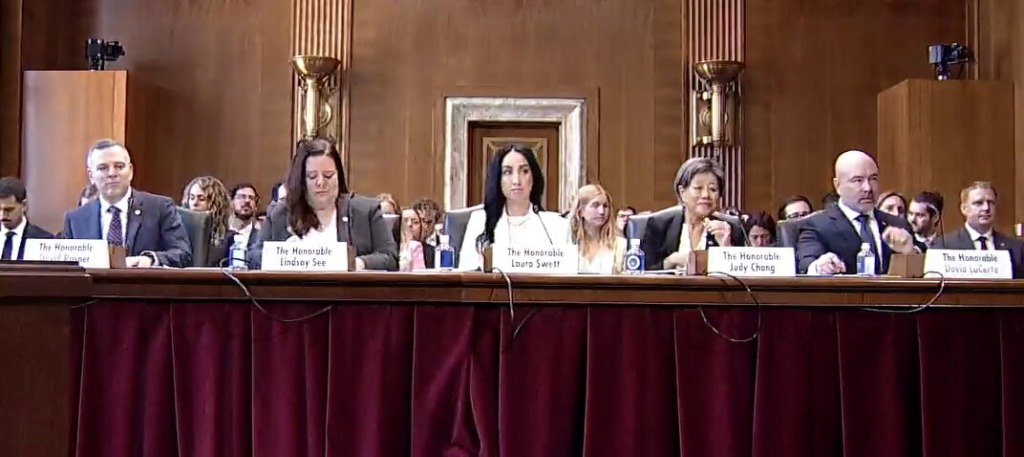
  • All five Federal Energy Regulatory Commission (FERC) commissioners testified Wednesday before the Senate Energy and Natural Resources Committee, where lawmakers from both parties focused heavily on ensuring that the costs of serving new data centers and other large loads are not shifted to existing ratepayers. (E&E News, July 23 | Bloomberg Government, July 22)
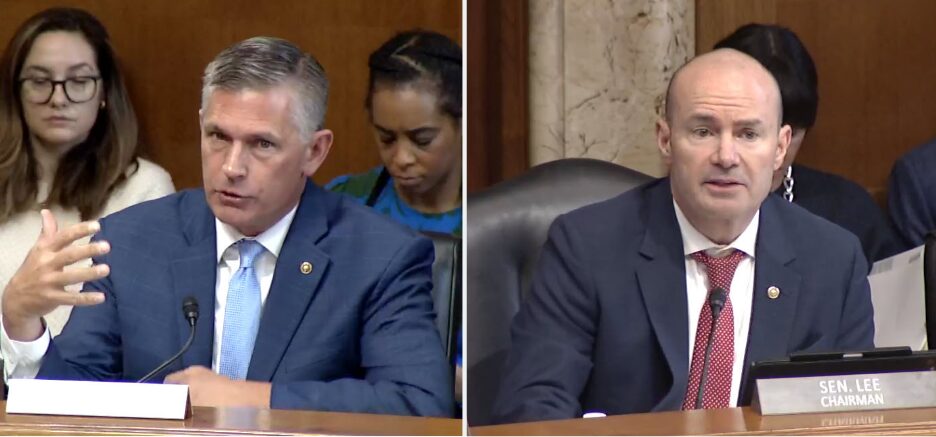
  • “FERC now sits at the center of some of the most important questions facing our country: reliable electricity, affordable energy, data centers, manufacturing, national security,” said committee chair Sen. Mike Lee (R-UT). “Every one of these issues, in its own way, now runs directly through FERC.” (PoliticoPro, July 22)
  • Commissioners and senators discussed broader strategies to expand grid capacity, including grid-enhancing technologies that can increase the capacity of existing transmission infrastructure, and permitting reform. (Daily Energy Insider, July 22 | New York Times, July 23)
  • FERC is also moving to address the reliability risks associated with large computational loads, directing the North American Electric Reliability Corp. (NERC) to finalize new reliability standards and registration requirements for certain computational loads by the end of 2026. (Roundtable Weekly, July 17)

Data Center Legislation

  • On Tuesday, the House Energy and Commerce Committee unanimously approved the bipartisan Ratepayer Protection Act (H.R. 9340) by a 52-0 vote. The bill would require state utility regulators to consider standards to ensure data centers cover the incremental costs of the energy infrastructure needed to serve them, rather than shifting those costs to other customers. (Energy& Commerce Committee Press Release, July 21)
  • The framework includes the Data Center Tax Accountability and Disclosure Act, which would require large AI data centers to disclose information about energy and water use, emissions, backup generation, and other operational impacts, while conditioning federal bonus depreciation on meeting “LEED Gold” rating standards. (Sen. Warner Press Release, July 21)
  • State policymakers are also reassessing data center development and tax incentives. New York Gov. Kathy Hochul recently imposed a one-year moratorium on new large-scale data centers and said she will pursue legislation to eliminate certain tax incentives for the facilities. (Fortune, July 14 | PoliticoPro, July 20)
  • Arizona has paused new data center sales tax incentives for three years, while leaders in other states are also examining changes to incentive structures. (Fortune, July 14 | PoliticoPro, July 20)

AI and the Regulatory Process

  • The IRS is considering whether AI could help analyze comments while still meeting Administrative Procedure Act requirements, though GAO found the agency does not currently have such tools. (Politico, July 24)
  • For The Real Estate Roundtable (RER), which regularly submits substantive comments to Treasury, the IRS, and other agencies, the potential use of AI in regulatory review could significantly change how stakeholder input is processed and underscores the importance of ensuring meaningful consideration of technical advocacy.

Permitting Push

  • As Senate negotiators work toward a broader permitting reform deal, House Energy and Commerce Committee Chairman Brett Guthrie (R-KY) moved to stake out House priorities by releasing a discussion draft of the Permitting Our Way to an Energy Resurgence (POWER) Act, a 19-bill package aimed at accelerating pipelines, power generation, transmission, and industrial projects. (E&E News | E&C Press Release | Bill Text, July 22)

With energy demand surging, real estate is an important partner in supporting energy investment, increasing efficiency, and delivering energy savings across the economy. The Real Estate Roundtable (RER) and its Sustainability Policy Advisory Committee (SPAC) continue to monitor federal and state actions affecting grid capacity, energy costs, infrastructure permitting, and data center development.

Federal Oversight of Data Centers Ramps Up

The North American Electric Reliability Corporation (NERC) issued its highest-level grid alert this week, warning that data centers, crypto mining operations, and other large “computational loads” are creating new reliability risks as electricity demand accelerates across the country.  (NERC, May 4)

Why It Matters

  • NERC is the international regulatory “grid watchdog” that ensures reliability and security of North America’s bulk electricity system.
  • NERC’s Level 3 Essential Action Alert directs grid operators, transmission planners, and utilities to address risks from large loads that can unexpectedly disconnect from the grid or create significant power swings within seconds. (NERC, May 4)
  • The alert follows incidents involving data centers across the East Coast and Texas, where large loads unexpectedly dropped off the grid, raising concerns about frequency, voltage, and overall power system reliability. (Utility Dive, May 5)
  • A Union of Concerned Scientists representative called the alert a “big deal,” noting it is only the third Level 3 alert in NERC’s history. (PoliticoPro, May 4)
  • The alert signals a broader shift toward future data center regulations that could require such large power users to register with NERC, just as entities that own and operate the electric grid must currently do. (PoliticoPro, May 4). Entities that register with NERC must comply with its grid reliability standards.
  • NERC also released voluntary risk-mitigation guidelines while it develops formal reliability standards for data centers and other large loads. (E&E News May 4)
  • Meanwhile, the alert outlines “essential actions” for current NERC registrants, such as stronger modeling of computational loads, more frequent stability studies, and installation of fault-recording equipment to better understand how data centers behave during grid disturbances. Grid planners are asked to respond by Aug. 3. (NERC, May 4)
  • Separately, the Federal Energy Regulatory Commission (FERC) is drafting a proposal that could provide more federal oversight on how large data centers must connect to the power grid. (Latitude Media | E&E News, May 4)

Data Centers & Electricity Demand Growth

  • NERC’s warning comes as data centers face growing scrutiny over their energy use, infrastructure impacts, and effects on electricity costs. (NYT, April 27)
  • Eleven states have proposed legislation since late 2025 to restrict or ban data center development, while Sen. Bernie Sanders (I-VT) and Rep. Alexandria Ocasio-Cortez (D-NY) have introduced legislation to pause new data center construction nationwide. (Axios, April 5)
  • At a House Energy subcommittee hearing last week, witnesses argued that large-load customers such as data centers should cover the full incremental costs of the generation, transmission, and distribution upgrades needed to serve them. (Politico | Hearing, April 30)
  • Separately, the U.S. Green Building Council (USBGC) and eight partner organizations launched the Greening AI Data Centers Coalition to coordinate on non-governmental sustainability standards for AI data centers, including performance criteria for energy, carbon, water, waste, biodiversity, and community impact. (USGBC, April 22)
  • Data centers are not the only source of rising power demand, but they are accelerating a broader challenge: the nation needs more generation, more transmission, faster permitting, and better grid planning to support economic growth, housing development, and U.S. technological leadership. (NYT, April 27)

Electricity Costs & Infrastructure

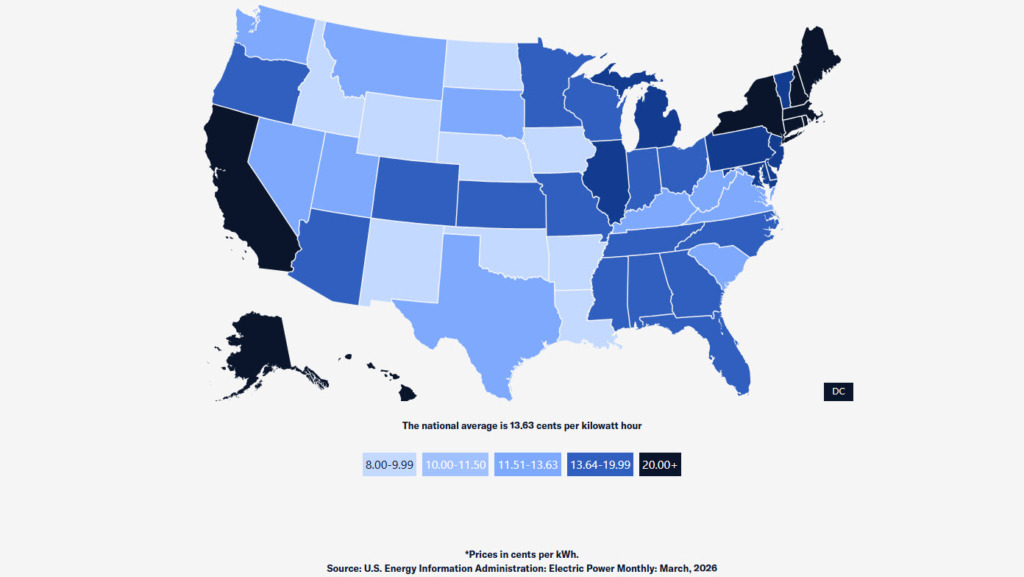
  • The Chamber noted that rising demand alone does not determine electricity costs. States with major data center hubs, including Virginia, Texas, and North Carolina, continue to have electricity rates below the national average, underscoring the importance of generation mix, infrastructure capacity, and state-level policy decisions. (Chamber of Commerce, May 5)
  • Infrastructure bottlenecks are adding to the challenge. Wood Mackenzie estimates the U.S. electrical equipment market tied to data centers could more than triple from $20 billion to $65 billion by 2030, while shortages of transformers and other equipment have stretched lead times to 18 to 36 months and pushed prices up as much as 20 percent. (Wood Mackenzie, April 28)

Roundtable View

  • The Real Estate Roundtable (RER) has consistently emphasized that grid reliability is essential to expanding the nation’s housing supply, spurring new real estate development, supporting economic growth, and advancing U.S. technological leadership.
  • RER supports a national “all of the above” energy strategy that invests in building efficiency, grid modernization, faster permitting, and innovation across all energy sources. (RER’s Spring Policy Priorities-Energy)

Policymakers should continue advancing permitting reforms to accelerate construction of transmission lines, pipelines, and generation plants—helping reduce delays, expand

Policymakers Continue Focus on Grid Reliability, Electricity Affordability 

Congress and the White House are elevating questions around energy infrastructure, cost allocation, and the ability of the power sector to meet the needs of AI in a rapidly evolving economy.

Hearing Spotlights Grid Strain

  • On March 25, the Senate Energy and Natural Resources (ENR) Committee held a hearing on the state of the U.S. bulk power system. Lawmakers and witnesses pointed to growing strain from rising electricity demand, infrastructure delays, and reliability concerns. (Senate ENR Hearing, Mar. 25)
  • Witnesses agreed the U.S. is entering a new phase of electricity demand growth not seen in decades—driven by a combination of AI applications, domestic manufacturing, and electrification—creating both reliability risks and investment uncertainty. (Senate ENR Hearing, Mar. 25)
  • Lawmakers and witnesses suggested several solution pathways, including permitting reform to accelerate project approvals, expanded transmission buildout to relieve congestion, and improved interconnection processes to bring new generation online faster. (Senate ENR Hearing, Mar. 25)
  • Dr. Liza Reed (Niskanen Center) emphasized the central role of transmission, stating, “We need more energy and transmission to move that energy,” and warning that “a shortage of grid capacity is the primary barrier to the cost-effective and swift deployment of AI in this country.” (Reed Testimony, Mar. 25)
  • As The Real Estate Roundtable’s (RER) Policy Guide on building performance standards states, the transition to a digital economy raises serious concerns about electricity availability, as “[v]ast swaths of the U.S. are at risk of running short of power.” (Roundtable Weekly, Oct. 11, 2024)

Executive Action

  • On March 20, the White House released its National Policy Framework for Artificial Intelligence, accelerating congressional attention on these issues by directly linking data center growth to energy policy. (White House AI Framework, Mar. 20)
  • The framework calls on Congress to “ensure that residential ratepayers do not experience increased electricity costs as a result of new AI data center construction and operation” while also urging policymakers to “streamline federal permitting for AI infrastructure construction and operation.” (White House AI Framework, Mar. 20)
  • The administration’s approach builds on its earlier ratepayer protection pledge, which requires major technology companies to provide or pay for their own power. White House officials have urged Congress to codify that commitment into law. (E&E News, Mar. 23)
  • Congressional leaders quickly signaled alignment with the framework. In a joint statement, House Republican leaders said Congress must “enact a national framework that unleashes the full potential of AI… and provides important protections for American families.” (E&E News, Mar. 23)
  • At the same time, divisions remain, with some lawmakers raising concerns about federal preemption and the broader scope of the proposal. (E&E News, March 23)

State of Play – Permitting Reform

  • Lawmakers have been advancing multiple legislative approaches to address permitting delays, transmission bottlenecks, and the growing energy demands of data centers.
  • Notably, the RER-backed, bipartisan SPEED Act (H.R. 4776,), which passed the House in December 2025, would provide permitting certainty, codify certain NEPA reforms, and streamline environmental reviews for energy infrastructure. (Roundtable Weekly, Dec. 19, 2025)
  • RER believes permitting reform is essential for advancing our economy’s energy transition. The current fragmented system of administrative reviews and approvals hinders the delivery of quick, low-cost, reliable electricity to our nation’s homes and commercial buildings. (Roundtable Weekly, Oct. 10, 2025)
  • Permitting reform talks remain active but unsettled. Bipartisan negotiations continue and some Republicans consider narrower reconciliation options, though procedural constraints and the GOP’s narrow majority leave the path forward uncertain. (E&E News, Mar. 26)

Data Centers

  • Separately, lawmakers have introduced a range of proposals addressing data center energy use and cost allocation.
  • Recently introduced bills would require federal studies on ratepayer impacts (H.R. 6529), expand FERC oversight (H.R. 8033), ensure large-load customers cover their electricity costs (H.R. 7977), and mandate dedicated power sources for new data centers (S. 3852)—reflecting growing congressional focus on preventing cost shifts to consumers. (E&E News, Mar. 23)
  • On March 25, Sen. Dick Durbin (D-IL) introduced the Data Center Water and Energy Transparency Act, which would require data center developers and operators to disclose energy and water use to state and local officials considering new projects. (Sen. Durbin Press Release, Mar. 25)
  • Meanwhile, Senators Elizabeth Warren (D-MA) and Josh Hawley (R-MO) joined in a letter to the Energy Department’s data gathering arm, urging the agency to “establish a mandatory annual reporting requirement for data centers and other large loads.” (Sens. Warren, Hawley press release |  The Verge, Mar. 26)

RER will continue to engage with members of Congress and the administration to advance policies that streamline project approvals, support efficient cost allocation, and enable the energy infrastructure needed to power the real estate sector and the broader economy.

Energy Policy Update: Permitting Push, ENERGY STAR Preserved, Grid Stressed

In Washington this week, President Donald Trump signed a bipartisan FY 2026 appropriations bill preserving ENERGY STAR funding, lawmakers refocused on permitting reform, and Winter Storm Fern exposed challenges to electric grid reliability driven by extreme weather.

ENERGY STAR

  • President Trump signed the bipartisan FY 2026 appropriations bill (H.R. 6938) into law on Jan. 23, securing approximately $33 million in funding for EPA’s ENERGY STAR program through Sept. 30. (E&E News, Jan. 29)
  • The agreement preserves the voluntary efficiency labeling initiative after earlier proposals to eliminate it and sets, for the first time, a specific mandatory annual funding level.
  • ENERGY STAR is a long-standing, market-based program that helps lower energy costs and supports “retrofit” investments for all commercial real estate asset classes. (Roundtable Weekly, Jan. 9)
  • The Real Estate Roundtable (RER) has long urged the “business case” to support the ENERGY STAR program. RER is working with a coalition of multi-industry partners in the real estate, manufacturing, consumer tech, and retail sectors to explain to Congress and the administration why ENERGY STAR is critical to the national “energy dominance” agenda. (Roundtable Weekly, June 6; May 23).

Permitting Reform

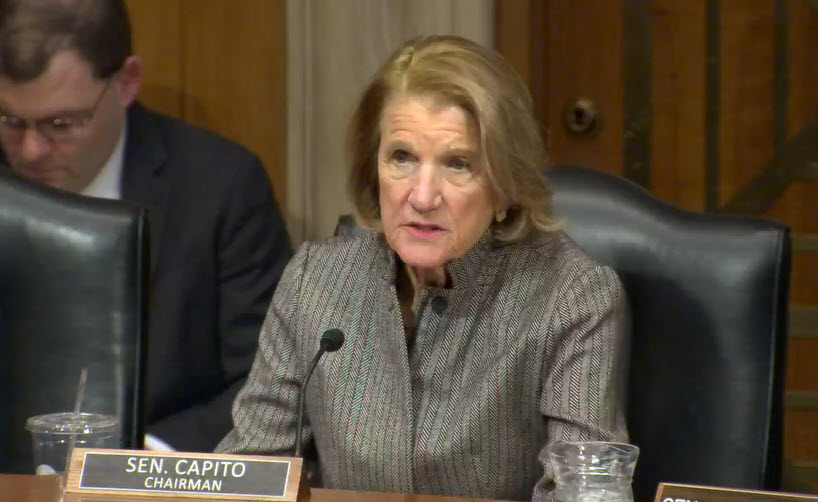
  • Senate EPW Committee Chair Shelley Moore Capito (R-WV) said permitting reform must be bipartisan, “project neutral,” and provide developers “predictability, consistency and finality” in securing permits in order to be effective. (E&E News, Jan. 29)
  • Abigail Ross Hopper (President and CEO of the Solar Energy Industries Association), testified that permitting reform should rest on three core principles: project certainty for approved projects, reduced timelines through streamlined and coordinated reviews, and a faster transmission buildout supported by stronger planning, permitting authority, and grid modernization. (UtilityDive, Jan. 29)
  • Faster permitting remains central to accelerating the buildout of the generation and transmission needed to meet rising electricity demand and improve reliability.

Winter Storm & Electric Grid

  • Ahead of Winter Storm Fern, the Department of Energy directed grid operators to be prepared to tap backup generation from large facilities—including data centers—to prevent outages and limit price spikes.
  • Energy Secretary Chris Wright framed the directive as part of a response to a “national energy emergency,” reflecting heightened reliability concerns as extreme weather collides with rapidly rising electricity demand from AI and other large loads. (WSJ, Jan. 22)
  • In the wake of this week’s winter storm, the North American Electric Reliability Corp. (NERC) warned that power generation and transmission are not growing fast enough to meet accelerating demand. NERC cautioned that several regions may lack sufficient energy supplies during extreme winter conditions, raising the stakes for grid expansion and resilience planning. (PoliticoPro, Jan. 29 | PoliticoPro, Jan 25)

RER will continue advocating for policies that remove permitting bottlenecks and support cost-effective grid modernization to ensure a robust supply of affordable power and a safe, reliable electric grid.