
Senators Urge Regulators to Assess Risks to U.S. Financial System; Roundtable Leaders Voice Concerns

Sen. Crapo at RER Meeting

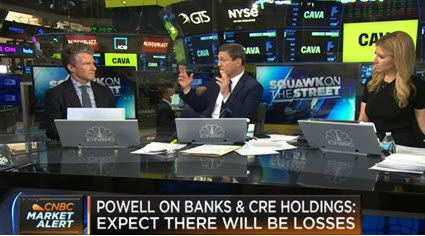
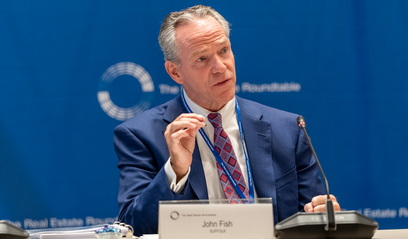
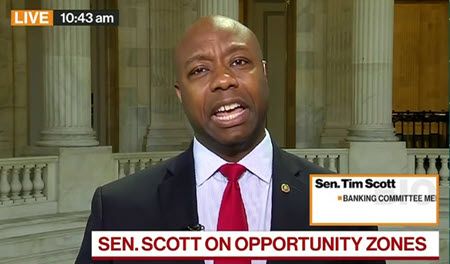
Senate Banking Committee Chairman Sherrod Brown (D-OH), above, and 11 other committee members urged Treasury Secretary Janet Yellen, who oversees the Financial Stability Oversight Council (FSOC), to identify risks and vulnerabilities brought to light during the recent banking crisis and provide regulatory, legislative, or other recommendations. (March 31 Letter and Politico Pro)

Regulatory Action

  • The committee letter called upon the Oversight Council’s members to conduct a thorough assessment that should include “traditional, quantifiable risks within prudential regulation, such as liquidity and interest rate risk management of less durable funding sources like non-core or uninsured deposits, and concentrations in asset classes like commercial real estate & long duration bonds.” (March 31 Letter) 
  • The Federal Reserve is conducting a separate review of federal banking oversight, with a report expected by May 1 that will recommend regulatory and supervisory actions. Fed Chair Jerome Powell has stated he will support the report’s regulatory recommendations. (Barr congressional testimony, March 30 and The Hill, March 28)
     
  • A recent House Financial Services Committee (HFSC) hearing—“The Federal Regulators’ Response to Recent Bank Failures”—featured testimony from Federal Reserve Vice Chair for Supervision Michael Barr, Federal Deposit Insurance Corp. Chairman Martin Gruenberg and Treasury Undersecretary for Domestic Finance Nellie Liang.
     
  • HFSC Chairman Patrick McHenry (R-NC) on March 31 stated, “As we heard from [President] Biden’s own regulators at this week’s hearing, supervisory incompetence was the leading cause of the failures. There is no evidence that the original Dodd-Frank would have prevented these bank runs. Additionally, no recent stress test has considered the current economic conditions—most notably the Fed’s rapid rate increases to combat Democrat-induced inflation—that contributed to the fall of these institutions.”

Roundtable Leaders Respond

Walker Webcast April 5, 2023 with Jeff DeBoer

  • Capital concerns affecting commercial and multifamily markets were a focus this week of the Walker Webcast, which featured Roundtable President and CEO Jeffrey DeBoer and National Multifamily Housing Council President Sharon Wilson Géno. Roundtable Member Willy Walker (Chairman & CEO, Walker & Dunlop) led the wide-ranging discussion on April 5, which addressed the federal response to the bank failures, the debt ceiling, and affordable housing. 

  • DeBoer said, “I don’t think anybody assumed a 12-year period of basically zero interest rates, followed by a steep 500bps increase in financing costs, immediately following a once-every-hundred-years pandemic that shut everything down and changed a lot of the ways  . . . (in which) . . . the built environment would be used,” DeBoer said. “I think all of this has to be allowed to settle through.” (Walker Webcast video and Connect CRE, April 5)
     
  • Similar observations were offered this week by the head of the International Monetary Fund, who cautioned that a more volatile global economy would bring slower growth and greater financial fragility. “There is simply no way that interest rates would go up so much after being low for so long and there would be no vulnerabilities. Something is going to go boom,” IMF Managing Director Kristalina Georgieva said. (PoliticoPro, April 6)
     
  • DeBoer also noted The Roundtable’s recent letter urging federal regulators “to take action immediately to provide increased latitude for financing institutions to work constructively with borrowers. Such action will avert what we believe would be an unnecessary crisis.” (Roundtable Weekly, March 17)

Bill Rudin on Squawk Box April 2023

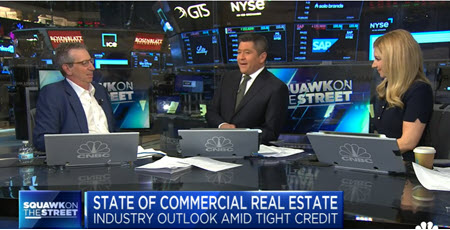
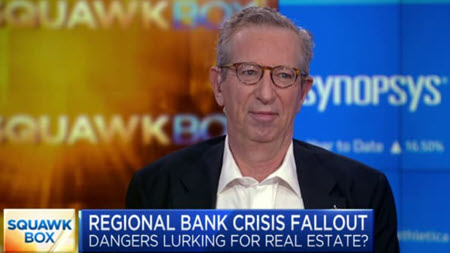
The challenges facing the industry due to recent interest rate hikes, bank failures, and continued widespread remote work will be a top focus of The Roundtable’s Spring Meeting on April 24-25 in Washington, DC (Roundtable-level members only). 

#  #  #

Bank Failures Increase Pressure on CRE Capital Markets

Scott Rechler on CNBC's Squawkbox

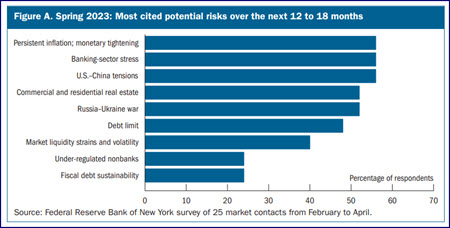
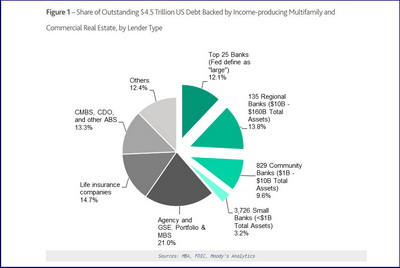
The failures of Silicon Valley Bank and Signature Bank this month have raised concerns about the financial health of small and regional banks that hold a large amount of commercial real estate debt—particularly loans backed by office buildings already under pressure from decreased valuations, rising interest rates, and looming debt maturities. (New York Times, March 22 and Wall Street Journal, March 21) 

Call for Regulatory Flexibility 

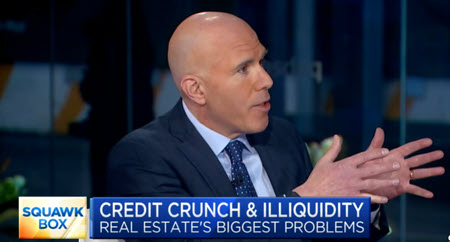
  • Roundtable Board Member Scott Rechler, above, (chairman and CEO of RXR) appeared on CNBC’s Squawk Box Wednesday morning to discuss liquidity pressures on CRE. During the interview, he endorsed a recent Roundtable request that banking regulators grant increased flexibility immediately to financial institutions for refinancing loans with borrowers and lenders, allowing time for capital markets to stabilize and the private sector to develop solutions. (Commercial Observer, March 22)
  • Rechler added that if no relief is provided, increased pressures on CRE may threaten the tax base of municipalities, the viability of small businesses that rely on regional banks, and the supply of housing. (Squawk Box, March 20)
  • Last week’s Roundtable letter from President and CEO Jeffrey DeBoer informed federal bank regulators about the immediate need for reestablishing a troubled debt restructuring (TDR) program for CRE, similar to initiatives established in 2009 during the global financial crisis and in 2020 during the height of the COVID-19 pandemic. (BisNow and GlobeSt, March 21)
  • DeBoer’s letter also cited the lingering effects of the global pandemic, including remote work’s negative influence on office space demand, as pressure points on liquidity and refinancing options for CRE assets. (Roundtable Weekly, March 17) 

CRE Loan Concentrations 

Federal Reserve sunset

  • A March 16 report from Goldman Sachs Research showed that small- and medium-size banks with less than $250 billion in assets account for approximately 80% of commercial real estate lending and 60% of residential real estate lending.
  • The Wall Street Journal reported this week that smaller banks hold around $2.3 trillion in commercial real estate debt and that about $270 billion in commercial mortgages held by banks are set to expire this year, according to data firm Trepp Inc.
  • Additionally, sales of commercial mortgage-backed securities (CMBS) were down 85% last month compared with the same time in 2022 due to rising interest rates and defaults. (Bloomberg, Feb. 17, 2023)
  • Treasury Secretary Janet Yellen testified yesterday before a House Appropriations Committee panel that the federal government is prepared to protect depositors in banks “of any size” who may face the possibility of collapse. “These are tools we could use again for an institution of any size if we judge that its failure would pose a contagion risk,” Yellen said. (Reuters, March 23)
  • The Fed is reviewing tougher capital and liquidity requirements for midsize banks, along with more stringent annual stress tests to assess their ability to weather recessionary pressures. New rules may target mid-sized banks with assets totaling between $100 billion to $250 billion. (Wall Street Journal | Financial Times | Reuters, March 14) 

The Roundtable’s March 17 letter to federal regulators states, “to avoid increasing unnecessary risk, we respectfully request that the Agencies reaffirm that financial institutions have flexibility to use reasonable and prudent judgment to give borrowers and lenders more time to see properties and loans through this current evolving environment.” 

#  #  # 

Roundtable Urges Federal Bank Regulators to Reestablish CRE Troubled Debt Restructuring Program

Real Estate Roundable President and CEO Jeffrey DeBoer

The Real Estate Roundtable today requested federal bank regulators to reestablish immediately a troubled debt restructuring (TDR) program for commercial real estate that would give financial institutions increased flexibility to refinance loans with borrowers and lenders. (Roundtable letter to regulators, March 17) 

Roundtable Liquidity Concerns 

  • The letter from Real Estate Roundtable President and CEO Jeffrey DeBoer, above, cites rising interest rates, a steady increase in looming debt maturities, remote work’s negative influence on office space demand, and heightened uncertainty from this week’s bank turmoil as contributing factors that have exerted pressure on liquidity and decreased refinancing options for CRE assets.
  • DeBoer added, “Regulators have taken significant action four times since 2009 to assist commercial real estate loan modifications during periods of economic instability—and now is the time to take action again. Our request is for immediate action, given increasing credit and liquidity constraints. Time will allow markets still struggling with post pandemic uncertainties to stabilize.”
  • Minutes from last month’s Fed Open Market Committee meeting confirmed economic pressures on CRE assets. The FOMC minutes state, “In particular, the staff noted that measures of valuations in both residential and commercial property markets remained high, and that the potential for large declines in property prices remained greater than usual.” 

Fed Intervention The Federal Reserve in Washington, DC

  • The Fed is reviewing tougher capital and liquidity requirements for midsize banks, along with more stringent annual stress tests to assess their ability to weather recessionary pressures. New rules may target mid-sized banks with assets totaling between $100 billion to $250 billion. (Wall Street Journal | Financial Times | Reuters, March 14)
  • The Fed this week acted to quell turmoil caused by the collapse of three mid-sized banks, including expanding its balance sheet to nearly $300 billion after months of shrinking it through a quantitative easing program. (Axios, March 17)
  • The Fed announced on Sunday night, March 12, the creation of a new Bank Term Funding Program (BTFP), offering loans of up to one year in length to banks, savings associations, credit unions, and other eligible depository institutions that pledge U.S. Treasuries, agency debt and mortgage-backed securities, and other qualifying assets as collateral. The BTFP is backstopped up to $25 billion from the Exchange Stabilization Fund. (Fed announcement, March 12)
  • Additionally, a Fed report released yesterday showed a huge outflow of $153 billion in loans at the Fed’s “discount window,” a funding resource that helps depository institutions manage their liquidity risks. The previous record for discount window borrowing was $111 billion during the 2008 financial crisis.  

Remote Work 

empty office remote work

  • DeBoer’s letter to the Agencies also emphasized the lingering effect of the global pandemic on hospitality, senior housing, retail (including the enclosed shopping center market), office and other property sectors.
  • The ongoing pressure of remote work arrangements has altered the current demand for office space nationwide, created significant concerns about the future of office use, and the cast doubt on the future of American cities that heavily depend on property tax revenue to fund needed community services. (Roundtable letter, March 17)
  • The wide adoption of remote work may have been a factor in Silicon Valley Bank’s collapse, according to the bank’s 2023 annual report filed in February. SVB acknowledged in a filing with the Securities and Exchange Commission that it faced “risks from a prolonged work-from-home arrangement as well as our implementation of a broader plan to return to the office.” (Fortune, March 16 and Axios, March 17) 

The Roundtable’s letter concludes by urging the federal regulators to “take action immediately to provide increased latitude for financing institutions to work constructively with borrowers. Such action will avert what we believe would be an unnecessary crisis.” 

#  #  # 

SEC Plans Increased Scrutiny of Private Funds With CRE Investments

SEC logo - image

The Securities and Exchange Commission’s (SEC) this week announced its 2023 Examination Priorities, which includes a focus on registered investment advisers (RIAs) who manage “private funds that hold certain hard-to-value investments…with an emphasis on commercial real estate.” (PoliticoPro, Feb. 7)  

Private Fund Adviser Disclosures

  • The SEC reports that more than 5,500 RIAs manage approximately 50,000 private funds with gross assets exceeding $21 trillion. In the past five years, the gross assets of private funds have increased, with retirement funds playing a significant role. The funds are invested through a variety of strategies used by hedge funds, private equity funds, and real estate-related funds, among others. (SEC 2023 Examination Priorities, Feb. 7)
  • The agency recently proposed an expanded set of disclosures by SEC-registered, private fund advisers, which could affect those that manage real estate investments. (SEC Feb. 9, 2022 News Release | Proposed Rule | Fact Sheet)
  • The Real Estate Roundtable submitted comments last April on how the proposed SEC rules would increase compliance costs, decrease returns for all private fund investors and drive smaller fund sponsors away from the market. (Roundtable comments to the SEC, April 25, 2022)
  • The Roundtable letter raises concerns that the SEC proposal, if finalized, could hinder real estate capital formation; harm development and improvement of real properties; and curtail essential economic activity that encourages job creation. (Roundtable Weekly, April 29, 2022)

Credit Rating Risk

SEC screens

  • Last week, the SEC issued a separate report that identified commercial real estate credit ratings as a potential risk for consideration in assessments by nationally recognized statistical rating organizations (NRSROs). (SEC Staff Report, Feb. 2023)
  • According to the agency’s NSRO report, “After being adversely affected by COVID-19, the single borrower CMBS sector experienced an uneven recovery during the first half of 2021 as compared to the first half of 2020, with properties such as lodging and retail lagging. The (SEC) Staff identified potential risks relating to commercial real estate ratings with significant exposure to sectors negatively impacted by COVID-19, and potential non-adherence to methodologies and rating processes.”

The Roundtable’s Real Estate Capital Policy Advisory Committee (RECPAC) will continue to respond to the SEC’s various proposed regulatory initiatives and proposals affecting CRE with its industry and coalition partners. 

#  #  # 

Office Sector Shows Economic Stress, NAIOP Releases Report on CRE’s Economic Contributions

Research-RECPAC mtg presentation slide

Trends in real estate capital and credit markets were the focus of a joint session of The Roundtable’s Real Estate Capital Policy Advisory Committee (RECPAC) and Research Committee on Jan. 24 during RER’s State of the Industry Meeting in Washington.

Market Reports

RECPAC Co-Chairs at SOI 2023

  • Research Committee Co-Chairs Paula Campbell Roberts (KKR), above left, and Spencer Levy (CBRE), right, led a discussion on market conditions and the economic outlook. Their findings suggest that the industry is facing challenges from shifting property fundamentals, rising rates, upward pressure on cap rates, and contracting credit capacity. (Download the slide presentation)
  • Other recent reports support the RECPAC-Research presentation, including one from CoStar that shows tightening credit conditions in the sector. “The office market is showing signs of weakness due to weak demand, driving higher vacancy rates and deteriorating operating performance, as well as challenging economic and capital market conditions,” said Mike Santomassimo, chief financial officer of Wells Fargo. He added that the bank is “… making sure we’re being proactive with our borrowers to make sure we’re thinking way ahead of any maturities or extensions, options that need to get put in place to help manage through it.” (CoStar, Jan. 18)
  • A report from Moody’s Analytics suggests that approximately $17 billion worth of mortgage bonds backed by office assets will come due in 2023, compared to $7 billion in 2022 and $4 billion in 2021. Victor Calanog, Moody’s head of commercial real estate economics told The Business Journals that the key issue for today’s office inventory is demand, due to the long-term effect of remote work and initiatives to increase adaptive use. (Washington Business Journal, Jan. 18)
  • The office paradigm shift is analyzed in a market risk assessment study of 11 metropolitan statistical areas released yesterday by Trepp and Compstak. Their findings show that a total of $40.7 billion in loans are scheduled to mature by the end of 2024. In addition to loan statistics, the report reviews leasing trends and headwinds. (Trepp/Compstak, Feb. 2)

CRE’s Economic Contribution

NAIPO study on CRE's Impact

  • NAIOP, the Commercial Real Estate Development Association, released a research study on Jan. 26 on the Economic Impacts of Commercial Real Estate for 2022.

  • The report analyzes the combined economic contributions of new commercial building development and the operations of existing commercial buildings in 2022. The NAIOP Research Foundation publication positive impacts on the U.S. economy, including:
    • $2.3 trillion to U.S. gross domestic product (GDP)
    • $831.8 billion in personal earnings
    • 15.1 million jobs

Economic Impacts of Commercial Real Estate is authored by Brian Lewandowski, Adam Illig, Michael P. Kercheval, Ph.D., and Richard Wobbekind, Ph.D., at the University of Colorado Boulder Leeds School of Business.

#  #  # 

The Roundtable Opposes NASAA Proposal Affecting REITS, Multifamily Industry, Capital Formation

NASAA logo border

The Real Estate Roundtable submitted comments today to the North American Securities Administrators Association (NASAA) in opposition to proposed rules that would place new restrictions on the market for public non-listed REITs. (Roundtable comment letter and Roundtable Weekly, July 29)

CRE Impact Concerns

  • NASAA’s proposal could have a profound impact on the $20.7 trillion U.S. commercial and multifamily real estate market.
  • These proposed revisions to the NASAA Statement of Policy Regarding Real Estate Investment Trusts could have the unintended and unnecessary consequence of impeding real estate capital formation, undercutting economic growth, and weakening the strength and stability of U.S. real estate capital markets. (NASAA Request for Public Comment, July 12)
  • The proposed revisions also have the potential to influence other sets of NASAA Guidelines under development, including those for Asset-Backed Securities, Commodity Pools, Equipment Leasing, Mortgage Programs, and Real Estate Programs other than REITs. (NASAA Request for Public Comment, July 12)

NASAA’s Proposed Changes

Modern buildings and American flag

  • Since nontraded real-estate investment trusts are not listed on stock exchanges, investors purchase shares through financial brokers. Federally regulated, public non-listed REITs (PNLRs) raised a record $35.4 billion last year. (Wall Street Journal, Aug. 30)
  • The NASAA proposal would negatively affect publicly registered, non-traded REITs by linking conduct standards for brokers selling non-traded REITs to the SEC’s Best Interest conduct standard.
  • The proposal has four revisions that would affect individual net income and net worth requirements; add a uniform concentration limitation; and include a new prohibition against using gross offering proceeds to fund distributions. (Roundtable Weekly, July 29 and the Institute for Portfolio Alternatives)

Roundtable Response

Jeffrey DeBoer, Real Estate Roundtable President and CEO

  • Roundtable President and CEO Jeffrey DeBoer, above, emphasized in his letter to NASAA that PNLRs are a growing source of capital for the acquisition and development of affordable housing, commercial properties for small businesses, and other types of real estate that supports economic growth and employment.
  • “The Roundtable encourages NASAA to conduct or at a minimum to address the economic impact of the proposal in its justification before considering adoption,” DeBoer stated. (Roundtable comment letter, Sept. 9)
  • The Roundtable’s letter also notes the proposal would impose arbitrary restrictions that would limit investor choice during a time of stock market volatility and high inflation.
  • The NASAA rules would also negatively impact highly regulated investment vehicles—including mutual funds, exchange-traded funds, interval funds, tender offer funds and business development companies.

The Roundtable’s letter concludes by urging NASAA to withdraw their proposal and engage industry participants to craft regulations that will help ensure NASAA’s goals without stifling investment in commercial real estate—nor limit investors’ ability to diversify their portfolios.

#  #  # 

Business Coalition Succeeds in Extending the Comment Period for NASAA Proposal Affecting REITS

NASAA logo border

A coalition of 17 business organizations, including The Real Estate Roundtable, wrote this week to the North American Securities Administrators Association, Inc. (NASAA) requesting an extension of the comment period on proposed revisions to the NASAA Statement of Policy Regarding Real Estate Investment Trusts.  In response to our coalition letter, NASAA has extended the comment period from August 11 to September 12, 2022. (NASAA extension request, Aug. 2)

The coalition is also preparing to submit a comment letter raising concerns about these proposed revisions to the NASAA Statement of Policy Regarding Real Estate Investment Trusts. (NASAA Request for Public Comment, July 12)

Proposed Changes

  • The NASAA proposal would negatively impact publicly registered, non-traded REITs by linking conduct standards for brokers selling non-traded REITs to the SEC’s Best Interest conduct standard, according to the coalition letter.
  • Specifically, the proposal has four revisions that would affect individual net income and net worth requirements; add a uniform concentration limitation; and include a new prohibition against using gross offering proceeds to fund distributions. (Roundtable Weekly, July 29 and the Institute for Portfolio Alternatives)

Wide Impact

San Franciso

  • The NASAA rules would also negatively impact highly regulated investment vehicles—including mutual funds, exchange-traded funds, interval funds, tender offer funds and business development companies.
  • These investment funds direct long-term capital to geographically diverse opportunities across a range of property types—office, industrial, multifamily, retail, self-storage, medical, and real estate debt—throughout the United States and its territories.
  • The funds would face arbitrary restrictions within the proposal that, if implemented, would limit investor choice during a time of stock market volatility and high inflation.
  • Additionally, the NASAA proposal would affect federally regulated, non-traded REITs— particularly NAV REITs. These investment vehicles are a growing source of capital to the acquisition and development of affordable housing, commercial properties for small businesses, and other types of real estate that support economic growth and employment.

Other Investment Concerns

  • The proposed revisions also have the potential to influence other sets of NASAA Guidelines under development, including those for Asset-Backed Securities, Commodity Pools, Equipment Leasing, Mortgage Programs and Real Estate Programs other than REITs. (NASAA Request for Public Comment, July 12)
  • With the deadline extended to Sept. 12, the coalition is continuing to refine its comment letter and welcomes input from our members.

The Real Estate Roundtable is working with several other organizations on the coalition’s responses to NASAA. Roundtable members can direct their comments and questions to Roundtable Senior Vice President Chip Rodgers or call 202-639-8400.

#  #  #

Proposed NASAA Rules Target REIT Guidelines, May Impact Real Estate Capital Formation

NASAA logo border

The North American Securities Administrators Association (NASAA) is seeking public comment on proposed revisions to its Statement of Policy Regarding Real Estate Investment Trusts. The July 12 proposal would update the conduct standards for brokers selling non-traded REITs with references to the SEC’s Best Interest conduct standard. (NASAA news release, July 12 and Investment News, July 25)

Proposed Changes

  1. Update the conduct standards for brokers selling non-traded REITs by supplementing the suitability section with references to the SEC’s best interest conduct standard.
  2. Update to the individual net income and net worth requirements—up to (a) $95,000 minimum annual gross income and $95,000 minimum net worth, or (b) a minimum net worth of $340,000—in the suitability section, by adjusting upward to account for inflation since 2007.
  3. Add a uniform concentration limitation prohibiting an aggregate investment in the issuer, its affiliates, and other non-traded direct participation programs that exceeds 10% of the purchaser’s liquid net worth. Liquid net worth would be defined as that component of an investor’s net worth that consists of cash, cash equivalents, and marketable securities. [NOTE: There is no carve out for accredited or other sophisticated investors.]
  4. Include, in multiple sections, a new prohibition against using gross offering proceeds to fund distributions, “a controversial product feature used by some non-traded REIT sponsors . . . having the potential to confuse and mislead retail investors.”

Potential Impact

Chicago skyward

  • The proposed revisions have the potential to influence other sets of NASAA Guidelines under development, including those for Asset-Backed Securities, Commodity Pools, Equipment Leasing, Mortgage Programs and Real Estate Programs other than REITs. (NASAA Request for Public Comment, July 12)
  • NASAA works to coordinate state regulation of broker-dealers, investment advisers and securities offerings—including non-traded REITs, which are publicly offered REITs not listed on any exchange.
  • NASAA’s Corporation Finance Section Committee Chair and Ohio Securities Commissioner Andrea Seidt said, “The REIT guidelines have not been updated for more than 15 years and these revisions are long overdue. If adopted, the proposed revisions will make key inflationary adjustments to existing suitability standards and promote uniformity in state concentration limits, both of which are key to limiting retail investor risk.” (NASAA news release, July 12)

Final comments on NASAA’s 44-page request are due by Aug. 11, 2022. The Real Estate Roundtable is working with several other organizations on a coalition response. Roundtable members can direct their comments and questions to Roundtable Senior Vice President Chip Rodgers or call 202-639-8400.

#  #  # 

Roundtable and Coalition Weigh In on Sweeping SEC Proposals Impacting Private Fund Investors

logo - U.S. Securities and Exchange Commission

The Real Estate Roundtable and 12 trade organizations recently responded to a set of sweeping, proposed Securities and Exchange Commission (SEC) rules that would significantly increase the compliance obligations of advisers to “private funds.” (Coalition letter, March 1)

Time Extension Request

  • The coalition letter detailed why time extensions are needed for comprehensive responses to two recently introduced SEC NPRMs (“Notice of Proposed Rulemaking”), which include more than 800 questions and an extensive expansion of cost-benefit analysis requests. The SEC provided a tight deadline for stakeholders to respond to the proposed rules.
  • The SEC issued two NPRMs on Jan. 26 and Feb. 9 that would significantly change how private funds are regulated. If approved, the proposed rules would require private-equity and hedge-fund managers to provide new statements on fund performance, compensation, fees and expenses. The NPRMs passed the Commission on a 3-1 party-line vote, with one dissenting Republican. (Wall Street Journal and PoliticoPro, Feb. 9)

SEC building

  • Currently, under most conditions, private companies are exempt from registration requirements put forth by the SEC, above – instead, they are regulated at the state level, where registration and disclosure requirements vary by state. The proposed rules would increase the compliance burden for private fund advisers, potentially impeding capital formation. (SEC resources: Jan. 26 News Release | Fact Sheet | Proposed Rule and Feb. 9 News Release | Fact Sheet | Proposed Rule)
  • The coalition response provided context to the NPRM requests, noting the deluge of recent SEC regulatory initiatives. The coalition letter stated, “We and our members will need simultaneously to analyze and prepare comments for these proposals as well as other significant proposals on short-selling (with the related re-opened proposal on securities lending), shortening the securities transaction settlement cycle, beneficial ownership reporting, security-based swap position reporting, and cybersecurity risk management (collectively representing more than 1,000 additional pages of text and thousands of additional individual questions from the Commission).”

A “LawFlash” report on the proposed SEC rules is available from Morgan Lewis. The Roundtable’s Real Estate Capital Policy Advisory Committee (RECPAC) will continue to respond to the SEC’s various proposed regulatory initiatives with its industry and coalition partners.

#  #  # 

House Again Passes Cannabis Reform Legislation Providing a Safe Harbor to CRE Owners

A Roundtable-supported bill that would allow federally regulated banks to provide mortgage and financial services to state-licensed, cannabis-related businesses (“CRBs”) without the threat of federal penalties passed the House April 19 on a strong bipartisan vote. 

The SAFE Banking Act

  • The Secure and Fair Enforcement (SAFE) Banking Act [H.R. 1996 (117)] would provide commercial property owners a safe harbor if they lease space to a CRB, whose mortgages would not be subjected to corrective action by a bank.
  • The SAFE Banking Act, which has been introduced in every Congress since 2013 by Rep. Ed Perlmutter (D-CO), passed the House multiple times in the last Congress – both as a stand-alone measure and as an addition to coronavirus relief legislation.
  • Rep. Perlmutter commented on the passage this week, “After years of bringing up this issue, I feel optimistic about the path forward for the SAFE Banking Act and, more broadly, reforms to our federal cannabis laws.” (Perlmutter news release, April 19)

Roundtable Support

  • The Real Estate Roundtable is a long-standing supporter of the SAFE Act. Roundtable President and CEO Jeffrey DeBoer noted in March 2019 letter to policymakers that the legislation, “… clarifies that banks could not take adverse action on a loan to a real estate owner solely because that owner leases property to a legitimate CRB.  The measure also protects sellers and lessors of real estate and other CRB ‘service providers’ by clarifying that proceeds from legitimate marijuana-related transactions do not derive from unlawful activity, and thus do not provide a predicate for federal criminal money laundering.”  (Perlmutter news release, March 18, 2021 and Roundtable letter, March 25, 2019)
  • The legislation is supported by a wide variety of other organizations, including the National Association of State Treasurers and Governors from 21 states and territories.  (Perlmutter news release, April 19)
  • The Roundtable also advocates that Congress should provide fuller protections to real estate business through legislation that clarifies state-compliant cannabis transactions are not illegal federal “trafficking” – and do not produce unlawful proceeds under money laundering statutes.

Cannabis and CRE

The estimated value of the U.S. cannabis industry is $17.7 billion, a substantial amount of which remains unbanked. As of January 2021, the legal cannabis industry supports 321,000 jobs across the country. (Perlmutter news release, April 19)

#  #  #