President Trump and Democratic Leaders Aim for $2 Trillion Infrastructure Package; Roundtable Recommends Policies to House Transportation Committee

President Donald Trump and Democratic congressional leaders on Tuesday agreed to pursue a $2 trillion infrastructure package and meet again in three weeks to discuss possible revenue sources.

The Roundtable on April 29 submitted  infrastructure policy recommendations to House Committee on Transportation and Infrastructure Chairman Peter DeFazio (D-OR) and Ranking Member Sam Graves (R-MO).  

  • House Speaker Nancy Pelosi (D-CA) said after the White House meeting, “We did come to one agreement: that the agreement would be big and bold.”   Senate Minority Leader Chuck Schumer (D-NY) added,  “… now it’s up to the president and the White House to tell us how they pay for it.” (Associated Press, April 30)
  • Schumer stated in his Dec. 6, 2018 letter to the president there would be no deal on infrastructure without addressing climate change.  Schumer wrote that one of the policies that should be included in any infrastructure package should, “Provide permanent tax incentives for domestic production of clean electricity and storage, energy efficient homes and commercial buildings …” (Schumer’s letter to President Trump and  Washington Post op-ed).
  • House Committee on Transportation and Infrastructure Chairman Peter DeFazio (D-OR) also attended the April 30 White House meeting.  DeFazio’s committee held a Member’s Day hearing on the next day to share their infrastructure priorities. “While I continue to press my colleagues on the Committee on Ways & Means, House Leadership, the Senate, and the White House on a path forward on funding, this Committee must do its legislative work,” DeFazio stated in his opening remarks.
  • The Roundtable on April 29 submitted infrastructure policy recommendations to DeFazio and Ranking Member Sam Graves (R-MO).  Roundtable President and CEO Jeffrey DeBoer states in the letter, “We offer policy suggestions within your Committee’s jurisdiction to improve programs to repair and modernize the transportation and other systems upon which the U.S. economy depends.  We also suggest targeted changes to the federal tax code, requiring coordination with the Ways and Means Committee, to help pay for our nation’s infrastructure deficit.”  (Roundtable Infrastructure Policies letter, April 29)
  • DeBoer emphasized the goal of the policies is to offer “a holistic approach to modernize our aging infrastructure [that] will create American jobs, boost economic growth, address climate threats, and improve the quality of life in all regions of the country.” 

    The Roundtable’s key suggestion to help pay for infrastructure is to repeal the Foreign Investment in Real Property Tax Act  (FIRPTA) of 1980. Bipartisan FIRPTA repeal legislation ( H.R. 2210 ) was introduced in the House on April 10. (Roundtable Weekly, April 12) 

The Roundtable’s key suggestion to help pay for infrastructure is to repeal the Foreign Investment in Real Property Tax Act  (FIRPTA) of 1980.  FIRPTA imposes a discriminatory layer of capital gains tax on foreign investment-a tax burden that does not apply to any other asset class.  Repealing FIRPTA would serve as a market-driven catalyst to finance improvements in our nation’s infrastructure.  Bipartisan FIRPTA repeal legislation (H.R. 2210) was introduced in the House on April 10. (Roundtable Weekly, April 12).

Other infrastructure policies detailed in The Roundtable’s April 29 letter include: 

  • A beneficial, 10-year cost recovery period for investments that improve energy efficiency performance in commercial and multifamily buildings;
  • Proposals supported by Democratic and Republican administrations alike to streamline the permit process for infrastructure projects;
  • An increase in the federal gas “user fee” in a responsible and sustainable manner;
  • Revising IRS “volume caps” and other limitations on tax-exempt bonds;
  • Improving the TIFIA loan program to encourage more public-private partnerships to finance infrastructure; and
  • Reasonable federal-state cost share rules for grants to support mass transit projects of regional and national significance (like the NY-NJ Gateway program).

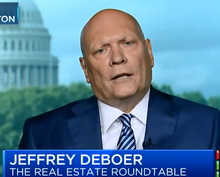
The Roundtable’s DeBoer discussed the role of public-private partnerships to develop infrastructure projects on CNBC’s Squawk Box  in June 2017.  (Roundtable Weekly, June 9, 2017)  

Ways and Means Chairman Richard Neal (D-MA) has indicated he intends for his committee to consider an infrastructure bill soon.

#  #  # 

Roundtable Recommends Policies to Spur Infrastructure Investment and Economic Growth

Repealing FIRPTA, streamlining permit procedures and passing infrastructure financing measures will help spur infrastructure improvements and contribute to economic growth, according to recommendations submitted this week by The Real Estate Roundtable to the House Ways and Means Committee.  (Roundtable Statement for the Record)

Repealing FIRPTA, streamlining permit procedures and passing infrastructure financing measures will help spur infrastructure improvements and contribute to economic growth, according to recommendations submitted this week by The Real Estate Roundtable to the House Ways and Means Committee.  (Roundtable Statement for the Record)

The Roundtable recommendations include the following:  

  • Unlocking private capital by repealing the Foreign Investment in Real Property Tax Act (FIRPTA).  FIRPTA imposes a discriminatory layer of capital gains tax on foreign investment—a tax burden that does not apply to any other asset class.  Repealing FIRPTA would serve as a market-driven catalyst to finance improvements in our nation’s infrastructure.
  • Streamlining the permitting process.  A report by the nonprofit organization Common Good estimates that a six-year delay in starting construction on public projects costs the nation more than $3.7 trillion.  Permit delays dampen private sector investment and add to the overall costs of infrastructure projects. 
  • Increasing the federal gas “user fee” in a responsible and sustainable manner.  The gas user fee (18.4-cents a gallon) that capitalizes the Highway Trust Fund has not been raised since 1993.  The Roundtable supports proposals to sustain the HTF by increasing the user fee by five cents a year for the next five years, and indexing it to inflation thereafter.
  • Revising IRS “volume caps” and other limitations on private-activity bonds (PABs).  Congress should broaden availability of these tax-exempt municipal bonding tools. Bipartisan measures that advance PAB financing, including the Move America Act (H.R. 1508), the Public Buildings Renewal Act ( H.R. 1251), and the BUILD Act  (S. 352), warrant close analysis.   
  • Improving the Transportation Infrastructure Finance Innovation Act (TIFIA) loan program through measures such as the RAPID Act (S. 353).  Congress should consider establishing a similar credit enhancement program to encourage public-private partnerships to help repair an aging pipeline grid and remediate gas leaks that impact climate change. 

DeBoer discussed the role of public-private partnerships to develop infrastructure projects on CNBC’s Squawk Box in June 2017.  “There’s a lot of capital that wants to invest in infrastructure,” DeBoer said.  (Roundtable Weekly, June 9, 2017).  

Ways and Means Chairman Richard Neal (D-MA) has indicated he intends for his committee to consider an infrastructure bill this spring.

Lawmakers Focus on Preventing Second Partial Government Shutdown; House Committees Prep for Action on Tax and Infrastructure Issues

The federal government this week resumed full-time operations after a 35-day partial shutdown. A three-week bill signed by President Trump last Saturday now funds approximately 25% of the government – including the Department of Homeland Security (DHS), Treasury and the Internal Revenue Service (IRS) – until Feb. 15. If a new funding measure is not passed, the government will face another partial shutdown.

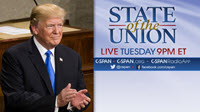
President Trump is scheduled to deliver the State of the Union to Congress on Tuesday, Feb. 5. 
(C-Span

  • The nonpartisan Congressional Budget Office released a report on Monday showing the partial shutdown reduced gross domestic product by $3 billion.  (Wall Street Journal, Jan. 28)
  • A House-Senate conference committee began negotiations Wednesday on a border security funding measure to resolve the same issue that caused the shutdown in December – a wall on the Mexican border.
  • President Trump yesterday said, “On Feb. 15th, the committee will come back and if they don’t have a wall, I don’t even want to waste my time reading what they have because it’s a waste of time.”  (Bloomberg, Jan. 31)
  • House Speaker Nancy Pelosi (D-CA) yesterday stated, “There’s not going to be any wall money in the legislation.  However, if they have some suggestions about certain localities where technology, some infrastructure [is appropriate] … that’s part of the negotiation.” 

      If a new funding measure is not passed by Feb. 15, the government will face another partial shutdown

  • The House Speaker added that House rules require the congressional conference committee to complete an agreement by Feb. 8 to pass it by Feb. 15.  “In order to have a bill signed by the president, we have to have a signed conference report by next Friday.  So we only have this week plus one day, with the State of the Union in between, to get this done,” Pelosi said.  (The Hill, Jan. 31)
  • President Trump is scheduled to deliver the State of the Union to Congress on Tuesday, Feb. 5, when he is expected to address his proposed increase in border security funding, including $5.7 billion for wall construction.  (Daily Caller, Jan. 30) 

House Committee Hearings on Tax, Infrastructure  

House Ways and Means Committee Chairman Richard Neal (D-MA) recently addressed his legislative priorities.

  • House and Senate tax-writing committees are preparing for action on their policy agendas in the 116th Congress.
  • House Ways and Means Committee Chairman Richard Neal (D-MA) addressed his priorities during a Jan. 24 organizational meeting.  Neal stated that in addition to retirement security and health care costs, “Another issue requiring our attention is America’s infrastructure. We must ensure our infrastructure systems are both safe and efficient  it’s essential for our global competitiveness.  We’ll also closely examine the Republicans’ tax law and its various problems.  So we’ll be conducting thorough oversight of this law – oversight that frankly is well overdue.  (Ways and Means, Neal Statement, Jan. 24.)
  • Rep. Mike Thompson (D-CA), chairman of the Ways and Means’ Subcommittee on Select Revenue Measures (formerly the tax policy subcommittee), said his panel’s first hearing will focus on infrastructure, although he has not set a date for the hearing.  Thompson added that the subcommittee will also review the 2017 tax code overhaul and how tax policies, such as a carbon tax or renewable energy tax breaks, impact climate change.  (CQ, Jan. 31)

Senate Finance Committee Chairman Charles Grassley this week said that retroactive renewal of more than 20 tax deductions that expired at the end of 2017 should be tied to a spending measure to keep the government fully funded beyond Feb. 15.  “The only vehicle that I see in the next few weeks is what comes out of this closing-down conference,” Grassley said,. “And if we don’t have something ready to go when that’s done, have a compromise on extenders … then it’s going to be a long time before we get another opportunity.”  (CQ, Jan. 31)

House Proposal Suggests Gas Tax Increase, Public-Private Partnerships to Fund Infrastructure Improvements

Rep. Bill Shuster (R-PA), the outgoing chairman of the House Transportation and Infrastructure Committee, released “discussion draft” language on July 23 aimed at improving and sustainably financing U.S. transportation and other infrastructure systems.  (Section-by-Section analysis of the proposal)

Roundtable President and CEO Jeffrey D. DeBoer appeared last summer on CNBC’s Squawk Box, emphasizing the importance of P3s as a platform to finance the design, building, operation and long-term maintenance of projects across all infrastructure asset classes(CNBC, June 7, 2017).

  • Shuster, who is retiring after the upcoming midterm elections, provided a “vision statement” explaining that the draft “is intended to further the national conversation about the current state of America’s infrastructure and highlight some of the major roadblocks to funding and improving our transportation network.”  He stated his proposal reflects “input from Members of Congress from both sides of the aisle” in an effort to build bipartisan support.
  • The wide-ranging draft proposes to phase-in increases to the “pay at the pump” gas tax and then eliminate it after 10 years; pilot a per-mile travelled “user fee”; shore-up the federal loan and guarantee program for mass transit; establish a public-private partnership (P3) program to construct and rehabilitate federal buildings; and establish a one-stop federal permitting shop to expedite project approvals.  (Eno Transportation Weekly, July 23) 
  • Any broad infrastructure policy conversation would likely address federal-state cost sharing arrangements for mass transit projects – such as the Gateway program to improve bridge and tunnel crossings between New York and New Jersey.  For example, a  June 29 letter from Trump Administration transit officials indicated a change in agency policy – that loans by the U.S. Transportation Department, repaid by state and local governments,  should factor into grant decisions.  The effect would be to reduce the amount of federal grants for mass transit and increase the state/local share. (B-Gov, July 3
  • Anticipating infrastructure as an issue for possible compromise after the upcoming elections, The Roundtable has offered a number of comments to the Administration and Congressional committees on real estate’s role in creating public-private partnerships to help repair roads, transit, broadband, power grid and other systems that are needed to make communities safe, productive and competitive.  (Roundtable Weekly, January 26) 

Roundtable President and CEO Jeffrey D. DeBoer appeared last summer on CNBC’s Squawk Box, emphasizing the importance of P3s as a platform to finance the design, building, operation and long-term maintenance of projects across all infrastructure asset classes.  Policies starting with streamlined permitting and a range of financing platforms should all be considered by lawmakers as layers in the “capital stack” for infrastructure,” DeBoer told Squawk Box. (CNBC, June 7, 2017)

Trump Administration Prepares to Unveil Nationwide Infrastructure Proposal; Roundtable Submits Specific Suggestions for Innovative Infrastructure Financing Sources

six-page document leaked to the media this week purports to show details of the White House’s anticipated infrastructure plan just before President Trump is scheduled to offer his first State Of The Union address on Jan. 30.  White House spokeswoman Lindsay Walters declined to comment on the contents of the leaked document, but said the Administration looks forward to announcing a plan “in the near future.” (Axios, Jan. 22)

six-page document  leaked to the media this week purports to show details of the White House’s anticipated infrastructure plan just before President Trump is scheduled to offer his first State Of The Union address on Jan. 30.

According to the document, leaked Monday to Axios and Politico, approximately 10 percent of the plan’s funds would go to  “transformative projects” – a category that includes a “commercial space” sector that could compete for funds.  (CQ, Jan. 25)
 
The  Roundtable on Jan. 11 sent a comment letter to President Trump offering specific suggestions on how innovative financing sources may be used to help pay-for infrastructure – and how restructuring a lengthy permitting process and cutting unnecessary red tape will help control project costs and delays. 
 
Sen. John Barrasso (R-WY), chairman of the Senate Environment and Public Works Committee, said that permit streamlining would be an important part of an infrastructure plan. (CQ, Jan. 23).  Barrasso’s committee oversees all public works projects and the Environmental Protection Agency, which would be a path to streamlining EPA and other agencies’ permitting approvals.
 
The  Roundtable letter suggests several innovative financing sources, including:

  • Responsibly and sustainably increase the federal gas “user fee;”
  • Allow states to capture lost tax revenues from Internet sales – and devote it to infrastructure;
  • Attract more foreign investment to U.S. infrastructure by repealing or scaling back the Foreign Investment in Real Property Tax Act (FIRPTA);
  • Assess whether IRS “volume caps” and other limitations on private-activity bonds (PABs) should be revised to boost infrastructure development;

The Roundtable on Jan. 11 sent a comment letter to President Trump offering specific suggestions on how innovative financing sources may be used to help pay-for infrastructure – and how restructuring a lengthy permitting process and cutting unnecessary red tape will help control project costs and delays.

  • Couple successful federal loan programs (like TIFIA) with state and local “value capture” techniques to re-pay that debt – and attract private investors;
  • Develop best practices that channel public-private partnerships (P3s) for appropriate projects in appropriate geographies;
  • Prioritize the limited proceeds from the Highway Trust Fund with a “Fix it First” strategy;
  • Limit “formula grants” and move toward performance-based criteria;
  • Enact common sense reform measures that limit taxpayers’ carrying costs for exorbitant liability insurance premiums on public infrastructure projects. 
  • Ease regulatory burdens for projects of same size and scope in same location as existing infrastructure.

More details on each of the suggestions above are included in The Roundtable letter.  
 
Also this week, Special Assistant to the President for Infrastructure Policy DJ Gribbin met on Tuesday with Roundtable members in an open exchange of ideas about a national infrastructure plan.  On Thursday, Gribbin spoke to the U.S. Conference of Mayors about the Trump Administration’s upcoming plan, stating that it will not require any new funding.  Gribbin said that 200 billion dollars in existing federal funds would be shifted to infrastructure projects, which would be leveraged to attract an additional 800 billion in state and private investment. (CQ, Jan. 25)
 
Infrastructure was a major topic of discussion during The Roundtable’s Jan. 24-25 State of the Industry meeting (see story above).  The Roundtable will remain engaged with policymakers as the Administration’s infrastructure plan moves forward in 2018.

Real Estate Roundtable Testifies Before Senate on Business Tax Reform

Rational Taxation of Real Estate Urged to Spur Job Creation, Encourage Business Expansion and Contribute to GDP Growth

WASHINGTON, DC — Real Estate Roundtable President and Chief Executive Officer Jeffrey DeBoer today testified before the U.S. Senate Finance Committee, encouraging modest changes to the current taxation of commercial real estate that would continue to encourage economic growth while cautioning policymakers on specific business tax reform concepts that could cause severe market dislocation.

During today’s Senate hearing on Business Tax Reform, DeBoer testified, “Importantly, commercial real estate markets are largely in balance with supply, only modestly exceeding demand.  Despite our industry’s relative positive health, we know the underlying economy can and should grow more rapidly.”  DeBoer added that The Roundtable is concerned that some concepts under discussion in tax reform are risky, untested and have the potential to cause severe dislocation – not only in real estate markets but in the nations’ capital markets as well.

In his written testimony and his oral statement, The Real Estate Roundtable’s President and CEO addressed specific elements of potential tax reform.  (See Senate Finance Committee webcast and documents at https://www.finance.senate.gov/hearings/business-tax-reform.) Below is a summary of policy issues covered in his testimony:

  • Business interest deduction.  DeBoer noted that interest, the cost of borrowing, is an ordinary and necessary business expense that has always been deductible.  Today, U.S. capital markets are the deepest in the world, but restrictions would deter business formation and expansion.  The impact would fall disproportionately on entrepreneurs and other developers likely to serve small and medium-sized markets.  As interest rates rise, the harm to the economy will grow.
  • Cost recovery / expensing.  Current cost recovery rules need reform, but 100 percent expensing of real estate is a risky and untested proposal.  Accelerated depreciation of real estate in the early 1980s led to tax-driven, uneconomic investment.  Tax rules should reflect the economic life of structures.  Leading research by MIT suggests existing depreciation schedules for real estate are too long.  Shortening depreciation to 20 years would spur sustainable and economically sound investment.   


  • Pass-through reform.  U.S. pass-through tax rules create a dynamic, flexible business environment that supports entrepreneurship and productive investment.  Tax reform should provide equitable relief for pass-throughs.  A new, reduced tax rate for pass-through business income should avoid “cliffs”, phase-outs, and carve-outs that discriminate against certain taxpayers and create new economic distortions.    


  • Capital gains.  The tax code should encourage entrepreneurial activity and risk-taking through low capital gains rates and continue to recognize that risk can involve more than the contribution of capital.  Reform should also preserve like-kind exchanges, which get properties into the hands of new owners with the time and resources to invest in job-creating property improvements.


  • State and local tax deduction.  Tax reform should retain the deductibility of state and local taxes.  Eliminating the state and local tax deduction would undercut the principal source of financing for schools, roads, law enforcement, and other needed infrastructure and public services.


  • FIRPTA.  Tax reform should boost job growth and domestic investment by repealing outdated tax barriers to foreign investment in U.S. real estate and infrastructure.


  • Infrastructure.  An infrastructure initiative in tax reform is needed to create jobs, reflect the changing transportation needs of Americans and increase productivity, all to benefit the GDP.  

In his testimony, DeBoer said that although tax reform should unleash entrepreneurship, capital formation, and job creation – Congress should also undertake reform with caution, given the potential for economic dislocation and unintended consequences. 

As an example of over-reactive government policies, DeBoer noted past tax reform efforts in 1981 and 1986, which combined, created severe dislocation in real estate markets nationwide; led to job losses and bankruptcies; and contributed to the demise of the savings and loan industry.

The Roundtable’s President and CEO also addressed the federal deduction for state and local property and income taxes. “Ending the federal deduction for state and local property and income taxes could potentially cause significant issues in our nation’s cities, as some businesses relocate for no reason other than taxes. We urge that this idea be rejected,” DeBoer said.

He also testified about the crucial need to preserve interest deductibility.  “Eliminating or limiting the deduction for interest on business debt would cause great dislocation in capital markets, slow economic activity and lessen the unique importance of America’s capital markets,” DeBoer said.

After noting that commercial real estate markets today are estimated to account for nearly 20 percent of America’s GDP and employ millions of Americans, he added that real estate provides local governments with its largest revenue source and plays a key role in the retirement savings and wealth creation of Americans.  “Properly designed tax reform can spur job creation, encourage more robust business expansion and result in a sustainable increase in GDP,” DeBoer testified.  

#  #  #