
RER, Nareit Urge Practical GHGP “Scope 2” Standards for Real Estate’s Energy Purchases

This week, The Real Estate Roundtable (RER) and Nareit submitted joint feedback to the Greenhouse Gas Protocol (GHGP) on proposed updates to its Scope 2 Guidance. The submission urges GHGP to preserve optional hourly and narrow geographic matching for bulk clean energy purchases, rather than make these strict “24/7” procurement conditions mandatory. (Summary memo | detailed comments, Jan. 23)

Background

  • Scope 2 emissions result from the generation of electricity, steam and other power purchased or acquired by a customer from a utility provider or grid operator. These emissions are not directly controlled by building owners or tenants, but depend on the types of fuels that power off-site grid infrastructure. (US-EPA
  • Last year, GHGP unveiled a set of proposed revisions to its Scope 2 Guidance. GHGP’s recommended modification to its global guidelines would require companies to match clean energy procurements (such as renewable energy certificates or power purchase agreements) to their actual electricity consumption on an hour-by-hour basis, rather than on an annual basis—a practice often referred to as “24/7 matching.” (GHGP Press Release, Oct. 20) 
  • The changes also proposed tight narrowing of geographic deliverability standards, requiring the purchased clean energy to be co-located on-site and/or within the same local grid segment. 

RER and Nareit Collaboration

  • The comments RER and Nareit submitted this week emphasize that 24/7 matching is not practicable for the vast majority of U.S. businesses that use GHGP guidance to voluntarily account for Scope 2 emissions. 
  • As RER and Nareit explained, 24/7 matching is not workable as a “one size fits all” standard practice for commercial building owners because they do notcontrol how much energy tenants use. Owners of multi-tenant buildings do not have dependable access to leased space energy data on a monthly—much less hourly—basis. (Summary memo)  
  • The joint RER-Nareit comments also explain that there is not enough solar or wind generation in many U.S. markets to support GHGP’s restrictive geographic deliverability mandate, and market and policy headwinds are expected to make corporate investments in renewables more challenging in the short term.
  • Further, RER and Nareit raised concerns about scientific validity, noting that electricity does not physically flow in accordance with contractual arrangements and that strict hourly “matching” is a misleading accounting construct.
  • RER and Nareit back an alternative approach put forth by GHGP working group participants that would maintain the current Scope 2 Guidance approach, allowing for—but not requiring—optional 24/7 matching.

Why It Matters

  • GHGP’s existing Scope 2 “quality control” criteria are a proven, successful framework that have helped spur significant growth in U.S. clean power purchases since 2015. The 24/7 matching mandate would reverse this trend.
  • Mandating strict time and place restrictions for corporate procurements like RECs will make compliance burdens with the Scope 2 Guidelines more onerous, increase costs, disincentivize private sector investments in clean energy—and not result in better information for investors.

January 31 Deadline

  • Real estate companies and their assurance providers submitting direct feedback to GHGP may wish to incorporate points from the joint RER/Nareit summary memo and detailed comments.

RER, Nareit and allied real estate stakeholders will remain engaged to advocate for a practical, science-based Scope 2 framework as GHGP moves to adopt new guidance.

Congressional Spending Package Preserves ENERGY STAR Funding

A bipartisan, three-bill “minibus” appropriations package advanced by the House on Thursday preserves funding for ENERGY STAR, ensuring continued support through the end of the federal fiscal year for the voluntary public-private partnership focused on energy efficiency in buildings and appliances. (PoliticoPro, Jan. 8)

State of Play

  • The House passed the minibus on a bipartisan 397–28 vote. The package now heads to the Senate, which is expected to take up the measure as early as next week. (The Hill, Jan. 8)
  • The bill funds the Departments of Energy, Commerce, Interior, and Justice, along with water programs, the Environmental Protection Agency (EPA), and certain federal science initiatives through Sept. 30, the end of the current fiscal year.
  • The package reflects weeks of bicameral negotiations following last month’s deal on overall spending levels.
  • House Appropriations Chair Tom Cole (R- OK) defended the bills as the product of “bipartisan, bicameral consensus” and a member-driven process. (Politico, Jan. 9)
  • The final agreement largely rejected dramatic reductions sought by the White House last spring, opting instead for more targeted spending adjustments to energy and environmental programs. (PoliticoPro, Jan. 8)

Why It Matters

  • ENERGY STAR is a long-standing, market-based program that helps lower energy costs and supports “retrofit” investments for all commercial real estate asset classes.
  • The outcome builds on bipartisan actions last summer, when both House and Senate appropriators separately advanced bills supporting FY’26 ENERGY STAR funding. (Roundtable Weekly, July 25)
  • RER has long urged the “business case” to support the ENERGY STAR program. It is working with a coalition of multi-industry partners in the real estate, manufacturing, consumer tech, and retail sectors to explain to Congress and the administration why ENERGY STAR is critical to the national “energy dominance” agenda. (Roundtable Weekly, June 6May 23).  

What’s Next

  • The minibus is expected to clear Congress before the current stopgap continuing resolution expires on Jan. 31.
  • Appropriators are preparing additional spending packages later this month, though several major funding bills—including Defense, Labor-HHS-Education, and Homeland Security have yet to be finalized.

These developments, alongside issues related to AI-driven power demand, grid reliability, and permitting reform, will be featured at RER’s upcoming Sustainability Policy Advisory Committee (SPAC) meeting on Jan. 21 in Washington, D.C.

SPEED Act Passes House, Setting Stage for Senate Permitting Talks

The U.S. House of Representatives passed the bipartisan SPEED Act (H.R. 4776) on Thursday by a 221–196 vote, advancing legislation aimed at streamlining federal permitting reviews to accelerate energy and infrastructure development amid surging electricity demand and rising power costs. (Axios, Dec. 18)

State of Play

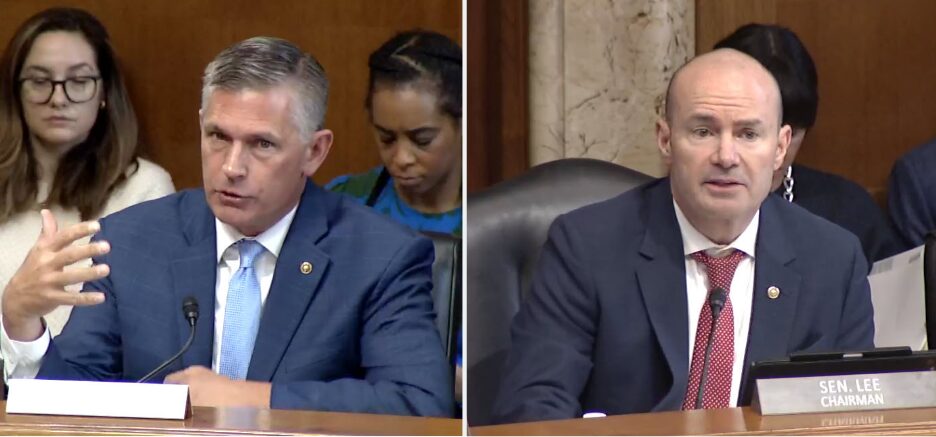
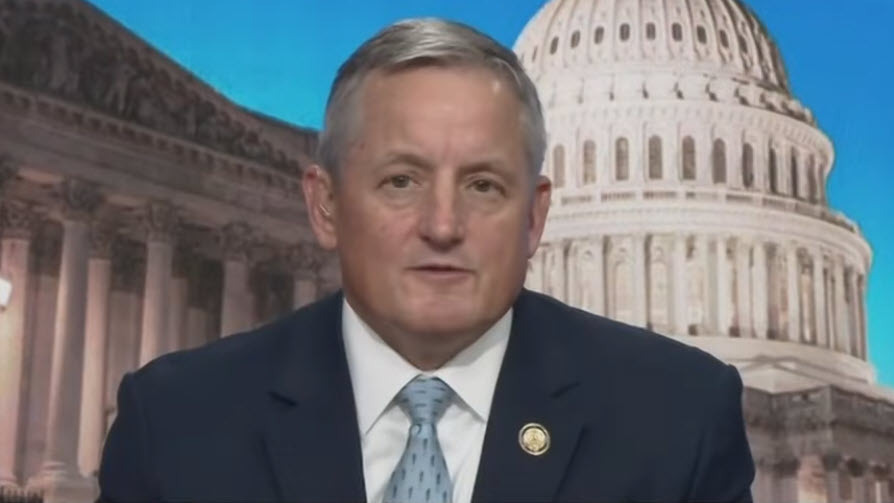
  • Sponsored by House Natural Resources Committee Chair Bruce Westerman (R-AR) and Rep. Jared Golden (D-ME), the SPEED Act would overhaul the National Environmental Policy Act (NEPA) by reducing duplicative reviews, curbing excessive litigation, and increasing certainty for large-scale grid improvements and other infrastructure development requiring federal approval.
  • The House’s passage of the SPEED Act marks a significant step in a broader congressional push to modernize permitting rules and address long-standing bottlenecks slowing investments in power generation, transmission, and distribution projects.
  • “For too long, America’s broken permitting process has stifled economic development and innovation,” Chair Westerman said following the vote. “This historic vote on the SPEED Act will fix the system by establishing the project certainty that’s currently lacking in the permitting process and allow America to build again.” (PoliticoPro, Dec. 18, Rep. Westerman Weekly Column, Dec. 19)
  • 11 Democratic votes in favor of the measure demonstrated bipartisan momentum heading into Senate consideration.
  • In the Senate, key negotiators acknowledged the House GOP’s internal challenges but welcomed the bill’s passage. Senate Environment and Public Works Chair Shelley Moore Capito (R-WV) said the House vote “will give us good momentum,” while Ranking Member Sheldon Whitehouse (D-RI) emphasized his focus on producing a bipartisan Senate bill. (PoliticoPro, Dec. 18)
  • The Trump administration has expressed support for congressional action on permitting reform, but has not taken a position on the SPEED ACT. (PoliticoPro, Dec. 8)

Roundtable Advocacy

  • Ahead of the procedural vote earlier in the week, The Real Estate Roundtable (RER) joined a broad business coalition led by the U.S. Chamber of Commerce in support of the SPEED Act. (Dec. 16 Letter)
  • RER also wrote to congressional leadership last week, urging passage of the bill, citing the need to strengthen grid reliability, lower energy costs, and keep pace with rapidly rising electricity demand. (Letter, Dec. 8)
  • In its letter, RER emphasized that the U.S. needs “as much electricity as possible, from as many sources as possible, delivered as quickly and cheaply as possible” to support economic growth, re-shore manufacturing, and maintain global competitiveness in artificial intelligence. (Roundtable Weekly, Dec. 12)

What’s Next

  • The bill now heads to the Senate, where it is expected to spur broad cross-committee negotiations involving the Energy and Natural Resources Committee and the Environment and Public Works Committee. (Axios, Dec. 18)
  • The House vote “doesn’t get any easier” for the SPEED Act to make it all the way through Congress, as the “political opening is extremely narrow” in the Senate. (Axios, Dec. 19)
  • The legislation faces opposition from some Senate Democrats who seek further protections to advance wind and solar development. At least seven Democrats would be needed to overcome a filibuster. (Bloomberg, Dec. 18)
  • Despite divisions, several Senate Democrats have signaled interest in crafting a permitting compromise capable of securing the 60 votes required for passage. (Axios, Dec. 18)

Permitting reform will be a featured topic at RER’s next all-member State of the Industry Meeting on Jan. 21–22, 2026, in Washington, D.C., as policymakers consider strategies to accelerate energy infrastructure and support long-term economic growth.

Business and Energy Leaders Press for Action on Permitting Reform

House lawmakers are set to vote before year’s end on a number of housing, energy, and permitting reform bills, with the bipartisan SPEED Act at the center of a broader push to address grid reliability and energy affordability.

SPEED Act

  • House Republicans are planning a floor vote the week of Dec. 15 on several measures, including the SPEED Act (H.R. 4776), which cleared committee on a bipartisan basis before Thanksgiving. (PoliticoPro, Dec. 5)
  • The measure would streamline National Environmental Policy Act (NEPA) reviews and curtail litigation. It is widely viewed as a foundation for Senate negotiations on broader permitting overhaul in 2026.
  • Senate Environment and Public Works Chair Shelley Moore Capito (R-WV) said House Natural Resources Committee Chair Bruce Westerman (R-AR) has generated “positive momentum” by striking a deal on a bipartisan amendment to his SPEED Act. The revisions would make it harder for the executive branch to cancel previously approved energy project permits. (PoliticoPro, Dec. 3)
  • On Thursday, a group of 30 House Democrats led by Rep. Scott Peters (D-CA) sent a letter to Rep. Westerman urging additional changes to the SPEED Act to secure more bipartisan support, while calling the bill a “huge step forward” for energy development. (PoliticoPro, Dec. 4)
  • Permitting reform is going to be No. 1 issue from our perspective of getting through Congress,” said Jarrod Agen, executive director of the White House’s National Energy Dominance Council.” (PoliticoPro, Dec. 4)

Industry Support

  • Jeffrey DeBoer, RER President and CEO said, “Permitting reform is essential to strengthening the nation’s electric grid and infrastructure. The current patchwork of federal reviews delays the delivery of affordable, reliable power to homes and commercial buildings. The Roundtable supports efforts—like the SPEED Act—to modernize permitting, improve grid resilience, and ensure the infrastructure needed for long-term economic growth.”
  • EEI President Drew Maloney recently noted, “We support developing all energy sources. We need as many electrons on the grid as possible to help keep the grid reliable and costs low.” (NPR, Nov. 6)

Senate Energy Plan

Sustainable Renewable Energy Concept With Wind Turbines, Solar Panels And City Buildings Background.
  • This week, Sen. Ruben Gallego (D-AZ) unveiled an all-of-the-above energy framework, “Fostering American Energy Innovation and Affordability,” focused on affordability, reliability and efficiency. (Press Release, Dec. 4 | Axios, Dec. 3)
  • His plan promotes permitting reform for natural-gas pipelines and interstate transmission siting, and emphasizes investment in solar, wind, advanced nuclear, and geothermal energy as part of a broader push to modernize the grid and lower costs. (PoliticoPro, Dec. 4)

House Committee Advances Energy Affordability Measures

  • The House Energy and Commerce Committee advanced a slate of energy bills this week aimed at lowering energy costs and rolling back Biden-era efficiency rules. Most of the measures passed along party lines. (PoliticoPro, Dec.4)
  • Energy Choice Act (H.R. 3699): Passed 24–21; blocks state and local bans on natural gas connections to buildings. (A “ban on gas bans” aligns with RER’s 20-Point Policy Guide on Building Performance Standards)
  • Affordable Housing Over Mandating Efficiency Standards Act (H.R. 5184): Passed 30–16; shifts manufactured-housing oversight from DOE to HUD and overturns Biden-era efficiency standards that increase upfront housing costs. (Roundtable Weekly, Nov. 21)
  • Homeowner Energy Freedom Act (H.R. 4758): Passed 25–21; repeals portions of the Inflation Reduction Act, including electric-home rebates and related grant programs. (Roundtable Weekly, Feb. 28)

Up Next: GHG Protocol – Scope 2 Guidance

  • RER’s Sustainability Policy Advisory Committee (SPAC) in coordination with Nareit, is developing industry-wide comments on the GHG Protocol’s proposed revisions to its Scope 2 Guidance, now under public consultation.
  • RER will host a one-hour member discussion on Wednesday, Dec. 10, from 3:00–4:00 p.m. ET to help shape the industry’s responses to the Scope 2 survey. For more information, contact Duane Desiderio at ddesiderio@rer.org.

RER will continue working with lawmakers and industry partners to advance permitting reforms that expand energy supply, strengthen grid reliability, and support real estate investment across property types.

OBBB Act Signed Into Law: Energy Policy and CRE Impacts

Sustainable Renewable Energy Concept With Wind Turbines, Solar Panels And City Buildings Background.

President Trump signed the “One Big Beautiful Bill Act” (OBBB) into law on July 4, enacting a sweeping overhaul of tax policy with far-reaching implications for energy, real estate, and investment. The legislation, followed by a companion executive order this week, includes provisions that scale back the Inflation Reduction Act (IRA), tax credits, and modifies rules for solar and wind development.

Clean Energy Tax Incentives

  • While the OBBB Act pares down many energy tax incentives from the Inflation Reduction Act, a number of important elements remain relevant to CRE:
  • The Act does not include a proposed excise tax on solar and wind projects that would have penalized facilities using materials from China and other designated foreign entities. (WSJ, June 29; CBS News, July 1; POLITICO, July 1)
  • 100% Expensing Provisions: Building owners may now fully write off the costs of clean energy projects, including solar installations when placed in service, regardless of tax credit eligibility or availability. Accelerated depreciation significantly enhances return on investment for such projects.
  • Tariffs and Duties: High tariffs remain in place on imported solar components, especially from Southeast Asia, as part of ongoing trade enforcement and reshoring efforts. These tariffs apply independently of any tax credit eligibility. (Solar Power World, May 20)
  • Cost-Effectiveness of Renewables: Despite the policy changes, utility-scale solar and onshore wind remain the most cost-effective new-build energy sources even without tax subsidies, according to Lazard’s 2025 Levelized Cost of Energy report.

New Executive Order

  • The EO directs the Treasury Department to:
  • Strictly enforce the termination of clean electricity production and investment tax credits under Sections 45Y and 48E, and to more narrowly define when a project is deemed to have started construction. (Bloomberg, July 7)
  • Issue updated guidance within 45 days (August 18) that tightens the definition of when clean energy projects begin construction, curtailing reliance on the long-standing “5% safe harbor provision that allowed developers to qualify for tax credits by incurring just 5% of project costs. (PoliticoPro, July 10)
  • Restrict the use of broad safe harbors unless a “substantial portion” of a project is actually built.
  • The guidance also requires projects to demonstrate “continuous construction,” a threshold they can meet by completing the project within four years. (PoliticoPro, July 10)
  • The move creates a layer of uncertainty for companies planning solar and wind projects that have relied on the 5% rule under IRS Notice 2021-41. Additional guidance is expected from Treasury to clarify the scope and enforcement.

ENERGY STAR

  • The ENERGY STAR program long supported by real estate, manufacturing, and consumer tech industries, remains intact following the OBBB Act’s funding rescissions.
  • RER continues to lead coalition efforts to preserve the program, including spearheading a June 6 letter to Congress signed by more than 30 organizations, urges continued support for ENERGY STAR as a voluntary public-private partnership. (Roundtable Weekly, June 6)

RER will work closely with Congress, federal agencies, and coalition partners to shape practical guidance and protect real estate’s role in the clean energy transition.

The Post-Election Energy Landscape for CRE

Green foreground with buildings in background

The 2024 election results signal a return to energy policies supported by President-elect Trump and a shift from Biden era climate programs. For the commercial real estate (CRE) industry, these changes present opportunities to emphasize the “business case” for high performance, energy efficient buildings.

Anticipated Energy Policy Shifts

  • De-Regulation: Former Congressman Lee Zeldin (R-NY), the pick to lead the EPA, remarked on “the opportunity to roll back regulations” on power plant emissions, abolish fees on oil and gas development, and lift rules that drive automakers to manufacture electric vehicles. (The Washington Post, Nov. 19)
  • Climate Disclosures: The SEC will likely withdraw its controversial rule for public companies to report climate-related financial risks in 10-K forms. (Bloomberg, Nov. 7) Companies may still need to report and disclose emissions under state laws like those in California (if they survive litigation).
  • Clean Energy Tax Incentives: The incoming administration has vowed to dismantle the Inflation Reduction Act (IRA) that provides credits and deductions for solar projects, battery storage, EV charging stations, and energy efficient buildings. However, many clean energy projects benefit Red States and House Speaker Mike Johnson (R-LA) said he intends to use “a scalpel not a sledgehammer” in reviewing the IRA in light of Republican support. (POLITICO, Sept 18).
  • City, State Grants: Federal funding will likely be eliminated to support city and state efforts to enact building performance standards (BPS). (Roundtable Weekly, Sept 6) Localities may continue to adopt these laws imposing energy use and emissions limits on buildings even without federal support, and The Roundtable will continue to urge policymakers to follow our 20-Point Guide for fair and reasonable BPS laws.
  • Grid Reliability: Given the increased demands on the electric grid from AI, bipartisan bills to streamline the federal permitting process to approve interstate transmission lines – carrying electricity produced in rural areas and delivering it to cities long distances away – could finally become a priority. (Roundtable Weekly, Oct. 25)

The “Business Case” for Energy Efficiency

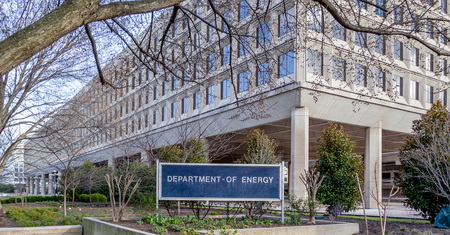
Department of Energy building in Washington, DC
  • By emphasizing the economic benefits of energy efficient buildings, the industry can remain resilient and forward-looking amid “policy volatility” arising from the power changes in Washington.
  • Energy efficient buildings improve our economy. They create jobs for American workers, enhance U.S. energy independence, help make the power grid more reliable, and attract overseas investments to our shores.
  • Non-regulatory, voluntary federal guidelines – developed and enhanced with The Roundtable’s support – help real estate companies make the case for energy efficiency.

They also include our collaboration with the Department of Energy and other agencies through the Better Climate Challenge, the national Zero Emissions Building definition, the Buy Clean initiative, and programs that highlight the environmental benefits of commercial-to-residential property conversions.

Roundtable Comments on EPA’s Proposed Voluntary Label for Low-Carbon Buildings

EPA NextGen logo

The Real Estate Roundtable submitted comments to the U.S. Environmental Protection Agency (EPA) yesterday on the agency’s proposed voluntary label for low-carbon buildings. (Roundtable letter, March 2)

Voluntary Building Label

  • EPA’s NextGen building label would expand upon the agency’s successful ENERGY STAR program for assets that attain high levels of energy efficiency.
  • The NextGen label would allow companies to highlight buildings that go beyond top efficiency performance—and further rely on renewable energy use and reduce their greenhouse gas (GHG) emissions. (EPA’s proposal and Roundtable Weekly, Jan. 27)
  • NextGen recognition has great potential for widespread market acceptance, The Roundtable stated in its comments.
  • EPA’s proposed program could create a uniform, voluntary federal guideline to simplify the confusing patchwork of city and state climate-related building mandates that exists across the country. (EPA Policy Brief, Jan. 19; Roundtable Weekly, Jan. 20)
  • EPA staff discussed its NextGen proposal with The Roundtable’s Sustainability Policy Advisory Committee (SPAC) at the “State of the Industry” meeting in January. (SPAC slide presentation)

Roundtable Recommendations

SPAC Chair Tony Malkin and Vice Chair Ben Myers

  • The Roundtable’s SPAC, chaired by Tony Malkin, above left, (Empire State Realty Trust Chairman President and CEO) and vice-chaired by Ben Myers, right, (BXP Senior Vice President, Sustainability), convened a working group to develop the comments submitted to EPA.
  • The Roundtable stated that NextGen recognition criteria “must be grounded in financial performance that offer building owners reasonable returns on their investments.”
  • The Roundtable’s comments suggested refinements to improve EPA’s proposed components, including:
      

    • Efficiency:
      Significant and demonstrated reductions in a building’s energy use should be eligible for the NextGen label (as an alternate, additional criterion to EPA’s proposal that only ENERGY STAR certified buildings could qualify).
    • Renewable Energy:
      The NextGen proposal would require that 30% of a building’s energy use must derive from renewables. The Roundtable recommends that the level should start at 20% and adjust over time to reflect the changing status of the electric grid as it decarbonizes through increased reliance on solar, wind, and other clean power sources.
    • GHG Reductions: 
      The Roundtable supports EPA’s proposal for a GHG “intensity target” that reflects a building’s unique weather conditions by a factor known as heating degree days (HDD). The Roundtable worked closely with EPA in the pre-pandemic era to consider HDD as a key variable in the underlying ENERGY STAR building score process. (Roundtable Weekly, July 19, 2019)
    • Renewable Energy Certificates (RECs):
      The Roundtable explained that voluntary NextGen recognition can provide much-needed guidance on corporate accounting for REC purchases and enhance credible claims on the environmental benefits from offsite clean power procurement.  

The Roundtable further advised EPA that it should conduct a pilot of the low-carbon label with private and public building owners before broad release to U.S. real estate markets. EPA intends to make the NextGen label available in 2024.

#  #  #

EPA Invites Comments on Proposed Label for Low-Carbon Buildings

EPA NextGen Certified Building logo

The Environmental Protection Agency (EPA) opened a comment period this week on its proposed ENERGY STAR NextGen certification, a voluntary public-private partnership program that would recognize low-carbon buildings. (EPA’s NextGen webpage)

NextGen Criteria

EPA's NextGen criteria slide

1.)   Demonstrate High Energy Efficiency
Building is ENERGY STAR certified and has a score of “75” or higher on EPA’s rating scale. 

2.)   Renewable Energy Use
Building must obtain at least 30% of the total energy it consumes from renewable sources through any combination of (a) onsite renewable generation, (b) renewable energy certificates (not “offsets”), (c) biofuels or other renewable fuels, or (d) renewable thermal certificates. 

3.)   Onsite Emissions Target
Building must meet a greenhouse gas emissions target unique for its asset class that is also “normalized” by regional weather conditions through a metric known as “heating degree days.” 

Next Steps

EPA NextGen slide - next

  • Comments are due to EPA by March 2. (Comments Submission Form).
  • SPAC has formed a working group to develop The Roundtable’s comment letter

EPA aims to make ENERGY STAR NextGen certification available in early 2024.

#  #  # 

Roundtable Recognized as Energy Department “Ally” in Better Climate Challenge

DOE BCC

The U.S. Department of Energy (DOE) recognized The Real Estate Roundtable this week as an inaugural “ally” of the Better Climate Challenge (BCC), a voluntary program to encourage private and government owners of buildings and industrial plants to cut their GHG emissions in half. (Climate Challenge Factsheet | FAQs | BCC Launch video, Feb. 28)  

Better Climate Challenge & CRE 

Real Estate Roundtable Chair John Fish

  • “The Real Estate Roundtable is proud to partner with the Department of Energy as an ‘ally’ in the Better Climate Challenge,“ said Roundtable Chair John Fish, above, (Chairman and CEO, Suffolk). “As leaders in the CRE industry, our members welcome opportunities to innovate with DOE and other federal agencies to reimagine how our nation’s buildings can optimize efficiency, slash GHG emissions, and draw electricity from a cleaner grid.
  • “Partnerships with DOE offer significant opportunities to focus on retrofitting older buildings,” Fish continued. “Seventy-five percent of U.S. buildings were constructed in the last century. The greatest and most positive impact our industry can have on the climate crisis is to make smart investments that modernize the apartments, office buildings, and other structures where our communities live, work, learn, and socialize.”
  • The BCC to date has received commitments from more than 90 organizations from various industries, including six companies represented by Roundtable membersEmpire State Realty Trust, Hilton, Jamestown LP, LaSalle Investment Management, Lendlease, and MetLife Investment Management.
  • Other real estate industry trade groups who are designated “allies” of the BCC include the Building Owners and Managers Association International (BOMA) and the American Hotel & Lodging Association (AHLA)

Program Requirements 

DOE's Better Climate Challenge launch

  • DOE Secretary Granholm, top left, officially launched the BCC on Feb. 28 during an executive discussion with White House National Climate Advisor Gina McCarthy, middle left, Housing and Urban Development Secretary Marcia Fudge and committed partner organizations.
  • The key element of DOE’s voluntary challenge is for companies to commit to reduce direct emissions (“scope 1”), and emissions from electricity purchases (“scope 2”), by 50% over 10 years. There is no requirement to quantify or reduce indirect “scope 3” emissions.
  • The 10-year window is measured from a baseline of up to five years before a company joins the program.

  • Commitments to reduce emissions must be across a building portfolio. DOE explained that to reach the 50% emissions reduction target, companies can tally their long-term clean power purchase agreements (PPA) and associated renewable energy certificates (RECs). PPAs and RECs are increasingly common strategies used by CRE and other sectors to help deliver more renewable energy to the electricity grid. (Roundtable Weekly, November 5, 2021)
  • Participating companies must also pursue an efficiency target, to prioritize energy savings that will contribute toward the 50% reduction in portfolio-wide emissions over a decade.
  • Companies joining the program must pledge to share energy and emissions data for 10 years through EPA’s Portfolio Manager, publicly report on progress, participate in peer-to-peer exchanges, and help develop industry best practices.

Businesses who want to pursue “partnership agreement” – or trade organizations who want to participate as an “ally” – with DOE’s national leadership initiative on climate can consult with BCC online.

#  #  #

House Committees Advance Clean Energy Measures Favorable to CRE

Austin TX solar panels

House committees this week advanced “clean energy” portions of the $3.5 trillion reconciliation plan along party lines, including several measures supported by The Real Estate Roundtable. 

Clean Energy Tax Incentives

  • The Ways & Means Committee this week approved “green energy” portions of the reconciliation package. (Bill text [Subtitle G); section by section)
     
  • The Committee approved significant changes to existing tax credits that incentivize investments in solar, wind, combined heat and power (CHP) and fuel cell systems – and expanded them to also include energy storage and dynamic glass properties.
  • These renewable energy investments would be subject to an “elective pay” option that can allow entities with little appetite for tax credits to request a payment equal to the value of the credit.
  • Investments in EV charging stations and high-voltage transmission lines (needed to support delivery of renewable power over long distances) would also benefit from the elective pay option.
  • The Committee also made changes intended to improve the 179D tax deduction for energy efficient buildings. The proposed changes are geared to support existing building retrofits.
  • The amounts of these incentives would start at a “base rate” – and could increase to a “bonus rate” if the property owner meets certain labor provisions for Davis-Bacon wages and hiring registered apprentices.

Climate and Energy

House Energy and Commerce Committee

  • The House Energy and Commerce (E&C) Committee passed a $456 billion section of the reconciliation bill. (Bill text / Committee memorandum, Sept. 9 and Markup summary, Sept. 13)
     
  • The centerpiece of the E&C package is a Clean Electricity Performance Program (CEPP). It would offer federal Energy Department “incentive payments” to electric utilities that meet clean energy targets and shift to zero-emissions sources (i.e., nuclear, hydropower, wind, solar, geothermal).
     
  •  A nationwide CEPP could accelerate “greening” the grid and help real estate and other sectors accommodate increasing demands from investors and regulators to source the electricity they purchase from renewable power.
     
  • However, Sen. Joe Manchin (D-WV), chair of the Senate Energy and Natural Resources Committee and a key centrist vote needed for ultimate passage of a reconciliation package, has questioned the need for the CEPP program. He has stated that utilities should not receive taxpayer funds because the electricity sector’s’ transition to clean power sources is already happening. (Politico and E&E News, Sept 14) 

Other elements of the E&C Committee’s bill include:

  • Grants for state/localities to adopt most recent and zero-energy building codes; and
  • A rebate program for electric vehicle charging infrastructure with set asides for individuals, small businesses, and low-income communities.

#  #  #