

Update: ENERGY STAR, Codes, Building Standards and More

Federal and other officials continue to weigh a wide range of energy policies affecting commercial real estate. RER’s Sustainability Policy Advisory Committee (SPAC) is coordinating industry input to ensure these measures are practical, cost-effective, and grounded in real-world CRE development, operational, and financing decisions.

ENERGY STAR

  • Senate Appropriations Committee Chair Susan Collins (R-ME) also sent a July 2 letter to EPA Administrator Lee Zeldin requesting information about the transition, funding, and staffing for ENERGY STAR. (Letter, July 2)
  • A short-term continuing resolution to extend current funding is increasingly likely. Congress is not expected to complete FY 2027 appropriations legislation by Sept. 30, the end of the present fiscal year.
  • ENERGY STAR is a critical program for CRE. According to the program’s National Buildings Registry, over 7 billion square feet of U.S. commercial floor space have been ENERGY STAR certified.
  • Why It Matters: CRE relies heavily on Portfolio Manager, ENERGY STAR’s standard energy and water benchmarking tool, for investor reporting, capital expense (capex) planning, building certifications, and compliance with state and local requirements.

Building Codes and Performance Standards
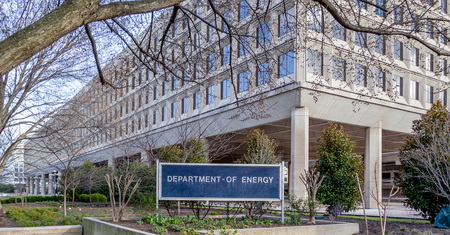
Department of Energy building in Washington, DC
  • RER is preparing comments on DOE’s “cost methodology” to better reflect CRE “hold” periods and loan maturity horizons. Comments are due Aug. 3.

California Building Performance Standard (BPS)

  • The California Energy Commission (CEC) released its draft Building Energy Performance Strategy Report. This report lays the foundation for a future statewide building performance standard in California for large commercial and residential buildings.
  • RER, ICSC, and Nareit are coordinating with the California Business Properties Association (CBPA) to discuss priorities for the real estate industry’s response to California’s pre-regulatory study.
  • The CEC will hold a public workshop July 29 (1 pm – 3 pm ET). Written comments regarding the report are due August 21. (CEC’s filing instructions here.)
  • The CEC study refers to ASHRAE Standard 100 as a “starting point” for a potential statewide building performance standard in California.
  • RER has coordinated with ASHRAE to hold a briefing session (Tuesday, July 28, 2 pm – 3 pm ET) to inform our members on Standard 100’s building energy consumption and emissions targets. (Register here)

Solar Tax Credits

Workers on sustainable energy project on rooftop of building
  • Solar projects that “begin construction” between July 5 –Dec 31, 2026 must be “placed in service” by the end of 2027 to qualify for federal tax credits.
  • The court opinion found the IRS Notice 2025-42 issued last summer illegal. Under that notice, only “low output solar facilities” (1.5 MW or less) may establish the “beginning of construction” date for federal tax credit eligibility by spending at least 5% of total project costs.
  • Bottom line: Projects of 1.5 megawatts or less can rely on the 5% safe harbor under existing IRS guidance. The court ruling currently restores the safe harbor for larger projects as well, although uncertainty remains because Treasury could appeal or issue revised guidance. (RER’s Fact Sheet -Clean Energy Tax Incentives, Aug. 27, 2025)

Quick Hits

  • Data Centers: The North American Electric Reliability Corporation (NERC) is on track with its Large Load Action Plan to eventually register data centers and likely require them to ultimately report their electricity use and other grid impacts. (NERC Primer | 2026 “State of Grid Reliability” Full Report and Snapshot (June 24) | Roundtable Weekly (May 8)
  • California Climate Reporting Rule: The California Energy Commission (CEC) released its anticipated “draft strategy report” to lay the foundation for an eventual statewide BPS law. The deadline for companies’ first public emissions disclosures has been pushed back from this coming August to November 10.  (ESG Today (June 25) | KPMG alert (June 25) | JD Supra (July 3)
  • Permitting Reform: Senate negotiators continue working toward a bipartisan permitting reform package ahead of the August recess, with transmission policy remaining a key sticking point. Lawmakers are also divided over environmental and historic preservation reviews and limits on the administration’s authority to revoke previously approved energy project permits. (E&E News, July 13)

RER’s SPAC will continue engaging federal agencies, Congress, state regulators, and industry partners as these initiatives develop. SPAC is chaired by RER Board MemberTony Malkin (Chairman and CEO, Empire State Realty Trust). SPAC’s Vice Chair is Tamara Chernomordik (Vice President, Kimco Realty).

Government Shutdown Stalemate Deepens, Raising CRE Concerns

The federal government remains shut down for a second week as partisan gridlock over spending and health care continues in Washington. (Punchbowl News Oct. 15, 17 | Roll Call Oct. 14)

State of Play

  • Republicans and Democrats remain deadlocked, with no signs of progress toward reopening the government. The Senate on Thursday failed for the 10th time to advance a short-term funding bill passed by the House since the shutdown began Oct. 1. (NPR, Oct. 16)
  • In a 51–44 vote, senators again rejected a GOP-led continuing resolution (CR) that would have funded the government through Nov. 21. (CNBC, Oct. 15)
  • Democrats continue to insist that any funding measure must include an extension of enhanced Affordable Care Act (ACA) subsidies that are set to expire at the end of the year.
  • GOP leaders also remain at a standstill until the government reopens—Speaker Mike Johnson (R-LA) refusing to recall the House without a funding deal, and Senate Majority Leader John Thune (R-SD) said discussions on health care tax credits can begin only after the shutdown ends. (NPR, Oct. 9 | PoliticoPro, Oct. 6)
  • The Trump administration’s plan to lay off more than 10,000 federal employees during the shutdown has been temporarily blocked after a judge ruled the firings likely exceeded executive authority. (Roll Call, Oct. 15 | Bloomberg, Oct. 16)

Path Forward

  • As the shutdown enters its third week, lawmakers are weighing several potential exit paths, including a short-term CR, a handful of Democrats could defect to advance the GOP bill, a Trump–Schumer compromise, or a bipartisan “dual-vote” plan led by Sen. Jeanne Shaheen (D-NH) to reopen the government and extend ACA subsidies for one year. (Punchbowl News, Oct. 16 | Bloomberg, Oct. 14)
  • The White House appears prepared for a prolonged shutdown, redirecting funds to sustain key programs and betting that public pressure will eventually force Democrats to adjust strategy. (Punchbowl News, Oct. 16)
  • Lawmakers on both sides warn the economic fallout will deepen if the impasse stretches into November, threatening programs vital to housing, infrastructure, and financial markets.

CRE Impact

  • Economy: Each week the government remains shut down is projected to cost the U.S. economy roughly $7 billion, according to EY-Parthenon Chief Economist Gregory Daco. (BisNow, Oct. 12)
  • GDP: U.S. gross domestic product could fall by 15 to 20 basis points for each week the shutdown persists, according to Marcus & Millichap, which noted that the immediate impact on CRE remains limited for now. (Marcus & Millichap)
  • Housing: The U.S. Department of Housing and Urban Development (HUD) reportedly has confirmed federal funding for rental voucher assistance is available through the end of 2025, consistent with HUD’s contingency plan for certain programs to continue operations during the shutdown. (NAHRO, Oct. 16 | Roundtable Weekly, July 25)
  • Energy: EPA’s Portfolio Manager building energy benchmarking tool remains up and running. However, the agency’s website explains that ENERGY STAR resources “will not be updated regularly” during the lapse in appropriations and “many services may not be available.”
  • NFIP: The lapse of the National Flood Insurance Program (NFIP) continues to delay property closings and financing in flood-prone regions. While existing claims can still be paid, new policies and renewals cannot be issued, complicating sales and dampening confidence in affected markets. (Roundtable Weekly, Oct. 10)
  • Sen. John Kennedy (R-LA) is urging GOP leaders to hold a stand-alone vote to reopen the NFIP. Speaker Johnson and Majority Leader Steve Scalise (R-LA) have resisted, saying the program will be reauthorized once the government reopens. (PoliticoPro, Oct. 16)
  • RER supports a long-term, sustainable NFIP reauthorization to avoid recurring market disruptions. (Roundtable Weekly, Sept. 19)

RER continues to urge Congress to act responsibly to reopen the government and restore critical housing, insurance, and economic programs essential to real estate investment and growth.

Update: What CRE Needs to Know About Energy Policy

Major changes to the federal tax code’s clean energy incentives, signed into law on July 4 by the One Big Beautiful Bill (OB3) Act, continue to reshape the future of building-related solar, storage, and energy efficiency investments.

Energy Tax Incentives

  • The OB3 Act accelerates the phase-down of certain tax credits, shortens eligibility timelines, and adds stricter foreign content and control rules. Projects beginning construction in 2025 and beyond should consider:
  • Tax credits that phase out over the next few years (such as the Section 48E “tech neutral” credit for solar, the Section 179D deduction and 45L credit for energy efficiency projects, and the Section 30C credit for EV charging stations);
  • Tax credits that remain available well into the 2030s (such as Section 48E for energy storage); and
  • Permanent options for “full expensing” that can accelerate tax write-offs of energy-related and other building investments, regardless of Section 48E or other tax credit availability

Solar “Beginning of Construction”

Workers on sustainable energy project on rooftop of building
  • The timing of when rooftop solar projects are deemed to “begin construction” is crucial for determining tax credit eligibility under the OB3 Act’s accelerated phase-down of the Section 48E credit.
  • RER, Nareit, NAIOP, and ICSC submitted a joint letter to Treasury on Aug. 8 urging continued reliance on both the Safe Harbor and Physical Work Tests. (Letter, Aug. 8)
  • On Aug. 15, the IRS issued Notice 2025‑42, preserving the Safe Harbor for rooftop solar projects of 1.5 MW or less, which includes most CRE rooftop solar projects and maintains their eligibility for Section 48E credits (for as long as they remain available). (Clean Energy Council, Aug. 18)

EPA ENERGY STAR

  • The status of the ENERGY STAR program should become clearer as part of the “phase 2” reorganization plan of the Environmental Protection Agency (EPA), expected to be implemented by the end of September, as per a White House budget office memo. (EPA press release, July 18) (Politico, July 17).
  • RER and multi-industry coalition partners advocated strongly for Senate and House Appropriations Committee actions this summer, which would provide ample federal spending for ENERGY STAR in FY’2026 starting on Oct. 1. (Roundtable Weekly, July 25).
  • Meanwhile, ENERGY STAR recently certified 131 buildings nationwide under its voluntary new NextGen program, available for highly energy efficient buildings that also opt to reduce emissions and use renewable energy.

California Guidance on Climate Reporting

  • The California Air Resources Board (CARB) released draft guidance this week for companies required to publicly report on climate-related financial risks under state law SB 261.
  • Quantifying and reporting Scope 1, 2, and 3 emissions will not be mandatory in the initial reporting period under California’s law, which applies to companies with annual worldwide revenue greater than $500 million. (PoliticoPro, Sept. 2 | RER’s fact sheet on SB 261 and SB 253, Sept. 2023)
  • The new reporting requirements are expected to start in 2026. Final rules from CARB are expected by December. (ESGToday, Sept. 4)

Housing Affordability and Energy Codes

  • Next Tuesday, Sept. 9, the House subcommittee focused on energy policy will hold a hearing examining the impact of residential building energy codes on housing affordability. (Energy Subcomm. Press release, Sept. 2)
  • According to the memo prepared for the hearing, construction that aligns with the 2021 version of model residential energy codes can add $31,000 to the price of a new home, “and take up to 90 years for a home buyer to recoup the payback value.”
  • Witnesses at the hearing include representatives from the National Association of Home Builders (NAHB) and the natural gas utility serving the Washington, D.C. metro area.

RER will continue advocating to the Trump administration and Congress for clear, workable policies that support long-term real estate energy investments.

The Post-Election Energy Landscape for CRE

Green foreground with buildings in background

The 2024 election results signal a return to energy policies supported by President-elect Trump and a shift from Biden era climate programs. For the commercial real estate (CRE) industry, these changes present opportunities to emphasize the “business case” for high performance, energy efficient buildings.

Anticipated Energy Policy Shifts

  • De-Regulation: Former Congressman Lee Zeldin (R-NY), the pick to lead the EPA, remarked on “the opportunity to roll back regulations” on power plant emissions, abolish fees on oil and gas development, and lift rules that drive automakers to manufacture electric vehicles. (The Washington Post, Nov. 19)
  • Climate Disclosures: The SEC will likely withdraw its controversial rule for public companies to report climate-related financial risks in 10-K forms. (Bloomberg, Nov. 7) Companies may still need to report and disclose emissions under state laws like those in California (if they survive litigation).
  • Clean Energy Tax Incentives: The incoming administration has vowed to dismantle the Inflation Reduction Act (IRA) that provides credits and deductions for solar projects, battery storage, EV charging stations, and energy efficient buildings. However, many clean energy projects benefit Red States and House Speaker Mike Johnson (R-LA) said he intends to use “a scalpel not a sledgehammer” in reviewing the IRA in light of Republican support. (POLITICO, Sept 18).
  • City, State Grants: Federal funding will likely be eliminated to support city and state efforts to enact building performance standards (BPS). (Roundtable Weekly, Sept 6) Localities may continue to adopt these laws imposing energy use and emissions limits on buildings even without federal support, and The Roundtable will continue to urge policymakers to follow our 20-Point Guide for fair and reasonable BPS laws.
  • Grid Reliability: Given the increased demands on the electric grid from AI, bipartisan bills to streamline the federal permitting process to approve interstate transmission lines – carrying electricity produced in rural areas and delivering it to cities long distances away – could finally become a priority. (Roundtable Weekly, Oct. 25)

The “Business Case” for Energy Efficiency

Department of Energy building in Washington, DC
  • By emphasizing the economic benefits of energy efficient buildings, the industry can remain resilient and forward-looking amid “policy volatility” arising from the power changes in Washington.
  • Energy efficient buildings improve our economy. They create jobs for American workers, enhance U.S. energy independence, help make the power grid more reliable, and attract overseas investments to our shores.
  • Non-regulatory, voluntary federal guidelines – developed and enhanced with The Roundtable’s support – help real estate companies make the case for energy efficiency.

They also include our collaboration with the Department of Energy and other agencies through the Better Climate Challenge, the national Zero Emissions Building definition, the Buy Clean initiative, and programs that highlight the environmental benefits of commercial-to-residential property conversions.