Roundtable Interview with US-EPA Administrator Covers ENERGY STAR, Coronavirus Guidance, and Brownfields Redevelopment in Opportunity Zones

Jeffrey DeBoer and Andrew Wheeler, EPA Administrator

U.S. Environmental Protection Agency (EPA) Administrator, Andrew Wheeler, above right, met yesterday with Real Estate Roundtable President and CEO, Jeffrey D. DeBoer, above left, to discuss a wide range of energy and environmental policy matters that impact the U.S. real estate sector.  (Video on Roundtable’s YouTube page)

DeBoer interviewed Wheeler at The Roundtable’s offices in Washington, D.C., as part of a series of “listening sessions” between EPA and stakeholders.  Their discussion covered:

  • EPA’s development of a standardized process to systematically calculate the economic costs and environmental benefits of its regulatory programs (video at 3:29);
  • A “science transparency” regulation that makes the scientific studies relied upon by EPA available to the public (video at 4:56);
  • Wheeler’s implementation of a “lean management” system to streamline the agency’s procedures for project permitting and environmental reviews (video at 8:15);

Energy Star Tenant Space logo

  • ENERGY STAR building ratings, and EPA’s corollary Tenant Space program that will launch on October 13.  Wheeler stated he is a “strong” ENERGY STAR proponent, expanding the program to cover tenant spaces was “the right thing to do” – and that these platforms must remain voluntary to spur technological innovations deployed in buildings and manufacturing. ( video at 12:40);
  • EPA’s development of COVID-related guidance to help the economy re-open, such as updated Portfolio Manager benchmarking instructions to account for recent changes in building occupancy and hours of operations, EPA’s approvals of cleaning and disinfecting products to combat COVID-19, and information on flushing pipes and plumbing systems to maintain indoor water quality (see, e.g., Roundtable Weekly, July 31, 2020 and May 22, 2020) (video at 15:45)
  • Public-private partnerships to re-develop Brownfield sites in economically-distressed “opportunity zones” created under the 2017 Tax Cuts and Jobs Act.  Wheeler remarked that every dollar EPA invests in a Brownfields clean-up leverages up to an estimated $20 dollars in private sector investment capital for surrounding low-income neighborhoods. ( video at 18:40)
  • Also yesterday, EPA career staff spoke to The Roundtable’s Sustainability Policy Advisory Committee (SPAC) regarding the imminent launch of the ENERGY STAR Tenant Space program on October 13.  Opportunities to certify high performance design and construction of leased office spaces will become a permanent EPA offering, and stem from the so-called “Tenant Star” law Congress passed in 2015 with the Roundtable’s strong backing.  (Commercial Property Executive, May 4, 2015)

The Roundtable participates in EPA’s Smart Sectors Program, the agency’s platform to collaborate with industry sectors to protect the environment and public health though sensible, cost-effective regulatory and incentive programs.  (EPA news release, Oct. 3, 2017)

#  #  #  

Representative Steve Stivers Anticipates a Pandemic Risk Insurance Bill by Early 2021

Rep. Steve Stivers (R-OH) interview - image

Rep. Steve Stivers (R-OH) discussed prospects for developing and enacting a federal pandemic risk-business continuity insurance program in an interview with Roundtable President and CEO Jeffrey DeBoer during the organization’s Fall Meeting this week.  (Video of the interview)

  • Rep. Stivers is the Ranking Member on the House Committee on Financial Services’ Subcommittee on Housing, Community Development and Insurance and played a key role in last year’s seven-year extension of the Terrorism Risk Insurance Act (TRIA).
  • DeBoer noted that the COVID-19 crisis has highlighted the lack of insurance availability for business continuity coverage for catastrophic pandemic events. Most business interruption insurance policies are denying pandemic risk-related claims, raising urgent concerns among policyholders – including owners of real estate, the event industry and professional sporting leagues.
  • Rep. Stivers emphasized the problem is growing worse and stated, “We’ve seen business interruption insurance not being willing to cover any pandemics.  I think you’re going to start to see lenders … requiring some type of pandemic coverage in their loan covenants in the coming years.”
  • While a number of legislative proposals have been introduced – including the Pandemic Risk Insurance Act of 2020 (H.R. 6983) – many are based on TRIA, which presents stark differences compared to pandemic risk.  Rep. Stivers notes in the interview how the scale and size of a terrorism attack and a pandemic are fundamentally different.  He also notes how a mandatory make-available clause that is part of the TRIA legislation is not currently part of a pandemic risk insurance bill.

Rep Steve Stivers remote interview with RER

  • Rep. Stivers (above) also said he expects a modified legislative approach to H.R. 6983 may be successful: “I believe in the first six months of next year we should have something (legislation) out of the House and pending in the Senate with the Senate starting to take action.”
  • Both DeBoer and Stivers agreed that a federal business continuity insurance program should be put into place before there is a recurrence of pandemic or government-ordered shutdown in response to a different natural catastrophe.
  • The Roundtable is working with industry partners such as Nareit and other stakeholders through the newly formed Business Continuity Coalition (BCC) to develop with policymakers an effective federal insurance program that provides the economy with the coverage it needs to provide business continuity coverage in the face of pandemic risk.  .  (Video of DeBoer’s discussion with Rep. Stivers)
  • DeBoer also asked the Congressman, as a member of the House Financial Services Committee, about the prospects for a pandemic relief bill.  Rep. Stivers responded, “I believe there will be a pandemic relief bill in the lame-duck session. The most important things to me are number one, liability protection for businesses that open.  Number 2 – some help for our state and local governments that have seen a hit in their revenues.  I’d like to see us add money for infrastructure … and for people who continue to struggle.”
  • He continued, “Instead of (increasing) unemployment insurance … I would rather see us do a temporary rental assistance program and I think it should apply to commercial as well as residential.  There’s already an eviction moratorium, but if you can’t evict somebody but you don’t get help for your rent, then you’re picking tenants over landlords and I’d like to see us fix that problem and do a temporary rental assistance program.”

Pressure for policymakers to act on another round of pandemic aid is growing since negotiations between Democrats and Republicans stalled in August.  (See story below on Coronavirus Response)

#  #  #

Roundtable Members and Business Leaders Urge NYC Mayor to Address Deteriorating Quality-of-Life Conditions as Part of Economic Recovery and Reopening

Scott Rechler, Chairman & CEO, RXR Realty LLC

More than 160 business leaders – including 16 Real Estate Roundtable members – yesterday sent a letter to New York City Mayor Bill de Blasio urging him to address crime and deteriorating quality-of-life issues as part of the city’s efforts to ease pandemic restrictions, encourage economic recovery and reopen businesses.  (New York Times and Forbes, Sept. 10)

  • The letter states, “We need to send a strong, consistent message that our employees, customers, clients and visitors will be coming back to a safe and healthy work environment.”  It adds that what must be confronted by city management is a “widespread anxiety over public safety, cleanliness and other quality of life issues that are contributing to deteriorating conditions in commercial districts and neighborhoods.”   (Partnership for New York City letter, Sept. 10)
  • The letter explains that if steps are not taken quickly to address security and other livability conditions, then people will be slow to return to the city and a establish a degree of normalcy.
  • Mayor de Blasio responded on twitter yesterday, stating, “To restore city services and save jobs, we need long term borrowing and a federal stimulus — we need these leaders to join the fight to move the City forward.”
  • One of the signatories of the letter, Roundtable Member Scott Rechler (Chairman & CEO, RXR Realty LLC and Trustee of the 9/11 Memorial Museum) appeared on CNBC’s Squawkbox this morning to discuss the business leaders’ concerns about the city’s economic recovery and reopening.  (Rechler in photo above)
  • “We don’t have a plan to build a brighter, better future for our city like we did post 9-11 and its eerily scary.  While I know we have a crisis and its going to need support from the federal government, that’s not the only solution. We need to manage our city better,” Rechler stated during the Squawkbox interview.

  • An op-ed in the New York Daily News today by Rechler also encourages individuals “to safely fill our city streets, our parks, our stores, our restaurants, and our business districts.”  Rechler calls for a safe return, especially by those “… who stayed home or left the city to protect themselves and their loved ones by slowing the spread of the coronavirus.”
  • New York City’s coronavirus infection rate has been reduced to a low level in recent months after a phased reopening of its economy started in June.  The infection rate in the city has been below 1% for more than one month, due to strict emergency regulations.  (Wall Street Journal, Sept. 11 and New York Gov. Cuomo’s website, Sept. 9)

Rechler’s op-ed adds, “Every lawyer, software engineer and banker working in New York’s office buildings supports five additional service jobs in retail, restaurants and small businesses, but this partnership, hundreds of thousands of jobs and livelihoods, falls apart if we all stay home.”

#  #  # 

Oversight Commissioners Emphasize Increasing CRE Access to Fed Credit Lending Facility; Congressional Committee Leaders Urge MSLP Expansion

Congressional Oversight Commission logo

The need for commercial real estate companies to have greater access to Federal Reserve lending facilities during the ongoing pandemic was addressed during an August 7 hearing before the bipartisan Congressional Oversight Commission – a five-person panel tasked with monitoring the use of coronavirus aid funds.  (New York Times, August 8)

  • The panel focused on the shortcomings of the Fed’s Main Street Lending Program (MSLP), a $600 billion loan facility established in March as part of the Coronavirus Aid, Relief and Economic Security (CARES) Act to assist mid-market businesses respond to the negative impact of COVID-19.
  • The MSLP is administered by the Federal Reserve Bank of Boston, whose president, Eric Rosengren, testified before the Commission on the MSLP and other credit facilities.
  • Rosengren explained the MSLP is structured to assist businesses that are too small to raise money by issuing bonds and stocks, yet too large to qualify for the Small Business Administration’s (SBA) Paycheck Protection Program loans. (AP, August 7)
  • Banks who participate in the program must make loans for at least $250,000, with strict requirements, and loans cannot be approved for highly indebted companies. (Roundtable Weekly, August 7)
  • Hotels that pursue loans using the Fed’s MSLP must adhere to restrictive criteria based on Earnings Before Interest, Taxes, Depreciation and Amortization (EBITDA).  (Reuters / Yahoo News, Aug 12)
  • “This program is designed as a cash flow program, so it’s designed for a business that expects to be able to pay off the debt,” Rosengren said. (Roll Call, August 7)

MSLP and CRE

Rep. French Hill (R-AR), below, a member of the Commission, asked Rosengran if there are discussions at the Fed “to expand a different Main Street facility that would be more of an asset-based loan rather than a cash flow loan?”

Rep. French Hill (R-AR)

  • Rosengran responded, “I know there are discussions about asset-based financing and some of the difficulties experienced, for example, in commercial real estate. So, there have been ongoing discussions about this, but there is no term sheet that is imminent.” (Watch hearing video and read testimony)
  • Another Commission member, Sen. Pat Toomey (R-PA), said, “I want to underscore a point that Congressman Hill raised … about considering asset based facilities. I think you’re very well aware there are some real challenges in the commercial mortgage backed security market right now, in particular, the hotel subset of the commercial mortgage backed sector is experiencing some real difficulties. Do you have any thoughts on whether we ought to stand up a facility specifically designed, it would be designed generally for the broad category of real estate I think and other categories that would be more suitable for an asset based lending than they are for an EBITDA constraint?”
  • Rosengran answered, “Yes, so an asset program would differ from what we have for Main Street. Most of that type of lending has a much longer maturity than five years. So as though these are five-year loans with a balloon payment at the end of the five years, that’s probably not appropriate for example, for retail or for commercial real estate such as hotels. So the nature of that program would be quite different. I know there is work being done thinking about how asset based can be addressed, including through the SBA.”
  • He added, “So I think there are a number of proposals that are being considered. I’m certainly aware that there are many concerns in the commercial real estate industry and those concerns will get even worse if the pandemic gets worse.”  (Watch hearing video and read testimony)

MSLP Revisions

Senate Banking Committee Chairman Mike Crapo (R-ID), below, and House Committee on Financial Services Ranking Member Patrick McHenry (R-NC) on August 10 wrote to Fed Chairman Jay Powell and Treasury Secretary Steven Mnuchin about utilizing the MSLP to support businesses and their employees struggling with the pandemic’s impact. 

Sen. Mike Crapo (R-ID)

  • The congressional committee leaders proposed utilizing the remaining funds appropriated by Congress for the Exchange Stabilization Fund “to expand MSLP and support more businesses.”
  • Sen. Crapo also submitted a letter to Treasury Secretary Mnuchin and Fed Chair Jay Powell encouraging the expansion the Main Street Lending Program (MSLP) by setting up an asset-based lending program and commercial real estate program.  (Sen. Crapo’s letter, July 31)
  • Four other U.S. senators recently wrote to Mnuchin and Powell with several recommendations on reforming the Fed’s MSLP credit facilities.  (Senators’ letter, Aug. 4)

  • “Many banks seem disinterested in the program because they either wish to retain more than 5 percent of a profitable loan or they have no interest in retaining any stake at all in an unprofitable loan,” according to Sens. Mike Braun (R-IN), John Cornyn (R-TX), Kelly Loeffler (R-GA) and Thom Tillis (R-NC).
  • A coalition of nine real estate industry groups, including The Real Estate Roundtable, on July 21 submitted a set of recommendations to the Senate Banking Committee aimed at improving the Fed’s MSLP for commercial real estate owners and tenants.  (Real estate coalition letter,  July 21 and Roundtable Weekly,  July 24)

The Fed’s efforts to support commercial real estate businesses and their employees struggling with the pandemic – especially in the hospitality and retail sectors – will be a focus of discussion during The Roundtable’s September 22 Virtual Fall Meeting.

#  #  # 

Final Treasury Rules on Deducting Business Interest Preserve and Strengthen the Real Estate Exception

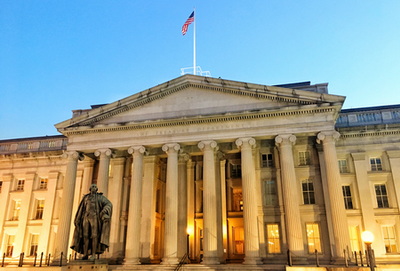
U.S. Treasury Department
US Treasury Department in Washington

Final Treasury regulations released on July 28 create a detailed legal framework to implement the new limitation on the deductibility of business interest enacted in the Tax Cuts and Jobs Act of 2017.  The underlying provision—section 163(j) —caps the deduction for business interest expense at no more than 30 percent of modified gross income but allows real estate businesses to elect out of the regime altogether. 

  • The deductibility of business interest expense was front and center in the 2017 tax reform debate.  Elimination of the deduction was viewed by some as a necessary “pay-for” to help offset the cost of immediately expensing capital investment and reducing the corporate rate from 35 to 21 percent.  The Roundtable worked to preserve the full deduction, noting that it was necessary to accurately measure income and critical to the normal financing of real estate investment and activities.  (Roundtable President & CEO Jeffrey DeBoer Statement for the Record before Senate Finance Committee, video clips and full hearing on September 19, 2017)
  • During the rulemaking process, The Roundtable focused on ensuring that the regulations would not restrict unnecessarily the ability of a real property trade or business (RPTOB) to elect out of the provisions of the new limit (section 163(j)).  Previously proposed regulations clarified, as requested, that interest on debt incurred by a partner to fund an investment in a partnership engaged in a real estate business would be allocable to that business and therefore qualify for the RPTOB election.  The proposed regulations also clarified that an RPTOB election by a partnership did not bind a partner with respect to any activity conducted by the partner outside the partnership.
  • The 575 pages of final rules unveiled last week favorably address and resolve several outstanding issues raised in Roundtable comment letters submitted at various times during the two and a half year regulatory process.  (The Roundtable’s Interest Deductibility webpage)
  • For example, the regulations clarify that a business entity can be in a real property trade or business even if it is not in a trade or business under the general tax rules of section 162 (the provision that authorizes taxpayers to deduct ordinary and necessary expenses paid or incurred in carrying on a trade or business).  Unlike the proposed rules, the final regulations provide that a small business that is exempt from the business interest limit can still make a RPTOB election.
  • This clarification is important because individual partners in a small business may not qualify for the exemption once their interests in multiple properties are aggregated.  The final regulations favorably revise troubling language in the proposed rules that suggested the RPTOB exception was only available for trades or businesses involved in rental real estate activities.
  • Consistent with Roundtable recommendations, the Treasury guidance also includes a notice (IRS Notice 2020-59) with a proposed revenue procedure that creates a safe harbor for assisted living facilities so they can qualify for the RPTOB exception – notwithstanding their provision of other services, such as nursing and routine medical services.  Other elements of the Treasury guidance include new proposed regulations on specific issues, such as application of the rules to foreign taxpayers.

Collectively, the final regulations should provide greater certainty to real estate owners and investors that debt used to acquire, improve, and operate commercial real estate remains fully deductible for federal income tax purposes, provided the taxpayer complies with specific tax and filing requirements. 

#  #  # 

EPA Releases ENERGY STAR Guidance on Building Operations Impacted by COVID-19

The U.S. Environmental Protection Agency (EPA) announced ENERGY STAR program guidance this week to reflect changes in building operations due to the COVID-19 pandemic. The guidance was developed after EPA sought input from The Roundtable’s Sustainability Policy Committee Advisory Committee (SPAC).

  • The EPA guidance – “Has COVID-19 affected ENERGY STAR certification?” – impacts real estate industry practices regarding the web-based “Portfolio Manager” tool used by more than 450,000 properties (or nearly 45% of U.S. commercial building space) to measure, benchmark, and track energy, water, and waste management in buildings. “Portfolio Manager” is a voluntary platform at the federal level for private sector buildings although a number of state and local laws mandate its use in major markets.  
  • EPA explained that building owners and managers should update Portfolio Manager “use details” to reflect changes in occupancy and operations that may have occurred since the start of the pandemic – for both the numbers of workers in a building and the asset’s weekly operating hours. (Point #1 in EPA’s guidance)  The agency also provided practical instructions on how to update such “worker numbers” and “hours of operation” details in the Portfolio Manager tool.
  • When merged with data on a building’s actual energy consumption, these “use details” are key variables to determine a 1-100 ENERGY STAR rating that allow investors, tenants, regulators, and other audiences to assess an asset’s energy performance compared to like-kind buildings.
  • EPA staff sought input on these matters at SPAC’s “virtual meeting” on June 12, which was held in conjunction with The Roundtable’s remote Annual Meeting (Roundtable Weekly,  June 12).  SPAC members were surveyed for their recommendations about how ENERGY STAR should address changes in building operations during the pandemic. The committee’s preferred option is now reflected in EPA’s latest guidance. 
  • EPA plans to issue additional guidance (expected in September) to advise owners and managers on how to apply for ENERGY STAR certifications that may be awarded to buildings in 2020. (Point #3 in EPA’s guidance) The key clarification in this week’s announcement is that updating “use detail” data to reflect COVID-era operations is prerequisite for the ultimate ENERGY STAR “label,” which may be granted for a building that ranks “75” or higher on EPA’s scale.
  • This week’s guidance is the latest example of longstanding cooperation between the ENERGY STAR program and SPAC.  It follows collaborations to update the technical models that EPA currently uses to “score” buildings  (Roundtable Weekly, July 19, 2019). SPAC also assisted the agency with developing the “ENERGY STAR Tenant Space” program to recognize high performance design and construction of leased office.  (Roundtable Weekly, June 15, 2018) 
  • In related news, EPA opened its process for 2021 ENERGY STAR awards this week.  Applications must be submitted by December 9, 2020 and can be downloaded here.

SPAC is led by Chairman Anthony E. Malkin (Chairman, President, and CEO, Empire State Realty Trust) and Vice Chairman Daniel Egan (Senior Vice President, Energy & Sustainability, Vornado Realty Trust).

#  #  # 

Business Coalition Urges Senate to Pass Corporate Diversity Legislation

The Real Estate Roundtable and 16 other national organizations sent a letter on July 27 urging leaders of the Senate Banking Committee to advance legislation that would require public companies to report the racial, ethnic and gender composition of their boards and executive officers. (The Hill and coalition letter, July 27)

  • The act would require issuers that must register under the Securities Exchange Act of 1934 to provide data regarding diversity on corporate boards and in executive management. Such diversity reporting would occur in annual reports and proxy statements regarding election of directors filed with the Securities and Exchange Commission (SEC).
  • The bill would also require securities issuers to disclose whether it has adopted a plan or strategy to promote board- and executive-level racial, ethnic, gender, and veteran-status diversity.
  • The coalition letter addressed to the Senate Committee’s Chairman Mike Crapo (R-ID) and Ranking Member Sherrod Brown (D-OH), cites a 2019 PwC Annual Corporate Directors Survey to show the benefits of diversity.  The survey results show that 94% of participating board directors indicated that a diverse board brings unique perspectives; 87% responded that diversity enhances board performance; and 84% responded that it improves relationships with investors.
  • Presumptive Democratic Presidential Nominee Joe Biden this week presented a series of proposals intended to address racial economic inequality. Biden said that as president, his future appointments to the Federal Reserve would be “diverse nominees for the Board of Governors and the regional Federal Reserve Banks.” (The Wall Street Journal, and The New York Times, July 29)
  • Last week the Biden campaign indicated its desire to eliminate several current law tax provisions, including like-kind exchanges under Section 1031, to pay for a 10-year, $775 billion “caregivers” proposal.

Roundtable President and CEO Jeffrey DeBoer responded, “The long-standing like-kind exchange tax law has encouraged investment in affordable housing and other properties, generated state and local tax revenue, and spurred new jobs through labor-intensive property improvement. As a result, exchanges allow cash-strapped minority, women, and veteran-owned businesses to grow their business by temporarily deferring tax on the reinvested proceeds.”  (Entire Roundtable Statement on like-kind exchanges, July 21 and Roundtable Weekly, July 24).

#  #  #

Industry Trade Group Leaders Focus on Prospects for Stimulus Legislation and CRE Impact

Real Estate Roundtable President and CEO Jeffrey DeBoer joined other real estate industry trade group leaders in a July 29 Walker & Dunlop webinar “All Eyes On Washington: What will the next stimulus bill do for CRE?” moderated by Roundtable member and W&D Chairman and Chief Executive Officer Willy Walker

  • Mortgage Bankers Association CEO and President Bob Broeksmit and National Multifamily Housing Council President Doug Bibby also participated in this “Walker Webcast” to discuss the next $1 trillion+ stimulus bill under consderation on Capitol Hill and its impact on the multifamily, mortgage, and commercial real estate industries.  (Watch video on The Roundtable’s YouTube channel)
  • The three trade group leaders agreed that consensus on a new stimulus bill will stretch into August and predicted a new bill would be passed by Aug. 8 or Aug. 15. Bibby and Broeksmit predicted the legislative package cost would total $1.75 trillion, while DeBoer estimated $2 trillion.  (BisNow, July 29 and ConnectCRE, July 30)
  • DeBoer noted that the real question in determining whether additional funding for state governments, small businesses, and others will be approved is how previous funds allocated by Congress during the pandemic are being allocated.  DeBoer asked, “Are they going to solve COVID-related problems, or solve issues that were pre-existing?”
  • Broeksmit added, “An imperfect compromise is going to emerge, and that’s all right because we need to get the funding out quickly. We don’t have time to get it perfect.”
  • Walker also focused on the federal eviction moratorium, observing that it negatively affects the relationship between landlords and their tenants as they attempt to work through financial challenges of paying rent.
  • “When you have an eviction moratorium, there is a propensity for people to go dark on you,” Walker said. “The owner and tenants stop working with each other. You lose the ability to maintain your community.”
  • Bibby stated that an eviction moratorium may seem appealing but it creates a cycle of economic disinvestment and puts the livelihoods of tens of thousands of owners across the country at risk.
  • DeBoer emphasized that a robust federal rental assistance program to help the unemployed as well as struggling small business is necessary to preserve the “rental obligation chain” that underpins the economy.  He also said The Roundtable supports additional funding for the Paycheck Protection Program (PPP), which has distributed approximately $520 billion to an estimated 5 million businesses. 
  • DeBoer added that businesses should receive assistance from the government on “new and unusual” expenses related to safety and cleaning protocols.

“We have to think of this period as building a bridge to a time when the economy works again, when businesses are open and when people are employed and can stand on their own two feet again,” said DeBoer. “But we need the bridge to get there, and it needs to be strong enough and long enough.”  (REBusiness Online, July 31 and Walker Webcast video)

#  #  # 

Coalition Urges Congress to Help Businesses with COVID-Related Cleaning, Safety, and Prevention Expenses

A broad business coalition urged Congress on July 16 to include assistance in the next pandemic response package to help businesses offset extra expenses related to heightened cleanliness and safety of work environments in the COVID-19 era. (Coalition letter, July 16)

  • The Worldwide Cleaning Industry Association (ISSA) is leading the coalition, which includes The Real Estate Roundtable, Building Owners and Managers Association (BOMA) International, the American Hotel & Lodging Association, International Council of Shopping Centers, and over two dozen additional national trade groups.
  • ISSA estimates that cleaning costs are 50% or higher compared to pre-pandemic practices due to increased use of disinfecting products, equipment upgrades, and greater frequency of cleaning activities. ISSA estimates a 3,000 square retail space will cost an additional $56,160 in cleaning-related costs – on top of personal protective equipment (PPE), testing, employee training, and other COVID-19-related expenses.
  • Several bipartisan bills pending in the House and Senate would establish a tax credit to help businesses and nonprofits cover more expensive safety and cleaning practices. Hill legislators are considering whether such incentives should be included in the next phase of pandemic relief legislation that may pass Congress before the August recess. 

Various “re-opening tax credit” bills introduced to date differ in terms of the size of the incentive they would offer, and the kinds of safety-related expenses they would cover. (The Hill, July 16) These bills include:

  • The Clean Start: Back to Work Tax Credit Act (H.R. 7079) introduced by Reps. Darin LaHood (R-IL) and Stephanie Murphy (D-FL), which would provide a 50% tax credit for the costs of qualified cleaning expenses including third-party janitorial services, cleaning products, PPE, and related tools and machinery. The bill proposes a credit maximum of $250,000 per business entity, up to $25,000 per location.
  • The Healthy Workplaces Tax Credit Act introduced by Rep. Tom Rice (R-SC), would offer a refundable tax credit for 50% of business’s costs incurred for COVID-19 testing, PPE, cleaning and disinfecting, and reconfiguring work spaces to adhere to social distancing guidelines. The credit would be limited to $1,000 per employee for a business’s first 500 employees; $750 per employee for the next 500 employees; and $500 per employee for each subsequent employee. 
  • Similar measures include a small business “workplace safety” tax credit (S. 4178) introduced by Sens. Kyrsten Sinema (D-AZ) and Kevin Cramer (R-ND); the “Safe Re-Opening Tax Credit” (H.R. 7222) introduced by Rep. Jimmy Panetta (D-CA); and the “Small Business PPE Tax Credit Act” (H.R. 7216) introduced by Rep. Brenda Lawrence (D-MI).

The ISSA-spearheaded coalition explained in its letter that any “re-opening tax credit” should be targeted, temporary, capped, and available to business entities and non-profits regardless of size. The letter noted that such a tax credit would help protect against further COVID-19 infections and other respiratory conditions such as asthma, MRSA and influenza. 

A COVID-induced healthy workplace tax credit would be “critical to the safety of Americans as businesses re-open and workers return to their jobs. The proposal will also prepare workplaces to better deal with future emerging pathogens that we could be confronted with in the future,” the coalition letter concludes.  

#  #  #

RER – COVID-19 Economic Crisis Alerts

July 30, 2020 – The Real Estate Roundtable COVID-19 Economic Crisis Alert – Walker Webcast – All Eyes On Washington: What will the next stimulus bill do for CRE?

July 24, 2020 – The Real Estate Roundtable COVID-19 Economic Crisis Alert – Interview with Rep. Darin LaHood (R-IL)

July 10, 2020 – The Real Estate Roundtable COVID-19 Economic Crisis Alert – Public Policy in the Age of COVID: Shaping the CRE Recovery 

May 14, 2020 – The Real Estate Roundtable COVID-19 Economic Crisis Alert – National Economic Policy Responses to the COVID-19 Crisis

May 6, 2020 – The Real Estate Roundtable COVID-19 Economic Crisis Alert – Interview with Dr. Joseph Gardner Allen, Assistant Professor with the Harvard T.H. Chan School of Public Health

May 5, 2020 – The Real Estate Roundtable COVID-19 Economic Crisis Alert – “The Policy Response to COVID-19: Implications for Real Estate” – hosted by the Pension Real Estate Association (PREA)

May 1, 2020 – The Real Estate Roundtable COVID-19 Economic Crisis Alert – Unpacking the Federal Stimulus – Bisnow Webinar

April 21, 2020 – The Real Estate Roundtable COVID-19 Economic Crisis Alert

April 10, 2020 – The Real Estate Roundtable COVID-19 Economic Crisis Alert 

April 3, 2020 – The Real Estate Roundtable’s COVID-19 Economic Crisis Alert