EPA Recognizes Roundtable Members with โ€œENERGY STAR for Tenantsโ€ Award for High Performance Office Spaces

The Environmental Protection Agency (EPA) on June 12 announced the first-ever federal government awards for energy efficiency in leased office spaces. Many Roundtable members and their tenants are recognized among the award’s inaugural winners.  (EPA list of tenants and landlords

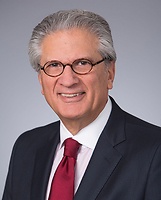
SPAC Chairman Tony Malkin (Chairman and CEO,  Empire State Realty Trust ) stated, “This is a great example of the Roundtable at work. We took best industry practice, formulated policy around it, and worked with staff and members of Congress to develop legislation for the good of the economy, our industry and the environment.”

  • Originally envisioned by The Roundtable’s Sustainability Policy Advisory Committee (SPAC), EPA’s ENERGY STAR for Tenants program has been long-supported by the industry.  After the enactment of the 2015 “Tenant Star” law, EPA was tasked with piloting the branding program for energy-efficient tenant spaces that met certain design criteria.  (Roundtable Weekly, June 30, 2017) 
  • SPAC Chairman Tony Malkin (Chairman and CEO, Empire State Realty Trust) stated, “This is a great example of the Roundtable at work.  We took best industry practice, formulated policy around it, and worked with staff and members of Congress to develop legislation for the good of the economy, our industry and the environment.  At the same time, our Sustainability committee worked with the Department of Energy and the EPA within their structures, rules, and regulations for years to create a new label for energy efficient tenant spaces, to complement existing programs that award whole-building efficiency.  This voluntary program will lead to a significant increase in cost-saving leased spaces as companies vie for EPA’s tenant label in the future.” 
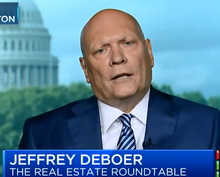
  • Roundtable President and CEO Jeffrey DeBoer noted the national value of the new federal recognition program. “Without any tax credit or subsidy, EPA’s new seal of approval can motivate tenants and landlords across the country to demonstrate their commitment to energy efficiency in leased commercial building space.  As EPA’s new office space program expands, CRE leaders  will have more opportunities to distinguish their buildings for investors, tenants, and the Millennial workforce who place a premium on sustainable assets.”  
  • To earn the label, applicants must verify how they drive energy efficiency in five key areas in the design and construction of high performance leased spaces.     (EPA Documents and Tools for Tenants
  • As funding for the federal ENERGY STAR program also affects the new EPA Charter Tenant program, a Senate Appropriations subcommittee on Tuesday affirmed the Trump Administration’s recommendation to continue ENERGY STAR program funding for FY2019 (starting October 1, 2018).  For the agency’s programs overall, the Senate panel recommended that appropriations be maintained at the status quo for the next fiscal year.  (The Hill, June 12) 

The 2018 ENERGY STAR Charter Tenants program was a focus during today’s SPAC’s meeting in Washington, which included presentations from EPA and other key federal agency officials.

“Building Success” Reports on The Roundtableโ€™s FY2018 Policy Activities in Tax, Capital and Credit, Homeland Security, Energy and Infrastructure Issue Areas

The Real Estate Roundtable has released its FY2018 Annual Report โ€œBuilding Success,โ€ which reports on the organizationโ€™s policy activities from July 1, 2017 to June 30, 2018 and outlines its policy priorities for the coming year.

  • “We are extremely proud of our success this past year and equally eager to build on its foundation as we move into our new fiscal year. As always, we will continue to inform lawmakers with consistent and credible policy analysis that encourages economic growth, job creation, and a healthy national real estate market,โ€ said Roundtable President and CEO Jeffrey D. DeBoer.
  • Immediate Past Roundtable Chair (2015-2018) William C. Rudin (Co-Chairman and CEO,ย Rudin Management Company, Inc.) noted the continued efforts of promoting greater diversity throughout the organization and his efforts during his tenure as Chair. โ€œWe have made measurable progress at identifying and recruiting more highly qualified women and people of color to join, and participate at The Roundtable. With greater membership diversity, we ensure that our decisions are better informed and more sustainable.โ€

The Report includes summaries showing continued progress on the policy front, including:

  • In late 2017, the most comprehensive tax reform in over 30 years, theย Tax Cuts and Jobs Act, was signed into law.ย  Due in large part to the Roundtableโ€™s advocacy efforts,ย TCJAย preserved interest deductibility; retained like-kind exchanges for real estate; and maintained depreciation and cost recovery rules. The Roundtable and its Tax Policy Advisory Committee is continuing its efforts with Treasury and the Administration to ensure appropriate implementation of the comprehensive law.
  • Congress passed financial deregulation legislation โ€“ย Economic Growth, Regulatory Relief, and Consumer Protection Actย (S.2155) โ€“ that included important reforms to the Basel III High Volatility Commercial Real Estate (HVCRE), which promote sustainable development and lending, and lowers financial barriers for job-creating projects.
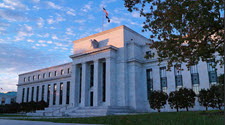
  • The Federal Reserve and four other federal agencies approved a proposal to simplify and ease the Volcker Rule.ย  The proposal, known as Volcker 2.0, seeks to simplify regulatory requirements by giving banks new quantitative โ€œbright-line rulesโ€ to provide more clarity on what activities are prohibited and permitted.
  • As a long-time supporter of the ENERGY STAR Program, The Roundtable was a key player in the creation and ongoing development of the EPAโ€™s new charter tenant program โ€œENERGY STAR for Tenantsโ€ labeling platform of high-performance leased office spaces.
  • Anticipating infrastructure as a policy issue for possible compromise after the upcoming midterm elections, The Roundtable offered comments to the Administration and Congressional committees on real estateโ€™s role in creating public-private partnerships to help repair the roads, transit, broadband, power grid and other systems needed to make our communities safe, productive and competitive.

Newly elected Roundtable Chair Debra A. Cafaro (Chairman and Chief Executive Officer, Ventas, Inc.) emphasized that The Roundtableโ€™s policy agenda remains full of key issues that require our engagement as a non-partisan industry voice. โ€œAbove all, we must uphold our independent and respected position on Capitol Hill, emphasizing our optimism about the economy and the positive contributions the real estate industry provides as a job creator and as a cornerstone for retirement savings. We are committed to proactively advancing policies that promote a healthy balance of capital and people flows to create sustainable economic growth that is good for our members, our industry and our national economy,โ€ said Cafaro.

The publication includes a listing of all Roundtable members, as well as the FY2019 Board of Directors and Committee Leadership, and has been mailed to all Roundtable members, congressional offices on Capitol Hill, and is available online.

Strong Commercial Real Estate Conditions Persist Despite Concerns Over Interest Rates and Trade Tariffs

Near-term optimism about commercial real estate market conditions are tempered by concerns over expected increases in interest rates and uncertainty about the effects of international trade tariffs, according to several recent economic and industry reports.  

The Federal Reserve is expected next week to raise its target interest rate above the rate of inflation for the first time in a decade.

  • The Federal Reserve is expected next week to raise its target interest rate above the rate of inflation for the first time in a decade. The Federal Open Market Committee in March raised the fed funds rate a quarter point to 1.75 percent, signaled rates will climb to 2 percent in 2018, and projected three additional hikes for 2019. (Reuters, June 7, “Fed Clambers Back to Positive Real Rates, Now Debate is When to Stop” and Politico, March 21) 
  • Interest rates and economic uncertainty are top concerns for the commercial real estate industry, despite near-term optimism from improved economic conditions, changes in the tax code and the promise of a loosening regulatory environment. ( 2018 Akerman U.S. Real Estate Sector Report, June 5) 
  • Nareit reports that the U.S. real estate market is likely to continue to grow for the next three to five years as current policies such as tax reform benefit the industry, according to a panel at a Capital Markets Update during REITweek: 2018 Investor Conference. (Nareit, June 6) 
  • The Fed’s latest “Beige Book” of current economic conditions shows positive growth and widespread concerns about trade tariffs.  The report also notes that steel and aluminum prices rose, “sometimes dramatically” due to recent duties imposed by the Trump Administration. The Beige Book is one of the first official reports showing the economic impact of the new tariffs on domestic business. (Roundtable Weekly, March 9 and  The Wall Street Journal, April 18)  
  • Commenting on these concerns, Roundtable President and CEO Jeffrey DeBoer noted the findings of The Real Estate Roundtable’s Q2 2018 Economic Sentiment Index: “There are fears about political uncertainty, trade wars, and interest rate increases, which are having some impact and creating a manageable amount of uncertainty for the markets for the remainder of 2018 and looking ahead to 2019.”  (Roundtable News Release, May 10) 

Economic policies that support economic growth will be a focus of discussion during next week’s 2018 Roundtable Annual Meeting in Washington, DC, which will feature special guests such as House Majority Leader Kevin McCarthy (R-CA), House Ways and Means Chairman Kevin Brady (R-TX) and Senate Minority Leader Chuck Schumer (D-NY).

Five Regulatory Agencies Clear Path for Volcker Rule Changes

The Securities and Exchange Commission (SEC) this week became the fifth and final regulatory agency to advance possible reforms to the Volcker Rule, which aims to restrict proprietary trading practices at banks. The Federal Reserve became the first agency to move a proposal to simplify and ease the Volcker Rule forward last week, followed by the Federal Deposit Insurance Corp., the Office of the Comptroller of the Currency and the Commodity Futures Trading Commission.  If adopted, this proposed revision is expected to enhance liquidity to commercial mortgage-backed securities (CMBS) markets.  (Roundtable Weekly, June 1)

SEC Chairman Jay Clayton

  • SEC Chairman Jay Clayton said, “The proposal seeks to simplify and tailor the 2013 final rule. I strongly encourage all interested parties to comment on the many questions proposed in the release and I look forward to commentator input about implementing the Volcker Rule in a more effective way.”
  • In a memorandum to the Fed’s Board of Governors, Fed Vice Chairman for Supervision Randall Quarles details the changes in the proposal.
  • U.S. Treasury Secretary Steven Mnuchin on June 5 commended the efforts of the Agencies.  Mnuchin stated, “The Treasury Department strongly supports changes aimed at better tailoring the application of the rule, preserving liquidity during periods of stress, decreasing unintended compliance burdens, and encouraging capital formation.  The five agencies responsible for regulation of the Volcker Rule coming together on this notice is an important first step. These efforts are building on the relief for Main Street borrowers and lenders included in the Economic Growth, Regulatory Relief, and Consumer Protection Act recently signed into law by President Trump.”
  • In a January 2012 comment letter to the Federal Reserve and other financial regulatory agencies, The Roundtable raised concerns about the unintended consequences of the Volcker Rule that could “negatively impact liquidity and capital formation in commercial real estate.”

The Volcker rule reform proposal will be a topic of discussion at next week’s Real Estate Capital Policy Advisory Committee (RECPAC) held in conjunction with The Roundtable’s Annual Meeting in Washington. The Roundtable plans to submit comments to the Agencies before a final rule is expected to be in effect by January 1, 2019.

Trump Administration Imposes Tariffs on Imported Steel and Aluminum from European Union, Canada and Mexico

The Trump Administration today imposed a 25 percent tariff on steel imports and a 10 percent tariff on aluminum imports from the European Union, Canada and Mexico, sparking rebukes from congressional Republicans and foreign policymakers, who have threatened retaliatory measures.

The Trump Administration imposed a 25 percent tariff on steel imports and a 10 percent tariff on aluminum imports from the European Union, Canada and Mexico, sparking rebukes from congressional Republicans and foreign policymakers, who have threatened retaliatory measures.

  • When the steel and aluminum tariffs were initially proposed in March, an exemption was granted until June 1 for certain trade partners, including Canada, Mexico and the EU – yet negotiations about the Administration’s domestic production concerns were not resolved by today’s deadline. 
  • Roundtable President and CEO Jeffrey DeBoer noted the commercial real estate industry’s concerns, stating “For every job in the steel production industry, there are more than 50 jobs in the US construction industry (140,000 vs. 7-10 million). New tariffs on construction materials like steel could have the unfortunate, unintended side effect of raising construction costs and reducing jobs in real estate development.” (Roundtable Weekly, March 9) 
  • According to the U.S. Department of Commerce, the U.S. imported 34.6 million metric tons of steel last year, a 15% increase from 2016.  The International Trade Administration reports the largest supplier of steel to the U.S. is Canada, accounting for 77% – while Mexican steel accounts for about 9% of U.S. imports. USA Today reports that the majority of that metal is used in construction, auto manufacturing and appliances. (USA Today, May 31) 
  • House Ways and Means Chairman Kevin Brady (R-TX) today stated, “These tariffs are hitting the wrong target. When it comes to unfairly traded steel and aluminum, Mexico, Canada, and Europe are not the problem-China is. This action puts American workers and families at risk, whose jobs depend on fairly traded products from these important trading partners,” Brady said. 
  • Sen. Mike Lee (R-UT) said he would introduce legislation next week to curtail the president’s powers to impose tariffs for reasons of national security. (The Hill, June 1) 
  • “You don’t treat allies the same way you treat opponents,” Sen. Ben Sasse (R-NE) stated.  “Blanket protectionism is a big part of why we had a Great Depression. ‘Make America Great Again’ shouldn’t mean ‘Make America 1929 Again.'”  

In the Federal Reserve’s latest “Beige Book” about economic conditions, positive growth is tempered by widespread concerns about trade tariffs. The report summary also notes that steel and aluminum prices rose, “sometimes dramatically” due to recent duties imposed by the Trump Administration. (Roundtable Weekly, March 9)  The Beige Book is one of the first official reports showing the economic impact of the new tariffs on domestic business. (Wall Street Journal, April 18)

The Fed and FCIC Vote to Simplify and Ease Volcker Rule

A proposal to simplify and ease the Volcker Rule, which restricts proprietary trading practices at banks and is enforced by five separate federal agencies, was unanimously approved this week by both the Federal Reserve and Federal Deposit Insurance Corp. (FDIC). (Roundtable Weekly, May 25)

The Fed’s proposal is part of a broader regulatory rollback.  (“ The Volcker Rule’s Proposed Revision Could Add Liquidity To CMBS ” – GlobeSt, May 31)

  • The nearly 400-page proposal, known as Volcker 2.0, would seek to simplify regulatory requirements by giving banks new quantitative “bright-line rules” to provide more clarity on what activities are prohibited and permitted. The Fed proposal is part of a broader regulatory rollback, which includes the recently enacted Economic Growth, Regulatory Relief, and Consumer Protection Act (S. 2155) that included Roundtable-supported revisions to the Basel III High Volatility Commerical Real Estate (HVCRE) Rule
  • For CRE, the Volcker Rule has put a damper on secondary market trading of commercial mortgage backed securities (CMBS) by limiting the ability of banks to hold inventories of secondary market securities, thereby diminishing market liquidity.  In addition to restricting banks from buying certain securities for their own accounts (so-called proprietary trading), it also has prohibited them from investing in hedge or private-equity funds – including real estate.  (“ The Volcker Rule’s Proposed Revision Could Add Liquidity To CMBS ”  – GlobeSt , May 31)
  • Real Estate Roundtable President and CEO Jeffrey DeBoer commented on the Volker Rule proposal. “This positive action will benefit liquidity and the commercial mortgage backed securities market, potentially increasing investment in job-creating construction activities,” DeBoer said.
  • One of the most significant changes in the Volcker 2.0 proposal would give banks more latitude by making it easier for them to show they are trading to help clients — a permitted activity known as market making  — rather than proprietary trading .
  • In a memorandum to the Fed’s Board of Governors, Fed Vice Chairman for Supervision Randall Quarles details the changes in the proposal .
  • In a January 2012 comment letter  to the Federal Reserve and other financial regulatory agencies, the Roundtable raised concerns about the unintended consequences of the Volcker Rule that could “negatively impact liquidity and capital formation in commercial real estate.”

The Fed and its regulatory partners are seeking public comment on its Volcker rule reform proposals. The Roundtable plans to work with its Real Estate Capital Policy Advisory Committee (RECPAC) to submit comments before a final rule is expected to be in effect by January 1, 2019.

Senate and House Committees Approve Bills Addressing Foreign Investment Risk; Includes Language Affecting Real Estate

Separate bills that would overhaul the process for reviewing foreign investment risk – including a purchase or lease by a foreign party of domestic properties located close to sensitive U.S. facilities – received unanimous approval Wednesday by the Senate Banking and House Financial Services Committees.  (Lexology, May 23)

Real estate provisions in  S. 2098  appear on pages 7 through 9.

  • The committees’ revised versions of the Foreign Investment Risk Review Modernization Act (FIRRMA) – S. 2098 and HR 5841 – seek to modernize and strengthen how the Committee on Foreign Investment in the United States (CFIUS) reviews acquisitions, mergers, and other foreign investments in the United States for national security risks.  Both bills would expand the list of covered transactions to include some foreign purchases and leases of real estate near military and other strategic facilities. (Real estate provisions in S. 2098 appear on pages 7 through 9.)
  • As a result of industry discussions with Senate and Treasury staff, the new legislative drafts include the addition of language designed to exempt real estate in ‘urbanized areas’ from the criteria of a covered transaction.  The Census defines an urbanized area as one comprising more than 50,000 people. 

FIRRMA may be ready for floor consideration in the House and Senate before the August congressional recess. The Trump Administration has shown support for reforming FIRRMA to strengthen CFIUS’ oversight. 

President Trump Signs Dodd-Frank Reform Bill With HVCRE Revisions

Revisions to the 2010 Dodd-Frank Act – including significant Roundtable-supported reforms to the Basel III High Volatility Commercial Real Estate (HVCRE) Rule – were signed into law by President Trump yesterday, two days after the House passed The Economic Growth, Regulatory Relief, and Consumer Protection Act (S. 2155). 

Revisions to the 2010 Dodd-Frank Act – including significant Roundtable-supported reforms to the Basel III High Volatility Commercial Real Estate (HVCRE) Rule – were signed into law by President Trump yesterday, two days after the House passed The Economic Growth, Regulatory Relief, and Consumer Protection Act (S. 2155).

  • S. 2155 previously passed the Senate in March with the same clarifications and reforms as the House bill.  The HVCRE Rule created needless confusion and increased borrowing costs in the industry for CRE Acquisition, Development and Construction (ADC) lending.
  • Senate Banking Committee Chairman Mike Crapo (R-ID) commented, “This step toward right-sizing regulation will allow local banks and credit unions to focus more on lending, in turn propelling economic growth and creating jobs on Main Street and in our communities.” (Sen. Mike Crapo News Release, May 22)
  • Details of the new measure addresses key deficiencies in current and proposed regulations.  Real Estate Roundtable HVCRE Working Group Co-Chair Joseph Forte (Sullivan and Worcester) noted, “This legislative action is a welcome solution to a poorly designed regulatory capital scheme that has not matched with risk. This caused an unnecessary cost burden to all commercial banks and their real estate development customers.  In addition, it restores to borrowers the ability to offer appreciated land value as equity to banks, when validated through appraisal practices established in earlier statutes.”  (Passage of Dodd-Frank Reform Encourages Investment, Economic Growth in Local Communities –Roundtable News Release, May 22) 
  • The Roundtable and twelve other real estate organizations detailed the industry’s HVCRE policy positions and urged inclusion of the language in broader Dodd-Frank reform legislation (S. 2155). (Roundtable HVCRE Comment Letter, March 2)
  • “The Reform Bill, in provisions that are now effective, overrides certain highly conservative provisions in both the federal banking agencies’ (Banking Agencies) Basel III capital rule and their interpretations of it.” ( Dodd Frank 2.0: Reforming U.S. HVCRE Capital TreatmentGibson Dunn, May 24)

Since 2015, The Roundtable’s HVCRE Working Group and industry coalition partners have played a key role in advancing specific reforms to the HVCRE Rule.  During next month’s Real Estate Roundtable Annual Meeting, HVCRE will be a focus of discussion, with more specific details offered during the Real Estate Capital Policy Advisory Committee (RECPAC) meeting on June 14.

Fed to Consider Changes to Volcker Rule

The Federal Reserve announced this week that it will consider a proposal to modify the “Volcker Rule” at a May 30 meeting of its board.  As a provision of the 2010 Dodd-Frank Act that puts restrictions on proprietary trading practices at banks, enforcement of the Volcker Rule is currently shared by five separate federal agencies – The Fed, Federal Deposit Insurance Corporation (FDIC), Office of the Comptroller of the Currency (OCC), Securities and Exchange Commission (SEC) and Commodity Futures Trading Commission (CFTC).  (Fed Statement, May 23)

The Federal Reserve announced this week that it will consider a proposal to modify the “Volcker Rule” at a May 30 meeting of its board.

  • “The Fed is the first regulator to set a date for discussing the proposal known as ‘Volcker 2.0.’ Four other agencies are also expected to adopt modifications to the rule. The changes will give large Wall Street banks more trading freedom, as regulators tweak restrictions on market making, hedging and other activities..” (The Wall Street Journal, May 25)
  • Fed Vice Chairman for Supervision Randal Quarles in a March speech said, “It should be clearer and more transparent what is subject to the Volcker Rule’s implementing regulation and what is not. The definition of key terms like ‘proprietary trading’ and ‘covered fund’ should be as simple and clear as possible.”  (American Banker, May 23)
  • House policymakers are considering adding to  must-pass budget legislation a measure that would put the Fed in charge of regulating the Volcker Rule.  The measure, sponsored by Rep. French Hill (R-AR), passed the House in April but has faces an uncertain fate in the Senate.  (U.S. House Considers Adding Volcker Rule Shift to Budget BillBloomberg, May 21)

The Dodd-Frank reform bill signed into law yesterday by President Trump exempts banks with less than $10 billion in assets from the Volcker Rule (named for former Fed Chairman Paul Volcker).

Passage of Dodd-Frank Reform Encourages Investment, Economic Growth in Local Communities

Roundtable-Supported Measure Will Promote Job-Creating Projects by Clarifying CRE Acquisition, Development and Construction (ADC) Regulations

(WASHINGTON, D.C.) — Financial deregulation legislation (S. 2155 ) passed today by the House of Representatives (258-159) includes significant reforms to the Basel III High Volatility Commercial Real Estate (HVCRE) Rule that will lower financing barriers for job-creating projects that bring positive investment to local communities throughout the country.

Today’s Dodd-Frank reform legislation, previously passed by the Senate in March, is expected to be signed by President Trump this week. Real Estate Roundtable President and CEO Jeffrey DeBoer noted the years of legislative effort to pass the Economic Growth, Regulatory Relief, and Consumer Protection Act.  “The HVCRE reforms included in this bill will help ensure that important real estate construction activities are funded, which is positive for local job creation and economic growth,” DeBoer said.

He added, “The Roundtable recognizes the diligent efforts of policymakers who worked to eliminate the needless regulatory confusion and increased borrowing costs that impeded Acquisition, Development and Construction (ADC) lending. We recognize the dedication of congressional leadership in the Senate and House, including Senate Banking Committee Chairman Mike Crapo (R-ID) and House Financial Services Committee Chairman Jeb Hensarling (R-TX), for their work to pass S. 2155 – and we look forward to President Trump’s signature on this important legislation,” DeBoer said.

The bipartisan HVCRE measure originally was co-sponsored by House Financial Services Committee members Robert Pittenger (R-NC) and David Scott (D-GA) as the Clarifying Commercial Real Estate Loans bill (H.R. 2148) – and passed the House by voice vote in November of last year.  The Senate Banking Committee then took up an identical HVCRE bill (S. 2405) co-sponsored by Senators Tom Cotton (R-AR) and Doug Jones (D-AL), which passed in March as part of the Senate’s broader Dodd-Frank reform legislation (S. 2155).   Today’s passage by the House of S. 2155 / H.R. ?? includes the same language and clarifications to the Basel III High Volatility Commercial Real Estate (HVCRE) Rule.

The new measure addresses key deficiencies in the agencies’ current and proposed regulations by providing the following modifications and clarifications to either an HVCRE or High Volatility Acquisition, Development or Construction (HVADC) loan:

  • Commercial borrowers will be able to satisfy the 15% equity requirement through the appreciated value of contributed land/property – versus the cost basis under the current rule.  
  • A new exemption would be added to the HVCRE rule covering acquisition/refinancing loans for performing income producing properties.   It clarifies that loans made to acquire existing property with rental income and/or do cosmetic upgrades and other improvements don’t trigger the capital penalty.
  • Allows borrowers to use internally generated capital in the project and, once the development/construction risk period has passed, outside the project, rather than forcing them to refinance the loan (possibly away from the original lender).
  • All ADC loans made prior to January 2015 would be grandfathered and do not have to satisfy current HVCRE exemption criteria.
  • Banks would able to withdraw HVCRE status prior to the end of an ADC loan’s term.

The Real Estate Roundtable’s HVCRE Working Group, co-chaired by Sullivan and Worcester Partner Joseph Forte, and PNC Real Estate Senior Vice President William Lashbrook, played a key role in advancing these reforms since 2015. 

Forte said, “This legislative action is a welcome solution to a poorly designed regulatory capital scheme that was not matched with risk. This caused an unnecessary cost burden to all commercial banks and their real estate development customers.  In addition, it restores to borrowers the ability to offer appreciated land value as equity to banks, when validated through appraisal practices established in earlier statutes.  In clearly defining HVCRE exposures, this legislative solution halts the regulatory experimentation in creating pools of commercial real estate development risk, including last year’s HVADC trial balloon of a use of proceeds test on unsecured transactions, requiring capital support where it did not exist. ”  

The Roundtable and twelve other real estate organizations on March 2, 2018 sent a comment letter detailing the industry’s HVCRE policy positions and urging inclusion of the HVCRE reforms in a broader Dodd-Frank reform package (S. 2155).