Housing Coalition Strongly Supports Amended 21st Century ROAD to Housing Act

11 National Organizations Send Letter to Congressional Leadership Calling for Swift Passage of Revised Legislation

Today, the undersigned organizations representing the nation’s rental housing providers and tens of millions of residents sent a letter to Congressional leadership signaling their strong support for the revised 21st Century ROAD to Housing Act.

Crucially, the revised bill preserves Build-to-Rent (BTR) housing, thereby safeguarding the development of hundreds of thousands of rental homes and benefiting the individuals and families who are building their lives in those homes. Professional housing providers and the sources of capital that support them are an important resource for Americans who need more housing options. This legislation will help preserve flexible housing options for renters, ease affordability challenges and provide more opportunity for households on the path toward homeownership.

Housing affordability has never been as critical an issue for American voters, and we stand ready to work with policymakers to ensure the final bill advances the goal of lowering costs while providing greater housing choice in communities across the nation.

We thank both the House and the Senate for their leadership on this issue and now call on Congress to pass this bipartisan bill quickly and deliver it to the President for his signature.

Signatories Include:
Affordable Housing Tax Credit Coalition
Leading Builders of America
Mortgage Bankers Association (MBA)
National Apartment Association (NAA)
National Association of Home Builders (NAHB)
National Housing Conference (NHC)
National Leased Housing Association (NLHA)
National Multifamily Housing Council (NMHC)
National Rental Home Council (NRHC)
Nareit
Real Estate Roundtable (RER)

The Real Estate Roundtable Supports Amended Bipartisan Housing Package to Increase Supply and Improve Affordability

(WASHINGTON, D.C.) — The Real Estate Roundtable (RER) commends House leaders for amending the 21st Century ROAD to Housing Act to advance a stronger bipartisan housing package that improves affordability, removes regulatory barriers, and preserves the capital investment needed to build more homes.

The revised bill makes significant improvements to provisions affecting build-to-rent housing and institutional investment in the single-family market, including removing a forced-disposition requirement that would have raised serious constitutional concerns, chilled investment in new rental housing, prevented the construction of thousands of homes, and worsened supply constraints in markets across the country.

“The housing crisis cannot be solved without building more affordable homes of every type, in every market and for every stage of life — including rental housing, workforce housing and paths to homeownership,” said Jeffrey D. DeBoer, President and CEO of The Real Estate Roundtable. “For more than a decade, the nation’s housing supply has failed to keep pace with demand. Restricting capital will only make that shortage worse. Increasing supply is the path forward.”

The package also includes broad housing supply and affordability reforms to reduce barriers to new construction, support manufactured housing innovation, streamline environmental reviews, and modernize HUD programs. It would also create grant programs for converting abandoned buildings into housing, expand community lending and strengthen tools to encourage local zoning and pro-housing policies.

RER appreciates the bipartisan work of House and Senate leaders and urges swift passage of this landmark housing bill to expand access to homeownership and rental housing opportunities nationwide.

Housing Supply Efforts Continue as ROAD Act Path Remains Uncertain

The path forward for the 21st Century ROAD to Housing Act remains uncertain as House Republican leaders, the White House, and key committee leaders continue working through possible changes to the Senate-passed housing package. (Punchbowl News, May 8)

State of Play

  • This week, House Financial Services Committee leadership continued efforts to find a path forward on a House-amended version of the Senate-passed housing bill, but a floor vote soon after lawmakers return from recess next week now appears unlikely. (PoliticoPro, May 6 | Politico, May 4)
  • House leaders are still working through legislative language and seeking White House support before moving forward. They have made clear the Senate bill cannot pass the House as written. (PoliticoPro, May 6)
  • Section 901 remains at the center of the debate, which would limit the role of large investors in the single-family housing market and impose a seven-year forced-sale requirement on certain build-to-rent homes. (Punchbowl News, May 8)
  • President Trump privately raised concerns with the Senate-passed bill, despite earlier White House support for the package, and was reportedly close to publicly objecting to the Section 901 language late last week. (Politico, May 4)
  • The developments follow President Trump’s recent comments to Rep. Zach Nunn (R-IA), a member of the House Financial Services Committee, that he wants the legislation moving forward. (Roundtable Weekly, May 1)
  • Senate Majority Leader John Thune (R-SD) said last week that the Senate housing bill is “stuck” and will likely require direct White House involvement to resolve the standoff with House GOP leadership. (Politico, May 4)

RER Advocacy

  • RER and broad housing coalitions have consistently emphasized that housing affordability is driven by supply shortages, construction costs, and mortgage rates—not institutional ownership levels—and that restricting institutional capital would only make it harder to meet the nation’s growing housing needs. (Roundtable Weekly, Jan. 9 | Jan. 16 |  Jan. 23 | Feb. 27| March 6 | March 13 | March 20 | March 27 | April 3 | April 10 | April 17 | April 24 | May 1)
  • Last week, RER and a broad housing coalition urged Congress to fix the Senate-passed 21st Century ROAD to Housing Act by removing language that would undermine build-to-rent housing construction and weaken the bill’s goal of expanding housing supply. (Letter, April 30)
  • The groups called on Congress to remove Section 901, pass a pro-supply housing package, and allow BTR developers and workers to get back to building the new rental homes the country urgently needs. (Roundtable Weekly, May 1)

HUD Eases Reviews

  • HUD announced this week that it is revising environmental review requirements in the FHA Multifamily Accelerated Processing (MAP) Guide, eliminating outdated provisions that HUD said have added costs, delays, and complexity for lenders and developers seeking FHA-insured multifamily financing. (HUD Press Release, May 4)
  • The updates are intended to reduce development costs, eliminate operational inefficiencies, and streamline requirements. (AHF, May 5)
  • HUD Secretary Scott Turner said the changes are aimed at “fixing policies that have made housing expensive and difficult to build,” adding that HUD is cutting outdated requirements, reducing costs and delays, and putting FHA financing back to work to support housing production and affordability.  (HUD Press Release, May 4)

Workforce Housing Legislation

  • The proposal is estimated to finance approximately 344,000 affordable rental homes and would allow state housing finance agencies to allocate credits through a competitive process similar to the Low-Income Housing Tax Credit (LIHTC). (Novograd, May 6)
  • The bill would also give states flexibility to transfer middle-income housing allocations to LIHTC and allow projects to combine both credits, helping make more mixed-income and affordable housing developments financially feasible.

RER and its coalition partners continue to urge Congress to advance a pro-supply housing package that expands production, preserves capital formation, and avoids policies that would make new rental homes harder to finance and build.

Housing Coalition Urges Congress to Fix BTR Provision in Senate Bill

The Real Estate Roundtable (RER) and a broad housing coalition continue to urge members of Congress to fix the Senate-passed 21st Century ROAD to Housing Act by removing language that would undermine build-to-rent (BTR) housing construction and weaken the bill’s goal of expanding housing supply. (Letter, April 30)

Coalition Letter

  • The coalition warned that despite repeated concerns from academics, economists, and rental housing leaders, Section 901 of the Senate bill includes language that would decimate BTR construction and communities at a time when the country needs more housing options—not fewer.
  • The letter states that the unconstitutional seven-year disposition requirement would effectively shut down new BTR development, unnecessarily scope in existing rental communities—including LIHTC properties—and increase housing costs for Americans. (Roundtable Weekly, April 17 | RER White Paper)
  • The groups called on Congress to remove Section 901, pass a pro-supply housing package, and allow BTR developers and workers to get back to building the new rental homes the country urgently needs. (Letter, April 30)

State of Play

  • President Trump wants to see progress on stalled housing legislation, according to Rep. Zach Nunn (R-IA), a member of the House Financial Services Committee, who spoke with the president at a White House event this week. “He wants the legislation moving forward,” Nunn said. (PoliticoPro, April 30)
  • After weeks of limited public engagement on the stalled housing bill, the White House is calling for more congressional action. Spokesperson Davis Ingle said President Trump “calls on Congress to pass further legislation” building on recent executive orders aimed at housing affordability. (PoliticoPro, April 30)
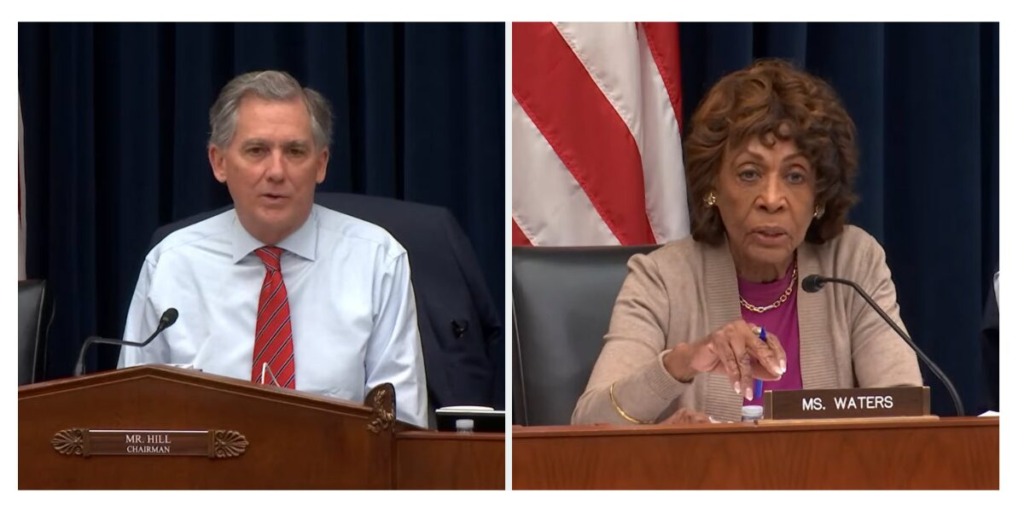
  • The House passed its housing package in February, followed by Senate passage of the 21st Century ROAD to Housing Act in March. Senate Banking leaders have urged the House to take up the Senate bill, while House Financial Services Committee leaders French Hill (R-AR) and Maxine Waters (D-CA) continue working on revisions.
  • A bipartisan House proposal could come to the floor as early as May, as lawmakers continue negotiating concerns over the Senate bill’s institutional investor restrictions and seven-year forced-sale requirement.

Market Impact

  • Recent reporting cited by the coalition letter shows the Senate language is already chilling BTR development, financing, and construction activity in markets across the country—despite the bill not yet being law. (CATO, April 29)
  • The Wall Street Journal reported that at least $3.4 billion in BTR investment, representing approximately 10,000 housing units, has already been frozen. (WSJ, April 27)
  • The Business Journals reported that capital is “on the sidelines” as investors wait for Congress to resolve the issue, with Adrianne Todman, former acting HUD secretary and current CEO of the National Rental Home Council, warning that the bill has already created a “chilling effect.” (The Business Journals, April 27)

Roundtable & Industry Advocacy

  • RER and broad housing coalitions have consistently emphasized that housing affordability is driven by supply shortages, construction costs, and mortgage rates—not institutional ownership levels—and that restricting institutional capital would only make it harder to meet the nation’s growing housing needs. (Roundtable Weekly, Jan. 9 | Jan. 16 |  Jan. 23 | Feb. 27March 6 | March 13 | March 20 | March 27 | April 3 | April 10 | April 17 | April 24)
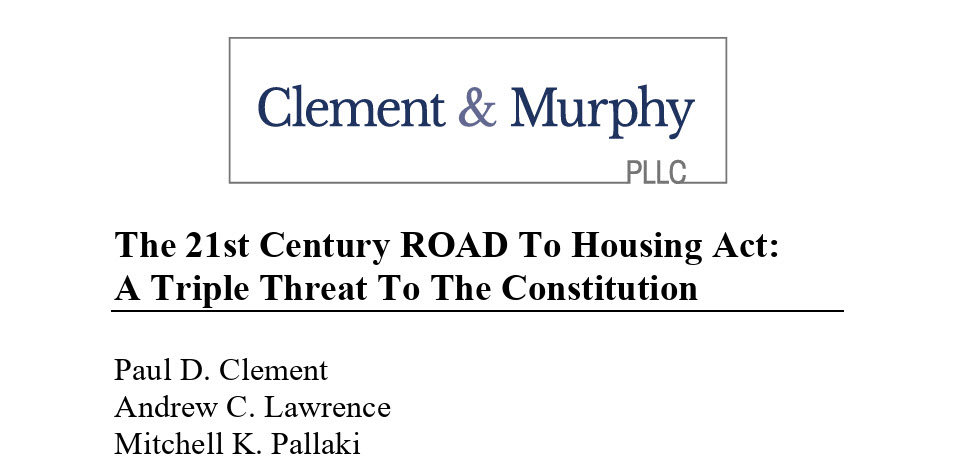
  • Last month, RER shared with members of Congress a white paper by Paul Clement of Clement & Murphy, PLLC, arguing that Section 901’s forced-sale requirement raises serious constitutional concerns under the Takings Clause, and also raises equal protection and federalism concerns. (Roundtable Weekly, April 17)

Workforce Training Legislation

  • USen. Todd Young (R-IN) and U.S. Rep. Nathaniel Moran (R-TX) introduced the Workforce Apprenticeship Growth and Education Support (WAGES) Act this week, legislation aimed at strengthening career pathways into the trades and helping address persistent construction labor shortages. (Press Release, April 30)
  • The bill would create a refundable payroll tax credit for employers that maintain or participate in a Registered Apprenticeship Program (RAP), helping offset wages paid to apprentices and mentors, as well as other program costs. (Bill Summary | Text)
  • “The Real Estate Roundtable (RER) commends Senator Young and Representative Moran for introducing the Workforce Apprenticeship Growth and Education Support Act,” said Jeffrey D. DeBoer, President and CEO, RER. “By promoting apprenticeships nationwide, this bill would help address today’s shortage of well-paid, highly skilled construction and job site workers. A greater career workforce educated on the innovations rapidly occurring in construction technology and practices would significantly increase productivity, help build modern housing, meet evolving business needs, and grow the economy.” (Statements of support, April 30)
  • At RER’s Spring Roundtable Meeting last week, policymakers and industry leaders emphasized the need to strengthen the workforce pipeline—an essential part of building more housing, increasing productivity, and preparing the next generation for good-paying jobs. (Roundtable Weekly, April 24)

RER will continue working with policymakers and housing coalitions to ensure the final housing package expands supply, supports construction, strengthens the workforce, and avoids provisions that would reduce rental housing production at a time of severe national housing need.

Bipartisan House Coalition Presses Leadership to Remove Section 901

A bipartisan group of 76 House lawmakers urged congressional leaders to remove or revise Section 901 of the Senate-passed 21st Century ROAD to Housing Act, arguing that the provision would undermine the bill’s affordability goals by discouraging build-to-rent (BTR) housing and reducing rental options for American families. (Punchbowl News, | PoliticoPro, April 22)

Why It Matters

  • The push adds to growing House resistance as negotiators weigh how to reconcile the two chambers’ housing packages.
  • The letter, led by members of the Congressional Real Estate Caucus and Build America Caucus, warns that Section 901 “would have far-reaching and unintended consequences that run counter to the bill’s stated goal of expanding housing opportunity,” and that the provision goes “far beyond its intended purpose” by threatening to reduce rental options. (Letter | PoliticoPro April 22)
  • Lawmakers argue the provision’s broad definition would also capture the construction of new single-family rental communities—threatening a growing source of housing supply at a time when the nation remains millions of units short. (Letter | Punchbowl News, April 22)
  • Section 901 would require certain large institutional investors to sell newly built single-family rental homes after seven years—a change that could disrupt the long-term ownership model behind BTR communities, constrain capital, and reduce housing options for families seeking the flexibility of a single-family rental home.
  • The housing bill was a major focus at The Real Estate Roundtable’s (RER) Spring Roundtable Meeting this week, where members and policymaker guests discussed the growing pushback to Section 901 and the need for any final package to preserve the bill’s pro-supply provisions. (See story above)

State of Play

  • Since the Senate passed its version of the bill, progressive and conservative groups alike have cited numerous benefits that single-family rental owners and builders deliver for U.S. housing markets, including expanding supply, maintaining housing stock, and providing families the opportunity to live in communities where homeownership remains out of reach. (Progressive Policy Institute, February 2026 | Competitive Enterprise Institute, February 2026)
  • Housing and Urban Development (HUD) Secretary Scott Turner recently toured a build-to-rent (BTR) community with the project’s developer, operator, and industry representatives, underscoring the growing visibility of BTR. (The Real Deal, April 18 | NMHC, April 13)

RER & Industry Advocacy

  • RER and other housing advocates continue to urge lawmakers to preserve the bill’s pro-supply provisions while removing language that could reduce rental housing production and discourage new investment.
  • RER and broad housing coalitions have consistently emphasized that housing affordability is driven by supply shortages, construction costs, and mortgage rates—not institutional ownership levels—and that restricting institutional capital would only make it harder to meet the nation’s growing housing needs. (Roundtable Weekly, Jan. 9 | Jan. 16 |  Jan. 23 | Feb. 27| March 6 | March 13 | March 20 | March 27 | April 3 | April 10 | April 17)
  • Last week, RER shared with members of Congress a recent white paper by Paul Clement of Clement & Murphy, PLLC, arguing that Section 901’s forced-sale requirement raises serious constitutional concerns under the Takings Clause, and also raises equal protection and federalism concerns. (Roundtable Weekly, April 17)

As lawmakers work to address the housing shortage, the focus should remain on expanding supply and lowering barriers to development—not on punitive restrictions that threaten new investment, undermine build-to-rent housing, and worsen affordability challenges.

RER White Paper Raises Constitutional Concerns With Senate Housing Bill’s Section 901

The Real Estate Roundtable (RER) this week released a white paper authored by Paul Clement of Clement & Murphy, PLLC, adding significant constitutional concerns to the growing case against Section 901 of Title IX of the Senate-passed 21st Century ROAD to Housing Act (H.R. 6644). While the broader legislation contains several constructive provisions to help boost housing supply, the Senate bill’s restrictions on certain institutional investors would undermine new development, disrupt the build-to-rent (BTR) market, and raise serious legal questions. (White Paper, April 14)

Why It Matters

  • The Senate provision would apply to corporate entities that own more than 350 single-family homes. It would largely prohibit those entities from purchasing additional single-family homes and require them to sell newly constructed single-family rentals (SFR) after seven years.
  • The investor “purchase ban” on single-family homes and the “forced sale” of new single-family rentals would amount to an unprecedented federal intervention in housing markets at a time when the country needs policies that encourage development—not deter it.

What the White Paper Says

  • The white paper released by RER argues that the forced-sale requirement for build-to-rent housing raises serious constitutional problems under the Fifth Amendment’s Takings Clause. (White Paper, April 14)
  • The paper concludes government cannot force one private owner to sell its homes to another without trampling on the Constitution’s “public-use” and “just-compensation” requirements. Furthermore, the Senate’s bill provides no mechanism for the government to pay just compensation to investors whose homes would be taken.
  • The paper also raises equal protection concerns by singling out a narrow category of corporate owners for special burdens.
  • While Congress has broad authority to regulate economic activity, the paper notes that it cannot arbitrarily target a specific class of property owners—particularly where the ownership and disposition of private property are at stake.
  • In addition, the paper argues that the proposal departs from the traditional state and local roles in land use and housing policy, raising broader federalism concerns.

Roundtable Advocacy

  • RER has consistently supported policies that expand housing availability, reduce barriers to development, and improve affordability.
  • At the same time, RER has warned that Section 901 would do the opposite by discouraging new investment in housing and weakening a growing source of supply.
  • RER shared the white paper with members of Congress in a letter urging lawmakers to preserve the bill’s pro-supply provisions while removing Title IX.
  • Since the Senate passed its version of the bill, progressive and conservative groups alike have cited numerous benefits that SFR owners and builders deliver for U.S. housing markets, in terms of increasing supply, maintenance, and upkeep of units, and providing opportunities for families to live in communities with strong education systems, where they can’t afford to buy. (Progressive Policy Institute, February 2026; Competitive Enterprise Institute, February 2026)

  •  As lawmakers work to address the housing shortage, the focus should remain on expanding supply and lowering barriers to development—not on punitive restrictions that threaten new investment, weaken build-to-rent housing, and make affordability challenges worse.

The constitutional concerns surrounding Section 901, and the broader policy debate over how best to expand housing supply, will be part of the discussion at RER’s Spring Roundtable Meeting (Roundtable-level members only) next week in Washington.

White House Economic Report Underscores Supply Gap as ROAD to Housing Act Stalls

Congress returned to Washington this week after a two-week recess with little visible movement on the 21st Century ROAD to Housing Act, even as House Financial Services Committee staff continued work on a bipartisan response to the Senate-passed bill.

State of Play

  • House and Senate lawmakers remain at odds over how to reconcile the competing housing packages, with the Senate bill’s treatment of institutional investment in single-family housing still one of the biggest sticking points. (Politico, April 14)
  • RER and other housing advocates continue to press lawmakers to preserve the bill’s pro-supply provisions while removing language that could reduce rental housing production and discourage new investment.

Why It Matters

  • The report says that if single-family homebuilding had continued at its historical pace after 2008, the U.S. would have “10 million or more additional single-family homes today”—a striking measure of the nation’s housing shortfall and the scale of lost supply. (CRE Daily, April 14)
  • White House economists reached that figure by asking how many homes would exist today if construction had continued at its pre-2008 pace, making the estimate as much about lost capacity as current demand. (Propmodo, April 13)
  • The findings reinforce that improving affordability will require more building, more investment, and fewer barriers to supply—and that policies constraining new housing production could worsen affordability rather than improve it.

New Research

  • Updated research continues to undercut the argument that institutional ownership is the main source of today’s affordability challenges.
  • An AEI report released last week says large institutional investors own less than 1 percent of the nation’s single-family homes and concludes that Section 901 of the Senate’s bill would reduce the supply of newly constructed and rehabilitated homes while burdening low- and middle-income renters. (AEI, April 10)
  • Separate Realtor.com research published in March also found that the institutional investor footprint has been shrinking from its 2022 peak. (Politico, April 14 | Realtor, March 13)
  • Recent market data points in the same direction. If institutional investment were the main cause of the nation’s housing affordability problems, the markets with the heaviest investor activity would be consistently posting the strongest price growth. (Roundtable Weekly, April 10 | GAO Report, April 6 | GAO Report, 2024)
  • The latest Case-Shiller data show the opposite pattern: Chicago and New York led annual home-price gains in December 2025, while several Sun Belt metros where institutional investors have been more prominent—including Tampa, Phoenix, Dallas, and Miami—saw prices decline. That divergence reinforces the broader point that supply constraints, not institutional investment alone, are the bigger force shaping affordability. (S&P Global, December 2025 | Realtor, October 2025)

New Housing Legislation Introduced

  • Separate from the House-Senate standoff, Sen. Bill Hagerty (R-TN) this week introduced the Freedom to Build Act, a proposal backed by The Real Estate Roundtable (RER) that would create a HUD “Freedom to Build” certification for localities adopting pro-supply policies such as faster approvals, regulatory streamlining, and other measures to expand housing construction. (Sen. Hagerty Press Release, April 14)
  • The bill is intended to incentivize deregulation, expand housing supply, and make homes more affordable by aligning existing federal incentives with communities that reduce barriers to building.
  • Jeffrey D. DeBoer, President & CEO of RER said, “This legislation would be a meaningful step toward expanding housing supply and improving affordability for working families. The Freedom to Build Act would align federal incentives with local decision-making to help unlock private capital, enhance housing supply, and support long-term economic growth. The Real Estate Roundtable has long supported policies that promote housing affordability—for renters and homeowners—and strengthen the connection between housing, jobs, and transportation.”

Sen. Hagerty will also be a featured guest at RER’s upcoming Spring Roundtable Meeting next week (Roundtable-level members only), where housing supply, affordability, and related policy developments will be among the topics discussed.

New GAO Data, Rising Cost Pressures Undercut Case for Build-to-Rent Restrictions

As the Senate-passed 21st Century ROAD to Housing Act awaits House action, new federal data and rising development cost estimates are reinforcing a key point in the housing debate: affordability challenges are driven by supply constraints, and federal policy should not make it harder or more expensive to build. (Washington Post, April 6)

What the Data Shows

  • At the center of the debate is Section 901, which would force large institutional investors to sell certain newly built single-family rental homes after seven years—a provision that could undermine build-to-rent housing and reduce supply. (Roundtable Weekly, April 3)
  • A new GAO report found that institutional investor ownership of single-family rental homes increased in six metro areas from 2018 to 2024, but still accounted for a very small share of all single-family homes in those markets—ranging from less than 1 percent to 3 percent. (GAO Report, March 24 | Highlights, March 24)
  • The findings add new weight to the argument that institutional ownership is not the main driver of the nation’s affordability challenges.
  • The Washington Post noted this week that forcing build-to-rent homes to be sold within seven years would weaken a fast-growing source of new single-family housing. (Washington Post, April 6)
  • A separate February report from the Progressive Policy Institute (PPI) reached a similar conclusion, finding that institutional investors own less than 1 percent of all single-family homes nationwide and account for less than 2 percent of all home purchases, and concluding that the broader affordability problem is rooted in supply-demand imbalances rather than investor concentration. (Progressive Policy Institute, February 2026)
  • The reports undercut the argument that restricting institutional investment is likely to meaningfully improve affordability, particularly when housing shortages, financing costs, regulatory barriers, and construction expenses remain the primary constraints on supply.

Market Impact

  • As Barron’s reported this week, Section 901’s proposed restrictions on institutional investors are already having a chilling effect on investments in single-family housing, with investment managers indicating that pension funds and other large investors may pause or reconsider deals until there is greater clarity around housing policy. (Barron’s, April 7)
  • Research from John Burns Research & Consulting suggests the Senate bill has “already paralyzed” the build-to-rent development industry, with new development slowing and capital “now frozen,” impacting project viability “from day one, not just in seven years.” (Barron’s, April 7)

Tariffs & Construction Costs

  • A new Cushman & Wakefield report found that tariff rates in effect as of April 7 would raise construction materials costs by 6.0 percent relative to a 2024 baseline and increase total project costs by roughly 3.0 percent, adding more pressure to housing and commercial real estate development. (Cushman & Wakefield, April 8)

RER & Industry Advocacy

  • RER and broad housing coalitions have consistently emphasized that housing affordability is driven by supply shortages, construction costs, and mortgage rates—not institutional ownership levels—and that restricting institutional capital would only make it harder to meet the nation’s growing housing needs. (Roundtable Weekly, Jan. 9 | Jan. 16 | Jan. 23 | Feb. 27March 6 | March 13 | March 20 | March 27 | April 3) (Letter, March 5 | Letter, March 13)
  • Research continues to show that restricting institutional capital is unlikely to improve affordability and could create new supply constraints. The PPI report, for example, notes that build-to-rent development is becoming an increasingly important source of new housing supply. (Progressive Policy Institute, February 2026)

What’s Next

  • Congress returns next week with a robust agenda. The Senate is set to return April 13 and the House on April 14, with unresolved DHS funding, a possible new reconciliation push, and the administration’s budget request all competing for floor time and political attention.
  • That packed schedule could make it harder for housing legislation to advance quickly.

The Senate-passed ROAD to Housing Act and broader housing policy will be a major focus at the upcoming Spring Roundtable Meeting April 20-21 in Washington, D.C. (Roundtable-level members only).

Research Continues to Reinforce Case Against Build-to-Rent Provision in Housing Bill

As the 21st Century ROAD to Housing Act remains in limbo in the House, new research is strengthening the case for removing the Senate bill’s build-to-rent (BTR) provision. The findings suggest the provision could curb housing supply without improving affordability.

State of Play

  • At the center of the debate is Section 901, which would require newly built single-family rental homes developed by large institutional investors to be sold to after seven years. (Roundtable Weekly, March 27 | The Atlantic, March 30)
  • Industry groups, researchers, and The Real Estate Roundtable (RER) warn that the mandate would disrupt a growing source of housing supply, raise serious constitutional concerns, and potentially trigger years of litigation involving property owners, tenants, and the federal government. (Roundtable Weekly, March 13 |  CNBC, March 29)

New BTR Research

  • Other recent studies are reinforcing concerns about the provision. A new AEI analysis found the bill’s investor restrictions could reduce supply and hurt lower-income families. (AEI study, March 27)
  • An Urban Institute case study found that single-family rental investors have developed renovation and property-management capabilities that could help rehabilitate more homes and expand the supply of affordable housing. (Urban Institute Case Study, March 30)

Roundtable & Industry Advocacy

  • RER and a broad real estate coalition have spent weeks urging lawmakers to preserve the bill’s pro-supply provisions while removing or revising Section 901, warning that the seven-year sale requirement would effectively eliminate build-to-rent housing production. (Roundtable Weekly, Jan. 9 | Jan. 16 |  Jan. 23 | Feb. 27March 6 | March 13 | March 20 | March 27) (Letter, March 5 | Letter, March 13)
  • That case was reinforced again last week in an open letter from housing researchers, who said the mandate would undermine a growing source of supply and is especially unworkable because many BTR communities are not designed to be sold unit by unit. (Letter, Mar. 26 | MultifamilyDive, Mar. 31)

New Cost Pressures

  • Rising aluminum prices are adding new strain to an already challenging development environment, pushing construction costs higher and threatening project viability.
  • “The conflict in the Middle East is further driving up materials prices and making construction that much less affordable and many projects that much less financially viable,” said Anirban Basu, the chief economist for Associated Builders and Contractors. (PoliticoPro, March 27)
  • The pressure comes on top of elevated rates, tariff uncertainty, and labor shortages that have already slowed homebuilding and weighed on new investment. (PoliticoPro, March 27)

What’s Next

  • Congress is in recess until April 13, leaving the package’s next steps uncertain for now.

RER will continue urging Congress to protect the bill’s supply-focused provisions while removing language that would make it harder to build rental housing.

House Weighs Next Move on ROAD to Housing Act

The bipartisan 21st Century ROAD to Housing Act remains in limbo in the House, where lawmakers are still weighing how to reconcile the Senate-passed package with the chamber’s own housing bill. The Senate approved its version two weeks ago after combining House priorities with the upper chamber’s broader housing agenda, but House members have raised concerns about several provisions added or revised in the Senate package—most notably the bill’s treatment of build-to-rent (BTR) housing.

State of Play

  • The House and Senate remain at odds over how to advance the housing package after the Senate passed its bill with overwhelming bipartisan support earlier this month. (PoliticoPro, Mar. 23)
  • House Financial Services Ranking Member Maxine Waters (D-CA) urged House Democrats this week to support a formal conference committee, arguing that the final bill should restore House priorities and address stakeholder concerns—an apparent reference to the Senate bill’s restrictions on large institutional investors in single-family housing.
  • Rep. Mike Flood (R-NE) said Wednesday that Senate Banking and House Financial Services leaders need to meet to resolve key differences between the two packages.
  • Rep. Flood identified three major House concerns with the Senate bill: the need to preserve but revise the provision restricting institutional investors from purchasing single-family homes, the omission of environmental review changes for certain affordable housing programs, and the Senate’s inclusion of a temporary rather than permanent restriction on a Federal Reserve central bank digital currency. (PoliticoPro | Watch Rep. Flood Remarks, Mar. 25)

Build-to-Rent

  • The biggest sticking point remains the Senate bill’s requirement that rental homes developed by large investors be sold to individual homebuyers after seven years. (The Urban Institute, Mar. 17)
  • House Republicans have raised concerns that the provision could undercut new rental housing production, disrupt financing, and introduce significant long-term uncertainty into the market.
  • The Real Estate Roundtable (RER) has warned that the bill’s forced-sale structure raises serious constitutional concerns and could trigger years of litigation involving property owners, tenants, and the federal government.

New BTR Research

  • Based on a March 19 discussion with 146 BTR executives, developers, and capital partners, the firm reported this week that the Senate bill’s seven-year disposal requirement has already frozen capital and halted new development ahead of enactment. Some capital will not return even if the bill is altered, reflecting ongoing concerns about future policy risk. (John Burns Research & Consulting, Mar. 24)

RER Advocacy

  • RER and a broad real estate coalition have spent weeks urging lawmakers to preserve the housing bill’s supply-focused provisions while removing language that would force large investors to sell newly built single-family rental homes after seven years. (Roundtable Weekly, Jan. 9 | Jan. 16 |  Jan. 23 | Feb. 27Mar. 6 | Mar. 13 | Mar. 20)
  • In March, RER joined a series of coalition letters urging senators to remove or revise Section 901, warning that the seven-year sale requirement would effectively eliminate the production of BTR housing. (Roundtable Weekly, Mar. 20) (Letter, Mar. 5 | Letter, Mar. 13)
  • That message was reinforced again this week in an open letter from housing policy researchers, who warned that the Senate-passed ROAD to Housing Act would undermine BTR housing, which represents a growing source of new supply in markets where housing is already out of reach for many households. (Letter, Mar. 26)
  • The researchers said BTR has helped expand the housing stock, particularly for middle-income renters seeking single-family-style housing, and cautioned that the bill’s seven-year sale mandate would disrupt the model’s economics and reduce future production.
  • The letter also noted that many BTR communities are not structured to be sold off unit-by-unit, making the requirement especially problematic in practice.

What’s Next

  • The House and Senate are out on recess and do not return to Washington until April 14, leaving the future of the broader housing package uncertain. (NYT, Mar. 25)

Whether lawmakers pursue a formal conference or a narrower compromise, RER will continue urging Congress to preserve the bill’s pro-supply provisions while removing language that would reduce rental-housing production and make it more difficult to meet the nation’s growing housing needs.