The Roundtable’s policy news digest will resume publication on Friday, January 9, 2026.
Recent issues of Roundtable Weekly can be searched by keyword here.
The Roundtable’s policy news digest will resume publication on Friday, January 9, 2026.
Recent issues of Roundtable Weekly can be searched by keyword here.

The Federal Reserve on Wednesday cut its benchmark interest rate by 25 basis points for the third straight meeting, lowering the federal funds target range to 3.50-3.75 percent. Fed Chair Jerome Powell emphasized that while policy is easing, the bar for additional reductions in early 2026 remains high.
Fed’s Decision
Housing and CRE Outlook
Congressional Oversight & Capital Framework

RER Advocacy
RER will continue to advocate policies that protect the safety and soundness of our financial system without harming credit flows and capital formation vital for CRE.

The House Financial Services Committee introduced a bipartisan housing package, the Housing for the 21st Century Act on Thursday, aimed to streamline housing development and improve affordability by updating outdated programs, removing unnecessary federal requirements, and increasing local flexibility. (One-pager; Text of the bill; Section-by-Section)
Housing for the 21st Century Act
Senate – ROAD to Housing Act

The House Financial Services Committee intends to mark up its housing package next week, along with 20 other bills on the National Flood Insurance Program and community banking, among others. (PoliticoPro, Dec. 11)

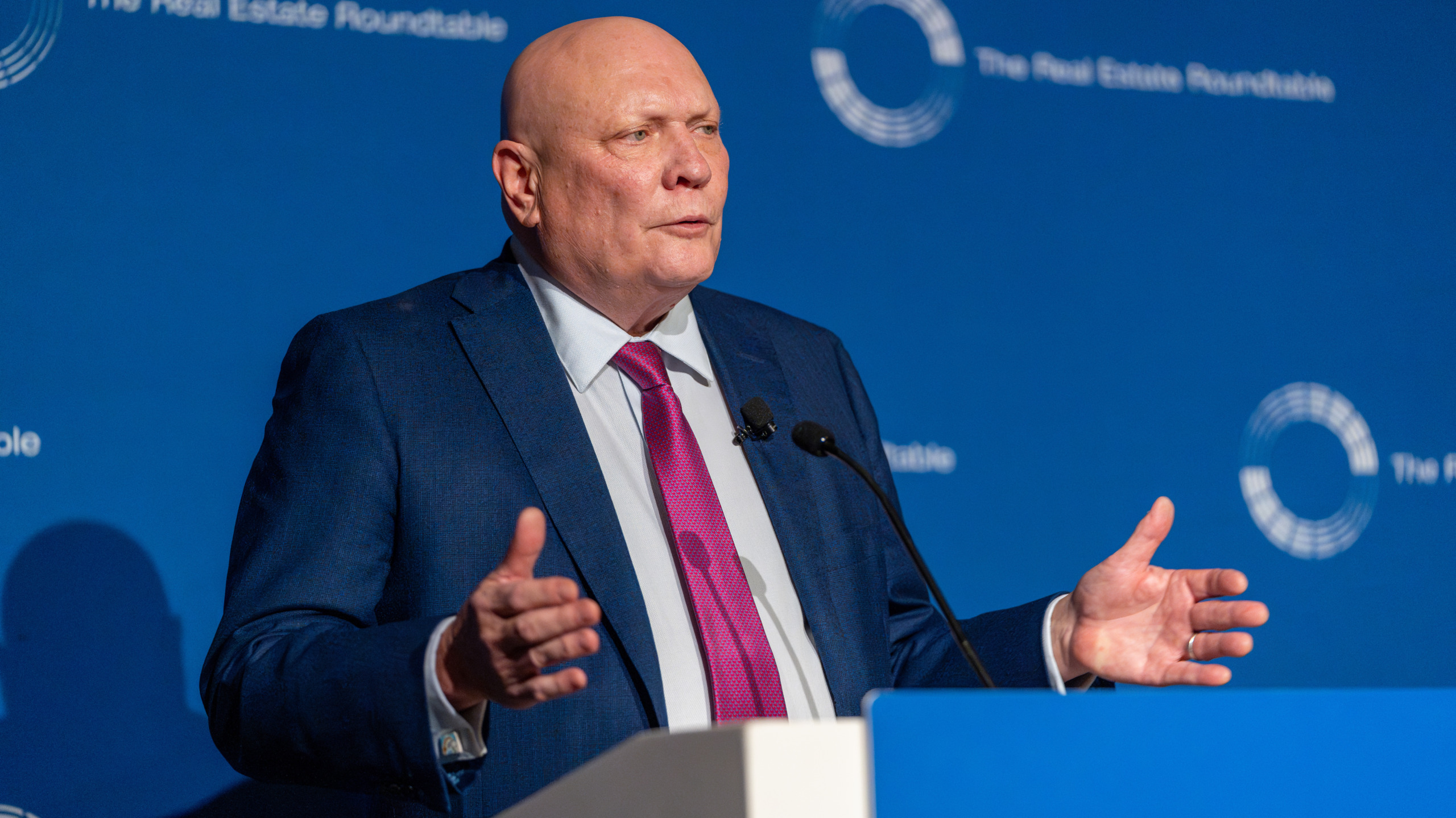
The Real Estate Roundtable (RER) President & CEO Jeffrey DeBoer was recognized this week as one of the “Top Lobbyists” in Washington, D.C. for 2025, according to the prominent policy news publication, The Hill. This marks the eighth consecutive year that DeBoer has received this honor. (The Hill, Dec. 11)
Roundtable on the Road
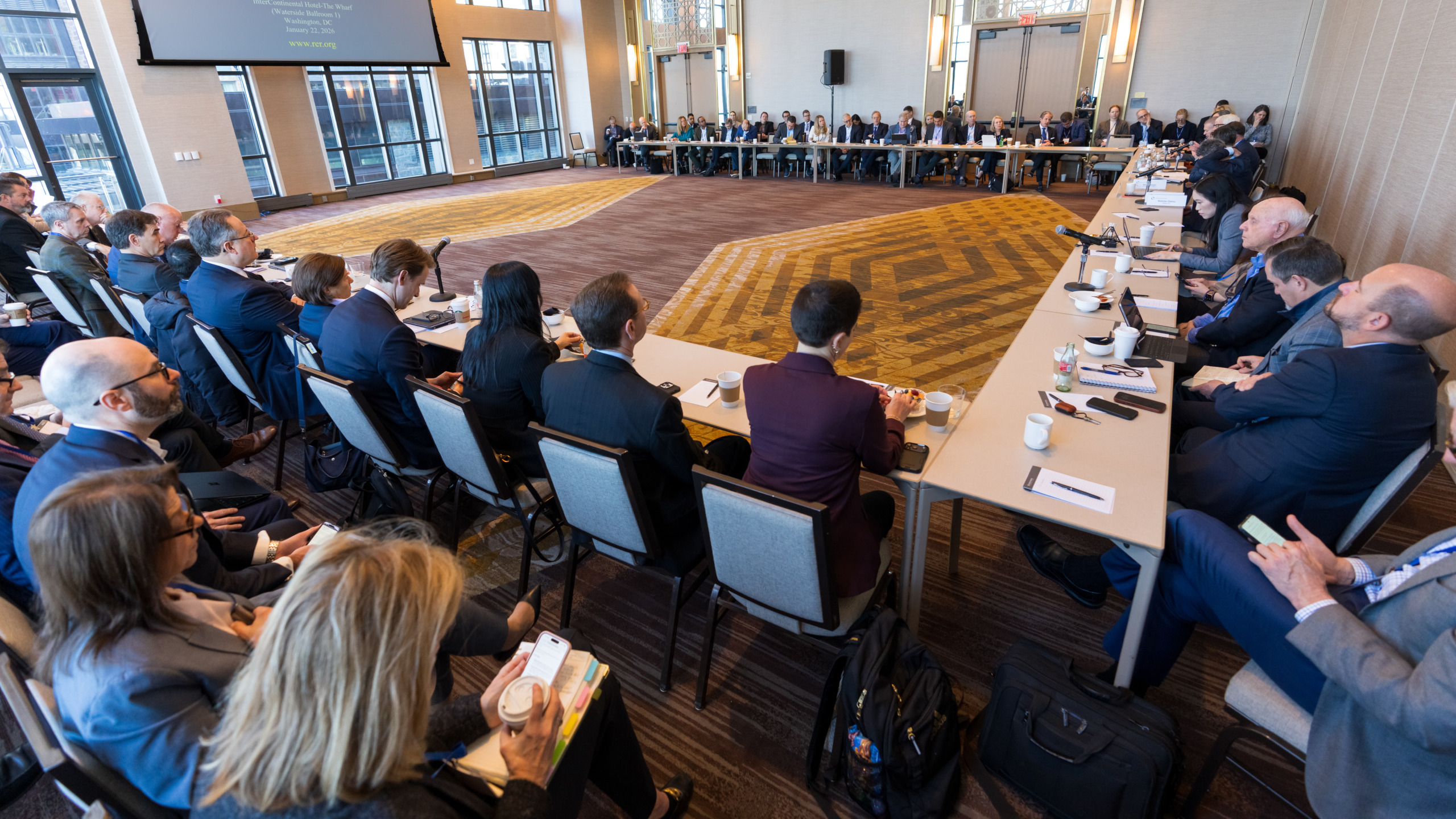
All RER policy advisory committees will meet in person at the State of the Industry Meeting scheduled for Jan. 21-22, 2026.

The Real Estate Roundtable (RER) wrote to congressional leadership this week, urging passage of the bipartisan SPEED Act (H.R.4776), calling the bill essential to strengthening grid reliability, lowering energy costs, and keeping pace with surging electricity demand. (Letter, Dec. 8)
Roundtable Advocacy
State of Play

Permitting reform will be a featured topic at RER’s next all-member State of the Industry Meeting on Jan. 21–22, 2026, in Washington, D.C., as policymakers consider strategies to bolster energy infrastructure and support long-term economic growth.

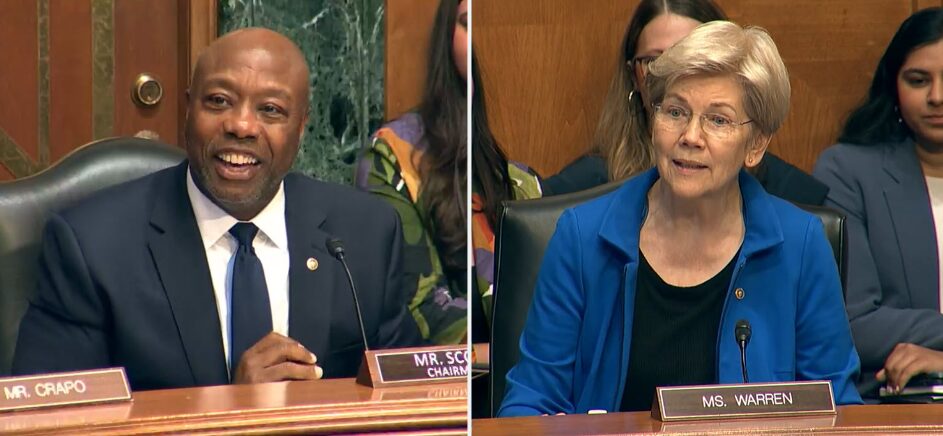
Housing Hearing
State of Play

Senate Housing Legislation
EB-5 & Workforce

RER will continue engaging with policymakers and industry leaders to promote bipartisan solutions and regulatory reforms that expand housing supply, improve affordability, and strengthen economic stability.

The House Financial Services Committee held an oversight hearing this week on prudential regulators, as federal agencies continue to reassess large bank capital standards. Ahead of the hearing, The Real Estate Roundtable (RER) and a coalition of business organizations urged regulators to modernize capital requirements to support lending, investment, and U.S. competitiveness.
House Financial Services Committee Hearing
Roundtable Advocacy

Enhanced Supplementary Leverage Ratio (eSLR)
As regulators continue work on a revised Basel III Endgame proposal, RER will remain engaged to ensure capital reforms protect safety and soundness without constraining credit flows essential to commercial real estate, economic activity, and long-term investment.

The Real Estate Roundtable (RER) submitted a comment letter this week urging the Treasury Department and IRS to finalize proposed regulations (REG-109742-25) that would repeal the Foreign Investment in Real Property Tax Act (FIRPTA) “look-through” rule for domestically controlled real estate investment trusts (REITs). (Letter, Dec. 5)
RER Advocacy
House Ways & Means Hearing – International Tax

RER and other industry groups have warned that reviving Section 899 could negatively impact U.S. commercial real estate by deterring foreign investment, weakening capital formation, increasing borrowing costs, and dampening property values.

House lawmakers are set to vote before year’s end on a number of housing, energy, and permitting reform bills, with the bipartisan SPEED Act at the center of a broader push to address grid reliability and energy affordability.
SPEED Act
Industry Support

Senate Energy Plan

House Committee Advances Energy Affordability Measures

Up Next: GHG Protocol – Scope 2 Guidance
RER will continue working with lawmakers and industry partners to advance permitting reforms that expand energy supply, strengthen grid reliability, and support real estate investment across property types.

(WASHINGTON, D.C.) — A coalition of leading business trade organizations urged prudential regulators to examine and modernize large bank capital requirements to ensure they support consumers, businesses, and the U.S. economy. The organizations, which represent a wide range of stakeholders, including small businesses, manufacturers, and farmers, highlighted the negative impact of inappropriately calibrated requirements on economic growth and American competitiveness, and applauded the ongoing efforts to improve the capital framework.
A review of 13 economic studies found that increased capital requirements can cost the economy $100 billion to $150 billion per year and result in $2.3 trillion in lost economic productivity over 30 years.
“We greatly appreciate the work being undertaken by bank regulators to modernize capital rules to unleash economic growth and support various industries and sectors across the country. Specifically, common sense adjustments to Basel III Endgame, the GSIB Surcharge, stress testing, and leverage requirements will improve access to credit and reduce the costs of goods and services for American businesses and consumers, ensuring the U.S. economy can continue to thrive and grow,” the trade organizations said.
The statement for the record was signed by the Financial Services Forum, American Bankers Association, American Cotton Shippers Association, American Farm Bureau Federation, Bank Policy Institute, Business Roundtable, Commodity Markets Council, Consumer Bankers Association, Futures Industry Association, International Swaps and Derivatives Association, Mortgage Bankers Association, National Association of Manufacturers, National Association of REALTORS®, The Real Estate Roundtable, Securities Industry and Financial Markets Association, and U.S. Chamber of Commerce.
Read the full statement for the record here.