White House “Clean Air in Building Challenge” Invites Owner Participation; SEC Delays Climate Rule

White House Indoor Air Quality Summit

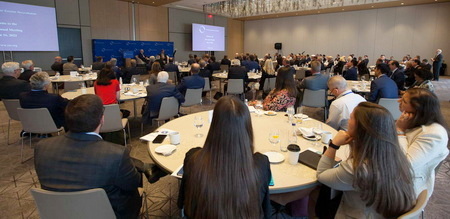
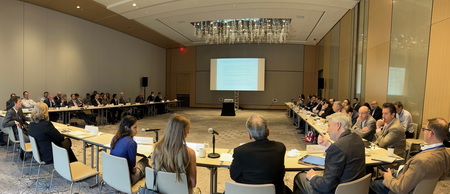
Real estate and other industry leaders recently participated in the first White House Summit on Indoor Air Quality (IAQ) as part of the Biden administration’s continued focus on the benefits of healthy buildings in the pandemic era. (Summit video, Oct. 12 and International WELL Building Institute, Oct. 13) 

Building Owner “Pledge” 

    • Create a clean indoor air “action plan” (e.g., regular HVAC inspections and maintenance)
    • Optimize fresh air ventilation (e.g., use economizers, open operable windows)
    • Enhance air filtration (e.g., install MERV-13 filters)
    • Communicate IAQ practices with building occupants  
  • Speakers at the summit included Silverstein Properties’ Chief Innovation Officer Guy Vardi and Dr. Joseph Allen, Healthy Buildings Program Director at Harvard University. Roundtable President Jeffrey DeBoer interviewed Dr. Allen at the height of the COVID-19 lockdown. (Roundtable Weekly, May 8, 2020 | Watch the video interview) 

Agency Developments 

EPA logo

  • The Environmental Protection Agency (EPA) recently released a Request for Information to solicit feedback from industry, researchers, and the public on key characteristics and measures of improved ventilation, filtration, and air cleaning in buildings. Comments are due by Dec. 5, 2022. 

In other news, the Securities and Exchange Commission will reportedly delay by “months” its release of a long-anticipated final rule on corporate climate disclosures. (Bloomberg Law, Oct. 19) The agency continues to assess the legality of its proposal under recent U.S. Supreme Court case law and sift through more than 14,000 comments received from the public—including input provided by The Roundtable and other CRE groups in June. (Roundtable Weekly, Sept. 16 and June 10

#  #  # 

Economic Uncertainty Follows Inflation and Interest Rate Increases

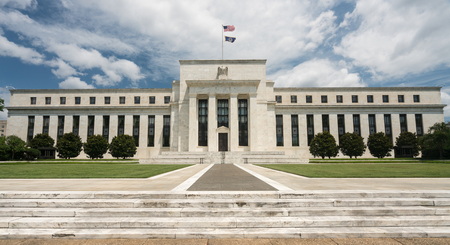
Fed Reserve building close-up

This week’s flurry of key economic data offered mixed signals about the state of the economy and whether the Federal Reserve’s interest rate increases can slow inflation without causing a significant increase in unemployment—a “soft landing” that could prevent a full-blown recession before the mid-term elections. (The Hill, July 28)

Economic Slowdown & Inflation

  • POLITICO described the week as a “Category 5 storm of economic news.” Developments included a drop in the consumer confidence index for the third straight month; an increase in the Fed funds rate by another 75 basis points; and a drop in the gross domestic product (GDP) at an annual rate of 0.9 percent.
  • Additionally, the Commerce Department reported today that the personal consumption expenditures price index (PCE)—a key inflation gauge closely tracked by the Fed—rose 1.0% increase last month and increased 6.8% since last June, the largest spike since January 1982. (Reuters and CNBC, July 29)
  • President Biden responded, “It’s no surprise that the economy is slowing down as the Federal Reserve acts to bring down inflation.” (White House statement, July 28)
  • Fed Chair Jerome Powell commented after the increase in interest rates. “I do not think the U.S. is currently in a recession. And the reason is there are just too many areas of the economy that are performing too well. The labor market has remained extremely tight, with the unemployment rate near a 50-year low, job vacancies near historical highs, and wage growth elevated. We think there’s a path for us to be able to bring inflation down while sustaining a strong labor market.” (Federal Reserve press conference transcript, July 27)
  • The recent rise in interest rates are starting to hamper commercial real estate transactions and valuesThe Wall Street Journal reported on July 26 that “banks are lending less and charging higher interest rates for the loans they make to owners and buyers of office buildings, shopping centers and other commercial real estate.”

GDP & Jobs

National Bureau of Economic Research logo

  • Treasury Secretary Janet Yellen yesterday addressed this week’s drop in GDP. “Most economists and most Americans have a similar definition of recession: a broad-based weakening of our economy. That is not what we’re seeing right now.” She added, “Job creation is continuing, household finances remain strong, consumers are spending, and businesses are growing.” (Treasury Department press conference transcript, July 28)
  • Two straight quarters of economic contraction is usually considered a “technical” recession. Yet The National Bureau of Economic Research (NBR), as the official designator of recessions, has not released a decision yet based on the recent economic data. NBR bases its analysis of a wide variety of economic indicators such as employment, personal income, durable goods, housing permits, and other factors. (The Washington Post, July 27 and CNBC, July 26)
  • White House economist Brian Deese commented on NBR and this week’s economic data on CNBC yesterday. “We’re certainly in a transition and we are seeing slowing as we all would have expected,” Deese said, “but if you look at the full data and the type of data that NBR looks at, nothing signals that this period in the second quarter is recessionary in the labor market.” (CNBC, July 28)

Roundtable Chair John F. Fish on Bloomberg Markets

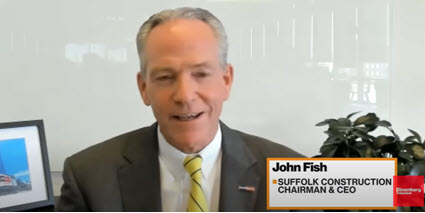
Roundtable Chair John F. Fish (Chairman & CEO, Suffolk), above, was interviewed July 27 on Bloomberg Markets: Americas about current economic conditions and real estate. He commented on the industry’s challenges, including fractious land use policy, supply shortages, and cost drivers. National economic conditions affecting CRE and the Fed’s monetary policies will be a focus during The Roundtable’s Fall Meeting on Sept. 21-22 in Washington, DC.

#  #  # 

Small-Business Owners Descend on Capitol Hill to Urge SBA Reauthorization, CRE Leaders Address Market Conditions

Goldman Sachs 10k Businesses

Over 2,500 small-business owners gathered on Capitol Hill this week to meet with more than 400 lawmakers and federal officials to urge reauthorization of the Small Business Administration (SB) for the first time in over 20 years. Small businesses throughout the nation are facing inflationary pressures, supply chain shortages, labor challenges, limited access to capital and a looming possibility of recession. (The Hill, July 20) 

10,000 Small Businesses 

  • The business owners urged lawmakers to modernize the SBA, enact tax credits and provide incentives to help small businesses retain workers and access capital.
  • Sens. Kyrsten Sinema (D-AZ) and Tim Scott (R-SC) commented on Tuesday during the summit that the SBA should be simplified and supported reauthorization. (The Hill, July 20)
  • Joe Wall, director of Goldman Sachs’s small-business program, said, “Our goal this week is to generate a lot of momentum so that heading into next year it’s a real priority.” (The Hill, July 20)

Owner Challenges

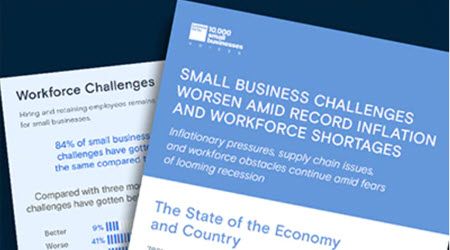
Goldman Sachs 10,000 Businesses survey

  • A recent survey of the program’s participants shows 93 percent of small-business owners are worried about the US economy experiencing a recession in the next 12 months. Nearly all respondents (97 percent) also say inflationary pressures have increased or remained the same compared with three months ago. Additionally, 88 percent of respondents say it is important for Congress to prioritize the Small Business Administration (SBA), which has not happened in 20 years. (Survey news release, July 13) 
  • Alumni of the 10,000 Small Businesses program collectively represent over $17.3 billion in revenues and employ 245,000 people. 

Industry Views

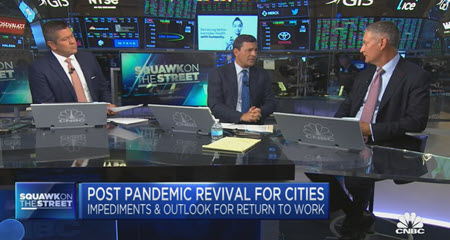
Marty Burger, far right, interviewed on CNBC's Squawk on the Street

Dr. Linneman commented that inflation is transitory with supply lagging demand due to 23% of the workforce collecting unemployment insurance. He also offers his views on national debt concerns, the Fed and interest rates, and return-to-the-office concerns. (Watch “The Best Hour in CRE” with Economist Peter Linneman, July 21)

#  #  #

The Fed Requests Comments on Proposal to Implement LIBOR Transition

The Federal Reserve

The Federal Reserve Board on July 19 invited comment on a proposal that implements the Adjustable Interest Rate (LIBOR) Act, which Congress enacted last year. The LIBOR Act provides a safe harbor for market participants who need to switch existing LIBOR-referencing financial contracts to a replacement benchmark for debt instruments before LIBOR reaches its final replacement date on June 30, 2023. (The Fed’s Notice of Proposed Rulemaking, July 19 and Roundtable Weekly, March 11)

LIBOR and CRE
  • LIBOR, formerly known as the London Interbank Offered Rate, is the interest rate benchmark that was the dominant reference rate used in recent decades and remains in extensive use today in outstanding financial contracts — including commercial real estate debt, mortgages, student loans and derivatives — worth an estimated $223 trillion. (Roundtable Weekly, Dec. 10, 2021)
  • The LIBOR Act also provides that all contracts with no adequate fallback provisions for an alternative benchmark substitute will be replaced by the Secured Overnight Financing Rate (SOFR).
  • The Real Estate Roundtable and 17 national trade groups submitted letters last year on April 14 and July 27 to policymakers in support of measures to address “tough legacy” contracts during the transition away from LIBOR. (Roundtable Weekly, Dec. 10, 2021)

What’s Next

LIBOR document with border

  • The Federal Reserve is working to mitigate potential risks and promote a smooth global transition away from LIBOR with both domestic and foreign supervisors. The Fed has emphasized the importance of preparation and transitioning to the market to ensure that supervised institutions can transition away from LIBOR. (The Fed Libor Transition webpage)

The Roundtable welcomes comments from its members on the proposed rulemaking and plans to work with its Real Estate Capital Policy Advisory Committee (RECPAC) on a response. For any questions, please contact The Roundtable’s Senior Vice President Chip Rodgers or call 202-639-8400.

#  #  # 

Inflation, National Policy Agenda, and CRE Market Conditions Focus of Roundtable Annual Meeting

2022 Real Estate Roundtable Annual Meeting Audience

The Roundtable’s 2022 Annual Meeting in Washington, DC this week focused on key policy issues affecting the commercial real estate industry—including inflation and interest rates; prospects for a scaled-back Build Back Better (BBB) Act; proposed climate risk disclosure rules; and a new industry Equity, Diversity, and Inclusion initiative.

Policy Focus

DeBoer and Manchin at 2022 Roundtable Annual Meeting

  • Roundtable President and CEO Jeffrey D. DeBoer, left, launched the June 16 business meeting with an overview of The Roundtable’s Policy Agenda and newly released 2022 Annual Report, Building a More Resilient and Dynamic Future. Annual Meeting guests included:
    • Sen. Joe Manchin (D-WV)
      Sen. Manchin, above right, discussed the benefits of a bipartisan approach to legislation and the role of inflation in considering any additional spending bills this year.
    • Sen. John Thune (R-SD)
      Sen. Thune spoke about supply chain issues, aid for Ukraine, the Fed and monetary policy, and the upcoming elections.
    • Rep. Abigail Spanberger (D-VA)
      Rep. Spanberger addressed efforts to produce common-sense gun policy, lower inflationary costs for families and policymaking in the House during the upcoming lame duck session.
    • Jim VandeHeiAxios and Politico co-founder and CEO discussed the current political environment, potential challengers to President Biden, the upcoming congressional elections, and the advantages of delivering news and analysis about today’s policy landscape in an efficient, “smart brevity” style.
    • Jonathan KarlABC New’s Chief Washington Correspondent spoke about the current political environment and the midterm elections.

Supplier Diversity & CRE

Rock Irvin, Chief Commercial Officer, SupplierGATEWAY (left) and Adenuga Solaru Chief Executive Officer (right)

  • The Annual Meeting also included an initiative of The Roundtable’s Equity, Diversity, and Inclusion (ED&I) Committee, chaired by Jeff T. Blau (Chief Executive Officer and a partner of Related Companies).
  • A proposed two-year pilot program was discussed with SupplierGATEWAY—a firm that assists companies interested in hiring Minority- and Women-Business Enterprises (MWBEs) as contractors, service providers, JV partners, and other “vendors” in their “supply chains.” (Photo: SupplierGATEWAY’s Rock Irvin, left, Chief Commercial Officer, with Adenuga Solaru, Chief Executive Officer)
  • The proposed online SupplierGATEWAY portal would support CRE firms interested in accessing a broad and centralized MWBE vendor database, posting hiring opportunities for those contractors, and utilizing tools to assist with corporate ESG reports.
  • SupplierGATEWAY’s executives demonstrated a CRE-specific “prototype” of their MWBE management portal that could be available by the fall for companies who may subscribe to the service. 
  • For more information regarding The Roundtable’s supplier diversity initiative, contact Roundtable Senior Vice President and Counsel, Duane Desiderio (ddesiderio@rer.org).

CRE Markets & Policy Advisory Committees

TPAC Meeting at Annual 2022 Meeting

  • The Roundtable’s Policy Advisory Committee leadership discussed their policy issue activities during the business meeting and referred to a Policy Issues Toolkit for background information on how key issues impact commercial real estate (see Executive Summary). Each committee met in conjunction with the Annual Meeting to address the following:  
    • The Sustainability Policy Advisory Committee (SPAC) focused on a recent Securities and Exchange Commission (SEC) proposed rule that would require registered companies to report on climate-related financial risks. The Roundtable submitted a comment letter to the SEC last week on the proposed rules. (Roundtable Weekly, June 10 and Roundtable comments | SPAC Agenda).
       
    • The Research and Real Estate Capital Policy Advisory Committees (RECPAC) met jointly with Rep. Rep. French Hill (R-AR) to discuss the congressional legislative agenda and capital markets from his perspective as a member of the House Financial Services Committee and Ranking Member of its Subcommittee on Housing, Community Development and Insurance. (Joint RECPAC-Research Agenda)
    • The Tax Policy Advisory Committee (TPAC) drilled down on a Senate proposal to tax unrealized gains associated with appreciated assets, partnership tax rules, like-kind exchanges, Opportunity Zone incentives, and energy-efficiency tax provisions. (TPAC Agenda)
    • The Homeland Security Task Force (HSTF) and Risk Management Working Group (RMWG) met jointly to discuss current threat issues, with presentations by Kevin Vorndran, Deputy Assistant Director, Counterterrorism Division, FBI and Nitin Natarajan, Deputy Director of the Cybersecurity and Infrastructure Security Agency (CISA). (Joint HSTF-RMWG Agenda)

Next on The Roundtable’s calendar is the Sept. 20-21 Fall Meeting (Roundtable-level members only).

#  #  # 

President Biden Announces Plan to Fight Inflation With Federal Reserve in Lead Role

President Biden meets with Fed Chair Powell and Treasury Secretary Yellen on inflation

President Joe Biden affirmed this week that the Federal Reserve will take the lead role in his administration’s efforts to tame inflation. The Fed’s “Beige Book” of regional economic surveys also confirmed the economy is facing headwinds of high inflation, supply chain issues and labor market difficulties. (Barron’s, May 31 and MarketWatch, June 1)

Top Economic Priority

  • Biden announced a three-pronged plan to fight inflation as his “top economic priority” in a May 30 Wall Street Journal op-ed, where he noted the Fed will have the primary responsibility to control rising prices.
  • Biden stated his second goal is to push Congress to act on cost-reduction measures such as clean energy tax credits and a Housing Supply Action Plan recently proposed by the administration. Lastly, he listed that Congress must act to reduce the federal deficit, citing a May 25 report by the Congressional Budget Office. (CBO Budget and Economic Outlook: 2022 to 2032).
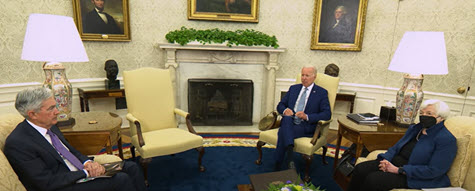
  • Federal Reserve Chair Jay Powell and Treasury Secretary Janet Yellen also met with President Biden this week (see photo with video link, above) to reiterate their “laser focus on addressing inflation.” Biden remarked, “With a larger complement of [Federal Reserve] board members now confirmed, I know we’ll use those tools of monetary policy to address the rising prices for the American people.” (White House remarks and video, May 31)
  • The next meeting of the Federal Open Market Committee is June 14-15, when it is expected that the Fed’s benchmark interest rate will be increased by half a percentage point. (AP, May 25)
  • The White House previously announced plans to combat inflation on May 10 that included proposals to increase taxes on large corporations and the wealthiest Americans – and possibly eliminate Trump-era tariffs on foreign imports. (White House Inflation Plan | News conference video | The Hill, May 10) 

Beige Book & Sentiment Index

Beige Book cover -  June 1 2022

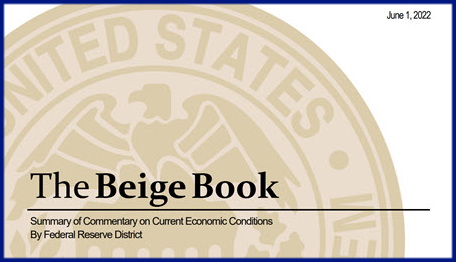
  • In the Fed’s June 1 “Beige Book,” the majority of the twelve Federal Reserve Districts reported slight or modest growth. Survey respondents cited labor market difficulties as their greatest challenge, followed by supply chain disruptions. Rising interest rates, general inflation, the Russian invasion of Ukraine, and disruptions from COVID-19 cases (especially in the Northeast) round out key concerns impacting household and business plans, according to the Fed’s surveys.
  • Roundtable President and CEO Jeffrey DeBoer commented on similar findings in The Real Estate Roundtable’s Q2 2022 Economic Sentiment Index. “Our Q2 Sentiment Index reveals bright spots for lease demand in a wide swath of the economy, particularly regarding life sciences, industrial, multifamily, and data center assets. At the same time however, high inflation, rising interest rates, labor and supply chain shortages are increasing costs associated with all real estate development and operations. The impact of ongoing war in eastern Europe is another cloud tempering optimism.”
  • He added, “We urge national policymakers to focus on creating jobs and supporting strong real estate asset values. Both actions would buttress the overall economy and help local community budgets provide needed safety, education and transportation services.” (Roundtable news release, May 13)

CBO Projections

CBO Outlook website image

  • The CBO’s May 25 Budget and Economic Outlook noted that although the deficit is projected to fall to about $1 trillion — or 4.2 percent of GDP — in the current fiscal year from almost $2.8 trillion last year, demographic pressures and other factors will push deficits steadily higher in later years.
  • These pressures on the federal deficit could have an impact on the prospect for legislation addressing “tax extenders” later this year during a post-election, congressional “lame duck” session. 

Inflation, interest rates and other economic conditions will be a focus of discussion during The Roundtable’s Annual Meeting on June 16-17 in Washington, DC (all member meeting). 

#  #  # 

Roundtable-Supported Fed Liquidity Facility Bolstered CRE Finance During Pandemic

Fed Building DC

A report published this week by the Dallas Fed concludes that the Federal Reserve’s Term Asset-Backed Loan Facility (TALF) played a key role in bolstering commercial real estate finance during the pandemic. The Federal Reserve added outstanding CMBS as eligible collateral for lending through the TALF in 2020 after urgent requests from business coalitions that included The Real Estate Roundtable. (Roundtable Weekly, April 17, 2020 and Joint Trades letter, March 24, 2020) 

TALF & CRE

  • The report by three authors with the Federal Reserve Bank of Dallas’ Research Department states the value of CRE assets at the onset of the pandemic in Feb. 2020 – particularly office towers, retail centers and hotels – suddenly became uncertain. The TALF’s subsequent support of asset-backed securities successfully anchored CMBS prices and helped to steady CRE finance during a tumultuous economic environment.
  • The TALF, previously used during the 2008 financial crisis, was relaunched by the Fed on March 23, 2020 in response to the Covid-19 crisis.
  • A business coalition that included The Roundtable on March 24, 2020 urged the Federal Reserve, Treasury, and Federal Housing Finance Agency to immediately expand the TALF to include non-agency CMBS – including legacy private-label conduit and single-asset single borrower (SASB) assets. The coalition stated the inclusion of private-label assets would stabilize asset prices and shore up the balance sheets of market participants. (Joint Industry letter)
  • On April 9, the Federal Reserve announced the range of TALF-eligible collateral would expand to include triple-A rated tranches of both outstanding (legacy) CMBS, commercial mortgage loans and newly issued collateralized loan obligations. However, the updated term sheet excluded single-asset single borrower (SASB) CMBS and commercial real estate collateralized loan obligations (CRE CLOs). (Federal Reserve news release and Term Sheet)
  • Six real estate industry organizations, including The Roundtable, wrote again to federal regulators on April 14, 2020 about the urgent need to include a wider range of investment grade commercial real estate debt instruments in the Fed’s TALF.
  • The 2020 letter stated, “Commercial and multifamily real estate assets that were perfectly healthy just weeks ago now face massive stress and a wave of payment and covenant defaults.”

  • The Fed on May 12, 2020 broadened the range of leveraged loans that could be used as collateral for the TALF to include new Triple-A rated collateralized loan obligations (CLOs) with leveraged loans. (Fed news release and Term Sheet)

TALF Lessons 

Federal Reserve Building up close

The report published this week concludes the TALF proved especially important in supporting commercial real estate finance. “The TALF program structure provided needed liquidity to investors at the height of the pandemic, but it incentivized borrowers to exit as normal market conditions returned, allowing the program to quickly unwind,” the article states. 

#  #  # 

Roundtable Convenes “Workplace Return” Town Hall Next Week with U.S. Labor Secretary; Industry Coalition Urges Full Capitol Hill Reopening

Labor Secretary Martin Walsh

U.S. Department of Labor Secretary Martin Walsh will address back-to-the-workplace issues in a March 18 virtual town hall with Roundtable members. Participants will also include Roundtable Chair John Fish (Chairman and CEO, Suffolk); Beacon Capital Partners President and CEO Fred Seigel; Boston Properties CEO Owen Thomas; and Roundtable President and CEO Jeffrey DeBoer. Roundtable members were sent an exclusive registration invitation this week via email. (Roundtable Meetings contact

Reopening Momentum 

  • “Americans have learned to deal and cope and live with the coronavirus,” Secretary Walsh recently told Insider (March 4). More employees coming back to the office can “add to job creation and job growth” he explained, as restaurants, retail shops, and other small businesses cater to returning workers.
     
  • The reopening theme was also the focus of a March 9 letter to Senate and House leaders signed by over 200 organizations and companies, including The Real Estate Roundtable. The coalition urged lawmakers to fully reopen Capitol Hill buildings by July 11 “in a way that is safe for all with security measures already being used in many state legislatures.” (Coalition letter, March 9)
     
  • In addition to The Roundtable, other real estate organizations signing the letter to re-open Capitol Hill included the American Hotel & Lodging Association; American Resort Development Association; Building Owners and Managers Association; CRE Finance Council; ICSC; NAIOP, Commercial Real Estate Development Association; and the National Apartment Association. 

2022 Roundtable Policy Agenda 

Virtual SOI 2022 DeBoer and Fish

  • Reopening businesses and the country is an important priority noted in The Roundtable’s 2022 Policy Agenda: “Connection, Commitment, and Collaboration – Supporting Federal Policy Through Experience and Innovation in 2022” sent this week to Roundtable members.
  • In the policy agenda’s introduction, John Fish, above right, and Jeffrey DeBoer, above left, emphasize the national need for a safe and successful return to the physical workplace.
  • “Our state and local economies—as well as our long-term global competitiveness—depend heavily on the innovation, collaboration, and productivity fostered by an in-person work environment,” Fish and DeBoer stated.
  • The Roundtable’s policy agenda states that the nation’s long-term health, economic growth, and strength of small businesses and local governmental budgets all require safe back-to-workplace encouragement. 

Policy Agenda Issues 

RER 2022 Policy Agenda Cover

The Roundtable encourages our members and partner organizations to share the content from our policy agenda on your social media channels or websites by using our communications toolkit.  You may also follow us on social media for RER updates and the latest developments in DC via LinkedIn or Twitter:  

LinkedIn

Twitter

#  #  #

FCC Issues New Rule That May Hinder Broadband Deployment in Multi-Tenant Buildings

A Federal Communications Commission (FCC) order released Tuesday aims to nullify arrangements between broadband providers and building owners to deliver efficient and cost effective internet service for residential and business tenants. (Bloomberg, Feb. 15)

  • The FCC maintains that its latest rules will “unblock broadband competition” for apartment dwellers and businesses. The agency aims to block agreements that would allow building owners to share revenue with a broadband company when providing internet access in a residential or commercial building. (FCC news release)
  • The FCC’s action this week derives from a Biden Administration executive order issued last summer that contains a far-reaching objective to “promote competition in the American economy.” The order included a lone reference to rules that improve tenants’ choices in selecting broadband providers, which led to this week’s action by the FCC.
  • Multifamily industry advocates counter that the FCC’s latest order could “discourage investment and harm deployment and maintenance of broadband networks.” [Feb. 17 statement of the National Multifamily Housing Council (NMHC) and the National Apartment Association (NAA)]
  • The NMHC and NAA statement explains that the FCC’s ruling attempts to provide a solution where there is no problem. “Industry data shows competition and superior broadband service already exists, with 80 percent of apartments surveyed having two or more providers on site.”
  • NMHC and NAA also point out that the FCC’s order could actually hinder broadband access for Americans living in low-income communities, smaller rentals, public housing, and other underserved properties most in need of broadband modernization. “Building owners often struggle to find even one provider to serve a property and provide up-to-date broadband service in these locations,” the organizations stated.

broadband access image

  • NMHC and NAA led a coalition of real estate groups – including The Real Estate Roundtable and Nareit – in filing comments to the FCC last fall. The coalition comments demonstrated there is “ample competition in the broadband market in apartment buildings and office and retail properties” and that new FCC rules were unnecessary.
  • The real estate coalition comments also explained that “revenue sharing agreements” between building owners and broadband providers are not the problem that limits internet access in low-income and other underserved communities. Rather, the chief “limiting factor” in addressing that challenge is the cost of “extending infrastructure to and within those communities” in the first place. (FCC comment letter, Oct. 20, 2021)

The bipartisan Infrastructure Investment and Jobs Act (IIJA) invests roughly $65 billion “to help ensure that every American has access to reliable high speed internet.” (Bipartisan Infrastructure Law Guidebook, “Broadband” section)

The Roundtable will continue to work with coalition partners to promote speedy and proper disbursement of IIJA funds for broadband and other infrastructure projects, while preserving the rights of owners to manage their buildings and meet their tenants’ demands.

#     #     #

SEC Proposes Increased Oversight for Private Investment Funds; Delay Reported for Proposed Climate Risk Rule

SEC logo - image

The U.S. Securities and Exchange Commission (SEC) on Feb. 9 proposed expansive, new disclosure requirements for private investment funds, while an anticipated proposed rule that could require issuers to report on GHG emissions has been delayed. (Wall Street Journal Feb. 9 and Bloomberg, Feb. 8) 

Proposed Rules & Private Funds

  • This week’s proposed rule, if approved, would require private-equity and hedge-fund managers to provide statements on fund performance, compensation, fees and expenses. The proposal passed the Commission on a 3-1 party-line vote, with one dissenting Republican. (PoliticoPro, Feb. 9)
     
  • Managed Funds Association President and CEO Bryan Corbett responded, “The SEC’s proposed additional regulations on private funds will harm the most sophisticated investors, including pensions, endowments and foundations, who rely on these funds to serve their beneficiaries. The agency’s treatment of private funds as if they were serving retail investors is misguided.” (Pensions and Investments, Feb. 8)

Climate Risk Disclosures & CRE 

SEC Chair Gary Gensler

  • Reps. Andy Barr (R-KY), French Hill (R-AR) and Bill Huizenga (R-MI) on Oct 6, 2021 wrote to SEC Chair Gary Gensler, above, claiming the SEC lacks jurisdiction to create and implement policies affecting private, non-market companies. “Lest there be any doubt, we wish to emphasize that the SEC has no authority to impose public disclosure obligations—regarding climate or otherwise— on private businesses that have not accessed the public capital markets,” the Members wrote. 
  • Bloomberg reported this week that the SEC has delayed the release of a separate proposed rule that could require REITs and other issuers to disclose GHG emissions and climate-related financial risks in their Commission filings.  (Bloomberg, Feb. 8) 
  • The climate risk proposal may extend into March or later, according to Bloomberg. Gensler previously announced it would be released last year. (Roundtable Weekly, June 11, 2021 and Reuters, May 6, 2021). 
  • The SEC’s climate proposal is widely expected to evolve into the first-ever federal rule that will require companies to measure and report on GHG emissions they directly cause (“Scope 1”), and emissions attributable to their electricity purchases (“Scope 2”). 
     
  • A brewing controversy is whether the SEC might also direct issuers to estimate and report on indirect “Scope 3” emissions up and down corporate supply chains. (Reuters, Jan. 19)
     
  • If the Commission potentially mandates “Scope 3” disclosures, the requirement could possibly impose new obligations on some commercial property owners to report on the emissions of their tenants – and some banks to report on the emissions of their borrowers.
     
  • Pre-rulemaking comments filed by The Roundtable last year, developed in close coordination with Nareit, point out that building owners should not be required to disclose tenant emissions simply because property owners do not even have access to leased-space energy data in many instances.
     
  • Any proposed rule from the SEC will trigger a public feedback process, followed by internal agency review, before it would take effect. 

The SEC’s climate rule is considered a major environmental initiative of the Biden Administration, particularly as GHG reduction provisions in the Build Back Better Act face a steep climb to pass the Senate. (Bloomberg, Feb. 8) 

#  #  #